Dragon Fruit Pollination Guide for Better Fruit Set
Learn which dragon fruit varieties can set with their own pollen, which need a partner, and how to hand-pollinate at night for larger, sweeter fruit.
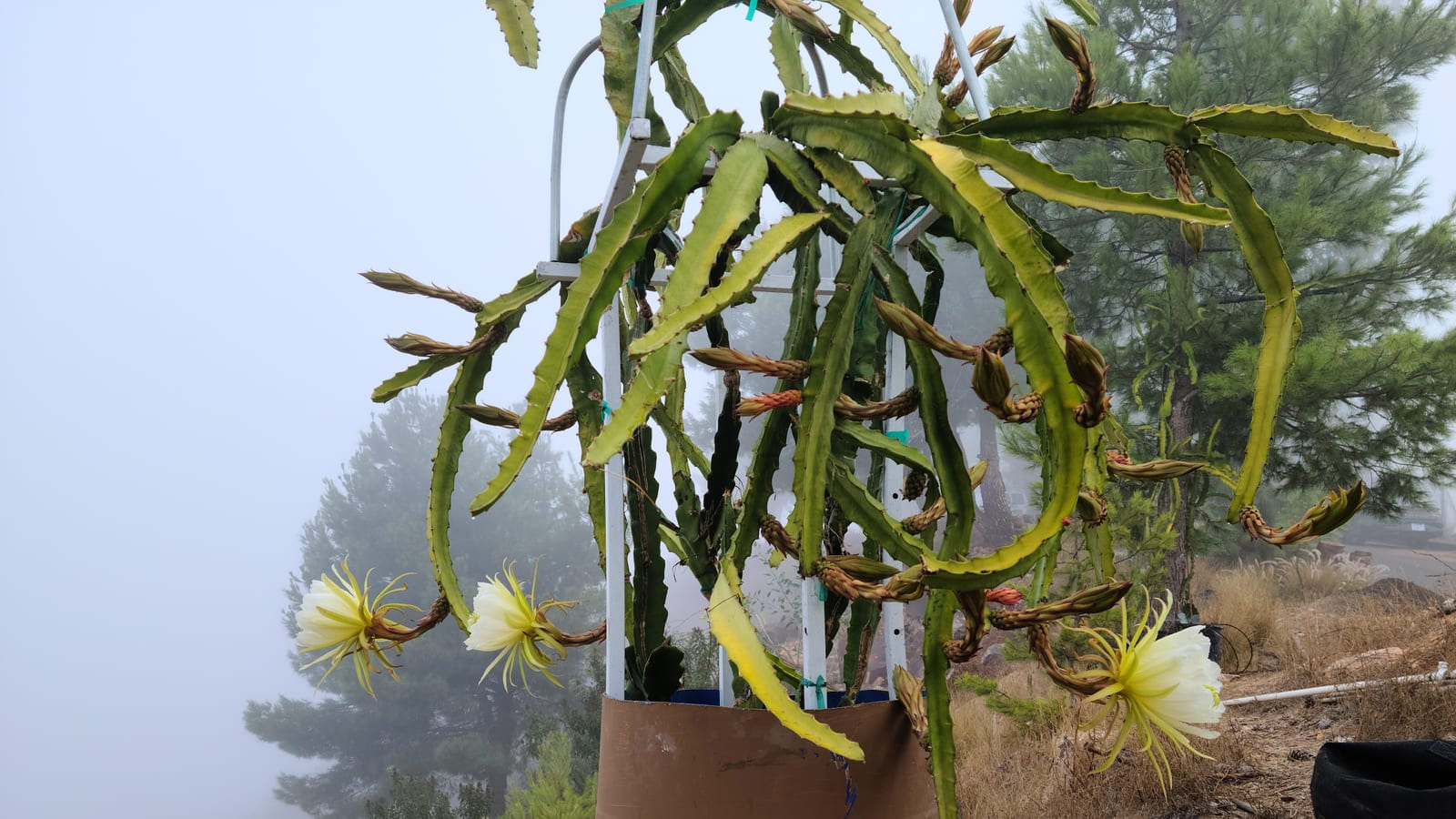
Dragon fruit pollination comes down to one practical question, can your variety set fruit with its own pollen, or does it need pollen from a different cultivar? If you do not know that answer, you can get huge flowers and still harvest nothing. The safest rule is to plant at least two compatible genetic types and be ready to hand-pollinate at night or early morning, because many named cultivars are self-incompatible or perform much better with cross-pollination.
UF/IFAS says self-incompatibility has been reported in several nursery cultivars and recommends planting two or three different genetic types to improve fruit set and fruit size. That advice matches what growers see in real backyards. Some varieties can fruit solo, some will barely set without a partner, and some technically self-set but still produce better-shaped, heavier fruit when hand-pollinated with fresh pollen from another bloom.
At Sky Botanicals in Escondido, Southern California, USDA zone 10a, we grow 50+ varieties, so pollination is not abstract. It is one of the main reasons a collection outperforms a one-plant setup. When blooms open after dark, we want to know which flowers can help each other, which pollen to save, and which varieties deserve a permanent pollinator role in the garden.
Quick answer table: self-fertile vs cross-pollinating
| Variety | Pollination status | What to expect | Best use |
|---|---|---|---|
| Vietnamese White | Usually treated as self-fertile | Can set on its own, often crops more reliably than collector types | Good one-plant starter and useful pollen backup |
| Sugar Dragon (S8) | Self-fertile | Reliable set and widely used as a pollinator helper | Best beginner pollinator variety |
| American Beauty | Self-fertile | Sets with its own pollen and suits small gardens | Starter fruiting variety |
| Robles Red | Self-fertile | Can self-set, but hand pollination often improves fruit size | Easy backyard red with less pollination stress |
| Lisa | Self-sterile | Needs a compatible second variety | Flavor grower, not solo grower |
| Dark Star | Often treated as self-sterile or uncertain | Better fruit set with a nearby pollinator | Mixed planting only |
| Purple Haze | Usually treated as self-sterile | Plan for cross-pollination | Collector planting with pollen support |
| Halley's Comet | Partly self-fertile | Can set some fruit but improves with hand pollination | Heat-tolerant variety with partner support |
| Physical Graffiti | Usually treated as self-sterile or cross-pollinated | Best yields with another variety in bloom | Production cultivar in mixed blocks |
Those labels are practical grower categories, not legal guarantees. UF/IFAS explicitly notes that self-incompatibility is not well documented for every cultivar, which is exactly why mixed plantings beat blind confidence. If your seller cannot tell you the pollination status, assume the plant will perform better with a partner.
What self-fertile, self-sterile, and cross-pollinating actually mean
Self-fertile
A self-fertile dragon fruit can set fruit using pollen from the same flower or the same plant. That does not mean it will always set heavily, and it does not mean hand pollination is pointless. It means the plant can complete the job alone if pollen reaches the stigma under workable conditions.
Self-sterile or self-incompatible
A self-sterile plant may bloom beautifully and still fail if you only use its own pollen. It needs genetically different pollen from another compatible cultivar. This is where people lose entire bloom waves. They assume every dragon fruit works like a tomato, but many do not.
Cross-pollinating in practice
Cross-pollinating means moving fresh pollen from one open flower to the stigma of another compatible variety. In backyard growing, that usually means a brush, a finger, or removing whole stamens and dusting them directly onto the stigma during the bloom window.
| Term | Meaning | Backyard implication |
|---|---|---|
| Self-fertile | Can fruit with its own pollen | Safer choice for one-plant growers |
| Self-sterile | Needs pollen from another cultivar | Must plant a partner or save outside pollen |
| Partly self-fertile | Can set some fruit alone but performs better with help | Treat like a plant that still benefits from a pollinator |
| Cross-pollination | Pollen transfer between different cultivars | Usually the best route for fruit size and consistent set |
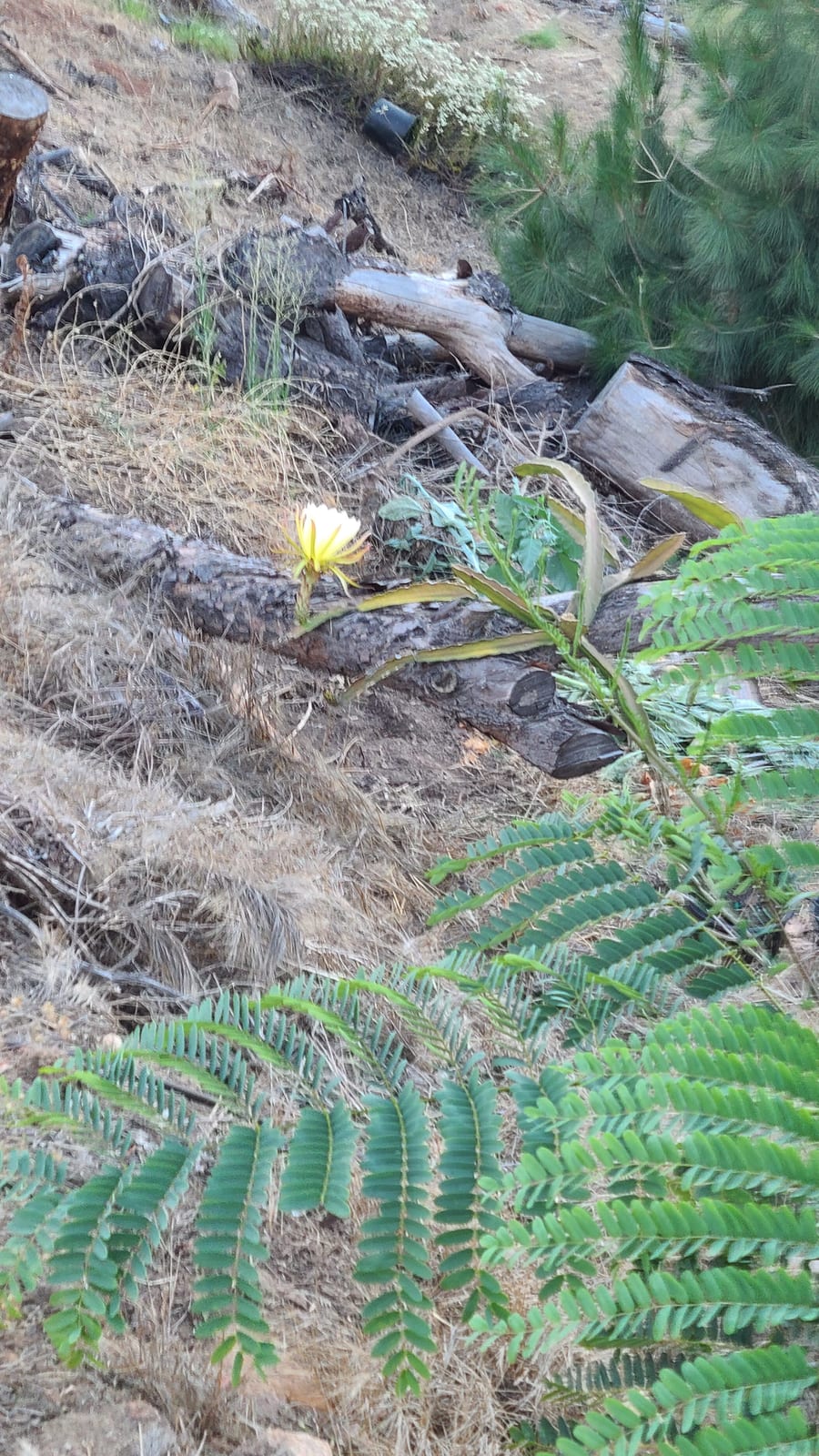
When dragon fruit flowers are pollinatable
UF/IFAS says pitaya flowers are nocturnal, open at night, and can be hand-pollinated during the night and early morning. The flowers may stay open into the early to mid-morning, when bees can sometimes visit, but you should not count on that. Moths and bats are natural pollinators, though UF/IFAS notes that they are not commonly observed doing enough work in many home plantings.
This means the bloom window is short and easy to miss. Most gardeners notice the giant flower in the evening, admire it, then check the plant the next afternoon after the flower has already collapsed. By then, if the variety was self-sterile and nothing visited it, your chance is basically gone.
That is why we tell Southern California growers to treat dragon fruit like a night shift crop during bloom season. If you want good set, be ready after dark or at sunrise.
How to hand-pollinate dragon fruit step by step
Step 1: Confirm the flower is fully open
Wait until the bloom is fully expanded and the anthers are releasing visible pollen. A flower that has just started opening may not give you enough viable pollen yet.
Step 2: Collect fresh pollen
Use a soft brush, cotton swab, or the whole stamen. UF/IFAS specifically says growers can collect pollen or even whole stamens from one flower and apply them to the stigma of another flower. If you have several blooms open at once, start with a known self-fertile helper such as Sugar Dragon or Vietnamese White and move outward.
Step 3: Dust the stigma thoroughly
The stigma sits in the center of the flower, usually protruding past the anthers. Coat it lightly but clearly. If you are crossing between plants, do not be shy. A little extra coverage is better than one hesitant touch.
Step 4: Repeat early in the morning if needed
If the flower still looks fresh at dawn, a second pass can help. This is especially worth doing on larger-fruited cultivars where good pollination often improves shape and size.
Step 5: Label the fruit if you are tracking cultivars
For serious collectors, write down the date, pollen donor, and receiving variety. That helps you learn which combinations set best in your own yard.
| Hand-pollination tool | Best for | Pros | Cons |
|---|---|---|---|
| Soft paintbrush | Most backyard growers | Precise, gentle, reusable | Easy to under-load if you rush |
| Cotton swab | Quick casual pollination | Cheap and simple | Can trap pollen in fibers |
| Whole stamen | Heavy bloom nights | Fast and pollen-rich | Less tidy, more blunt |
| Finger | Emergency method | No tool needed | Messy and less precise |
Why cross-pollination often gives better fruit, even on self-fertile varieties
This is the part many growers miss. A variety can be self-fertile and still benefit from cross-pollination. UF/IFAS says cross-pollination between different types helps assure better fruit set and size. Existing Sky Botanicals variety notes point the same direction. Halley's Comet, Robles Red, and several others can fruit with modest help, but hand pollination often improves the final result.
That means your goal should not be to prove a plant can technically fruit alone. Your goal should be to get cleaner set, fuller fruit, and fewer dropped flowers. In a backyard collection, the best way to do that is to overlap bloom windows and use strong helper varieties.
Best pollinator-helper varieties for Southern California collections
Sugar Dragon (S8)
Sugar Dragon (S8) is the obvious recommendation. It is self-fertile, beginner-friendly, and already one of the easiest varieties to justify on flavor alone. When a cultivar is both sweet and useful as a pollen source, it earns permanent space.
Vietnamese White
Vietnamese White is another strong utility variety because it is productive, broadly grown, and usually treated as self-fertile. It is not the flashiest fruit, but it makes sense in a pollination strategy.
American Beauty
American Beauty gives you a sweeter self-fertile option if you want a helper that is also a high-value eating fruit. In smaller gardens, this is often a better second plant than an obscure collector variety with uncertain pollen behavior.
Pollination mistakes that cause bloom failure
- Growing only one self-sterile cultivar
- Assuming every dragon fruit is self-pollinating
- Checking flowers only in daylight after they have already closed
- Using old dry pollen instead of fresh pollen
- Ignoring overlap in bloom timing between varieties
- Confusing fruit color or seller hype with pollination reliability
We also see people blame fertilizer or weather when the real issue is compatibility. If a plant keeps blooming and dropping, pollination should move to the top of the list. For broader plant health troubleshooting, compare this guide with our dragon fruit problems guide.
How temperature and weather affect pollination success
UF/IFAS places optimum growth around 65°F to 77°F and warns about temperatures below freezing and extreme sun stress. For pollination, that tells you the plant performs best when the whole system is not under stress. Heat waves can dry flowers faster, poor hydration can weaken blooms, and cool spells can shorten the period where pollen feels abundant and sticky.
In Escondido, we usually get workable summer bloom conditions, but inland heat can still matter. On very hot evenings, pollinate earlier in the bloom window and do not wait until late morning. On cooler coastal-influenced nights, you may get a little more flexibility.
How we manage pollination at Sky Botanicals
At Sky Botanicals, we do three things that make a big difference. First, we plant for overlap, not just variety collecting. Second, we keep at least a few dependable self-fertile varieties in every block. Third, when bloom season gets busy, we hand-pollinate first on known self-sterile or uncertain cultivars like Purple Haze, Lisa, Dark Star, and production hybrids that tend to reward cross-pollen.
Because we grow in Southern California zone 10a, we also care about access. A trellis packed too tightly with hanging branches makes pollination harder at exactly the moment you need to move quickly. Pruning for airflow and access is not just a disease-management move. It is a pollination move too. If you are still building that foundation, start with our care guide and our Southern California guide.
Which setup is best for beginners?
If you only want one plant, buy a known self-fertile variety such as Sugar Dragon, Vietnamese White, American Beauty, or Robles Red. If you want the best odds of reliable fruit every year, grow at least two different cultivars and learn hand pollination. If you want collector fruit such as Lisa, Purple Haze, or Dark Star, assume you need a helper unless you have already proven otherwise in your own yard.
| Grower goal | Best setup | Recommended direction |
|---|---|---|
| One easy plant | Known self-fertile cultivar | Sugar Dragon or Vietnamese White |
| Small backyard with better odds | Two different cultivars | One helper plus one specialty fruit |
| Collector planting | Three or more overlapping varieties | Mix self-fertile and self-sterile types |
| Maximum yields | Mixed block plus hand pollination | Track bloom nights and pollen donors |
FAQ
Can dragon fruit pollinate itself?
Some varieties can, but not all. UF/IFAS says self-incompatibility has been reported in several cultivars, so you should never assume a new variety is safe as a solo plant.
What time should I hand-pollinate dragon fruit?
Pollinate at night once the flower is fully open, or very early the next morning while the bloom is still fresh.
Do I need two dragon fruit plants?
If you grow a self-sterile or uncertain variety, yes, you should have another compatible cultivar. Even self-fertile plants often perform better with a partner.
Which dragon fruit varieties are best for beginners?
Known self-fertile types such as Sugar Dragon, Vietnamese White, American Beauty, and Robles Red are usually the easiest starting point.
Why does my dragon fruit flower but not fruit?
The most common reasons are self-incompatibility, poor pollen transfer, missing the bloom window, or stress during flowering.
Does cross-pollination make better fruit?
Often yes. UF/IFAS notes that cross-pollination helps assure better fruit set and size, even beyond the basic question of whether the plant can set fruit at all.
Can I save pollen for later?
You can try, but fresh pollen from a flower open that night or early morning is the safest choice for backyard growers.
Sky Botanicals grows 50+ dragon fruit varieties in Escondido, Southern California, USDA zone 10a, and the pollination lesson is simple: if fruit set matters, do not gamble on one unknown plant. Build a mixed collection, keep a few reliable helpers, and treat bloom nights like the short, high-value harvest opportunities they are.