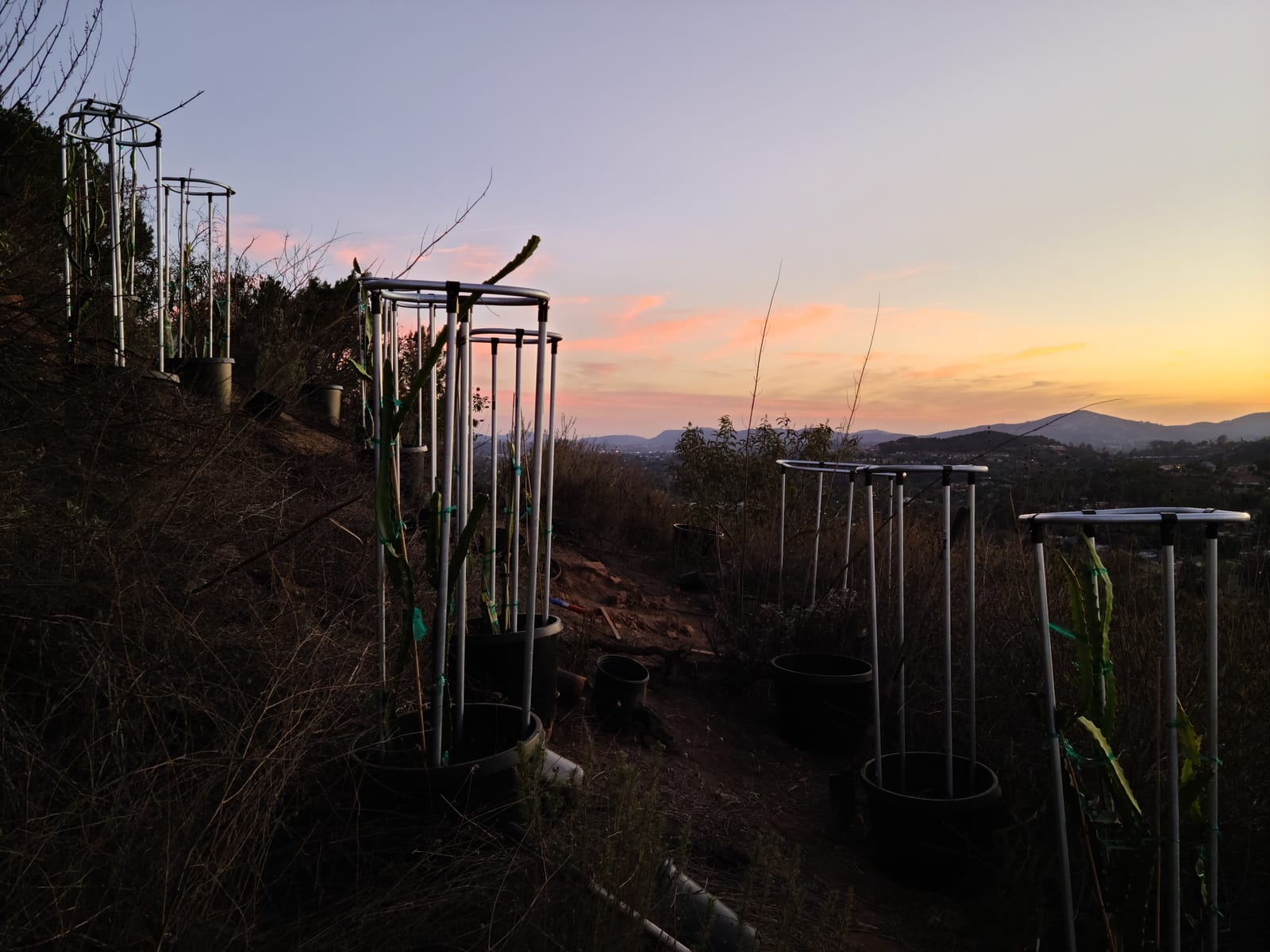
How to Grow Dragon Fruit in Southern California
A practical zone 10a guide for getting dragon fruit established, blooming, and fruiting in warm Southern California yards.
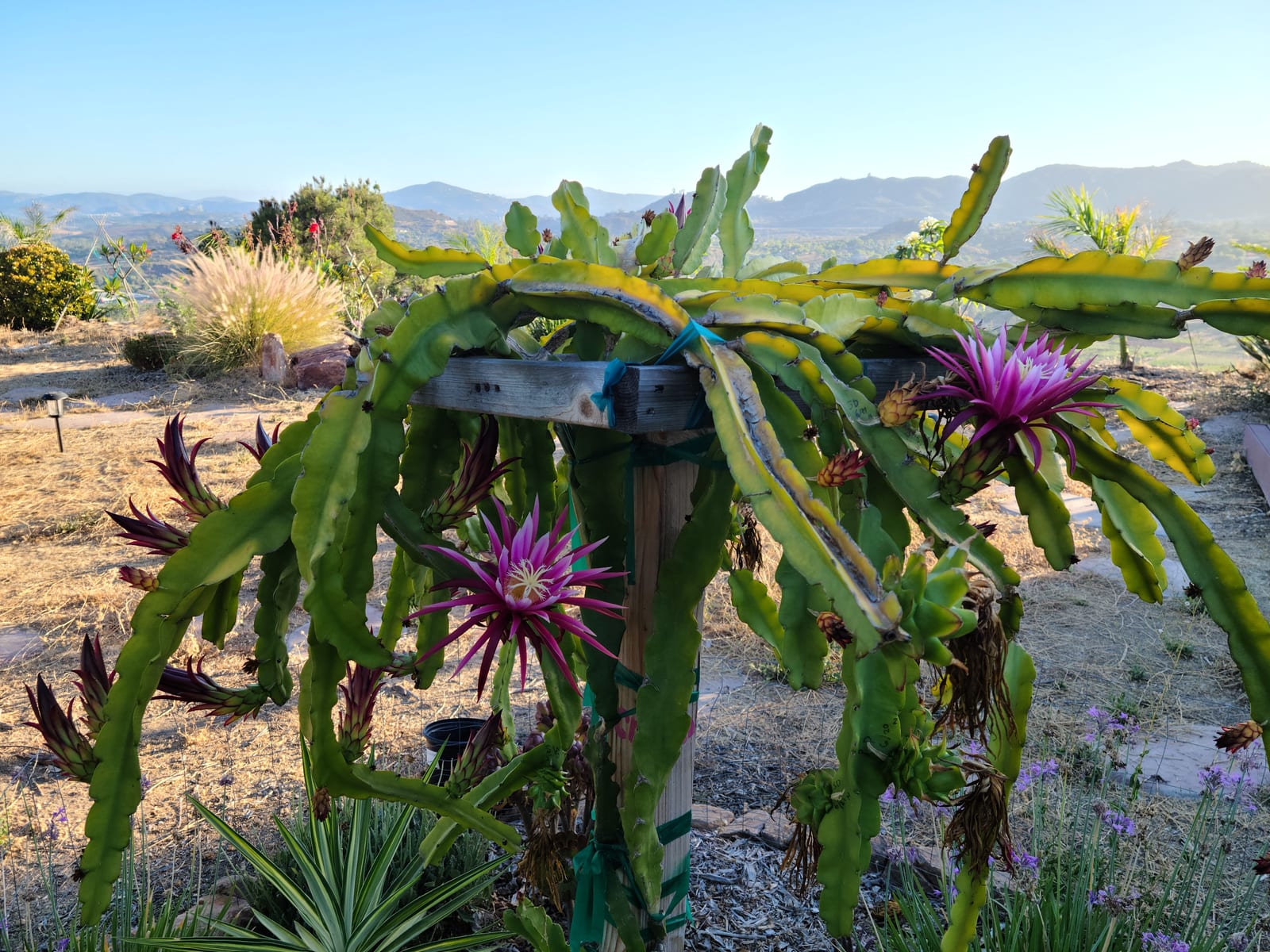
Dragon fruit grows well in Southern California when you give it full sun, fast drainage, warm nights, and protection from hard freezes. In Escondido and other zone 10a pockets, Sky Botanicals grows 50+ varieties successfully by matching the plant to microclimate, support, and pollination needs.
Why Southern California Works
Dragon fruit, also called pitaya, is a tropical climbing cactus that performs best in USDA zones 10a to 11. UF/IFAS notes ideal growth around 65°F to 77°F, with plants tolerating cool or warm climates as long as temperatures do not stay above 100°F. For Southern California growers, that means the main job is not heat, it is winter cold protection and drainage.
In inland San Diego County, including Escondido, evenings can cool off fast. That is usually fine, but young plants hate wet roots plus cold nights. If your site gets frost, choose a warmer wall, a patio microclimate, or a large container you can move.
Step 1: Pick the Right Site
Start with the warmest, sunniest spot you have. Dragon fruit needs at least 6 hours of sun, but in very hot inland locations some afternoon shade can prevent sunburn on new growth. A south- or west-facing fence, masonry wall, or sturdy post often works best.
| Factor | Target | Why it matters |
|---|---|---|
| USDA zone | 10a to 11 | Minimizes freeze damage |
| Ideal temp | 65°F to 77°F | Best growth range |
| Cold risk | Below 31°F can injure plants | Needs protection in cold snaps |
| Heat risk | Above 100°F is stressful | May need shade in inland heat |

Step 2: Build Drainage First
Dragon fruit roots rot fast in heavy, soggy soil. The best mix is loose, airy, and slightly acidic, usually around pH 5.5 to 6.5. Use raised mounds, amended native soil, or large containers with fast drainage holes. If your yard has clay, do not plant directly into a low spot.
A good practical mix is coarse sand, pumice or perlite, and composted organic matter. The goal is quick drainage with enough moisture retention to carry the plant between irrigations.
Step 3: Choose Varieties That Fit Your Goal
For Southern California, self-fertile types reduce frustration. 8-S, also called Sugar Dragon, is widely favored because it can set fruit on its own. American Beauty is another reliable Southern California performer. If you want bigger fruit set, plant at least two genetically different varieties so you can cross-pollinate.
| Variety | Strength | Pollination note |
|---|---|---|
| 8-S / Sugar Dragon | Reliable flavor, self-fertile | Good solo plant |
| American Beauty | Productive, widely grown | Often benefits from a partner |
| Yellow types | High interest, strong flavor | Usually needs cross-pollination |
If you are building a collection, Sky Botanicals in Escondido uses this same logic, matching variety to climate and pollination behavior instead of chasing hype.
Step 4: Install a Strong Trellis
Dragon fruit gets heavy. A weak tomato cage will fail. Build a central post with a top frame or crossarms about 5 to 6 feet high so the stems can cascade down. Concrete, steel, or heavy treated wood all work if the structure is anchored well. Mature vines can weigh hundreds of pounds.
Prune early so the plant forms one main trunk. Once it reaches the top, let only a few arms hang over the frame. That shape increases flowering and makes harvest easier.
Step 5: Water and Feed Correctly
Water deeply, then let the top layer dry before watering again. In summer, that may mean weekly irrigation. In cooler months, reduce sharply. Overwatering is the fastest way to lose a dragon fruit plant in Southern California.
For fertilizer, start with a balanced formula like 13-13-13 or 16-16-16 during establishment. When the plant is mature and trying to bloom, shift toward a higher-phosphorus blend such as 8-24-24, then back off nitrogen once fruiting starts. That pattern supports stem growth first, then flowers, then fruit.
Step 6: Pollinate at the Right Time
Dragon fruit flowers open at night. Many varieties need hand pollination after dark or early the next morning. Use a small brush or collect pollen from one flower and move it to another. If you grow only one plant, choose a self-fertile variety. If you grow several, fruit set usually improves.
Seasonal Care in Southern California
Spring is for training and feeding. Summer is for growth, bloom, and careful watering. Fall is the main fruiting window for many plantings. Winter is protection season. If frost is forecast, cover the plant, move containers under shelter, or use a frost cloth on young vines.
For a broader care overview, see Dragon Fruit Care Guide. For common questions about fruit set, ripeness, and buying plants, see Dragon Fruit FAQ. If you want cultivar comparisons, check Dragon Fruit Varieties Guide.
Common Mistakes to Avoid
- Planting in clay that stays wet
- Using a weak trellis that cannot handle mature weight
- Overfertilizing with nitrogen during bloom
- Assuming one variety will pollinate every other variety
- Letting the plant sit in cold, wet soil in winter
FAQ
Can dragon fruit grow in Escondido?
Yes. Escondido is one of the better inland Southern California pockets for dragon fruit if you manage cold snaps and drainage.
What USDA zone is best?
Zone 10a is workable, and zone 10b to 11 is even easier. Frost protection matters in 10a.
What soil pH is best?
Target slightly acidic soil, roughly pH 5.5 to 6.5.
What temperature range is ideal?
About 65°F to 77°F is the sweet spot for growth.
Which varieties are easiest for beginners?
8-S Sugar Dragon and American Beauty are strong starting points in Southern California.
Do I need two plants?
Not always. Self-fertile varieties can fruit alone, but two genetically different plants usually improve set and size.