Dragon Fruit FAQ: 30 Most Common Questions Answered
Everything you need to know about growing, caring for, and buying dragon fruit — answered by growers with 50+ varieties.
Whether you're considering your first dragon fruit plant or expanding a collection, these are the questions we hear most at Sky Botanicals. Every answer comes from hands-on experience growing 50+ varieties at our farm in Escondido, Southern California.
Getting Started
1. What is dragon fruit?
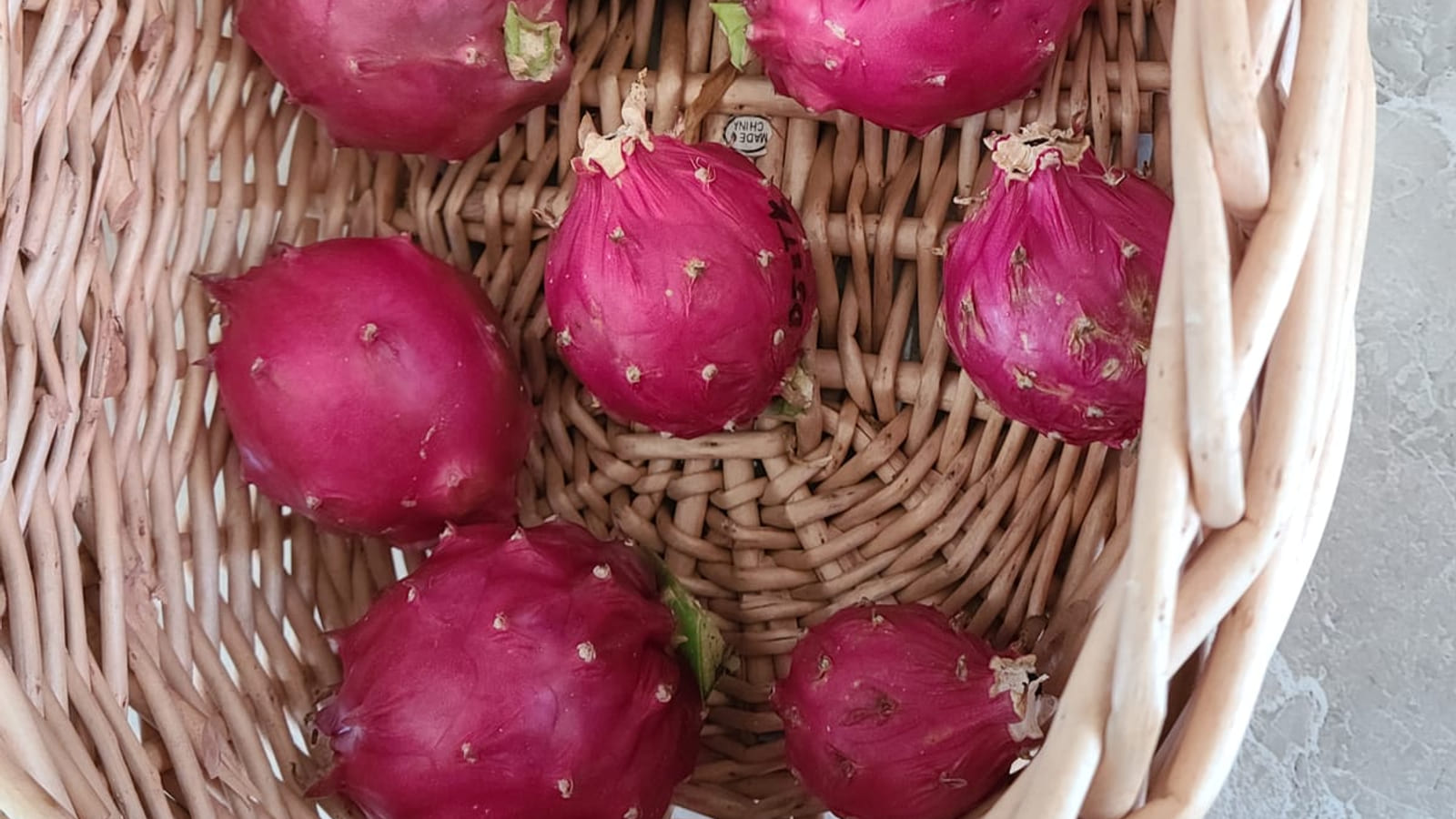
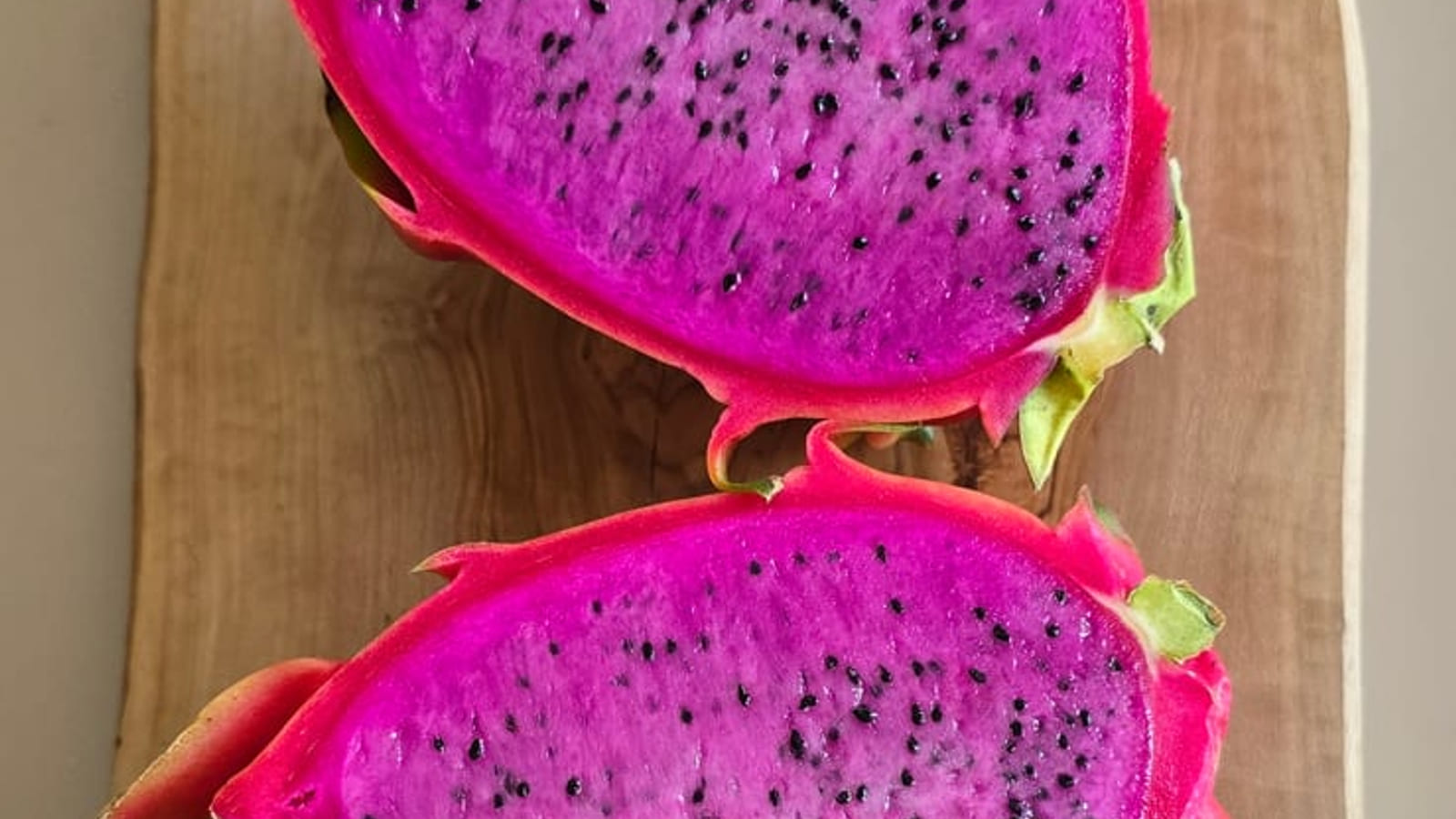
Dragon fruit (also called pitaya or pitahaya) is a tropical fruit that grows on climbing cacti in the genus Selenicereus (formerly Hylocereus). The plant produces large, fragrant flowers that bloom overnight, followed by colorful fruit with white, red, purple, or magenta flesh depending on the variety. Despite being a cactus, dragon fruit is not a desert plant — it's native to Central American rainforests and prefers moderate water and partial shade in hot climates.
2. Can I grow dragon fruit where I live?
Dragon fruit grows outdoors year-round in USDA zones 9b through 11. If you experience frost, you can still grow it in containers and move plants indoors during winter. In zones 9a and below, indoor growing under grow lights is possible but fruit production will be limited. The ideal temperature range is 65-85°F. Plants start showing damage below 32°F and can die at sustained temperatures below 28°F.
3. Should I grow from seed or cuttings?
Cuttings, always. A cutting from a known variety will produce fruit in 1-2 years and give you the exact variety you chose. Seeds take 5-7 years to fruit and produce random genetics — the fruit may taste nothing like the parent. Every serious grower starts with cuttings.
4. What size cutting should I buy?
Larger cuttings fruit faster. A 12-15" cutting typically fruits in 18-24 months. A 25-38" cutting can fruit within 12 months under good conditions. Smaller cuttings are cheaper but add 6-12 months to your first harvest. At Sky Botanicals, we offer both small (under 26") and large (26-38") cuttings.
5. How much does a dragon fruit plant cost?
Cuttings typically range from $15-$40 depending on variety rarity and size. Common varieties like Vietnamese White are on the lower end. Rare varieties like Ecuador Palora or Physical Graffiti command higher prices. Grafted plants cost more ($30-$60+) but can fruit sooner.
Growing & Care
6. How much sun does dragon fruit need?
6-8 hours of direct sunlight is ideal. In hot climates (above 100°F), afternoon shade prevents sunburn. Morning sun with afternoon shade is the ideal setup in Southern California and similar climates. Indoor growers need at least 600W equivalent of full-spectrum grow lights.
7. How often should I water dragon fruit?
Water deeply once every 7-14 days during the growing season (spring through fall). In winter, reduce to once every 3-4 weeks. The soil should dry out between waterings — dragon fruit is a cactus and will rot in constantly wet soil. A good rule: stick your finger 2 inches into the soil. If it's dry, water. If damp, wait.
8. What soil does dragon fruit need?
Well-draining soil with a pH of 6.0-7.0. A good mix is 40% potting soil, 30% perlite, 20% coarse sand, and 10% compost. The key is drainage — dragon fruit roots rot quickly in waterlogged soil. If you grab a handful of your mix and squeeze, water should flow freely. If it clumps like a ball, add more perlite.
9. Does dragon fruit need a trellis?
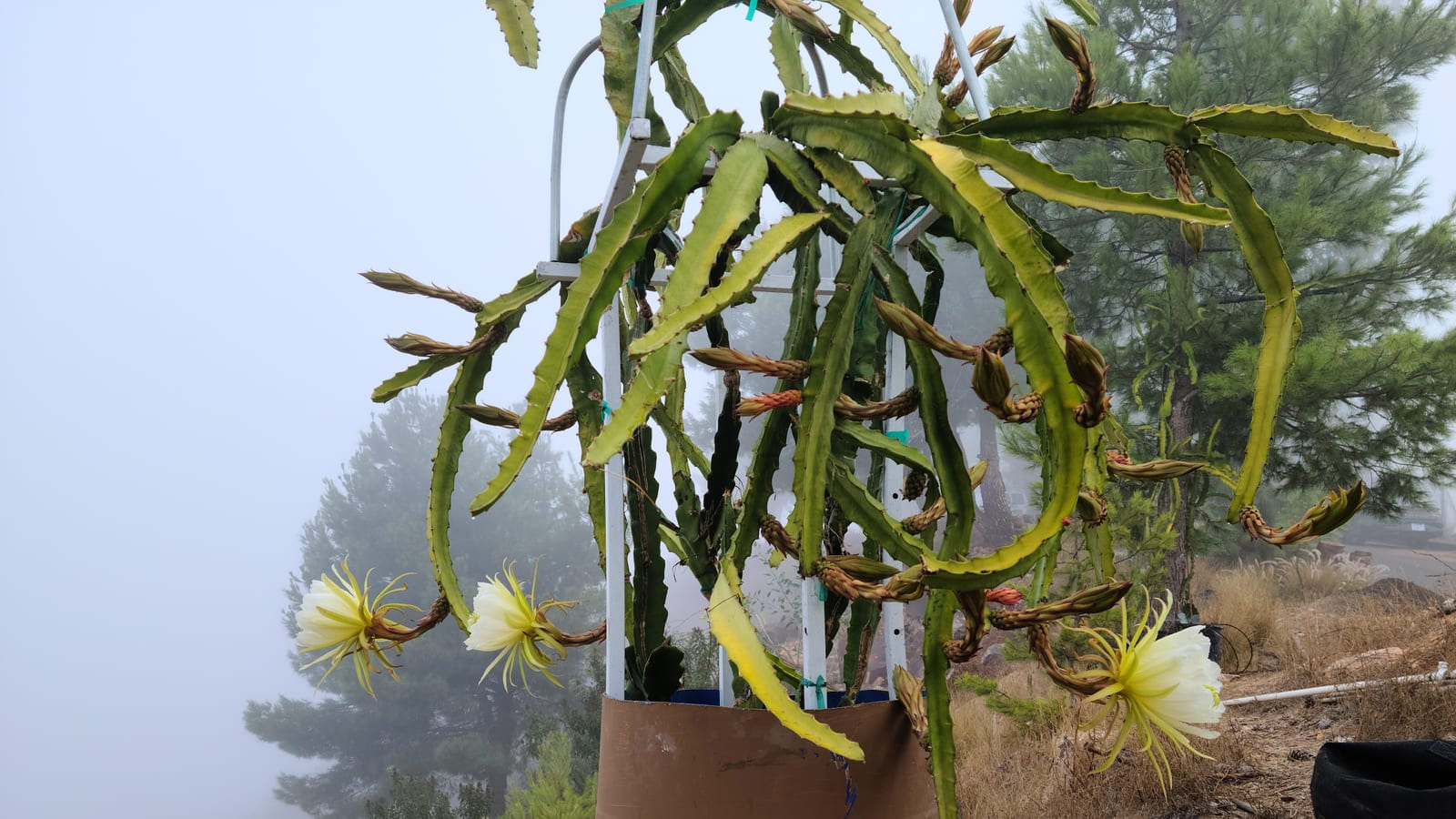
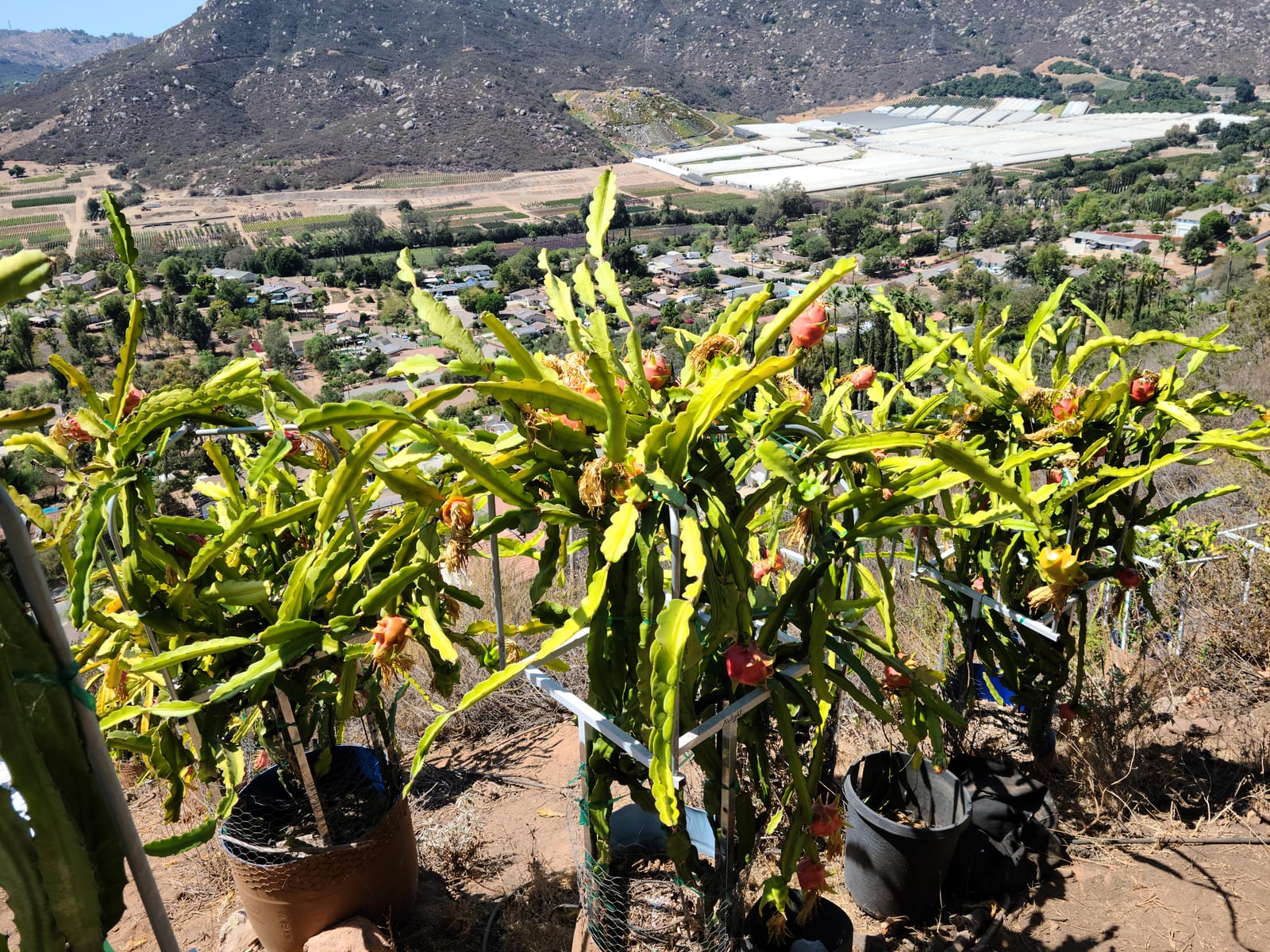
Yes. Dragon fruit is a climbing cactus that needs vertical support. The most common setup is a single sturdy post (4x4 wood or metal pipe) about 5-6 feet tall with a circular frame or crossbar at the top. The plant climbs up and drapes over the top like an umbrella, which is where most fruit forms. Without support, the plant sprawls on the ground and produces poorly.
10. What fertilizer should I use?
During the growing season (April-October), use a balanced fertilizer (8-4-12 or 6-6-6) monthly. Switch to a low-nitrogen, high-phosphorus fertilizer (2-8-4) when flower buds appear to boost fruit production. Organic options like compost tea, fish emulsion, and bone meal also work well. Stop fertilizing in winter when the plant is dormant.
11. When does dragon fruit bloom?
Most varieties bloom from May through November in Southern California. Flowers open at night (typically 8-10 PM) and close by morning. Each flower lasts only one night, making timing critical for hand pollination. A healthy mature plant can produce 4-6 bloom cycles per season.
12. How long does it take to get fruit?
From a cutting: 1-2 years for most varieties. From seed: 5-7 years. Larger cuttings and grafted plants can fruit within the first year. Once a plant starts fruiting, it will produce annually. Mature plants (3+ years) are the most productive, with some varieties yielding 20-30+ fruits per season.
Pollination
13. Do I need to hand-pollinate dragon fruit?
If you grow self-fertile varieties, hand pollination is optional but improves fruit size and set rate. If you grow self-sterile varieties, hand pollination (or a second compatible variety nearby) is required to get any fruit at all. Even with self-fertile varieties, hand pollination can increase fruit weight by 30-50%.
14. What does self-fertile vs self-sterile mean?
Self-fertile varieties can pollinate themselves — pollen from the flower can fertilize its own ovary. Self-sterile varieties cannot; they need pollen from a different variety. If you only have space for one plant, choose a self-fertile variety like Sugar Dragon, American Beauty, or Zamorano.
15. How do I hand-pollinate dragon fruit?
Wait until the flower is fully open (usually around 9-10 PM). Use a small paintbrush or cotton swab to collect pollen from the stamens (the many thin stalks inside the flower). Transfer the pollen to the stigma (the large central structure). For self-sterile varieties, you need pollen from a different variety's flower. The whole process takes about 30 seconds per flower.
16. What is the best pollinator variety?
Sugar Dragon (S8) is the best universal pollinator. It's self-fertile, produces abundant pollen, and its pollen is compatible with nearly every other variety. Vietnamese White is another excellent pollen donor. If you grow any self-sterile varieties, having one of these two nearby solves most pollination challenges.
Varieties & Choosing
17. What is the sweetest dragon fruit variety?
Ecuador Palora (yellow dragon fruit) is the sweetest, with Brix scores of 20-24. Among red-fleshed varieties, Frankie's Red reaches Brix 21. Purple Haze hits 19. For context, most grocery store dragon fruit (Vietnamese White) scores around 12-14 Brix — the named cultivars are dramatically sweeter.
18. What is the best dragon fruit variety for beginners?
Sugar Dragon (S8). It's self-fertile, reliably productive, disease-resistant, sweet (Brix 18-20+), and works as a universal pollinator if you add more varieties later. American Beauty and Zamorano are also excellent beginner choices.
19. What is the difference between red, white, and yellow dragon fruit?
White-fleshed varieties (from S. undatus) are mild and refreshing — this is what you see in most grocery stores. Red and purple varieties (from S. costaricensis/polyrhizus) have richer, berry-like flavors and deeper sweetness. Yellow varieties (from S. megalanthus) have spiny yellow skin, white flesh, and are the sweetest of all types.
20. How many varieties should I grow?
At minimum, one self-fertile variety will get you fruit. Two or more varieties is better — cross-pollination improves fruit size even for self-fertile types, and you get a range of flavors. If space is limited, one self-fertile variety (Sugar Dragon) plus one self-sterile variety with great flavor (Physical Graffiti or Purple Haze) is a strong two-plant combo.
21. Why does grocery store dragon fruit taste bland?
Grocery stores sell mass-produced Vietnamese White dragon fruit, harvested underripe for shipping. Named cultivars grown to full ripeness and picked at peak are a completely different experience. The difference between a grocery store dragon fruit (Brix 10-14) and a ripe Sugar Dragon (Brix 18-20) is like comparing a gas station tomato to a garden-fresh heirloom.
Harvesting & Fruit
22. How do I know when dragon fruit is ripe?
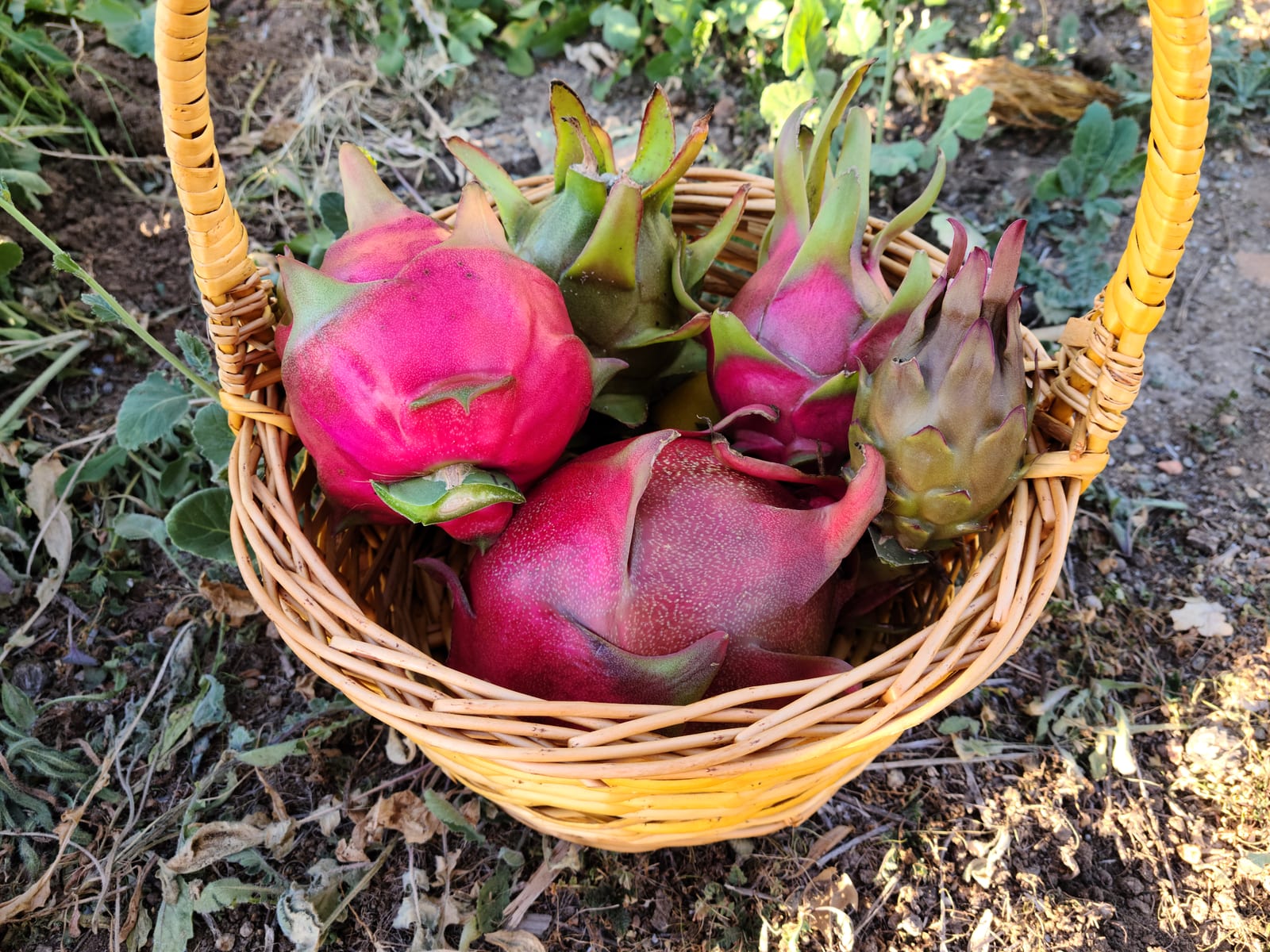
The fruit is ripe when the skin color is fully developed (bright pink, red, or yellow depending on variety), the fins/flaps start to wither slightly, and the fruit gives gently when pressed — similar to a ripe avocado. A ripe fruit will also twist off the branch easily. Don't wait until the fruit falls; by then it may be overripe.
23. How long does dragon fruit take from flower to harvest?
About 30-50 days from successful pollination to ripe fruit, depending on variety and temperature. Warmer temperatures speed ripening. You'll see the fruit swell rapidly in the final 1-2 weeks.
24. How do I store dragon fruit after picking?
Fresh dragon fruit keeps 5-7 days at room temperature and up to 2 weeks refrigerated. Don't wash until ready to eat. For longer storage, cut the flesh into cubes and freeze — frozen dragon fruit keeps for 6+ months and works great in smoothies and sorbet.
25. Can I eat dragon fruit skin?
The skin is not toxic but isn't typically eaten due to its tough, waxy texture. The flesh and seeds are the edible parts. Cut the fruit in half and scoop out the flesh with a spoon, or peel the skin off in sections.
Problems & Troubleshooting
26. Why is my dragon fruit turning yellow?
Yellow stems usually mean overwatering or nutrient deficiency. Check your watering schedule first — let the soil dry between waterings. If drainage is good and watering is correct, apply a balanced fertilizer. Yellowing can also indicate too much direct sun in extreme heat (sunburn), which shows as bleached or yellowed patches on the sun-facing side.
27. Why isn't my dragon fruit flowering?
Most common causes: the plant is too young (needs to be 1-2+ years from cutting), not enough light (needs 6+ hours), too much nitrogen fertilizer (promotes stem growth over flowers), or the plant hasn't reached the top of its trellis yet (most varieties bloom from the drooping tips, not the climbing portion). Also check that nighttime temperatures are warm enough — blooming requires consistent nights above 60°F.
28. What pests affect dragon fruit?
The most common pests are mealybugs, scale insects, and ants (which farm the mealybugs). Slugs and snails can damage stems at ground level. For treatment, neem oil works for most soft-bodied pests. Keep the base of the plant clean and dry to discourage slugs. Birds and rats may eat ripe fruit — mesh bags or netting can protect individual fruits.
29. Why is my dragon fruit stem soft/mushy?
Soft, mushy stems indicate rot, almost always caused by overwatering or poor drainage. Cut away the rotted section with a clean knife until you reach firm, healthy tissue. Let the cut dry for 3-5 days before replanting. Fix your watering schedule and improve soil drainage to prevent recurrence.
Buying & Shipping
30. Can dragon fruit cuttings survive shipping?
Yes. Dragon fruit cuttings are extremely hardy and ship well. Reputable sellers let the cut end callous (dry and seal) for several days before shipping. Cuttings can survive 1-2 weeks in transit without issues. When your cutting arrives, let it rest in shade for a few days before planting, and don't water for the first week to let any minor shipping damage heal.