Self-Pollinating Dragon Fruit Varieties: Complete List
Want fruit from one plant? Here are the dragon fruit varieties most growers consider self-pollinating, plus how reliable they are in real backyards.

The best self-pollinating dragon fruit varieties for home growers are usually American Beauty, Sugar Dragon (S8), Vietnam White, Lisa, Ecuador Palora, Voodoo Child, Townsend Pink, and a smaller group of regionally traded self-fertile selections. The important caveat is that self-pollinating does not always mean heavy fruit set without help. In Southern California at Sky Botanicals in Escondido, USDA zone 10a, we still see better set, better shape, and often sweeter fruit when even self-fertile varieties are hand-pollinated on bloom night.
If you want the safest one-plant starting point, start with Sugar Dragon, American Beauty, or Vietnam White. Those three show up again and again in grower lists because they can set fruit with their own pollen and also serve as useful pollen donors for more demanding varieties. That matters if you are building a small collection now and want to expand later with cross-pollinating types.
What self-pollinating actually means
Dragon fruit growers use a few pollination terms loosely, so it helps to define them before choosing plants. Self-fertile means a flower can set fruit with its own pollen. Self-pollinating usually means it can also move that pollen effectively enough to set fruit on its own, either naturally or with minimal intervention. Self-sterile means it needs pollen from a different compatible variety.
In practice, those labels are not perfect. A variety may be sold as self-fertile yet set only a light crop in hot, dry, or windy weather. Another may technically self-set but make small or misshapen fruit unless you hand-pollinate between about 8 p.m. and midnight when flowers are fresh. That is why growers in warm climates often talk about reliability rather than just category.
At Sky Botanicals, we treat pollination as a spectrum. A variety can be self-fertile and still benefit from stored pollen, cross-pollen, or hand work on bloom night. If your yard only has room for one post, pick a reliable self-fertile variety. If you have room for two or three, add at least one strong pollen producer for insurance.
The complete list most growers agree on
No single official registry covers every named pitaya in circulation, but the overlap across nursery, grower, and variety-reference sources is useful. The varieties below are the names that appear most consistently on self-fertile or self-pollinating lists.
| Variety | Typical flesh color | Pollination status | Why growers like it |
|---|---|---|---|
| Sugar Dragon (S8) | Red-purple | Self-pollinating | Reliable set, strong pollen, often treated as a universal pollinator |
| American Beauty | Magenta | Self-fertile | Sweet fruit, common starter variety, good one-plant option |
| Vietnam White | White | Self-fertile | Reliable pollen production, dependable cropper, widely available |
| Lisa | Dark red | Often listed as self-fertile or self-pollinating | Excellent flavor, useful pollen source in many collections |
| Ecuador Palora | White | Often listed as self-fertile | Yellow skin, very high sweetness, often over 20 Brix |
| Voodoo Child | Red-purple | Self-fertile | Common on backyard self-fertile lists |
| Townsend Pink | Pink | Self-fertile | Useful for small gardens, often mentioned by collectors |
| Giant White Jaina | White | Self-fertile in some collections | Good for growers wanting white-flesh fruit with simpler pollination |
| Kim Red | Red | Self-fertile in some collections | Regional grower favorite in Southern California circles |
The reason the wording matters is that not every list agrees on every name. Sugar Dragon, American Beauty, and Vietnam White are the closest thing to consensus picks. Lisa and Ecuador Palora are often listed as self-fertile too, but their performance can vary by climate and grower handling.
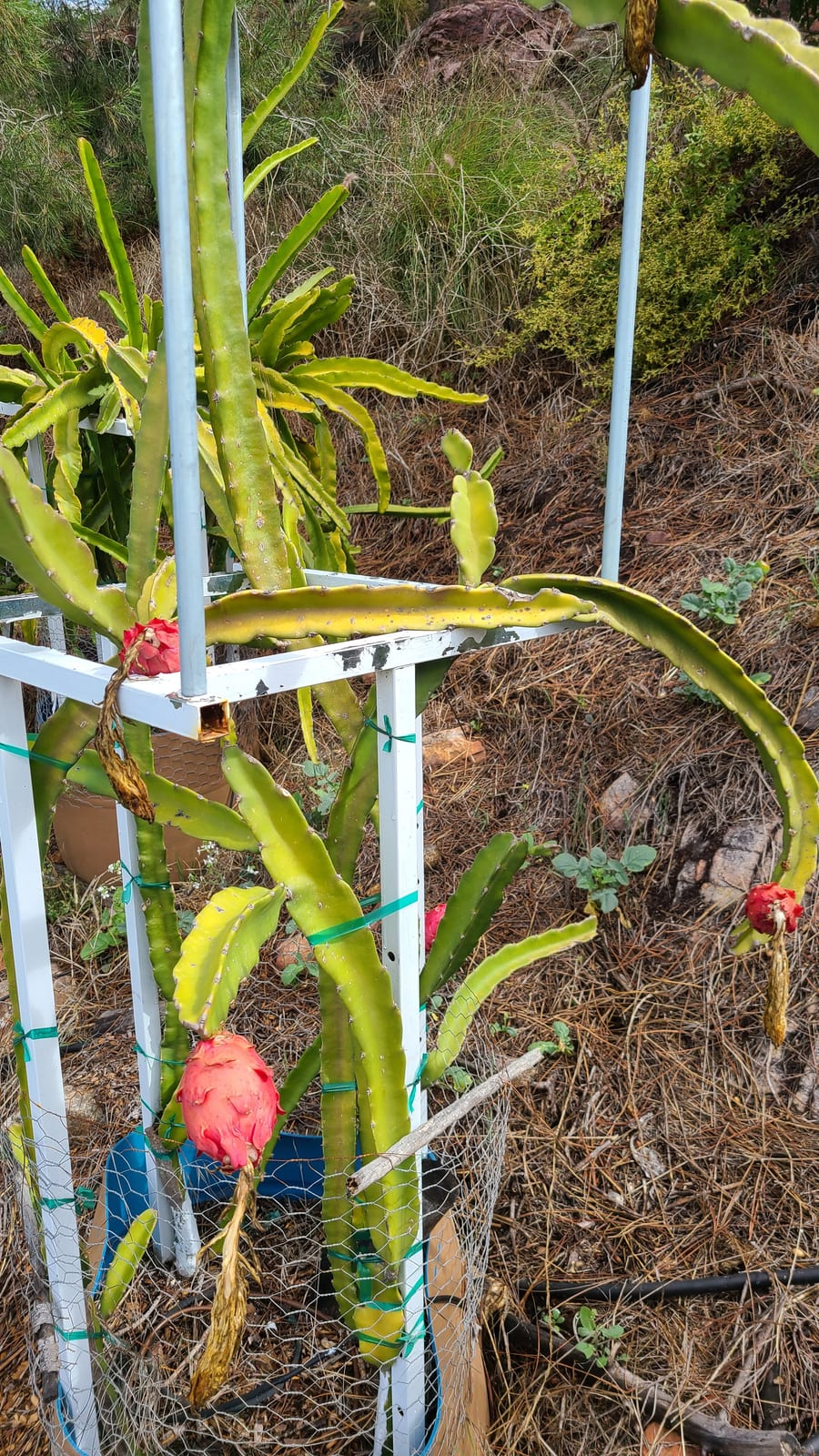
Best single-plant choices for beginners
If you want one plant that can realistically fruit by itself, start with one of these three.
1. Sugar Dragon (S8)
Sugar Dragon has a reputation for being one of the most useful varieties in a collection because it is self-pollinating and produces abundant viable pollen. Gardener's Path lists it as self-fertile and notes that many growers consider it a universal pollinator. Its fruit is usually smaller, around 8 to 12 ounces, but flavor is strong and often rated at 18 Brix or higher. For patios, posts, and small trellises, that is a fair trade.
2. American Beauty
American Beauty is one of the easiest quality varieties to recommend because it combines good flavor, broad availability, and self-fertility. Gardener's Path cites a Brix score of 18.51, with typical fruit weight of about 0.5 to 1 pound. It is not the most heat-proof variety in brutal inland spots, but for coastal and inland Southern California with light afternoon protection, it is still a strong home-garden choice.
3. Vietnam White
Vietnam White is less flashy than red-fleshed varieties, but it earns its place because it flowers reliably, produces useful pollen, and is often easier to manage in mixed plantings. Its sweetness is usually lower than the best red and yellow types, but white-fleshed varieties are often the workhorses that make a collection productive.
How sweet are the self-pollinating types?
Sweetness is one of the biggest reasons people chase named varieties instead of buying an unlabeled grocery-store cutting. Brix is the usual measure. One degree Brix is roughly 1 gram of sugar per 100 grams of juice. Higher is not always better, but it gives a useful baseline.
| Variety | Reported Brix | Notes |
|---|---|---|
| American Beauty | 18.51 | Sweet magenta flesh, common benchmark variety |
| Sugar Dragon (S8) | 18+ | Berry-rose notes, small fruit, strong pollen producer |
| Lisa | 18 | Rich flavor with acidity, top-rated in some taste tests |
| Ecuador Palora | 20+ | Yellow skin, white flesh, often the sweetest commonly sold type |
| Vietnam White | Often lower than premium reds | Grown more for reliability than extreme sweetness |
For perspective, many average dragon fruit land around 15 Brix, while standout fruit can push into the high teens or low twenties. That is why Palora is such a cult favorite. Zenyr Garden describes Ecuador Palora as commonly above 20 Brix, while Gardener's Path gives Colombiana, another yellow type, a Brix reading of 21. Those are dessert-level numbers, but yellow types also take longer and can be fussier.
Why your self-pollinating plant still may not set fruit well
Pollination failure is not always a genetics problem. It is often a conditions problem. Flowers open at night, pollen has a freshness window, and desert heat or dry wind can shorten the useful period. Humidity, temperature, insect activity, and flower timing all matter.
We tell growers to look at five common causes before blaming the plant. First, the flower may have opened on a hot, dry night and the pollen lost viability quickly. Second, the stigma may not have gotten enough pollen contact even though the flower was technically self-fertile. Third, overfeeding nitrogen can push stem growth instead of reproductive strength. Fourth, heat-stressed plants may abort buds before bloom. Fifth, weak hydration right before bloom can reduce fruit set.
This is one reason our pollination guide and hand pollination guide pair so well with this article. A self-pollinating variety gives you easier odds, not a free pass.
How we handle pollination at Sky Botanicals
At our Escondido farm in Southern California, USDA zone 10a, we usually keep self-fertile varieties in the collection even when we have 50+ varieties available. They are practical insurance. On bloom nights, we still check which flowers opened, collect fresh pollen, and pollinate anything we care about heavily, especially in stretches of dry heat.
That routine matters because inland Southern California and the low desert can get warm evenings that dehydrate flowers faster than coastal gardens do. Hand pollination only takes a minute or two per bloom, and it often improves fruit shape and fill. If you are growing for the best eating quality instead of just proving you can get fruit, it is worth the extra step.
Best pairings if you want better insurance
Even if you start with a self-pollinating plant, the smartest small-collection strategy is to pair it with another good pollen producer. The classic combinations are Sugar Dragon with American Beauty, Sugar Dragon with Physical Graffiti, and Vietnam White with harder-to-set red varieties. Lisa also shows up repeatedly as a strong pollen source in grower references.
If you are trying to maximize reliability in a tiny yard, use one reliable self-fertile plant and one high-quality cross-pollinating flavor variety. That gives you fruit now and better options later. If you are still narrowing your shortlist, our beginner variety guide, American Beauty spotlight, Sugar Dragon spotlight, and Vietnamese White spotlight help fill in the tradeoffs.
What to buy if labels are vague
Many nursery tags say only dragon fruit or pitaya. That is not enough if you care about pollination. Ask for the exact cultivar name, whether the seller has personally fruited it with its own pollen, and whether it has been grown successfully in your climate. For Arizona, inland Southern California, and other hot dry areas, also ask how it handles afternoon sun above 100°F.
If a seller cannot answer those basics, treat the plant as unknown. Unknowns can still be fun, but they are not the best first post if your goal is one-plant success.
Bottom line
If you want the simplest route to homegrown dragon fruit, buy a named self-pollinating variety, not an unlabeled cutting. Sugar Dragon is the safest all-around recommendation, American Beauty is a strong sweet-fruit favorite, and Vietnam White is a dependable utility player. Lisa, Ecuador Palora, Townsend Pink, Voodoo Child, Kim Red, and Giant White Jaina are worth exploring if you buy from a seller who has verified their performance locally.
And remember, self-pollinating is a head start, not magic. In Escondido and across Southern California zone 10a, we still get the best results by pairing good genetics with bloom-night attention, healthy soil, moderate nitrogen, and climate-aware watering.
FAQ
Can one dragon fruit plant produce fruit by itself?
Yes, but only if it is a self-fertile or self-pollinating variety. Sugar Dragon, American Beauty, and Vietnam White are among the safer one-plant options.
Is self-fertile the same as self-pollinating?
Not always. Self-fertile means the flower can use its own pollen. Self-pollinating implies it sets fruit effectively with that pollen, often with less intervention.
Which self-pollinating dragon fruit is sweetest?
Ecuador Palora is often the sweetest commonly listed self-fertile option, with reported readings above 20 Brix. Among easier starter varieties, American Beauty and Sugar Dragon are strong flavor picks around the high-teens Brix range.
Which self-pollinating variety is best for beginners?
Sugar Dragon is usually the best beginner recommendation because it is productive, useful as a pollen donor, and widely respected by experienced growers.
Do self-pollinating dragon fruit still benefit from hand pollination?
Yes. Hand pollination often improves fruit set, shape, and fill, especially during hot or dry bloom nights.
What is the best pollinator to add later?
Sugar Dragon is the classic add-on because many growers treat it as a universal pollinator. Vietnam White and Lisa are also commonly used for pollen.
How many hours of sun do self-pollinating varieties need?
Most still need strong light, usually full morning sun plus protection from brutal late-afternoon heat in hotter inland climates. In very hot areas, sun tolerance matters as much as pollination status.