Sugar Dragon (S8): The #1 Dragon Fruit for Beginners
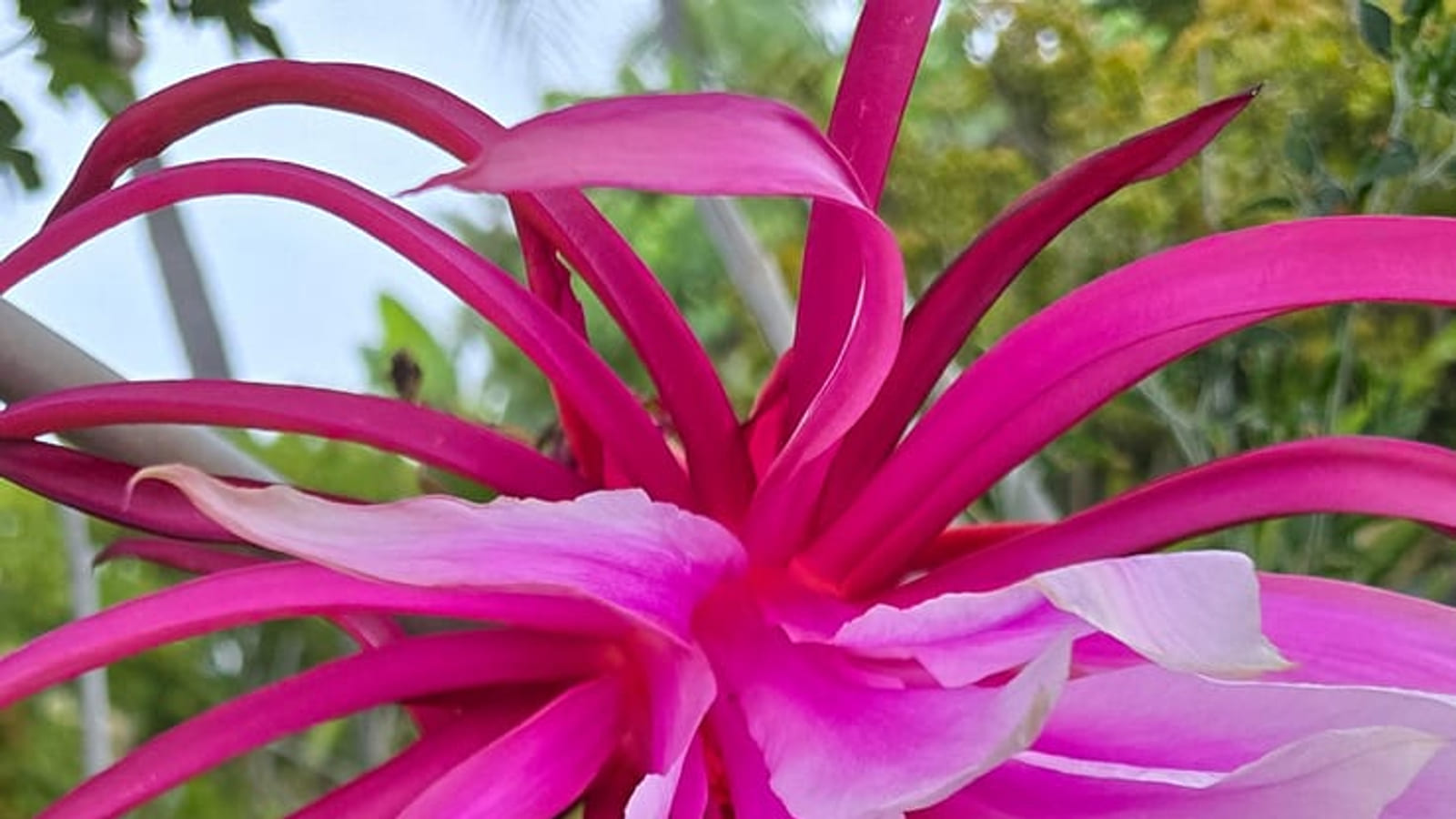
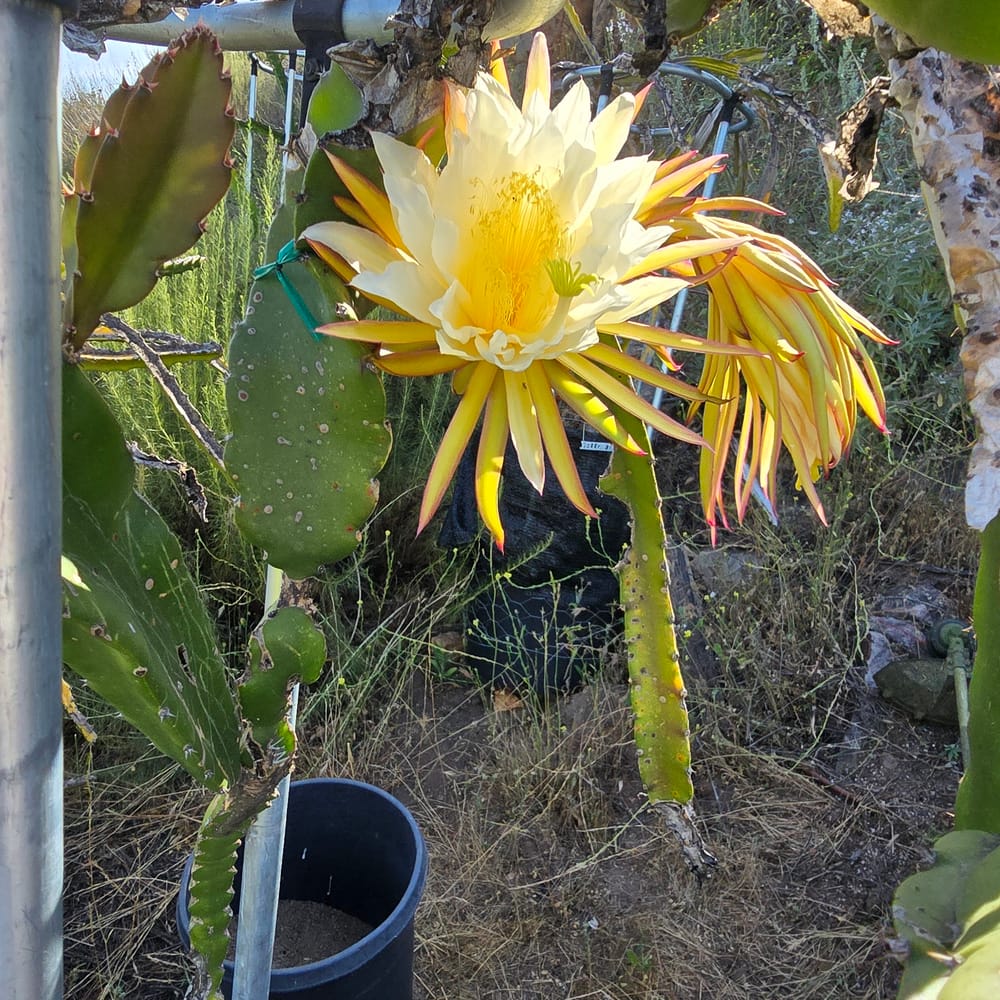
Sugar Dragon (also known as S8) is the single best dragon fruit variety for beginners. It is self-fertile, disease-resistant, heavy-producing, and one of the sweetest red-fleshed dragon fruits you can grow. At Sky Botanicals in Escondido, California (USDA zone 10a), where we curate a collection of 50+ dragon fruit varieties, Sugar Dragon is the cultivar we point new growers to first — and the one experienced collectors keep because it makes every other variety in their yard more productive.
If you only have room for one dragon fruit plant, this is the one. Here is why.
Overview
Sugar Dragon is a Selenicereus costaricensis hybrid developed by Paul Thomson, one of the most influential dragon fruit breeders in the United States. Thomson's selections out of Southern California form the backbone of the modern American dragon fruit industry, and S8 — the eighth numbered selection in his breeding program — is arguably his most popular release.
| Trait | Sugar Dragon (S8) |
|---|---|
| Scientific name | Selenicereus costaricensis hybrid |
| Breeder | Paul Thomson (Southern California) |
| Skin color | Bright red to pink |
| Flesh color | Magenta / red |
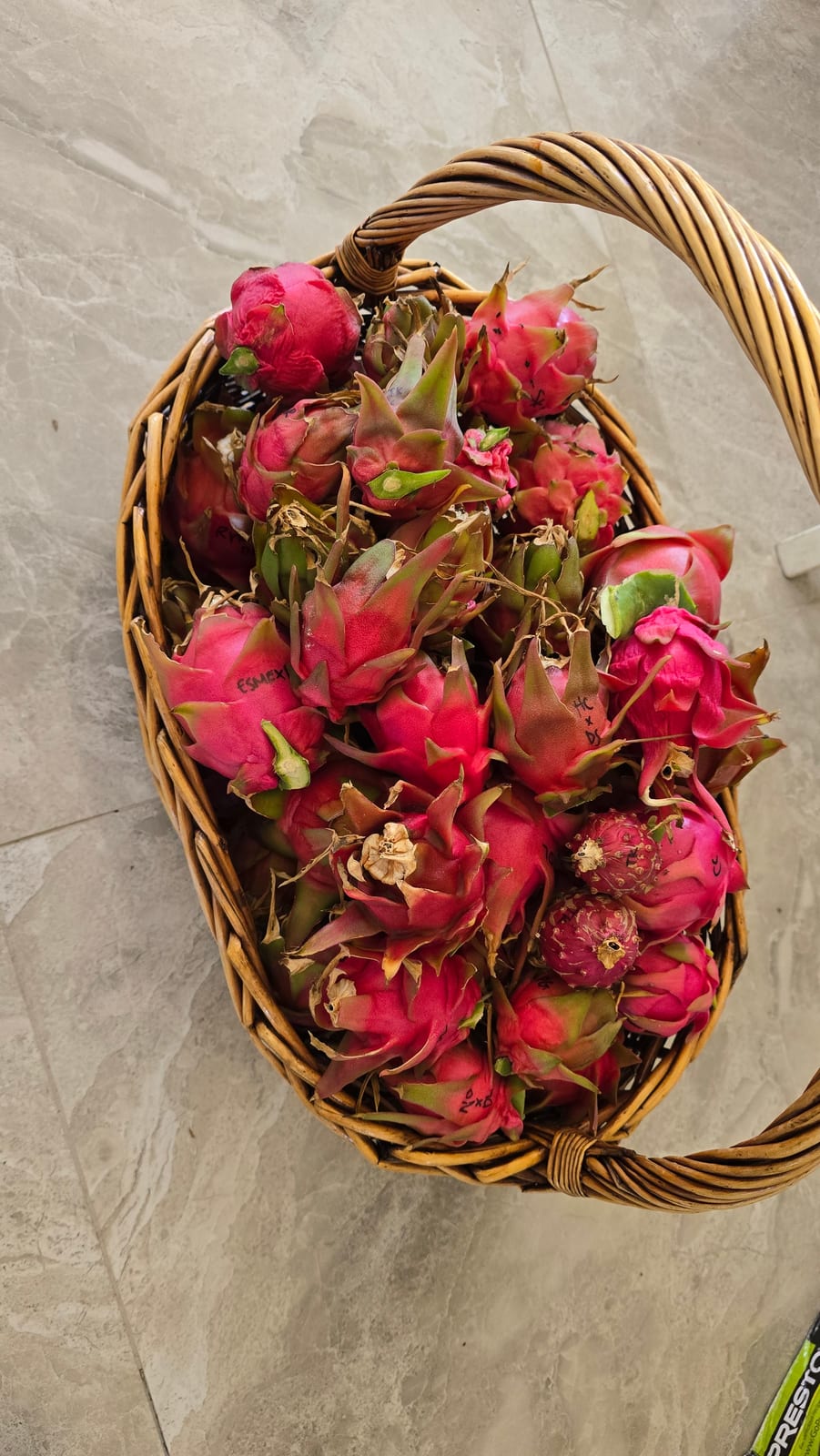
| Fruit size | 0.25-0.75 lb (small but prolific) |
| Brix (sweetness) | 18-20+ (can exceed 20 in good conditions) |
| Flavor | Very sweet, berry-like, clean finish |
| Self-fertile | Yes — fruits with a single plant |
| Pollinator role | Universal — pollen compatible with nearly every variety |
| Production | 20-30+ fruits per mature plant per season |
| Best USDA zone | 9b-11, excellent in 10a-10b |
The fruit is smaller than commercial giants like Physical Graffiti or Halley's Comet, but Sugar Dragon makes up for size with sheer numbers and flavor concentration. A mature, well-trellised plant can push 20 to 30+ fruits in a single season, often in multiple flushes from early summer into fall.
Why Sugar Dragon Is THE Beginner's Variety
There are roughly 50+ dragon fruit cultivars in serious U.S. collections, and almost every one has at least one reason a beginner might struggle with it — needs a pollen partner, prone to stem rot, slow to fruit, finicky about temperatures, or inconsistent year to year. Sugar Dragon has none of those problems.
1. It's self-fertile
This is the big one. Most dragon fruit varieties — including many red-fleshed ones — need a second, genetically different plant nearby to set fruit. If you only have one plant and it is not self-fertile, you will watch beautiful night-blooming flowers open and then drop without producing anything. Sugar Dragon fruits reliably from its own pollen, which means one plant in one pot or one corner of a yard can give you a full harvest.
2. It's disease-resistant
Sugar Dragon stems are noticeably tough. Compared with softer-stemmed Hylocereus undatus cultivars, S8 resists the stem canker, anthracnose, and rot issues that tend to hit beginners who over-water. It is also less prone to sunburn when adequately hardened off. That forgiveness matters when you are still learning.
3. It's a reliable, heavy producer
Some varieties fruit heavily one year and sulk the next. Sugar Dragon is metronomic. Once mature (usually 2-3 years from a rooted cutting), it sets flushes of flowers from late spring through early fall, often four to six waves in a long Southern California season.
4. It's forgiving
Skip a watering? Forget to fertilize for a month? Prune it at the wrong time? Sugar Dragon will still fruit. It is the most beginner-proof dragon fruit we grow.
5. It's sweet
Most importantly — the payoff is worth it. At 18-20+ Brix, Sugar Dragon is sweeter than almost any white-fleshed dragon fruit and competitive with specialty red varieties. A beginner growing a bland white cultivar can lose motivation. A beginner growing Sugar Dragon tastes what the fruit is actually supposed to taste like and gets hooked.
6. It's a universal pollinator
Covered in the dedicated section below — but worth flagging here because it means one Sugar Dragon plant doesn't just feed you, it multiplies the productivity of every other variety in your collection.
For a broader look at how Sugar Dragon compares to the full cultivar landscape, see our dragon fruit varieties guide.
Flavor Profile & Sweetness
Sugar Dragon did not get its name by accident. In side-by-side tastings at our Escondido farm, it consistently scores among the top three reds for raw sweetness, and it is one of the few cultivars that routinely cracks 20° Brix under good conditions.
To put that in context:
- White-flesh dragon fruit (e.g., Vietnamese White): typically 12-14° Brix
- Average red-flesh dragon fruit: 14-17° Brix
- Sugar Dragon: 18-20+° Brix
- Yellow dragon fruit (Ecuador Palora): 20-22° Brix
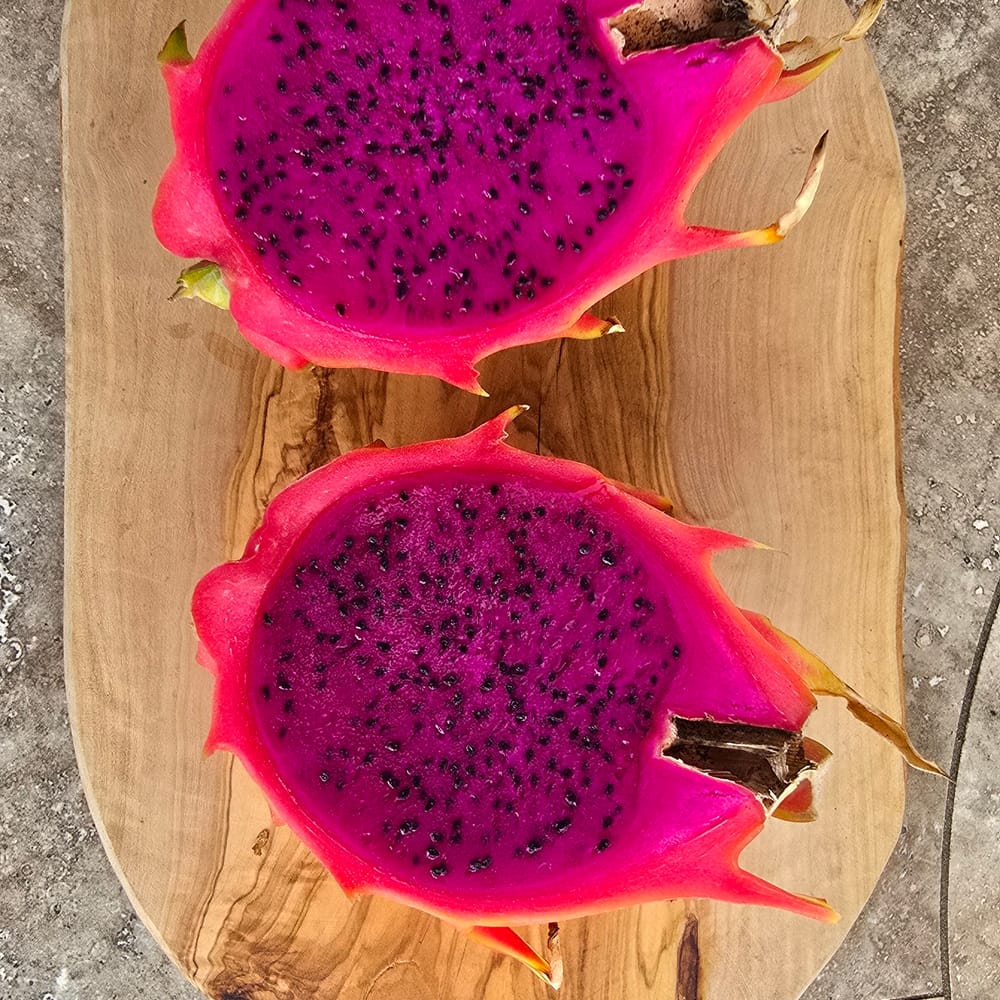
The flavor is very sweet with a berry-forward profile — many tasters describe it as raspberry or blackberry with a hint of kiwi — and a clean finish, meaning no lingering vegetal or earthy aftertaste that some red cultivars leave behind. The magenta flesh is smooth, juicy, and scoops cleanly out of the skin with a spoon.
Small fruit size actually helps flavor: sugars concentrate in a smaller water volume, which is a big reason S8 consistently out-sweets larger reds.
Growing Requirements
Sugar Dragon is forgiving, but it still rewards the basics. Here is the short list of what it wants.
Climate
USDA zones 9b through 11, with zone 10a-10b being ideal. At Sky Botanicals we grow it outdoors year-round in Escondido with only occasional frost blanket protection on the rare sub-40°F night. Below 32°F for extended periods, stems can be damaged; above 100°F, provide afternoon shade and consistent water.
Sunlight
Full sun to light afternoon shade. Unlike some red cultivars that scorch in inland sun, Sugar Dragon tolerates full sun once established — another beginner-friendly trait. Hardened-off plants handle 6-8 hours of direct sun without stem yellowing.
Soil
Fast-draining, slightly acidic soil (pH 5.5-6.5). A typical mix is 1/3 cactus soil, 1/3 compost, 1/3 pumice or perlite. Dragon fruit hates wet feet more than almost anything else.
Water
Deep but infrequent. In summer, once per week is usually plenty; in winter, every 2-3 weeks. Let the top 2-3 inches of soil dry between waterings.
Fertilizer
A balanced 6-6-6 or 10-10-10 every 6-8 weeks during the growing season. Add extra potassium (e.g., a bloom formula like 3-7-7) when flower buds start forming to support fruit fill and Brix.
Support
Sugar Dragon wants to climb. Use a sturdy 5-6 ft trellis post topped with a wheel or cross-arm. Train a single main stem up the post, then let it branch and cascade at the top.
Time to fruit
Rooted cuttings typically begin fruiting in year 2 and hit full production by year 3-4. If you start from a small unrooted cutting, add roughly 6 months.
For a full rundown on watering, pruning, and seasonal care, see our dragon fruit care guide.
As a Universal Pollinator
This is where Sugar Dragon earns its spot in every serious dragon fruit collection — even collections that already have dozens of varieties.
Many dragon fruit cultivars are self-sterile, meaning they need pollen from a genetically different plant to set fruit. The challenge is that not every variety's pollen works on every other variety — compatibility is cultivar-specific, and some pairings simply do not produce fruit.
Sugar Dragon's pollen is compatible with nearly every other dragon fruit variety we've tested. That includes self-sterile heavy-hitters like Physical Graffiti, American Beauty, Halley's Comet, Dark Star, and Purple Haze. One or two Sugar Dragon plants in a collection can dramatically boost fruit set across the entire yard.
Practically, this means:
- If you have a self-sterile variety that has never fruited, adding Sugar Dragon may fix it.
- If you hand-pollinate at night (standard practice for serious growers), Sugar Dragon is the pollen source you reach for first.
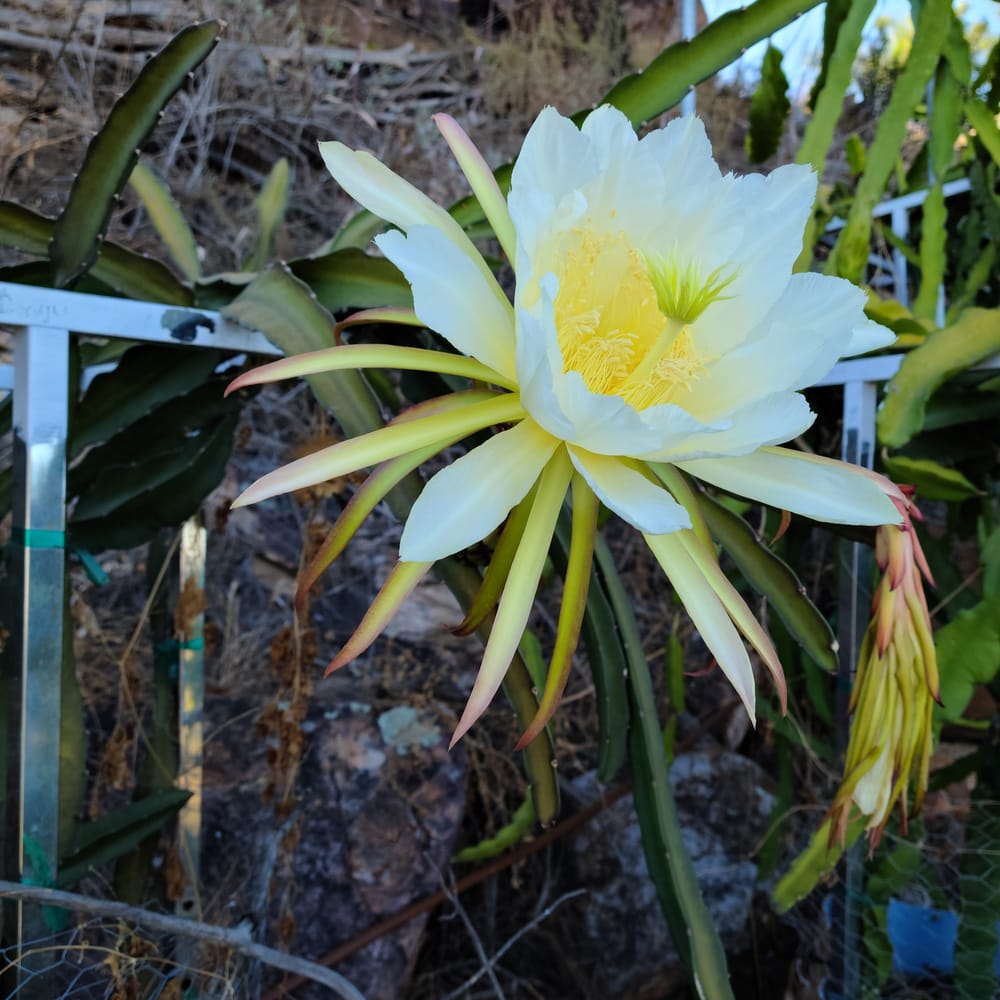
- Sugar Dragon flowers open around the same time window (9 PM - 2 AM in summer) as most other common cultivars, making it a natural bloom-time match.
For a deeper dive on pollination mechanics and which varieties need partners, see our dragon fruit FAQ.
Comparison to Other Red Varieties
Sugar Dragon is not the biggest red, nor is it the highest Brix on earth, but it is the most well-rounded — especially for beginners. Here is how it stacks up against three of the other most popular red-fleshed cultivars.
| Variety | Fruit size | Brix | Flavor | Self-fertile? | Beginner-friendly? |
|---|---|---|---|---|---|
| Sugar Dragon (S8) | 0.25-0.75 lb | 18-20+ | Very sweet, berry, clean | Yes | Yes — #1 pick |
| Zamorano | 0.5-1 lb | 17-19 | Sweet, grape-like, juicy | Partial (better with partner) | Medium |
| American Beauty | 0.75-1.25 lb | 15-18 | Earthy, berry, rich | Yes | Yes — good #2 pick |
| Physical Graffiti | 1-2 lb | 16-19 | Complex, kiwi-watermelon | No (needs pollinator) | No — needs partner |
The takeaway: Physical Graffiti produces larger, arguably more interesting fruit, but you need at least two plants and a willingness to hand-pollinate. American Beauty is the closest direct competitor — also self-fertile and beginner-friendly — but it is a step behind on sweetness. Zamorano is an excellent fruit but less forgiving for first-time growers. Sugar Dragon wins on the combined scorecard: sweet enough, productive enough, bulletproof enough, and self-sufficient enough to succeed as a standalone first plant.
How We Grow Sugar Dragon at Sky Botanicals
At our Escondido farm we keep multiple mature Sugar Dragon plants on 6-foot trellis posts spaced about 10 feet apart, in a south-facing row that gets full morning sun and partial afternoon shade from a neighboring avocado. The combination of zone 10a warmth, low humidity, and our fast-draining soil mix gives us consistent 18-20° Brix fruit with minimal intervention.
We use Sugar Dragon as the backbone pollen source for the rest of our 50+ variety collection. When hand-pollination season hits in May and June, the Sugar Dragon flowers are where we collect pollen first, brush onto self-sterile varieties, and see the biggest fruit-set bump.
FAQ
Is Sugar Dragon the same as S8?
Yes. S8 is the breeding-program designation Paul Thomson used for the selection that was later marketed as Sugar Dragon. You will see both names used interchangeably on nursery tags, and they refer to the same cultivar.
Can I grow Sugar Dragon with just one plant?
Yes. Sugar Dragon is self-fertile, so a single plant will set fruit on its own pollen. You do not need a second variety to get a harvest. That said, adding other varieties nearby often increases overall yield and adds flavor diversity to your collection.
How long until Sugar Dragon fruits?
A rooted cutting typically produces its first fruit in year 2, with full production (20-30+ fruits per season) by year 3-4. An unrooted cutting adds about 6 months to that timeline.
How sweet is Sugar Dragon compared to other dragon fruit?
Very sweet — 18-20+ Brix, which is well above the 12-14 Brix typical of white-fleshed varieties like Vietnamese White and competitive with the sweetest reds on the market. Only yellow dragon fruit (Ecuador Palora) reliably exceeds it on pure Brix.
Why is Sugar Dragon called a universal pollinator?
Its pollen is cross-compatible with nearly every other dragon fruit variety tested, including self-sterile cultivars like Physical Graffiti and Purple Haze. One Sugar Dragon plant can effectively pollinate an entire mixed collection, which is why serious growers almost always keep at least one.
Can I grow Sugar Dragon in a container?
Yes. Sugar Dragon does well in a 15-25 gallon container with a sturdy trellis. Use a fast-draining cactus/compost/pumice mix and water when the top 2-3 inches dry out. Containerized plants usually stay a bit smaller but still fruit reliably once mature.
Will Sugar Dragon survive a frost?
Brief dips to the low 30s°F are usually tolerated by mature plants, especially with a frost blanket. Prolonged exposure below 32°F will damage stems. In Escondido (zone 10a) we only cover on the coldest forecast nights, a few times per winter at most.
Where can I buy a Sugar Dragon plant?
Sugar Dragon is widely available in Southern California at specialty dragon fruit nurseries, including Sky Botanicals. Look for rooted plants with firm green stems, no soft spots, and visible growth nodes. Rooted plants establish much faster than raw cuttings for first-time growers.
The Bottom Line
If you are starting a dragon fruit collection and you can only buy one plant, buy Sugar Dragon. It is self-fertile so you do not need a partner, disease-resistant so beginner mistakes won't kill it, sweet enough at 18-20+ Brix to convert skeptics, and universally compatible so every future plant you add will benefit from its pollen. There is a reason it is the cultivar we recommend first at Sky Botanicals, and the one serious growers never remove from their collections — even after they have tried 50 others.
Ready to dig deeper? Start with our complete varieties guide, then read the care guide to make sure your first plant thrives. Questions? Our dragon fruit FAQ covers the 30 most common ones we hear from new growers.