Dragon Fruit Care Guide: Watering, Soil, Sunlight, and Pruning
Everything you need to grow healthy dragon fruit — specific schedules, soil recipes, and techniques from our Southern California farm.
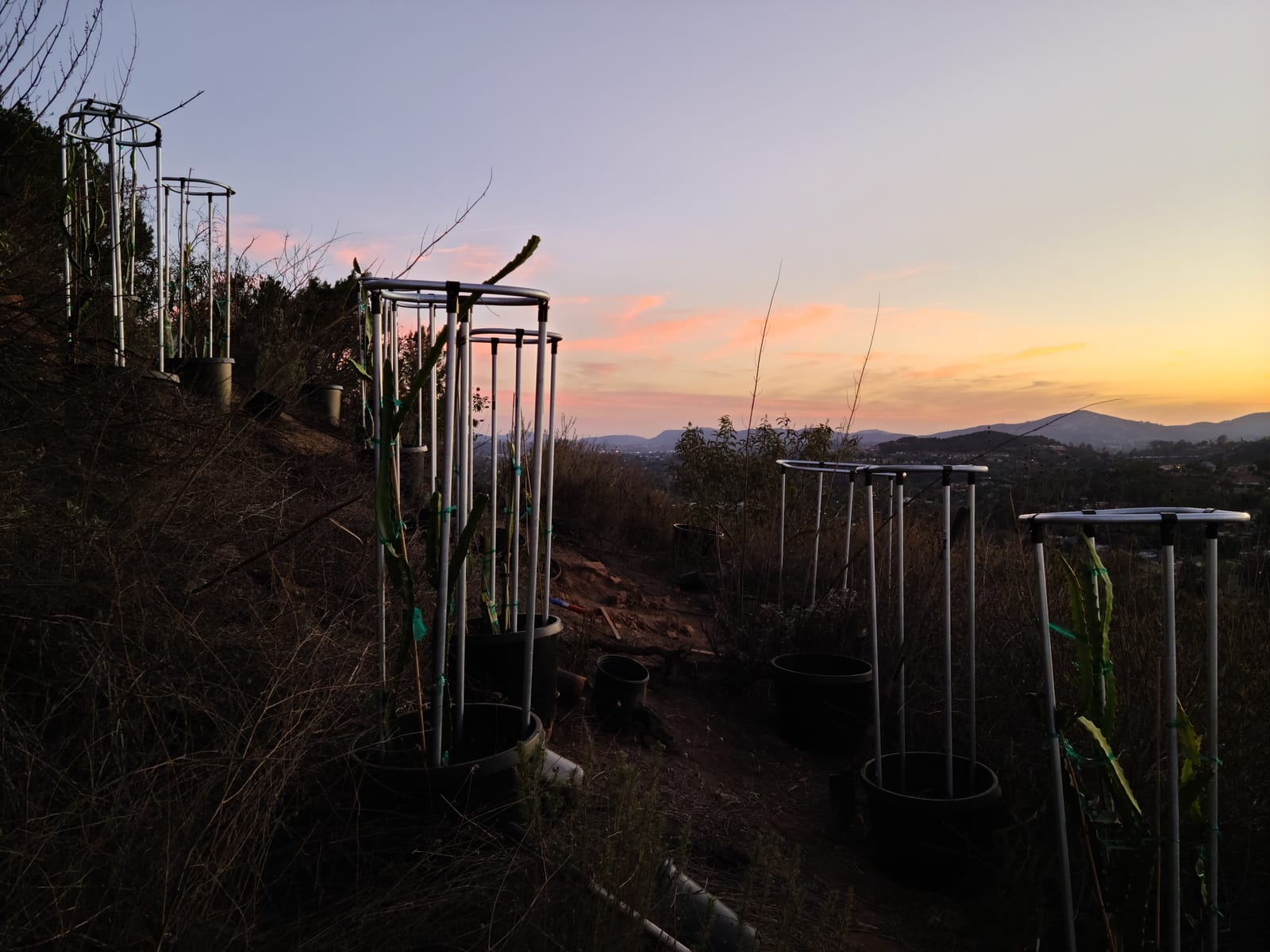
Dragon fruit is easier to grow than most people think, but it has specific needs that differ from both typical fruit trees and desert cacti. This guide covers every aspect of dragon fruit care with the exact numbers and schedules we use at Sky Botanicals, where we grow 50+ varieties in Escondido, Southern California (USDA zone 10a).
Soil: Get This Right First
The single most important factor in dragon fruit care is drainage. Dragon fruit is a tropical cactus — it needs more water than a desert cactus but will rot instantly in soggy soil.
The ideal soil mix
| Ingredient | Amount | Purpose |
|---|---|---|
| Potting soil | 40% | Nutrients and moisture retention |
| Perlite | 30% | Drainage and aeration |
| Coarse sand | 20% | Drainage and structure |
| Compost | 10% | Slow-release nutrients |
Target pH: 6.0-7.0 (slightly acidic to neutral)
The squeeze test: Grab a handful of your mix and squeeze it. Water should flow freely through your fingers. If the soil clumps into a ball, add more perlite until it doesn't.
Container growing: Use pots with multiple drainage holes. A 15-20 gallon container works well for a single plant. Elevate the pot on feet or a stand so water drains freely from the bottom.
In-ground planting: If your native soil is clay or doesn't drain well, build a raised mound 12-18 inches high and fill it with the mix above. Never plant dragon fruit in a low spot where water collects.
Watering: Less Than You Think
Dragon fruit needs consistent moisture during the growing season but absolutely cannot sit in waterlogged soil. More plants die from overwatering than underwatering.
Watering schedule
| Season | Frequency | Amount |
|---|---|---|
| Spring (Mar-May) | Every 7-10 days | Deep soak, 1-2 inches |
| Summer (Jun-Sep) | Every 5-7 days | Deep soak, 2 inches; more in heat waves |
| Fall (Oct-Nov) | Every 10-14 days | Moderate soak |
| Winter (Dec-Feb) | Every 3-4 weeks | Light watering only if no rain |
The finger test: Stick your finger 2 inches into the soil. If it's dry, water deeply. If it's still damp, wait. This simple test prevents most watering mistakes.
How to water: Soak the soil thoroughly until water runs out the drainage holes (containers) or the ground is saturated 6-8 inches deep (in-ground). Then don't water again until the soil dries. Deep, infrequent watering is always better than light, frequent watering.
Signs of overwatering
- Stems turning yellow or soft
- Mushy, black roots
- New stem segments dropping off
- Foul smell from the soil
Signs of underwatering
- Stems wilting or shriveling
- Yellowing at stem tips
- Hard, dry soil pulling away from pot edges
Sunlight: Morning Sun, Afternoon Shade
Dragon fruit needs plenty of light but can burn in intense afternoon heat — it's a rainforest cactus, not a desert one.
The ideal setup: 6-8 hours of direct sunlight per day, with morning sun and afternoon shade in hot climates.
| Climate | Best Exposure |
|---|---|
| Mild coastal (San Diego, LA) | Full sun to light afternoon shade |
| Hot inland (Escondido, Riverside, Phoenix) | Morning sun + afternoon shade or 30% shade cloth |
| Humid subtropical (Florida, Texas Gulf) | Full sun with good air circulation |
| Indoor growing | Full-spectrum grow lights, 12+ hours for blooming |
Sunburn protection: If temperatures regularly exceed 100°F, install 30% shade cloth over your plants. This blocks enough heat to prevent scald without reducing flower production.
Acclimating new plants: Never move a plant from shade directly into full sun. Over 2-3 weeks, gradually increase sun exposure — 2 hours the first few days, then 4, then 6, then full. Sudden exposure causes white or brown burn patches that permanently scar the stems.
Blooming trigger: Dragon fruit is photoperiodic — it needs 12+ hours of daylight to trigger flowering. In Southern California, this happens naturally from late spring through fall. Indoor growers need grow lights on a timer to simulate this.
Fertilizing: Feed the Growth Cycle
Dragon fruit is a heavy feeder during the growing season but needs different nutrients at different stages.
| When | What | NPK Ratio | Why |
|---|---|---|---|
| Early spring (March) | Balanced fertilizer | 16-16-16 or 20-20-20 | Kickstart growth after dormancy |
| Monthly Apr-Jun | Balanced fertilizer | 6-6-6 or 8-4-12 | Support stem growth |
| When buds appear | Switch to bloom formula | 2-10-10 or 0-10-10 | Phosphorus drives flowers and fruit |
| During fruiting (Jul-Oct) | Bloom formula | 2-10-10 | Continue supporting fruit development |
| Nov-Feb | Nothing | — | Plant is dormant; fertilizer causes weak growth |
Organic alternatives
- Compost tea: Monthly during growing season — gentle, well-rounded nutrition
- Fish emulsion: High nitrogen, great for spring growth flush
- Bone meal: High phosphorus, mix into soil when buds appear
- Worm castings: Top-dress 1-2 inches around the base in spring
The key switch: Most growers make the mistake of using the same fertilizer year-round. High nitrogen during blooming produces more stems but fewer flowers. Switch to high phosphorus (the middle number) as soon as you see flower buds forming.
Trellising: Build It Strong
Dragon fruit is a climbing cactus. Without a trellis, it sprawls on the ground and produces poorly. With proper support, the plant grows upward and drapes over the top, which is where most fruit forms.
The standard home setup
A single sturdy post, 5-6 feet above ground, with a support structure at the top for branches to drape over.
| Component | Specification |
|---|---|
| Post material | 4x4 pressure-treated wood, metal pipe, or concrete post |
| Post height | 5-6 feet above ground, buried 18-24 inches deep |
| Top support | 24-36 inch diameter ring, cross bars, or old bicycle wheel |
| Plant spacing | 6-10 feet between posts for multiple plants |
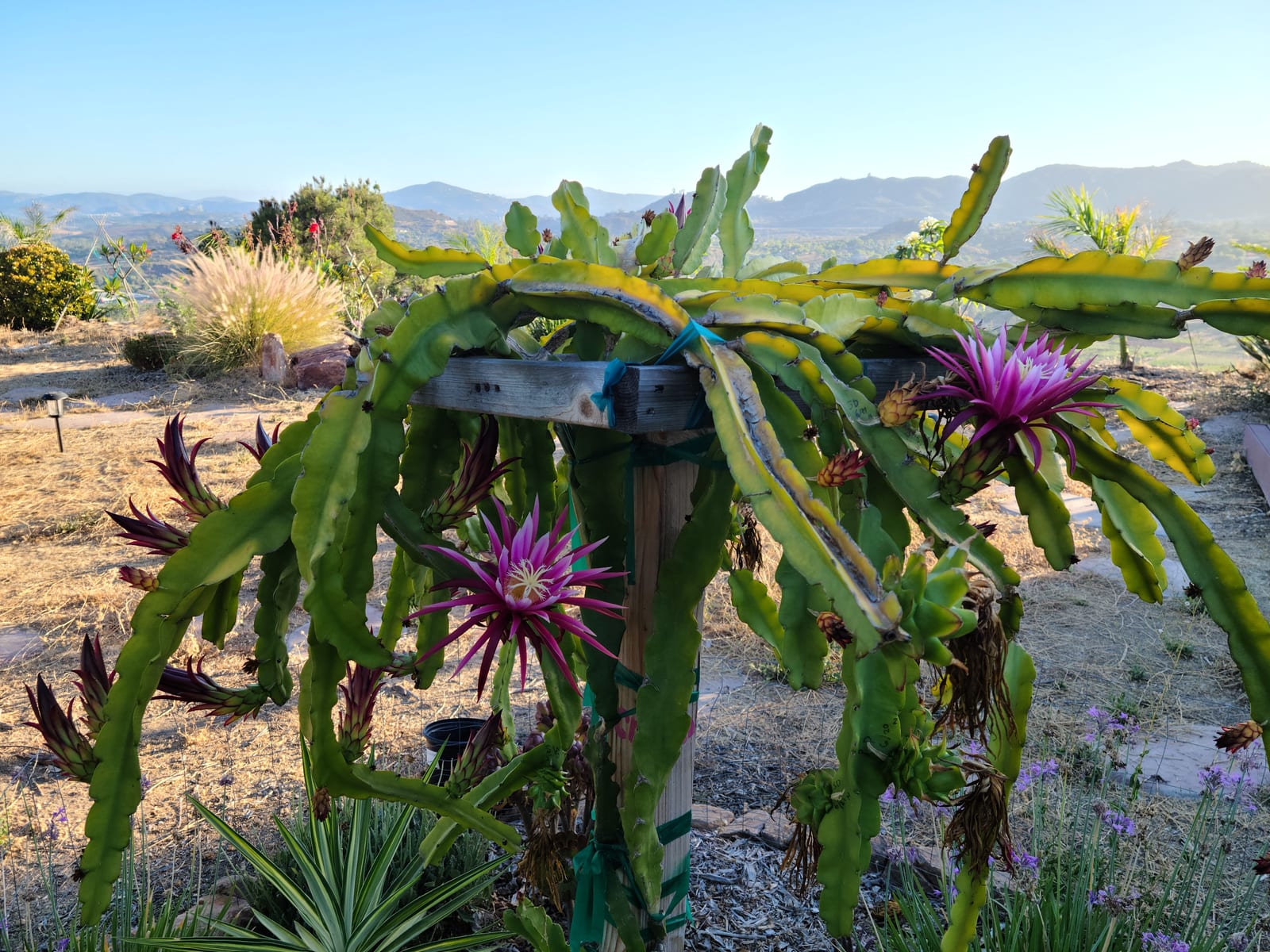
Why the top matters: Dragon fruit blooms and fruits primarily from the hanging tips that drape over the top of the trellis. The climbing section below rarely produces fruit. The top ring or cross gives more hanging surface area, which means more fruit.
Weight warning: A mature dragon fruit plant can weigh 100+ lbs. Don't underestimate this. Lightweight stakes and thin bamboo will collapse. Use a post you'd trust to hold a person.
DIY tip: A 6-foot metal T-post driven 2 feet into the ground with a repurposed bicycle wheel wired to the top makes an excellent low-cost trellis.
Pruning: Shape for Production
Pruning controls growth, improves fruit production, and prevents disease. Dragon fruit responds well to pruning — don't be afraid to cut.
When to prune
- Main pruning window: After the last harvest (late fall or winter)
- Light maintenance: Any time during the growing season as needed
- Young plants: Once per growing season to train shape
- Mature plants: 2-3 times per year
What to remove
- Dead or damaged stems — anything brown, mushy, or scarred
- Stems growing below the trellis top — these won't fruit and waste energy
- Interior congestion — open up the canopy for air circulation and light
- Weaker stems — keep darker green, thicker mature stems; remove lighter green thin ones
How to cut: Use clean, sharp pruning shears. Cut at a 45-degree angle so water runs off the cut instead of pooling (pooled water causes rot). Sterilize shears with rubbing alcohol between plants to prevent spreading disease.
Pro tip — cane tipping: Cutting the tip of a stem (removing the last 1-2 inches) triggers the plant to branch and produce more flowering points. This is the single most effective pruning technique for increasing fruit production. Do this in early spring before the bloom season starts.
Seasonal Care Calendar (Southern California, Zone 10a)
| Month | Water | Feed | Do |
|---|---|---|---|
| Jan-Feb | Minimal (only if dry) | None | Frost protection below 40°F; plan pruning |
| March | Resume weekly | First app (balanced 20-20-20) | Plant new cuttings; inspect for pest damage |
| Apr-May | 1-2x per week | Monthly balanced (6-6-6) | Major pruning; train growth on trellis |
| Jun-Jul | 2x per week; more in heat | Switch to bloom (2-10-10) | Hand-pollinate at night; shade cloth if 100°F+ |
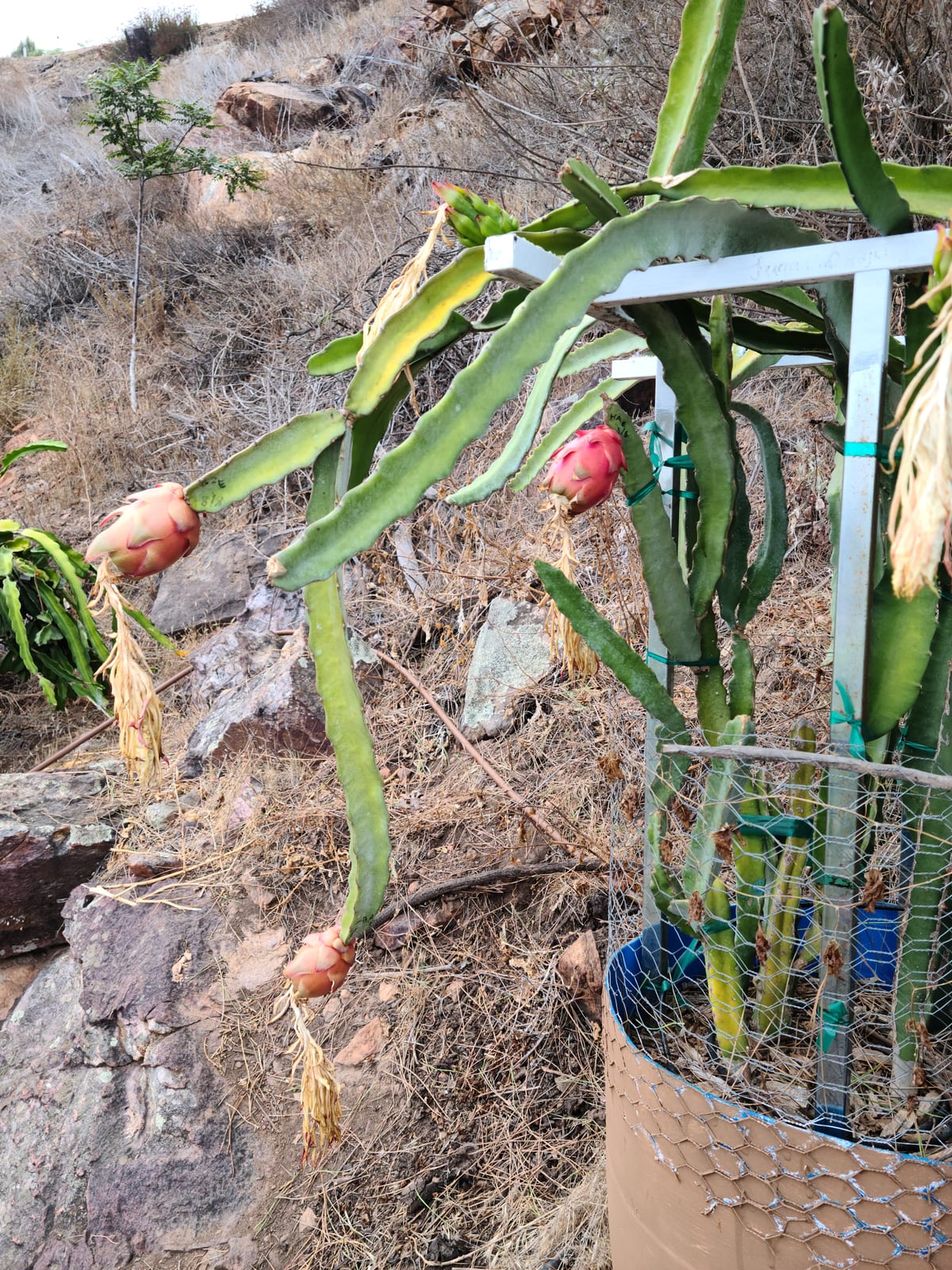
| Aug-Sep | 2x per week | Continue bloom formula | Peak harvest — pick when fins wither |
| Oct-Nov | Every 10-14 days | Last feed in October | Final harvests; cleanup pruning |
| December | Minimal | None | Rest period; frost protection as needed |
Quick Reference Card
| Parameter | Value |
|---|---|
| Soil pH | 6.0-7.0 |
| Soil mix | 40% potting soil, 30% perlite, 20% sand, 10% compost |
| Water (summer) | Deep soak every 5-7 days |
| Water (winter) | Every 3-4 weeks |
| Sunlight | 6-8 hours/day; morning sun preferred |
| Shade cloth | 30% when above 100°F |
| Ideal temperature | 65-85°F |
| Cold damage | Below 40°F |
| Frost kill | 32°F and below |
| Vegetative fertilizer | 16-16-16 or 20-20-20 |
| Bloom fertilizer | 2-10-10 or 0-10-10 |
| Fertilize frequency | Monthly, spring through fall |
| Trellis height | 5-6 feet above ground |
| Pruning | 1-3x per year; main window after last harvest |
| Days flower to fruit | 30-50 |
| Fruit season (SoCal) | June-November, peak Aug-Sep |
Frequently Asked Questions
How often should I water dragon fruit?
Every 5-7 days during summer, every 7-10 days in spring/fall, and every 3-4 weeks in winter. Always let the soil dry between waterings.
What is the best soil for dragon fruit?
A well-draining mix of 40% potting soil, 30% perlite, 20% coarse sand, and 10% compost, with a pH of 6.0-7.0.
Can dragon fruit grow in full sun?
Yes, but in hot climates (above 100°F) it benefits from afternoon shade or 30% shade cloth. Morning sun with afternoon shade is ideal.
When should I fertilize dragon fruit?
Monthly from March through October. Use balanced fertilizer (16-16-16) for growth, then switch to high-phosphorus (2-10-10) when flower buds appear.
How do I prune dragon fruit?
Cut at 45-degree angles with clean shears. Remove dead stems, growth below the trellis top, and interior congestion. Tip-cut stems in spring to trigger more blooms.