Dragon Fruit Varieties: Complete Guide to 50+ Cultivars
Detailed flavor profiles, sweetness ratings, pollination types, and growing tips for every major dragon fruit variety.
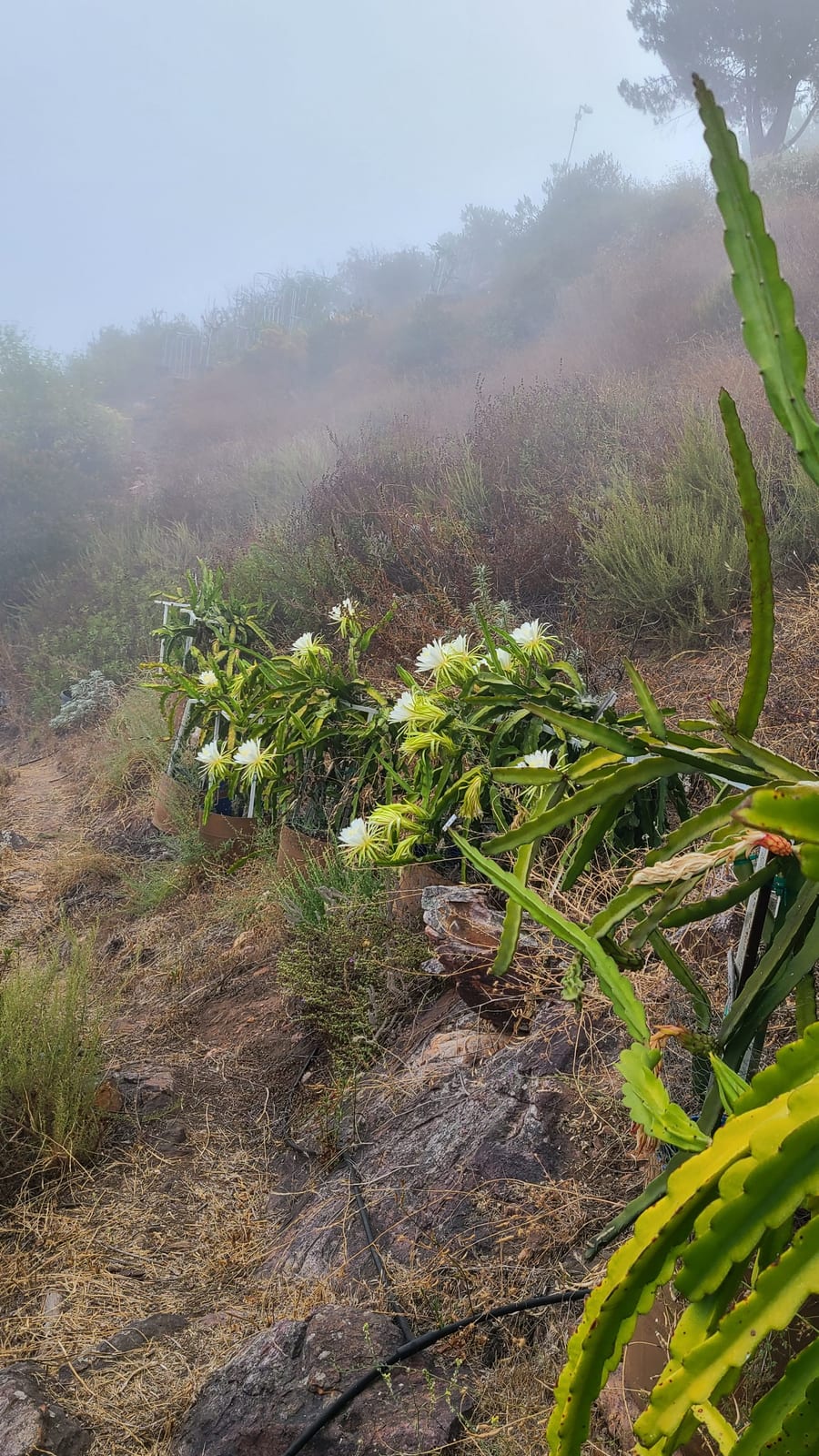
Dragon fruit (pitaya) comes in over 50 named cultivars spanning three main species, each with distinct flavors, colors, and growing characteristics. At Sky Botanicals, we grow and sell dozens of these varieties from our farm in Escondido, Southern California (USDA zone 10a). This guide covers every major cultivar with honest flavor notes, sweetness scores, and pollination requirements so you can pick the right varieties for your garden.
The Three Dragon Fruit Species
All commercial dragon fruit varieties come from three species (recently reclassified from Hylocereus to Selenicereus):
| Species | Skin | Flesh Color | Key Trait |
|---|---|---|---|
| S. undatus | Pink/Red | White | Most widely grown worldwide |
| S. costaricensis / polyrhizus | Pink/Red | Red, Purple, Magenta | Richest colors and flavors |
| S. megalanthus | Yellow (spiny) | White | Sweetest of all dragon fruit (Brix 20-24) |
Many named cultivars are hybrids between these species, which is why you see such diversity in flavor and color.
White-Fleshed Varieties
White-fleshed dragon fruit tends to be milder and more refreshing. These are the varieties most people picture when they think of dragon fruit.
| Variety | Avg Weight | Brix | Self-Fertile? | Flavor Notes |
|---|---|---|---|---|
| Vietnamese White | ~1 lb | Moderate | Yes | Mild, refreshing; excellent pollen donor |
| David Bowie | Medium | Moderate | No | Mild, classic pitaya flavor |
| Neitzel | Medium | Moderate | Yes | Sweet; breeding parent of Dark Star and Delight |
| Harpua | ~1 lb | Moderate | Yes | Semi-sweet, mild melon; snowy white pulp |
| Alice | 0.5-1 lb | Moderate | No | Semi-sweet; hot pink exterior |
| Seoul Kitchen | 0.7-1.5 lbs | Moderate | Yes | Smooth, creamy when chilled; large for a white variety |
| Connie Mayer | 0.5-0.75 lb | Moderate | No | Sweet coconut flavor; unusual green skin |
Standout pick: Seoul Kitchen is one of the largest white-fleshed varieties and tastes even better chilled. Connie Mayer is worth growing for its unusual coconut flavor and green skin.
Red and Magenta-Fleshed Varieties
Red-fleshed varieties are the most diverse group, ranging from berry-like sweetness to complex tropical flavors.
| Variety | Avg Weight | Brix | Self-Fertile? | Flavor Notes |
|---|---|---|---|---|
| Sugar Dragon (S8) | 0.25-0.75 lb | 18-20+ | Yes | Very sweet, berry-like; universal pollinator |
| Voodoo Child | 0.25-0.75 lb | 18-20+ | Yes | Sweet, berry-like; bright purplish-red flesh |
| Zamorano | ~0.75 lb | Moderate-high | Yes | Sweet crimson flesh; earliest to flower |
| Lisa | ~1 lb | 18-20+ | No | Strawberry flavor; compact growth for containers |
| Frankie's Red | Small | 21 | Yes | One of the highest Brix readings among red varieties |
| Makisupa | 1-1.25 lbs | 15 | Yes | Sweet with slight astringency; large fruit |
| Natural Mystic | Large | Moderate | Yes | Reliable self-fertile red |
| Robles Red | ~1 lb | 17-18 | Yes | Sweet-sour tropical kiwi; thick skin for shipping |
| Valdivia Roja | 0.5-0.75 lb | 18 | No | Sweet, firm flesh; excellent heat AND cold tolerance |
| Sin Espinas | ~1 lb | 16.5-17 | Yes | Good quality; nearly thornless branches |
| Bien Hoa Red | Medium | 18-19 | Yes | Sweet purple flesh; Vietnamese origin |
| Tricia | 1+ lb | Up to 20 | No | Sweet, no aftertaste |
| San Ignacio | 1.5-2 lbs | Moderate | Yes | One of the largest dragon fruit varieties |
| Delight | 0.75-1 lb | Moderate-high | Yes | Very sweet; highly productive |
Standout picks: Sugar Dragon is the single best variety for beginners — self-fertile, reliable, sweet, and produces pollen that works on almost every other variety. Frankie's Red hits Brix 21, making it one of the sweetest red-fleshed cultivars available.
Purple-Fleshed Varieties
Purple-fleshed varieties are the showstoppers. Their deep violet to magenta flesh makes them visually striking, and many have grape or berry flavor profiles.
| Variety | Avg Weight | Brix | Self-Fertile? | Flavor Notes |
|---|---|---|---|---|
| American Beauty | 0.5-1 lb | Moderate | Yes | Sweet, grape-like; fast grower; most popular purple |
| Cosmic Charlie | 0.75-1.25 lbs | ~18 | Yes | Grape/kiwi flavor; Neitzel x Rixford hybrid |
| Purple Haze | 1-2 lbs | 19 | No | Sweet grape; few seeds; one of the largest purples |
| Halley's Comet | 1-2 lbs | Moderate | Disputed | Sweet, hearty; tolerates full sun; very large fruit |
| Condor | 1-1.5 lbs | Moderate | Disputed | Great tasting; bright purple flesh |
| Dark Star | 0.75-1 lb | Moderate | No | Mild grape-like; reliable bloomer; best chilled |
| Physical Graffiti | Medium-large | Moderate | No | One of the best tasting; top producer |
| Rixford | 1-1.5 lbs | Moderate | No | Rich, complex; slow start but high producer |
| La Verne | 1-1.5 lbs | Moderate | No | Sweet, deep purple; fast growing |
| Shayna | 8-10 oz | 19 | Yes | Sweet; Condor x Vietnamese White hybrid |
| Edgar's Baby | 0.75-1 lb | 15-17 | Yes | Juicy fruit candy flavor; compact, fast growing |
| AX | Large | Moderate | No | Watermelon flavor; distinctive among dragon fruit |
Standout picks: American Beauty is the go-to purple variety — self-fertile, fast growing, and consistently good. Physical Graffiti is widely considered one of the best-tasting varieties period.
Yellow Dragon Fruit
Yellow dragon fruit (Selenicereus megalanthus) is in a league of its own. The fruit is smaller with spiny yellow skin, but the sweetness is unmatched.
| Variety | Avg Weight | Brix | Self-Fertile? | Flavor Notes |
|---|---|---|---|---|
| Ecuador Palora | 1-1.5 lbs | 20-24 | Yes | Lychee, pear, kiwi; the sweetest dragon fruit in existence |
| Yellow Dragon | 0.5-0.75 lb | 18-20 | Yes | Sweet, aromatic; longest fruiting season (~9 months) |
| Yellow Thai | Medium | 18.5-20+ | Yes | Pink lemonade flavor; hybrid of S. megalanthus x S. undatus |
Key differences from red/pink types: Smaller fruit, spiny skin, white flesh only, significantly sweeter (Brix 18-24 vs 15-19 for most red types), longer fruiting season (September through May), and all commercially available yellows are self-fertile.
Best Varieties by Goal
| Your Goal | Top Picks | Why |
|---|---|---|
| Sweetest fruit | Ecuador Palora, Frankie's Red, Purple Haze | Brix scores of 20-24, 21, and 19 respectively |
| Beginner-friendly | Sugar Dragon, Zamorano, American Beauty | Self-fertile, forgiving, reliable producers |
| Largest fruit | San Ignacio, Halley's Comet, Purple Haze | Fruit up to 1.5-2 lbs |
| Container growing | Lisa | Compact growth habit |
| Cold/heat tolerance | Valdivia Roja, Physical Graffiti | Handle temperature extremes better than most |
| Best pollinator | Sugar Dragon, Vietnamese White | Self-fertile with abundant pollen production |
| Unique flavors | AX (watermelon), Yellow Thai (pink lemonade), Connie Mayer (coconut) | Standout flavor profiles |
| Nearly thornless | Sin Espinas | Spanish for "without thorns" |
Pollination Quick Reference
Understanding pollination is critical. Self-fertile varieties can fruit on their own, but even self-fertile plants produce larger fruit with hand pollination.
Self-Fertile (no second plant needed)
Sugar Dragon, American Beauty, Cosmic Charlie, Voodoo Child, Natural Mystic, Zamorano, Delight, Harpua, Neitzel, Vietnamese White, Vietnamese Red, Seoul Kitchen, Sin Espinas, Bien Hoa Red, Robles Red, Makisupa, Frankie's Red, San Ignacio, Shayna, Edgar's Baby, Ecuador Palora, Yellow Dragon, Yellow Thai
Requires Cross-Pollination
Lisa, Rixford, Dark Star, Purple Haze, Halley's Comet, La Verne, Physical Graffiti, AX, Connie Mayer, Alice, David Bowie, Tricia, Red Jaina, Valdivia Roja
Pro tip: If you grow any self-sterile varieties, plant Sugar Dragon or Vietnamese White nearby. Both are strong pollen producers compatible with most other cultivars.
Fun Fact: Music-Inspired Names
Many dragon fruit cultivars are named after songs and musicians: David Bowie, Cosmic Charlie (Grateful Dead), Voodoo Child (Jimi Hendrix), Physical Graffiti (Led Zeppelin), Dark Star (Grateful Dead), Halley's Comet (Phish), Natural Mystic (Bob Marley), and Purple Haze (Jimi Hendrix). This tradition started among Southern California growers and has stuck.
Frequently Asked Questions
What is the sweetest dragon fruit variety?
Ecuador Palora (yellow dragon fruit) is the sweetest, with Brix scores consistently reaching 20-24. Among red-fleshed varieties, Frankie's Red hits Brix 21.
What dragon fruit variety is best for beginners?
Sugar Dragon (S8) is the best beginner variety. It is self-fertile, produces fruit reliably, has good disease resistance, and works as a universal pollinator for other varieties in your collection.
Do I need two dragon fruit plants to get fruit?
Only if you grow self-sterile varieties. Self-fertile varieties like Sugar Dragon, American Beauty, and Zamorano can fruit with a single plant. However, even self-fertile plants produce larger fruit with hand pollination.
What is the difference between white, red, and yellow dragon fruit?
White-fleshed varieties (from S. undatus) are mild and refreshing. Red and purple varieties (from S. costaricensis/polyrhizus) have richer, berry-like flavors. Yellow varieties (from S. megalanthus) have spiny yellow skin, white flesh, and are significantly sweeter than all other types.
How many varieties does Sky Botanicals carry?
We grow and sell 50+ dragon fruit cultivars from our farm in Escondido, Southern California, including rare varieties you won't find at most nurseries.
What dragon fruit grows the largest fruit?
San Ignacio produces fruit up to 2 lbs, followed by Halley's Comet and Purple Haze which can also reach 1.5-2 lbs.
Can I grow dragon fruit in a container?
Yes. Lisa is the best variety for container growing due to its compact growth habit. Most other varieties can also be container-grown with a sturdy trellis, though they'll produce smaller fruit than in-ground plants.