When Does Dragon Fruit Bloom? Timing and Night Steps
Dragon fruit usually blooms from late spring through early fall, opens at night for one short pollination window, and rewards growers who know the signs before dusk.
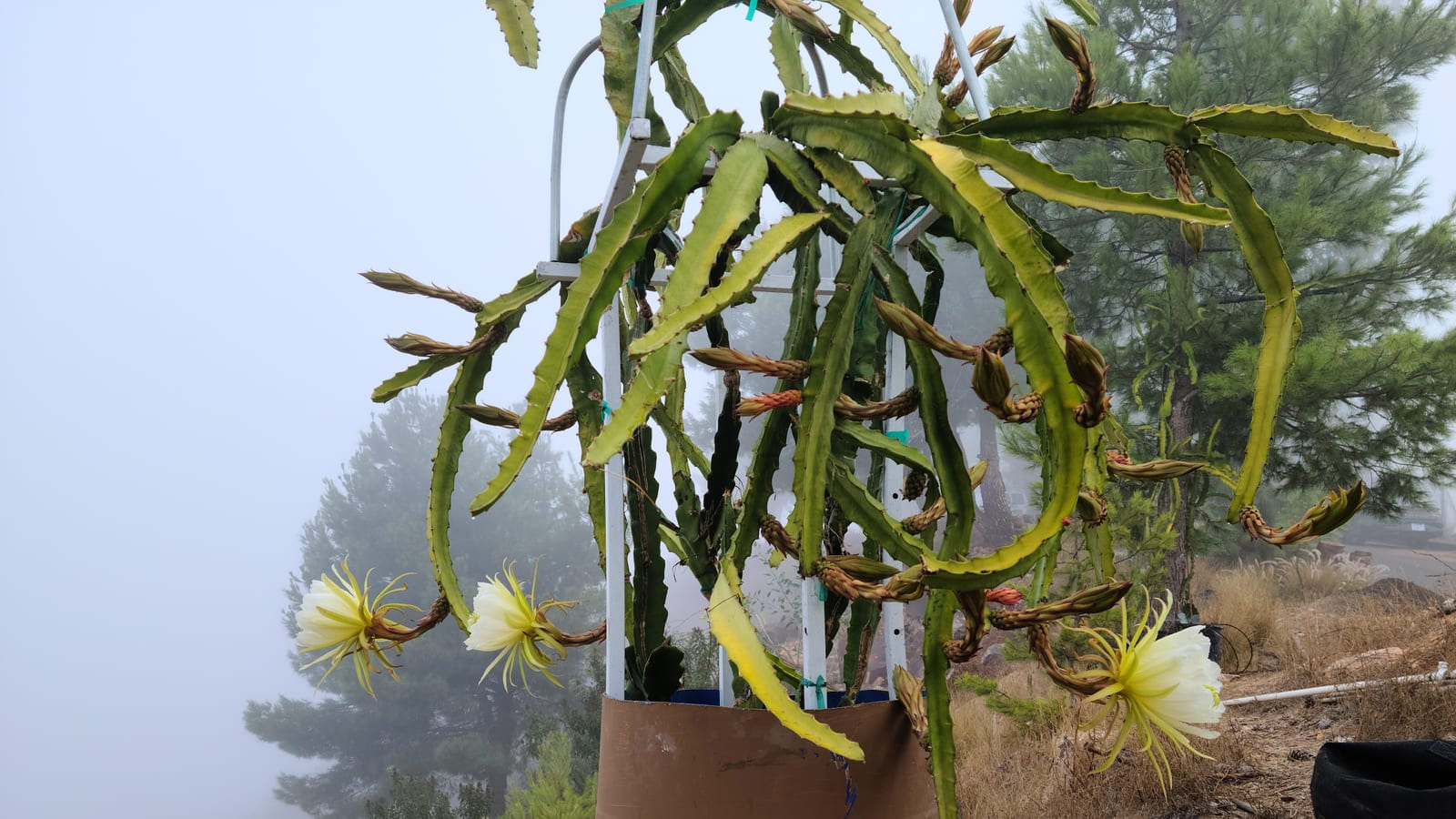
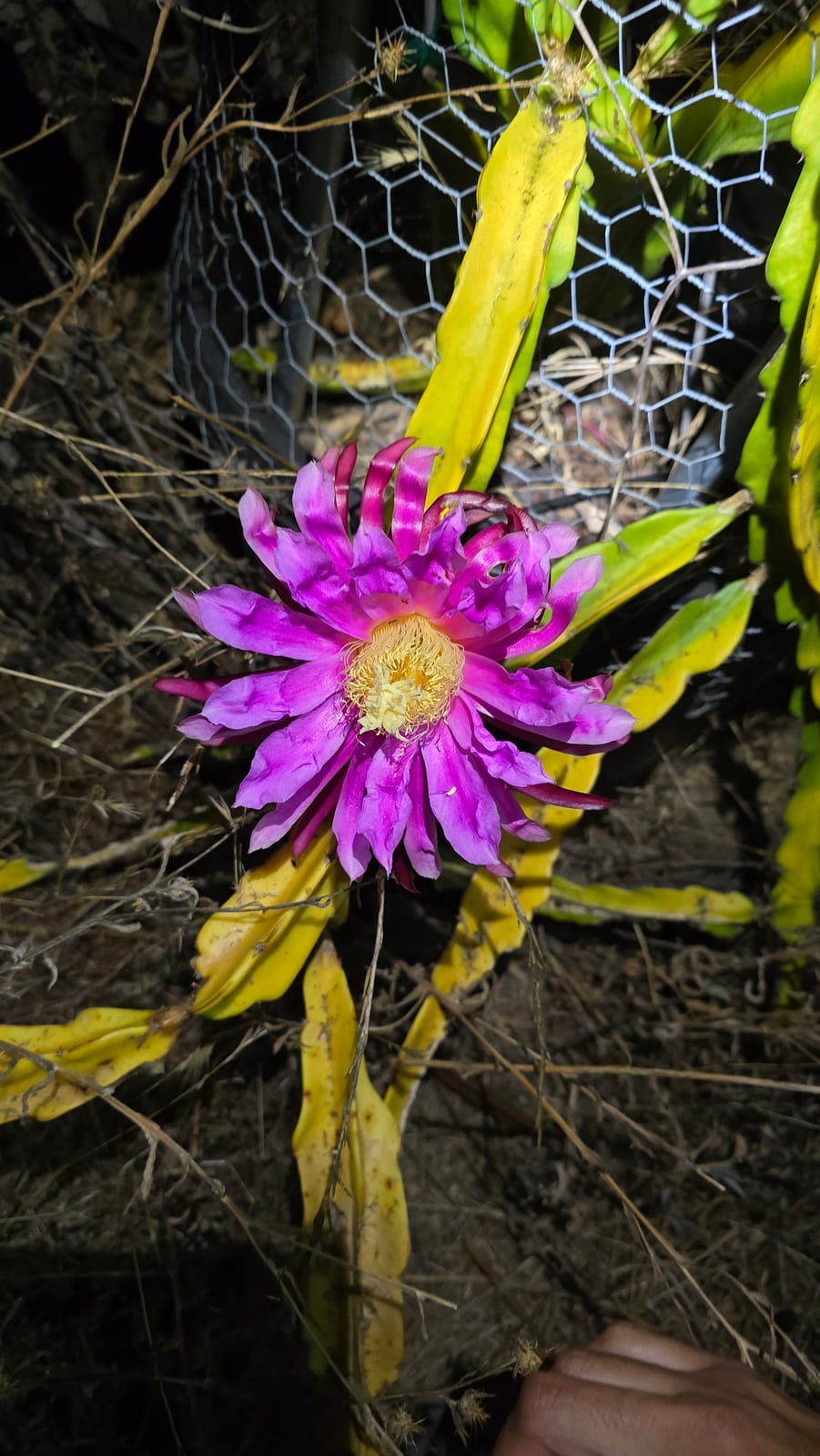
Dragon fruit usually blooms from late spring through early fall, with many warm-climate plants entering their main flower cycle in early summer and continuing in flushes through summer into fall. The flowers open at night, often around dusk to the 7 to 9 p.m. range, stay viable for only one night, and may remain open into early or mid-morning, which means your best job that night is simple, confirm the flower is fully open, check whether the variety needs cross-pollination, and hand-pollinate immediately if fruit set matters.
That timing is consistent across several sources. Gardening Know How places the bloom season from early summer through mid-autumn. Specialty Produce describes flower buds as available from late spring through early fall and says a plant may cycle through as many as seven flushes of buds in one season. UF/IFAS confirms the flowers are nocturnal and can be hand-pollinated during the night and early morning hours. Zenyr Garden, a grower-style source, places bloom opening around 7 to 9 p.m., while Specialty Produce says the entire flower life is only around eight hours, which is exactly why people keep missing it.
At Sky Botanicals in Escondido, Southern California, USDA zone 10a, we grow 50+ varieties, and bloom season is not a decorative moment. It is the highest-leverage part of the whole fruiting cycle. If you know when buds appear, how quickly they develop, and what to do the night the flower opens, you can turn a beautiful bloom into fruit instead of watching it collapse unused the next morning.
Quick answer table: dragon fruit bloom timing
| Stage | What happens | Typical timing | What you should do |
|---|---|---|---|
| Active warm-season growth | Plant builds energy and stems | Best around 65°F to 77°F | Keep light, roots, and nutrition balanced |
| Bud initiation | Small pointed buds appear on stem margins | Late spring to summer | Do not overprune or overfeed nitrogen |
| Bud development | Buds enlarge and elongate | Often about 30 days, sometimes longer | Keep moisture even and inspect daily |
| Flower opening | Bloom opens after dusk | Often around 7 to 9 p.m. | Prepare to pollinate that night |
| Pollination window | Pollen transfer can succeed | Night through early morning | Hand-pollinate if variety is self-sterile or uncertain |
| Flower closes | Bloom collapses by next day | About one night, often 8 hours of prime bloom | Check set over the next several days |
What season does dragon fruit bloom?
For most outdoor growers in warm climates, dragon fruit bloom season runs from late spring into early fall. Gardening Know How summarizes the season as early summer through mid-autumn. Specialty Produce places flower-bud availability from late spring through early fall, which fits what many Southern California growers see in practice. In Escondido, we usually tell growers to watch hardest from May through September, then treat any later bloom as a bonus wave rather than the core season.
That season also lines up with the plant's climate preferences. UF/IFAS and the University of Guam both point to best active growth around 65°F to 77°F. Dragon fruit can tolerate warmer weather under 100°F if water and root conditions are good, but the main point is that blooming follows warm-season momentum, not winter hope. If your plant sits outside and looks quiet in January, that is normal.
How many bloom flushes can a dragon fruit plant have?
Dragon fruit does not always flower just once. Specialty Produce notes that each plant may cycle through as many as seven flushes of buds in one season. That is useful because many home growers assume a missed flower means the year is ruined. It usually does not. A healthy mature plant can give you several opportunities, especially if the canopy is balanced and the weather stays favorable.
The exact number depends on variety, maturity, nutrition, and local weather. Vigorous productive cultivars often throw more repeat opportunities than weak or stressed plants. Still, the important practical lesson is that bloom is a season, not one dramatic night.
| Bloom pattern | What it means | Grower takeaway |
|---|---|---|
| One small flush | Young or lightly stressed plant | Do not overreact, improve fundamentals |
| Several flushes | Healthy established plant | Stay ready for repeated bloom nights |
| No flushes | Usually maturity, light, or stress issue | Troubleshoot before chasing bloom boosters |
| Many buds, poor set | Pollination problem | Review variety compatibility and hand pollination |
What does a dragon fruit bud look like before it blooms?
The first sign is usually a small pointed swelling along the edge of a stem segment, often at a hanging margin where light exposure is strong. The bud starts compact and can be easy to confuse with new vegetative growth if you are not watching closely. As it matures, the bud elongates, the bracts become more obvious, and the flower begins to look like a tapered green torch.
Specialty Produce describes unopened dragon fruit flower buds as starting about grape-sized, then expanding up to 27 centimeters long before the flower opens. Plant Care Today describes the mature pre-bloom bud as reaching up to 10 inches. Those are good visual references for growers who keep wondering whether they are seeing a real bud or just another branch. A genuine flower bud becomes noticeably heavier, thicker, and more directional than ordinary vegetative growth.
How long does a bud take to reach bloom?
There is some variation here, but the useful number is that bud development is usually measured in weeks, not days. Specialty Produce says it takes approximately 30 days for the flower buds to develop into blossoms, though some cases may stretch much longer. Zenyr Garden documents a visible 12-day-old bud stage, which helps show how gradually the process builds.
This matters because many growers ignore their plants for three weeks, then suddenly notice a giant flower and realize they missed the setup window. If you inspect your hanging stems every few days during bloom season, the whole process becomes much easier to manage.
Practical signs bloom night is close
- The bud length increases quickly over several days
- The outer bracts loosen and spread a bit
- The bud points outward and droops with more weight
- The tip looks fuller and less tightly sealed
- You can tell by late afternoon that it looks ready to open after dark
What time do dragon fruit flowers open?
Dragon fruit flowers are nocturnal. UF/IFAS says flowers open at night and can be hand-pollinated during the night and early morning hours. Zenyr Garden narrows that down further by placing bloom opening around 7 to 9 p.m. Specialty Produce adds that the total bloom life is only about eight hours. Plant Care Today says flowers open at dusk and stay open until around midnight, though in many gardens they remain usable into early morning.
The practical rule is this, do not wait until breakfast to start caring. If the variety is self-sterile or uncertain, the high-value work is done that same night. This is exactly why our night pollination guide exists.
What should you do the night your dragon fruit blooms?
Your job depends on whether the variety is self-fertile, self-sterile, or uncertain. If you know the variety self-sets reliably, you can mostly enjoy the flower and inspect it again in the morning. If the variety is self-sterile or you are not sure, hand-pollinate that night using fresh pollen from a compatible flower or known pollinator variety. UF/IFAS specifically says growers can collect pollen or whole stamens from one flower and apply them to the stigma of another flower during the night or early morning.
Night-bloom checklist
| Step | What to do | Why it matters |
|---|---|---|
| 1 | Confirm the flower is fully open | Open flowers release usable pollen |
| 2 | Check the variety's pollination status | Not all cultivars self-set well |
| 3 | Collect fresh pollen with a brush, swab, or whole stamen | Fresh pollen works better than guessing tomorrow |
| 4 | Dust the central stigma thoroughly | Good coverage improves set and fruit size |
| 5 | Repeat at dawn if the bloom still looks fresh | A second pass can help on valuable flowers |
| 6 | Label the cross if you track varieties | Useful for serious collectors and seed work |
If you only have one plant and do not know whether it is self-fertile, use that night to learn what you can. Some of the best beginner helpers are listed in our pollination guide, including Sugar Dragon, Vietnamese White, American Beauty, and Robles Red as practical self-fertile references.
Which varieties usually bloom and set most easily?
While bloom timing depends on care and climate, pollination success varies strongly by variety. In our published pollination work, varieties commonly treated as self-fertile include Sugar Dragon, Vietnamese White, American Beauty, and Robles Red. Varieties commonly treated as self-sterile or uncertain include Purple Haze, Lisa, Dark Star, and Physical Graffiti. That distinction matters because a dramatic bloom on a self-sterile plant is not a promise of fruit.
For buyers planning a one-plant setup, we usually recommend starting with a dependable self-fertile type rather than a collector variety that needs a partner. That is one reason our beginner variety guide gives so much weight to forgiveness instead of just flavor hype.
| Variety | General pollination reputation | Why it matters on bloom night |
|---|---|---|
| Sugar Dragon (S8) | Self-fertile | Good solo option and useful pollen source |
| Vietnamese White | Usually self-fertile | Often a reliable starter and helper |
| American Beauty | Self-fertile | Easy for small gardens |
| Robles Red | Self-fertile | Can still benefit from hand pollination |
| Purple Haze | Usually self-sterile | Have partner pollen ready |
| Lisa | Self-sterile | Do not rely on solo blooming |
| Physical Graffiti | Often cross-pollinated | Mixed planting is safer |
What weather helps bloom timing and success?
Warm, stable conditions help. UF/IFAS and the University of Guam both support the 65°F to 77°F range as the best growth window. UF/IFAS also says plants tolerate heat as long as temperatures do not stay over 100°F for too long. That does not mean flowers cannot open during hot weather. It means bloom and pollination quality are generally better when the plant is not under severe heat or cold stress.
In inland Southern California, heat spikes can shorten your margin for error. On hot evenings, pollinate earlier in the opening window. In cooler marine-influenced areas, flowers may stay fresh slightly longer into morning. Either way, healthy roots and even moisture matter more than chasing a perfect number.
How can you tell whether pollination worked?

After the flower closes, you usually need a few days to know whether the ovary behind the bloom is swelling or collapsing. A successful flower generally leaves behind a firm developing fruit base that starts enlarging rather than yellowing and dropping. An unsuccessful flower often shrivels, softens, or aborts soon after the bloom fades.
Do not judge too early the next morning. The flower itself will look spent, and that is normal. What matters is what the base does over the next several days. If you are still learning the full fruiting sequence, our harvest guide picks up where this article leaves off.
Common mistakes people make during bloom season
- Expecting blooms in winter or too early in spring
- Missing the bud stage because they do not inspect the canopy
- Waiting until midday to think about pollination
- Assuming every variety self-pollinates
- Overpruning right before buds or bloom
- Pushing too much nitrogen instead of balanced warm-season growth
- Ignoring light quality and wondering why a shaded plant stays sterile
Most of these are preventable. The plant usually gives you enough warning if you know where to look and when to care.
How we handle bloom season at Sky Botanicals
At Sky Botanicals, bloom season is organized around readiness. We keep the canopies open enough to inspect, we know which varieties are likely to need partner pollen, and we treat warm-season evenings as part of fruit production, not just garden aesthetics. Because we grow 50+ varieties in Escondido, zone 10a, we also pay attention to overlap. A plant collection with staggered but overlapping bloom cycles is much easier to manage than a random assortment of isolated collector plants.
That is the real difference between seeing flowers and harvesting fruit. Bloom timing is only half the story. The other half is being ready to use the window.
FAQ
What month does dragon fruit bloom?
In warm climates, dragon fruit commonly begins blooming in late spring or early summer and can continue in flushes through summer into early fall.
How long does a dragon fruit flower last?
Only one night in prime condition. Specialty Produce estimates the flower life at about eight hours, though some blooms remain open into early or mid-morning.
What time do dragon fruit flowers open?
They open after dusk. Grower observations commonly place opening around 7 to 9 p.m., with pollination possible through the night and early morning.
How long does it take for a bud to open?
Bud development usually takes weeks. A common grower reference is about 30 days from visible bud development to bloom, though timing varies by plant and weather.
Do I need to hand-pollinate dragon fruit the same night it blooms?
If the variety is self-sterile or uncertain, yes, that night is the safest time. Fresh pollen and a fully open flower give you the best odds.
Why did my dragon fruit bloom but not fruit?
The most common reasons are self-incompatibility, weak pollen transfer, or stress during the bloom window.
Can a dragon fruit plant bloom more than once in a season?
Yes. Healthy plants can produce multiple flushes, and some sources describe up to seven bloom waves in one season.
Dragon fruit bloom season rewards timing more than luck. Watch for buds from late spring onward, assume the real work happens after dusk, and be ready to pollinate while the flower is open. That is how a one-night bloom becomes a real harvest.