Halley's Comet Dragon Fruit Guide for Growers
Halley's Comet is a strong, partly self-fertile dragon fruit variety with 1.0-2.0 pound fruit, about 16 Brix sweetness, and good full-sun tolerance, making it a smart pick for warm-climate growers in Escondido, Southern California, USDA zone 10a.
What Halley's Comet is best for
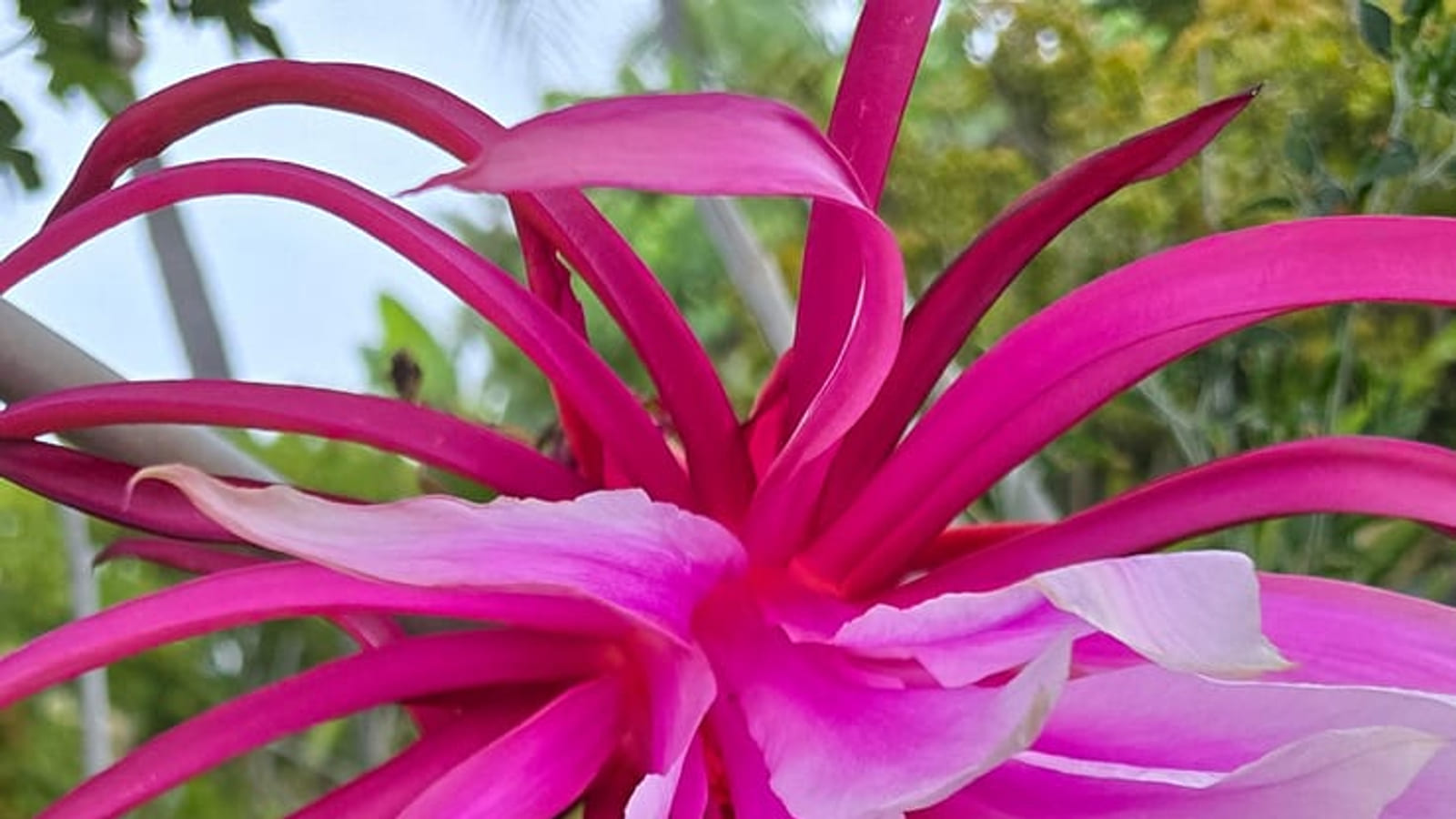
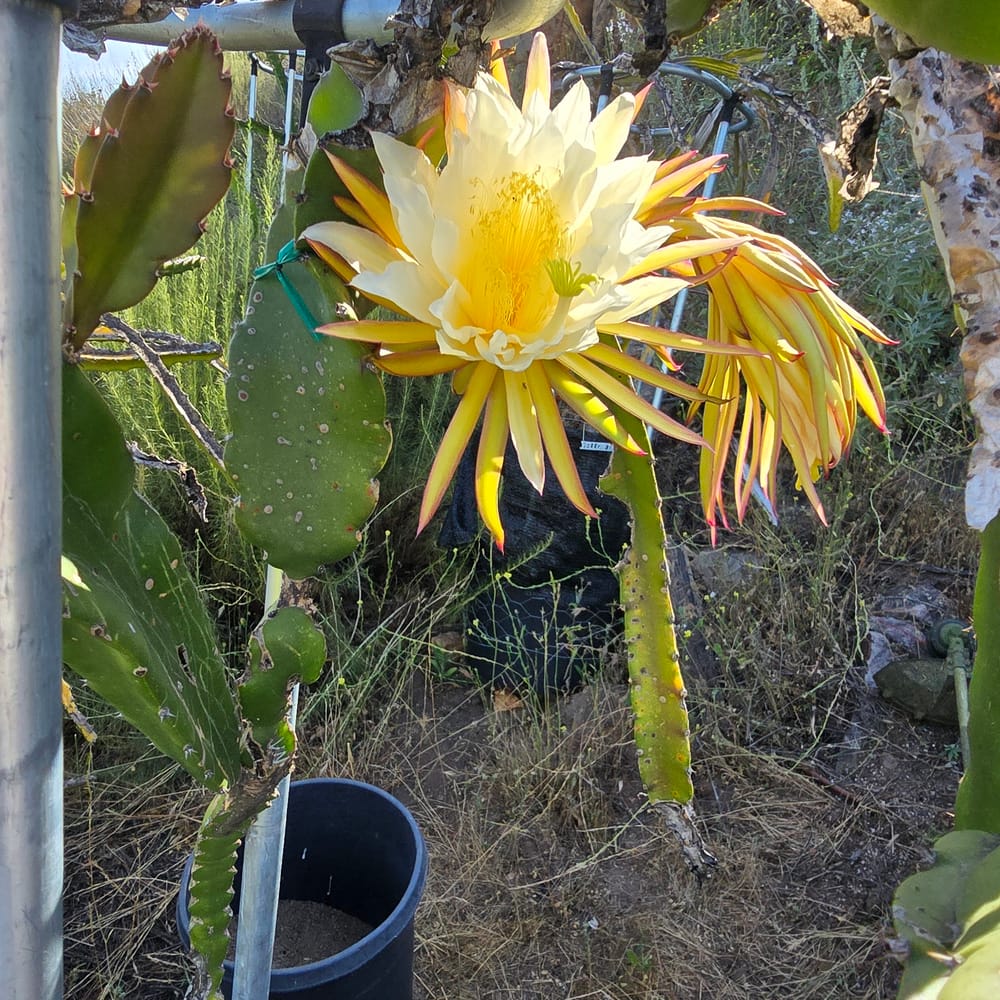
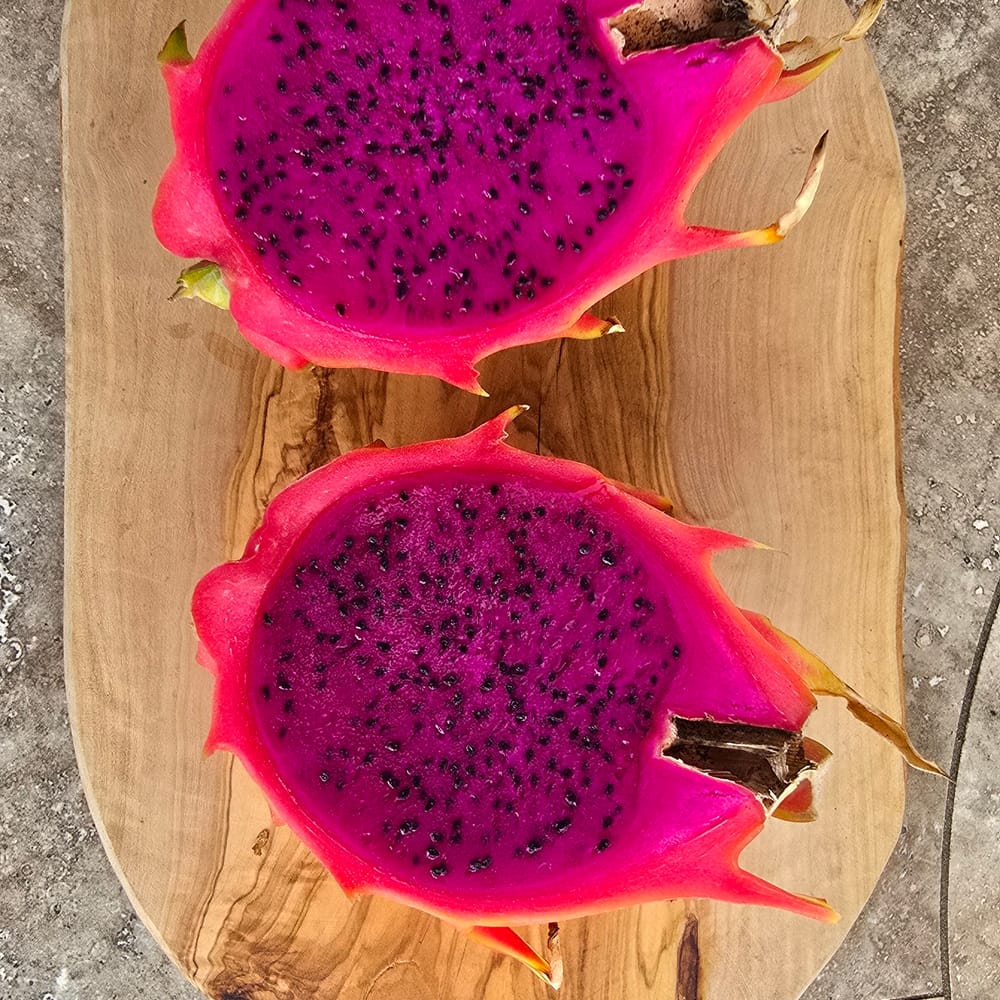
At Sky Botanicals, we like Halley's Comet because it sits in the sweet spot between ornamental appeal and real garden performance. It is a hybrid of Hylocereus undatus and Hylocereus guatemalensis, with pink skin, short green fins, and dark pink to purple flesh. It blooms through summer, sets large fruit, and handles bright sun better than many softer varieties.
If you want a variety that looks dramatic, tastes sweet, and can still do well in a hot Southern California backyard, Halley's Comet deserves a spot on the shortlist.
Key facts at a glance
| Trait | Halley's Comet | Why it matters |
|---|---|---|
| Fruit weight | 1.0-2.0 lb | Big enough for home harvests and market-style presentation |
| Brix | About 16 to 16.7 | Solid sweetness without going overboard |
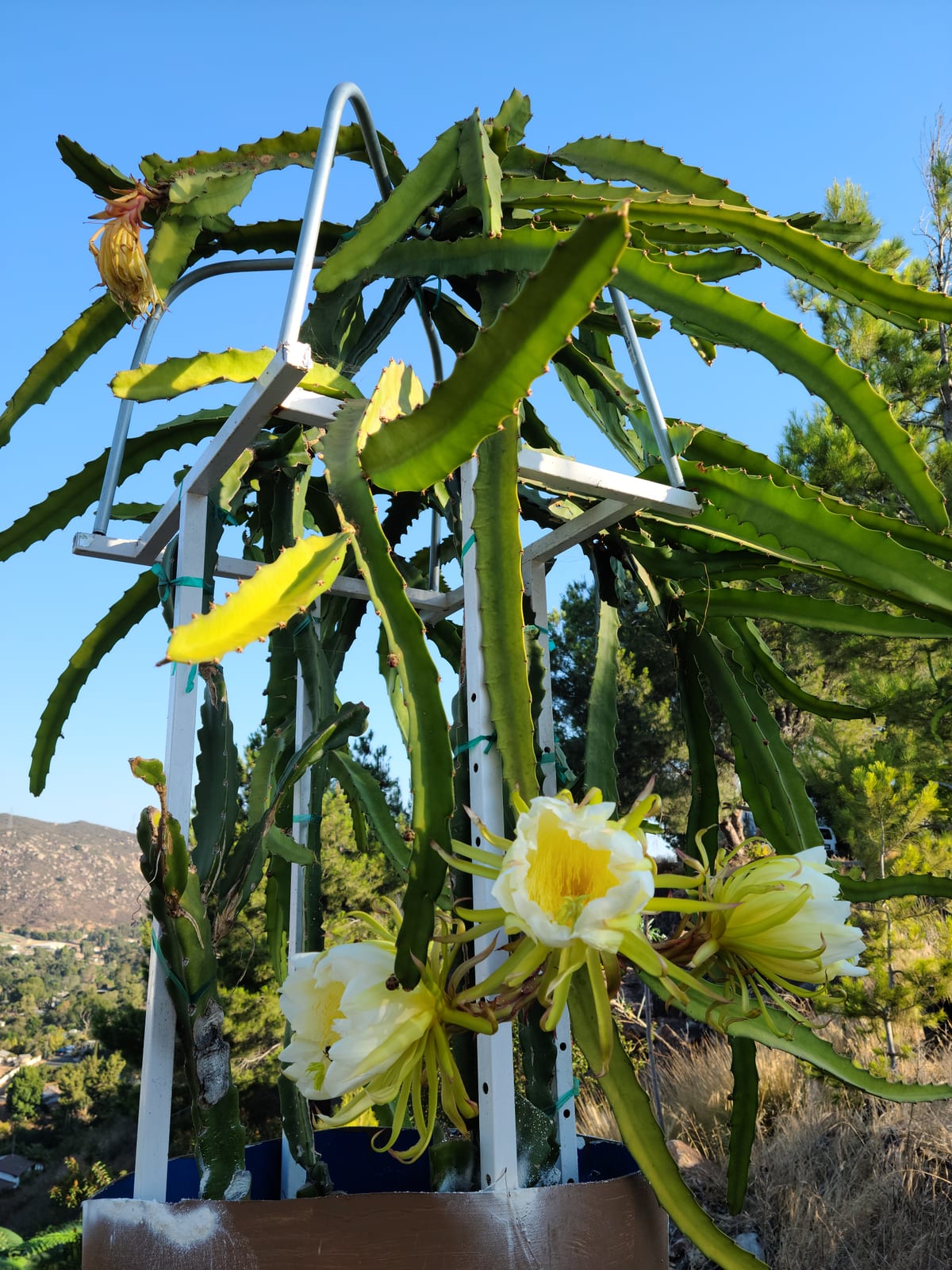
| Flower size | 13+ inches across | Big night blooms and stronger pollination visibility |
| Flesh color | Dark pink to purple | Strong visual appeal for fresh eating and photos |
| Sun tolerance | Full sun with minimal sunburn | Useful in hot inland yards |
| Pollination | Partly self-fertile | Better yields with hand pollination or a partner variety |
How Halley's Comet compares to other popular varieties
Compared with softer, more delicate types, Halley's Comet is more forgiving in bright heat and usually produces heavier fruit. It is not the sweetest dragon fruit in the world, but it is balanced, juicy, and dependable. If you already grow Physical Graffiti, think of Halley's Comet as a cousin with a similar visual impact and a slightly different growth style.
For growers building a collection, it pairs well with high-Brix dessert types and with a reliable pollinator such as Sugar Dragon. If you are still choosing a wider planting plan, our dragon fruit varieties guide is the better big-picture reference.
Growing conditions that actually matter
Halley's Comet is a cactus, but it does not want to bake in neglect. It wants drainage, structure, and enough water to keep stems active during the warm season. In USDA zone 10a, it can stay outdoors year-round with frost awareness. Hunker places dragon fruit broadly in USDA zones 10a through 11, while variety sellers for Halley's Comet describe it as suitable where temperatures do not fall below freezing for long.
In practical terms, that means the plant is happiest where nights stay mild and winter freezes are rare. In Escondido and much of Southern California, that usually means a sheltered wall, a sturdy trellis, and smart watering habits.
Planting and care steps
- Choose a cutting or rooted plant with healthy, firm stems and no soft rot.
- Set it in fast-draining soil or a raised mound so water never lingers around the crown.
- Give it full sun, but protect very young plants from harsh afternoon scorch.
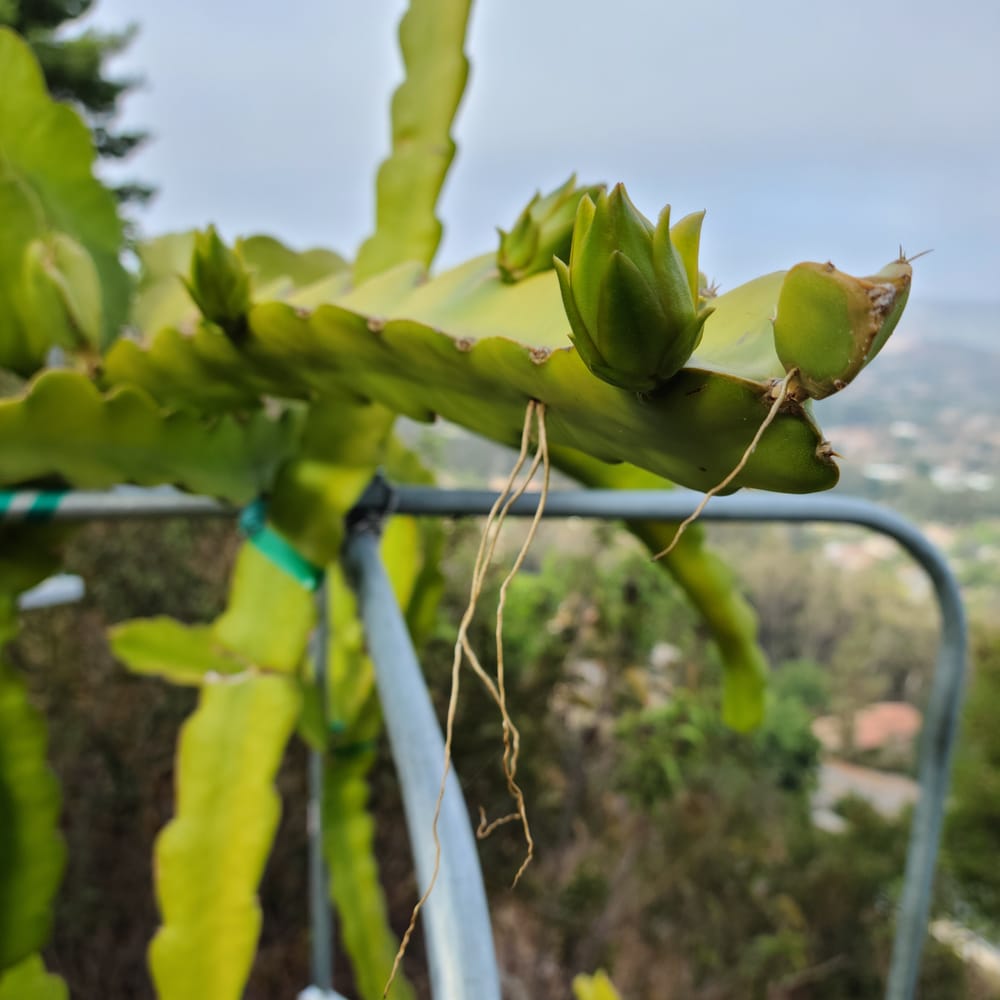
- Install a trellis early, because the mature plant needs support once the stems start climbing.
- Water deeply, then let the upper soil dry before watering again.
- Feed lightly during active growth so stems stay productive without pushing weak, floppy growth.
- Hand pollinate summer blooms if you want bigger, more consistent fruit set.
Best climate fit
Dragon fruit is generally grown outdoors in USDA zones 10a to 11, with some protection in zone 9. Halley's Comet fits that warm-climate profile well. It can handle heat, but extreme heat near 100°F still stresses dragon fruit in general, so mulch, airflow, and morning watering matter. On the cool side, dragon fruit tolerates brief drops to around 40°F, but deep frost is a problem.
That is why Halley's Comet makes more sense in Southern California than in colder inland regions unless you have greenhouse protection or moveable containers.
Fruit quality and harvest notes
Halley's Comet is typically picked for its balanced sweetness, juicy flesh, and large size. Some growers report fruit around 1.5 pounds with bright pink skin and dark pink flesh. Others note fruit closer to 2 pounds. In either case, it is a substantial harvest. The bloom-to-harvest window in Southern California is commonly reported at about 38 days, which helps growers plan harvest timing during peak summer and fall cycles.
If you care about flavor first, Halley's Comet is a good middle-ground variety. It is sweet enough for fresh eating and sturdy enough to keep on the vine while you wait for peak color and texture.
Best uses in a Sky Botanicals collection
For a grower building a 50+ variety collection, Halley's Comet works as a dependable anchor plant. It gives you:
- large fruit for visual impact,
- strong summer bloom performance,
- good sun tolerance for inland yards,
- and a useful comparison point against sweeter specialty cultivars.
It also fits neatly beside our other educational pages, including dragon fruit care guide, how to grow dragon fruit in Southern California, and Lisa variety spotlight.
FAQ
Is Halley's Comet self-fertile?
It is partly self-fertile, but yields improve with hand pollination or pollen from a compatible variety.
How sweet is Halley's Comet?
Most sources place it around 16 to 16.7 Brix, which is pleasantly sweet without being extreme.
How big does the fruit get?
Typical fruit weight is about 1.0 to 2.0 pounds, with some growers reporting fruit around 1.5 pounds.
Is it a good variety for Southern California?
Yes. It is a strong fit for warm inland areas, especially USDA zone 10a sites with full sun and good drainage.
Does Halley's Comet need a trellis?
Yes. Like all dragon fruit, it needs a sturdy support system to climb and to hold fruit safely.
What makes Halley's Comet different from sweeter varieties?
It is more about balance, size, and reliability than record-breaking sweetness. That is exactly why many growers keep it in the collection.
Sky Botanicals note: if you are growing in Escondido or anywhere in Southern California, Halley's Comet is one of those varieties that rewards good setup more than fancy tricks. Give it structure, sun, drainage, and a little pollination help, and it usually pays you back.