Yellow vs Red Dragon Fruit: Taste, Growth, Yield
Yellow dragon fruit is usually sweeter, while red types offer more variety, bigger harvests, and easier growing. Here is how they really compare in the garden and on the plate.
Yellow dragon fruit is usually sweeter than red dragon fruit, but red types are broader, easier to collect, and often more productive for home growers. If your only question is flavor intensity, yellow usually wins. If your real question is what you should plant, the answer is more complicated because red and purple types offer more variety in size, pollination behavior, season timing, and overall garden performance.
At Sky Botanicals in Escondido, Southern California, USDA zone 10a, we grow 50+ varieties, so we think about this less as a grocery-store color debate and more as a cultivar decision. The yellow-versus-red comparison matters most when someone is trying to choose between one premium sweet fruit and a broader planting built around yield, pollination, and climate fit.
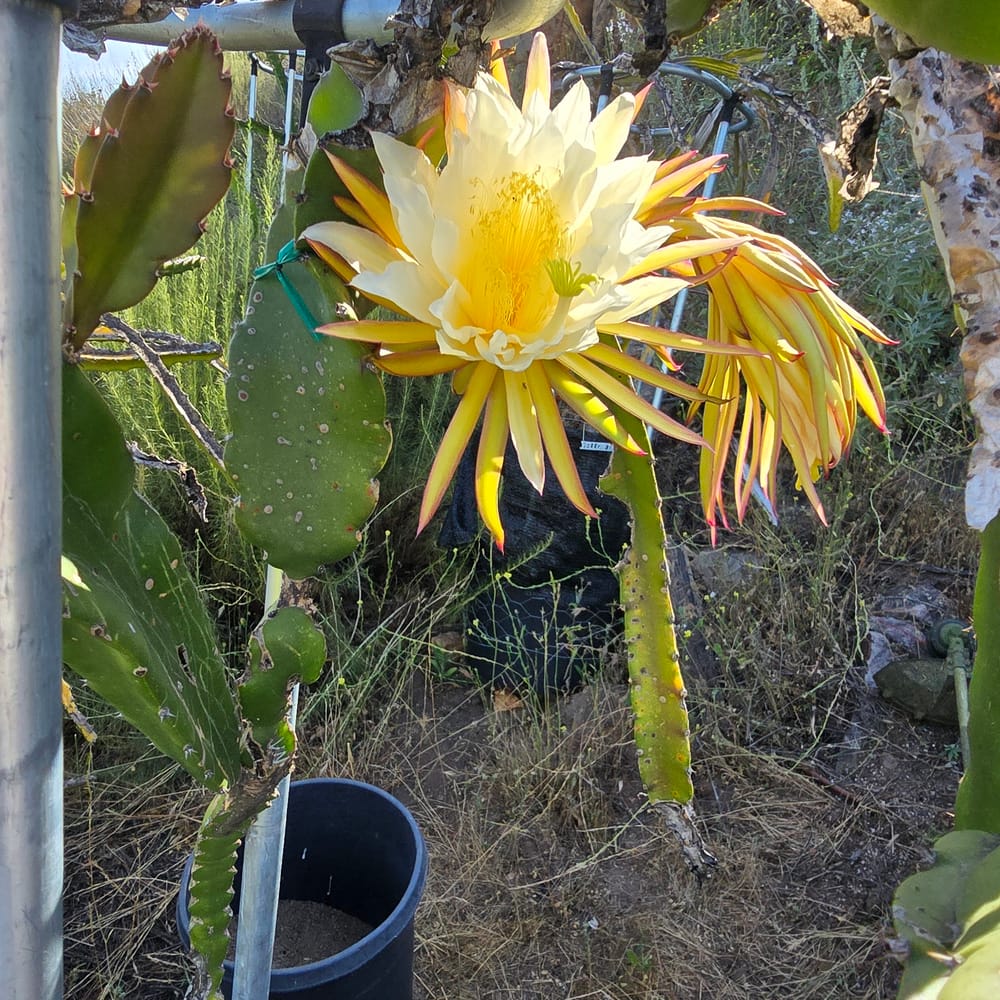
From a species standpoint, most yellow dragon fruit in cultivation comes from Selenicereus megalanthus, while most red- or purple-fleshed types are from S. costaricensis, S. polyrhizus, or hybrids. UF/IFAS describes dragon fruit generally as a tropical climbing cactus with fruit about 4.5 inches thick, flowers up to 14 inches long, and optimum growth around 65 to 77°F. Those baseline numbers apply to both groups, but the way each group expresses sweetness, fruit texture, and ease of growing is very different.
If you are still sorting out terminology, our pitaya vs pitahaya explainer clears that up first. Then come back here to decide what belongs in your yard.
The direct comparison at a glance
| Category | Yellow dragon fruit | Red dragon fruit |
|---|---|---|
| Typical sweetness | Usually highest, often about 18 to 24 Brix | Often about 15 to 20 Brix, with elite reds around 21 |
| Flavor profile | Sweet, aromatic, often pear, kiwi, lychee notes | Wider range, from mild to berry-like, grape-like, or tropical |
| Skin and handling | Yellow skin, often spiny | Red or pink skin, usually easier to handle |
| Flesh color | Usually white | White, red, magenta, or purple depending on cultivar |
| Pollination | Many commercially grown yellows are self-fertile | Mixed, from strongly self-fertile to fully self-sterile |
| Home garden choice | Best as a specialty sweetness pick | Best for building a versatile collection |
Sweetness: yellow usually wins, but not by default every time
The strongest case for yellow dragon fruit is simple: it is often the sweetest fruit in the whole dragon fruit world. Our published varieties guide lists Ecuador Palora at roughly 20 to 24 Brix, with other yellow types commonly landing around 18 to 20+. By comparison, many strong red and purple cultivars live in the 15 to 19 Brix range, though standout reds such as Frankie's Red can reach about 21, and Sugar Dragon often lands around 18 to 20+.
That is why yellow fruit gets so much hype. When it is well grown and properly ripened, it usually tastes denser, more aromatic, and less watery than common white-fleshed supermarket dragon fruit. A lot of people eat a bland white dragon fruit once, decide the crop is overrated, then try a good yellow fruit and suddenly understand why collectors get obsessed.
Still, Brix is only one part of flavor. One excellent grower article on measuring dragon fruit sweetness points out that flavor is not just sugar. Acidity, aroma compounds, seed crunch, and water content also matter. A well-balanced 18 Brix red with berry notes can be more memorable than a flat fruit that simply reads sweet on a refractometer. So the better conclusion is not yellow is always better. It is yellow is usually sweeter, while red offers more flavor diversity.
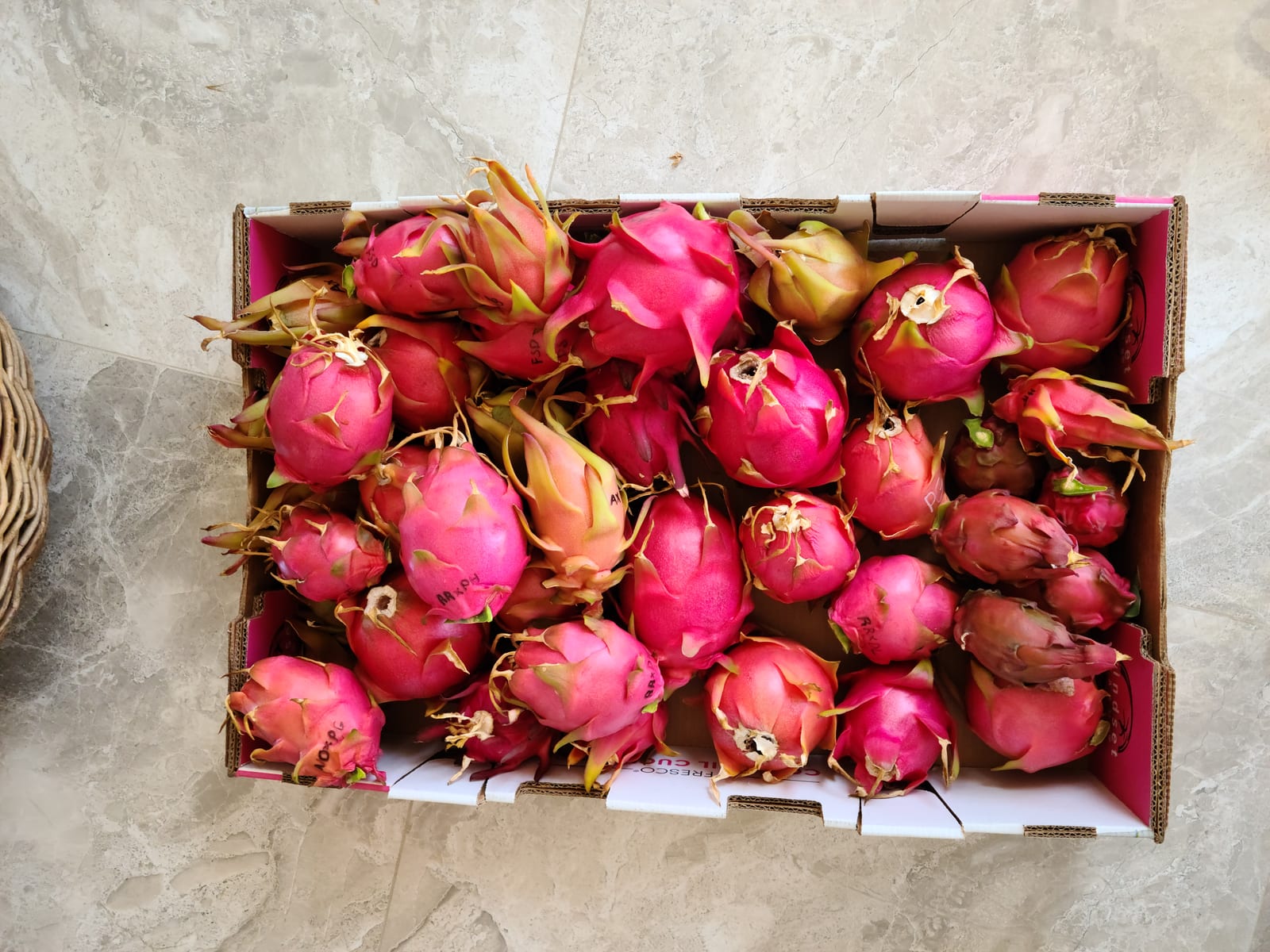
Flavor range: red has the bigger personality spectrum
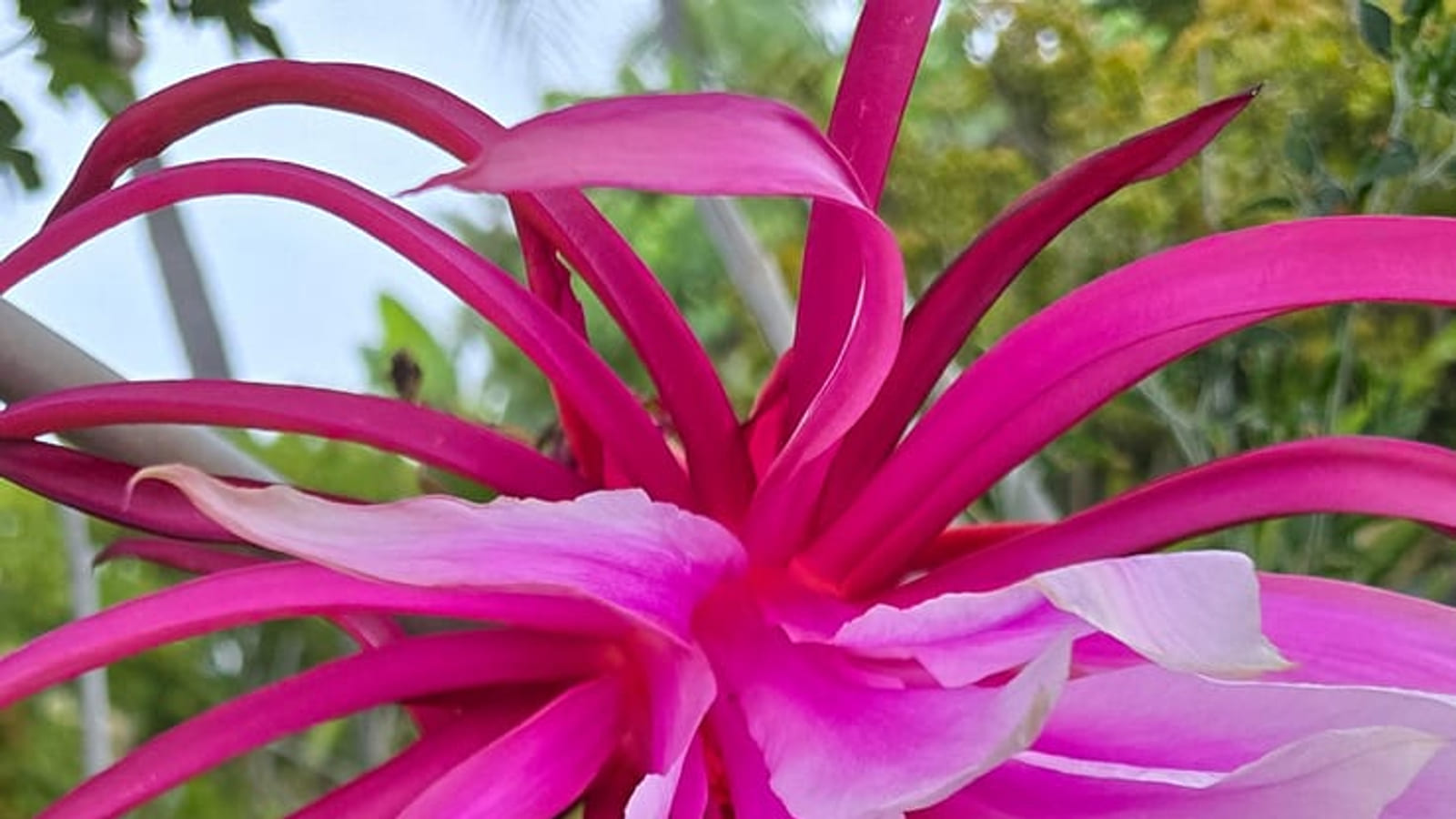
Yellow fruit tends to cluster around a familiar profile: very sweet, floral, and aromatic, often described with pear, kiwi, or lychee notes. Red and purple types spread much wider. Sugar Dragon leans berry-like. American Beauty often reads grape-like. Lisa gets compared to strawberry. Robles Red can come off sweet-tart and tropical, and AX is famous for a watermelon note.
That variety is a real advantage if you are planting for long-term enjoyment. Yellow is the premium dessert option, but red is the category where collectors can tune for exactly the flavor they want. That is one reason we usually suggest that new growers plant at least one reliable red or purple variety even if their first instinct is to chase maximum sweetness.
Our complete varieties guide is useful here because it shows that color does not tell the whole story. Two red-skinned fruits can taste completely different. One may be mild and refreshing, another jammy and intense.
Nutrition differences are smaller than flavor differences
Nutritionally, yellow and red dragon fruit are more alike than different. Healthline's nutrition summary for dragon fruit lists about 57 calories, 15 grams of carbohydrate, and 3 grams of fiber per 100 grams, plus small amounts of magnesium and iron. Both yellow and red fruits are generally light, hydrating, and seed-rich.
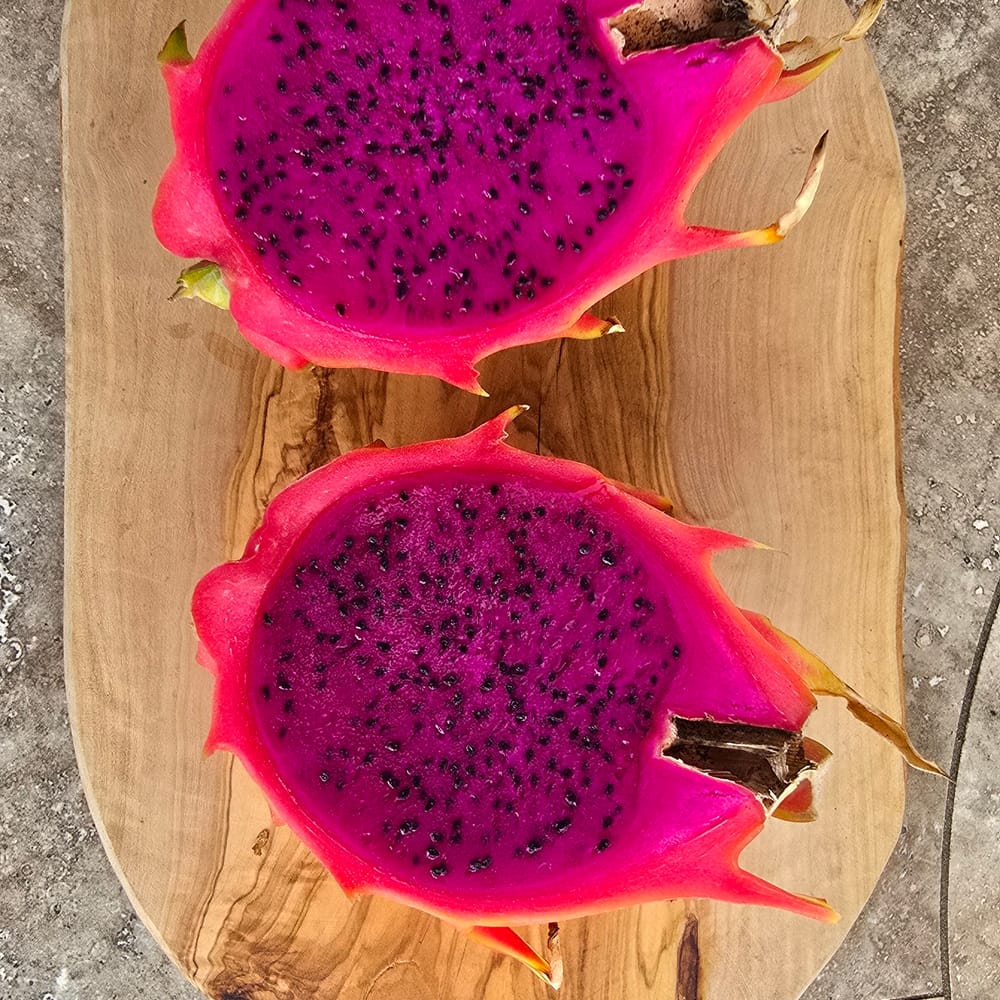
The bigger nutritional talking point is pigment. Red-fleshed dragon fruit contains betalains, the same antioxidant family that creates the deep red or magenta flesh. That means if someone specifically wants the dramatic antioxidant-rich red color, red-fleshed types offer something yellow fruit does not. Yellow fruit, however, often wins the taste test because sweetness is more obvious than nutrient chemistry.
So if you are choosing for eating pleasure, pick by flavor first. If you are choosing for smoothie color, jam, or vivid fresh-cut presentation, a red-fleshed cultivar brings something yellow cannot.
Growth habit and ease of growing
This is where the comparison becomes more useful for gardeners. Yellow dragon fruit is not impossible, but it is often treated like a premium specialist fruit for a reason. It can be slower to bulk up, more particular about handling, and less forgiving when drainage, pruning, or nutrition are off. Red and purple hybrids, especially proven self-fertile ones, often establish faster and reward beginner mistakes more generously.
UF/IFAS notes that dragon fruit cuttings can grow as fast as 1.2 inches per day under good conditions and may fruit in 6 to 9 months after planting, while seed-grown plants can take up to 7 years. Those numbers describe the crop as a whole, but in practice cultivar behavior varies. Many vigorous red hybrids are simply easier first plants because they trellis up fast and show you what success looks like.
If you garden in a humid climate like Florida, the difference widens. Yellow fruit can still perform, but you need especially good drainage and a clean, airy canopy. In dry climates like our zone 10a conditions in Escondido, yellows are easier to babysit. In wet climates, reds and purples usually give you a wider safety margin.
Pollination and fruit set
Yellow dragon fruit has a reputation for being straightforward because many commercially grown yellow types are self-fertile. Our varieties guide lists Ecuador Palora, Yellow Dragon, and Yellow Thai as self-fertile, which is useful for small gardens. But red types cover the whole range. Some, such as Sugar Dragon and American Beauty, are also self-fertile and very dependable. Others, such as Purple Haze, Lisa, or Physical Graffiti, may need compatible pollen for best fruit set.
That means yellow is not automatically simpler. A carefully chosen red planting can be just as easy, and often more productive, than a single yellow plant. The key is picking the right cultivar, not just the right color. If you need help with that, read our self-pollinating varieties list and pollination guide.
| Question | Yellow | Red |
|---|---|---|
| Can one plant fruit alone? | Often yes | Sometimes yes, depends on cultivar |
| Best for hand pollination learning? | Fine, but less variety to compare | Excellent because you can mix pollen across types |
| Best pollen donor role | Usually not the first choice | Sugar Dragon and Vietnamese White are classic helpers |
Yield and season length
If your goal is pounds of fruit over time, red types usually give you more options. UF/IFAS reports that mature pitaya plants can produce about 220 pounds per year under strong conditions, but actual yield varies heavily by cultivar, structure, pruning, and pollination. Some red and purple varieties are famous for being heavy, dependable producers. Physical Graffiti is widely respected as a top producer. American Beauty and Sugar Dragon are also common productivity favorites in home collections.
Yellow types can produce very worthwhile crops, but they are often grown as premium fruits rather than bulk workhorses. Our varieties guide also notes that yellow dragon fruit can have a longer fruiting season, with some yellow types producing from roughly September through May. That extended season is a real advantage, especially if you already have reds peaking in summer and want to spread out harvests.
So on yield, the cleanest answer is this: red usually wins on total collection flexibility and productive cultivar count, while yellow can win on high-value specialty fruit and sometimes longer season coverage.
Fruit size and handling differences

Yellow fruit is often smaller and more labor-intensive. The skin may carry spines, which means more care at harvest and prep. Red fruit is usually more user-friendly. It is easier to pick, easier to clean, and easier to hand to someone who has never handled dragon fruit before.
That sounds minor until you are growing multiple trellises. If you want a no-fuss home garden that family members can harvest without gloves or extra cleanup, red or purple types tend to be simpler. If you are willing to put in the handling effort for a premium sweetness payoff, yellow earns its place.
Which one tastes better when fully ripe?
If two fruits are both excellent and fully ripe, this becomes a preference question. Yellow often tastes sweeter right away because the sugar concentration is obvious. Red may taste more complex. For people who love candy-like fruit, yellow is often the favorite. For people who want berry or grape notes, reds and purples are more interesting.
Ripeness matters just as much as color. An underripe yellow will disappoint, and an overripe red can go flat fast. If harvest timing is still confusing, use our harvest timing guide and ripeness by variety article.
Which one should you plant first?
If you have space for one plant and care most about flavor intensity, choose a yellow type. If you have space for one plant and care most about reliability, choose a proven self-fertile red or purple type first, then add yellow later. That is my honest recommendation.
Here is why. A single red or purple variety such as Sugar Dragon or American Beauty usually teaches a new grower faster. You learn trellising, watering, pruning, and pollination on a plant with a wide support network of grower experience behind it. Once that system is working, adding yellow makes more sense because you have a benchmark for plant health and fruit quality.
At Sky Botanicals, if someone asked us to build a balanced starter collection for Southern California zone 10a, we would often suggest one reliable self-fertile red, one pollination helper, and one specialty fruit. Yellow would usually be that specialty fruit, not the whole plan.
Best use cases for each
| Your goal | Pick yellow if... | Pick red if... |
|---|---|---|
| Sweetest fresh eating | You want the highest odds of dessert-level sweetness | You are okay with slightly less sweetness for more flavor range |
| First backyard plant | You already know the basics and have a good site | You want the easiest learning curve |
| Colorful smoothies and desserts | You only need white flesh | You want vivid magenta or purple flesh |
| Collection building | You want a premium specialty fruit | You want more cultivars and pollination options |
| Longer harvest spread | You want a possible shoulder-season fruit | You want more peak-season cultivar choices |
How we see it at Sky Botanicals
Because we grow in Escondido, Southern California, zone 10a, we get to evaluate fruit in a relatively dry climate with lots of control over irrigation. In those conditions, yellows are fantastic quality fruits when fully ripe. But if you asked us which category is more important to the average grower, we would still say red and purple types. They give you more entry points, more famous cultivars, more pollination compatibility options, and more ways to build a rewarding planting.
Yellow is the luxury bottle on the shelf. Red is the whole wine list.
Bottom line
Choose yellow dragon fruit when your top priority is sweetness and you want a premium specialty fruit. Choose red dragon fruit when you want wider variety, easier collection building, more color options, and often a simpler growing path. The smartest answer for most serious growers is not either-or. It is one good red first, then one good yellow once your system is dialed in.
If you want to go deeper next, read our beginner varieties guide, American Beauty spotlight, and Frankie's Red spotlight. Those pages make the comparison real by putting actual cultivars side by side.
Frequently asked questions
Is yellow dragon fruit sweeter than red dragon fruit?
Usually yes. Yellow types commonly land around 18 to 24 Brix, while many red and purple types cluster closer to 15 to 20, though elite reds can also be very sweet.
Does red dragon fruit ever taste better than yellow?
Yes. Many people prefer the more complex berry, grape, or tropical flavors in red and purple cultivars, even when yellow is technically sweeter.
Which is easier to grow at home, yellow or red dragon fruit?
Red is usually easier overall because there are more forgiving cultivars and more proven self-fertile options for beginners.
Which one produces more fruit?
That depends on cultivar and management, but red and purple categories give you more well-known heavy producers, while yellow is often grown as a premium specialty fruit.
Are yellow dragon fruit plants self-pollinating?
Many commercially available yellow types are self-fertile, but it is still best to verify the exact cultivar before you rely on a single plant.
Why does yellow dragon fruit cost more?
It is less common, often sweeter, and usually more labor-intensive to handle because of the spiny skin and specialty-market demand.
Should I grow both yellow and red dragon fruit?
Yes, if you have room. That gives you sweetness diversity, season spread, and a much more interesting home harvest.