Palora Yellow Dragon Fruit Cutting: Cold Hardy & Sweet
A Palora yellow dragon fruit cutting comes from a vigorous *Hylocereus megalanthus* hybrid named after its place of commercial popularity in Palora, Ecuador. This variety stands out for its exceptional sweetness and remarkable cold hardiness. Unlike many tropical cacti, Palora has survived temperatures as low as 17°F for extended periods and rebounded to fruit the following season. The plant produces large, bright yellow oval fruits. These fruits feature thick skin with small spines that brush off easily at harvest. Inside, the white flesh contains larger, crunchier black seeds and offers a flavor profile similar to kiwi and pear. Palora is self-fertile, so a single cutting can grow into a plant that sets fruit without a pollinator partner. It grows aggressively with long, segmented stems that require vertical support. We recommend starting with a healthy stem cutting in well-draining soil to ensure quick rooting and strong early growth.
Palora Yellow Dragon Fruit at a Glance
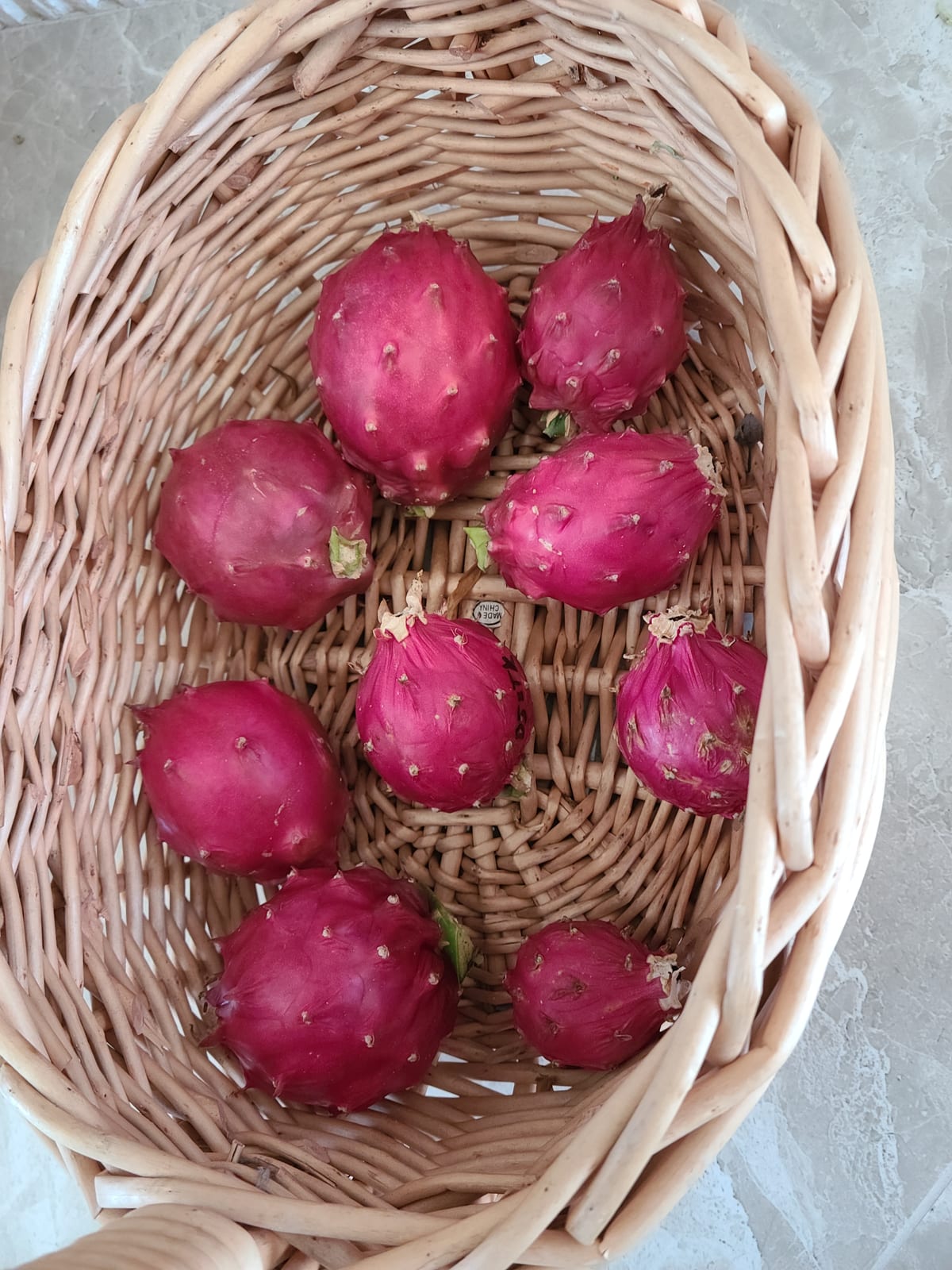
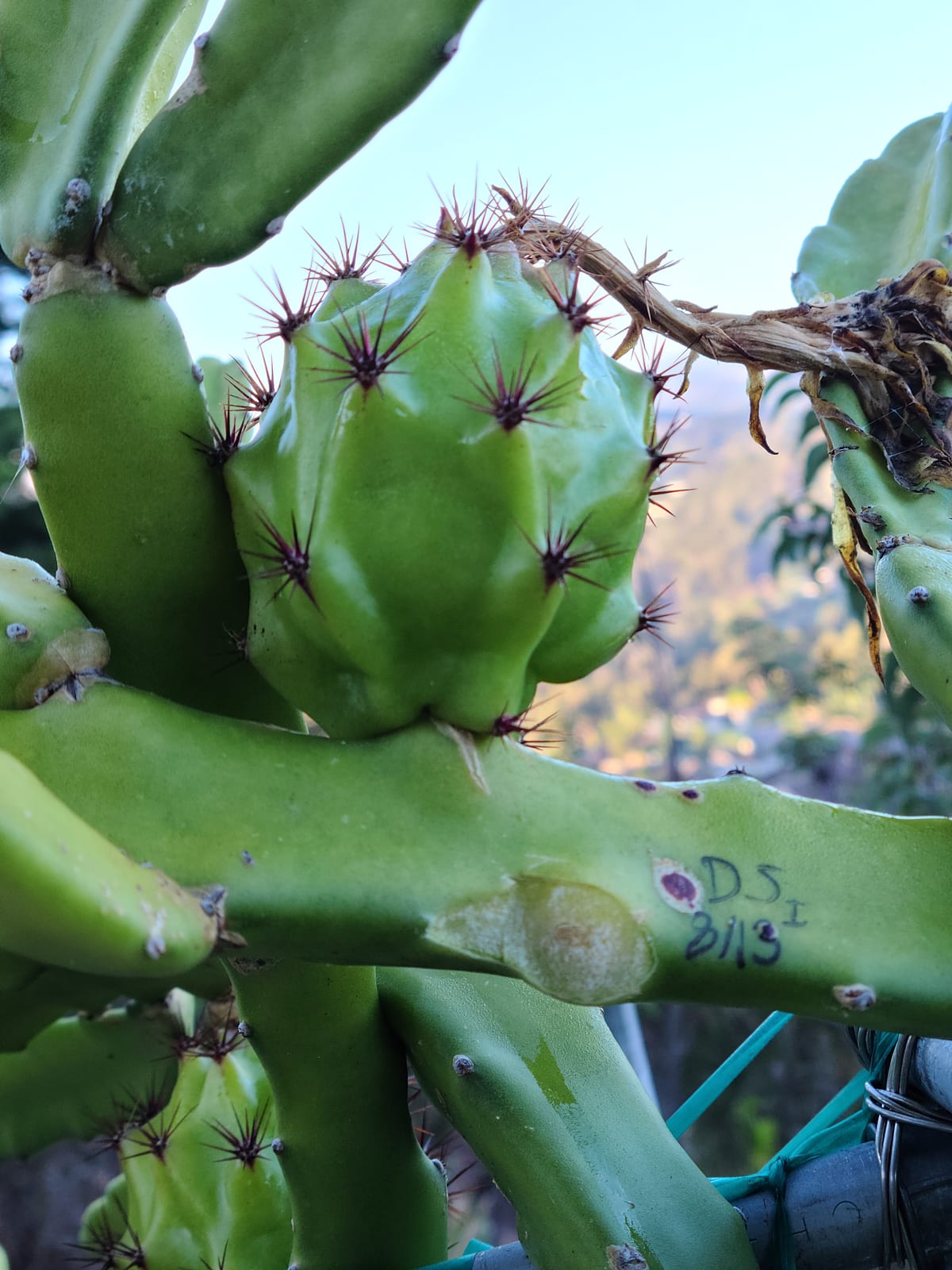
This variety commands attention in the garden. The stems grow aggressively with segments reaching up to four feet long. You will see olive to dark green coloration and medium spines along the three-sided edges. This vigorous habit requires strong vertical support to keep the weight off the ground. The plant rewards that effort with large oval fruits. Each fruit weighs between 400 and 600 grams. The thick yellow skin features small raised scales and spines that brush off easily at harvest.
Palora handles cold better than most tropical cacti. Documented cases show survival at 17°F for 72 hours. The plant rebounded to flower and fruit the following year. This resilience makes it a strong candidate for marginal climates. Compare this to the American Beauty Dragon Fruit Cutting which lacks this specific cold tolerance. Mature plants produce 20 to 50 fruits per season.
How to Grow Palora from a Cutting
Propagation by stem cutting is the standard method for Palora. Seeds are slow and unpredictable. Cuttings root quickly and give you a head start on fruit production. Select a firm, six-inch stem segment free of soft spots or discoloration. Use a sharp clean knife to make a straight cut. Let the cut end dry in a shaded spot for two to three days. This callousing step prevents rot when the cutting touches soil.
Prepare a well-draining rooting medium. A mix of coarse sand and perlite works well. You can also use a standard cactus potting mix. The goal is aeration. Moisture is necessary but standing water kills the cutting. Fill a small pot with the medium. Make a hole deep enough to hold the cutting upright. Insert the calloused end about two inches deep. Firm the soil around the base to provide support.
Keep the medium lightly moist. Do not soak it. The cutting needs humidity to push roots but it will rot if it sits in wet soil. Check the top inch of soil before watering again.
Place the pot in bright indirect light. Direct sun can scorch the new tissue before roots form. After two to three weeks you should feel resistance when you gently tug the stem. This indicates root growth. Palora cuttings are vigorous. They often establish roots faster than other varieties. Once rooted you can move the plant to a larger pot with standard cactus soil. Treat it like any other young dragon fruit plant. Provide vertical support as the stems begin to climb. For a comparison of growth habits see our guide on the American Beauty Dragon Fruit Cutting.
Palora Growing Conditions and Care
Palora thrives in temperatures between 68°F and 95°F. While it is frost sensitive below 50°F, its documented cold hardiness allows it to survive brief dips much lower than most tropical cacti. You do not need a greenhouse in mild climates. A sunny spot with good air circulation is usually sufficient.
Soil structure matters more than soil type. Use a sandy loam or a high-quality cactus mix amended with organic matter. The goal is rapid drainage. Water consistently during the bloom and fruiting stages. Let the top inch of soil dry out completely between waterings. This cycle encourages deep roots and prevents rot. Reduce watering in winter when the plant is dormant.
Full sun produces the best fruit. Palora tolerates partial shade but may grow slower and produce fewer flowers. If you live in a region with intense afternoon heat, some afternoon shade can protect the stems from scorching. Compare this light requirement to the American Beauty Dragon Fruit Cutting which often prefers slightly more shade in hot climates.
Vertical support is non-negotiable. The stems are heavy and aggressive. Build a sturdy trellis or A-frame. Train the stems to climb early. This keeps the fruit off the ground and improves air flow around the plant.
Feed your Palora with a balanced fertilizer during the vegetative stage. Switch to a high-potassium formula once flower buds appear. Potassium supports fruit development and sweetness.
- Check soil moisture before watering. Stick your finger an inch deep. If it is dry, water thoroughly.
- Apply balanced fertilizer every two weeks during spring and summer growth.
- Switch to high-potassium fertilizer when you see flower buds forming.
- Reduce feeding and watering in late autumn as temperatures drop.
Palora vs. Other Yellow Dragon Fruit: Key Differences
Most gardeners know the standard yellow dragon fruit as Hylocereus megalanthus. It is a reliable producer with a distinct flavor. Palora is a hybrid selection from that same species. The differences are significant for anyone growing for taste or market. The most obvious change is size. Palora fruits are two to three times larger than the standard variety. You get more flesh per harvest. The skin texture also changes. Standard yellow dragon fruit has dense, sharp spines that require careful handling. Palora has about half the spine count. The remaining spines are smaller and brush off easily. This makes harvesting faster and safer.
| Feature | Standard Yellow (H. megalanthus) | Palora Hybrid |
|---|---|---|
| Fruit Size | Standard (200-300g) | Large (400-600g) |
| Spine Density | High (dense, sharp) | Low (sparse, soft) |
| Sweetness (Brix) | 12-14° | 16-20° |
| Self-Fertility | Variable (often needs pollinator) | High (self-fertile) |
| Cold Tolerance | Low (damage below 32°F) | High (survives to 17°F) |
| Growth Vigor | Moderate | Aggressive |
Sweetness is the second major differentiator. Standard yellow varieties often sit around 12 to 14 degrees Brix. Palora consistently hits 16 to 20 degrees Brix. The flavor is richer and less acidic. This sugar content matters for commercial growers and home eaters alike. You do not need to add sugar to desserts or drinks.
Pollination habits differ as well. Many standard yellow varieties are not fully self-fertile. They produce better crops with a pollinator partner nearby. Palora is self-fertile. A single plant sets fruit reliably. This simplifies garden planning. You do not need to dedicate space to a second variety just for pollination. Compare this to the American Beauty Dragon Fruit Cutting which also offers strong self-pollination traits but lacks the specific cold hardiness of Palora.
Cold tolerance sets Palora apart from almost all other yellow types. Standard H. megalanthus suffers damage at freezing temperatures. Palora has survived 17°F for extended periods. It rebounds and fruits the next season. This resilience allows growers in marginal climates to attempt yellow dragon fruit where they previously could not. The growth vigor is also higher. Palora stems grow longer and faster. You will need a sturdy trellis to support the weight. The plant rewards that effort with higher yields and larger fruit.
Palora is a hybrid selection. It retains the yellow skin and white flesh of the species but improves on size, sweetness, and hardiness. It is not a separate species.
Flowering and Harvest
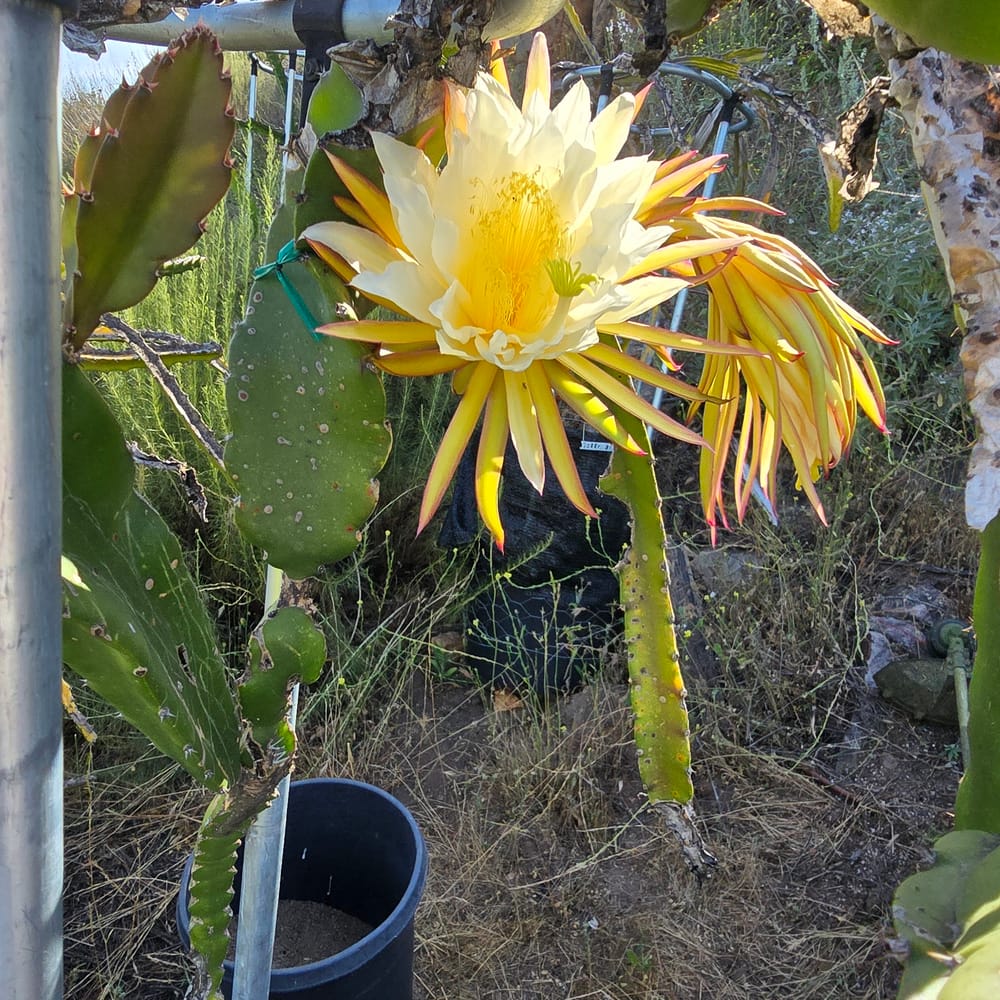
The real spectacle begins with the flowers. These bell-shaped blooms open at night, usually around 10 PM. They release a strong, sweet fragrance that fills the garden. A fully open flower measures about 14 inches across. The development from bud to full bloom takes roughly 40 days. You will want to be outside to see them open.
Palora is self-fertile. You do not need a second plant or a pollinator partner to set fruit. A single cutting produces enough viable pollen for its own flowers.
Once pollination occurs, the fruit develops quickly. It takes about 120 days (roughly 17 weeks) for the fruit to reach maturity, far longer than the 30 to 50 days typical of Hylocereus types. Watch the skin color change from pale yellow to a bright, vibrant gold. This is your primary signal that the fruit is ready.
Test the fruit by gently twisting it. A ripe Palora fruit will brush off the stem with very little effort. If you have to pull hard, it is not ready. The small spines on the skin are soft and brush off easily at this stage. You can handle the fruit safely with bare hands. For a different harvest experience, check out our notes on the American Beauty Dragon Fruit Cutting.
Taste, Nutrition, and Uses
Palora delivers a flavor profile that stands apart from standard red-fleshed varieties. The taste resembles a mix of kiwi and pear. It is bright and aromatic without the floral notes found in some hybrids. The sweetness is substantial. You can expect readings between 16 and 20 degrees Brix. This high sugar content makes it one of the sweetest dragon fruits available. The texture is firm yet juicy. The larger black seeds add a pleasant crunch to every bite.
Palora is a nutritional powerhouse. It is low in calories but rich in vitamin C. The fruit provides significant antioxidants and dietary fiber. It also contains essential minerals like magnesium. This makes it a healthy addition to any diet.
Most growers eat Palora fresh. Slice the fruit in half and scoop out the flesh with a spoon. The white translucent meat contrasts beautifully with the yellow skin. It works well in fruit salads or as a standalone snack. The high sugar content means you rarely need added sweeteners. You can also blend it into smoothies. The kiwi-like acidity cuts through creamy bases like yogurt or milk. The seeds blend smoothly and add texture.
Dessert applications highlight the fruit's natural sweetness. Use the flesh as a topping for pancakes or waffles. It pairs well with vanilla or coconut flavors. You can also freeze the scooped flesh for sorbet. The result is a refreshing treat that captures the tropical essence of the plant. For a different approach to yellow dragon fruit desserts, check out our notes on the American Beauty Dragon Fruit Cutting.