Dragon Fruit Cutting Timeline: 1-2 Years to Fruit
A healthy dragon fruit cutting usually produces its first fruit in about 1 to 2 years under warm, well-managed conditions. If conditions are mediocre or the cutting started small, 2 to 3 years is a realistic expectation. Rooting is not the bottleneck since it typically takes only 2 to 4 weeks after callusing. The real delay comes from building enough mature stem mass to bloom. Because a cutting is a clone of the parent plant, it bypasses the juvenile phase that slows down seed-grown plants. A thick, mature cutting from a productive parent carries stored energy and usually fruits on the fast end of that timeline.
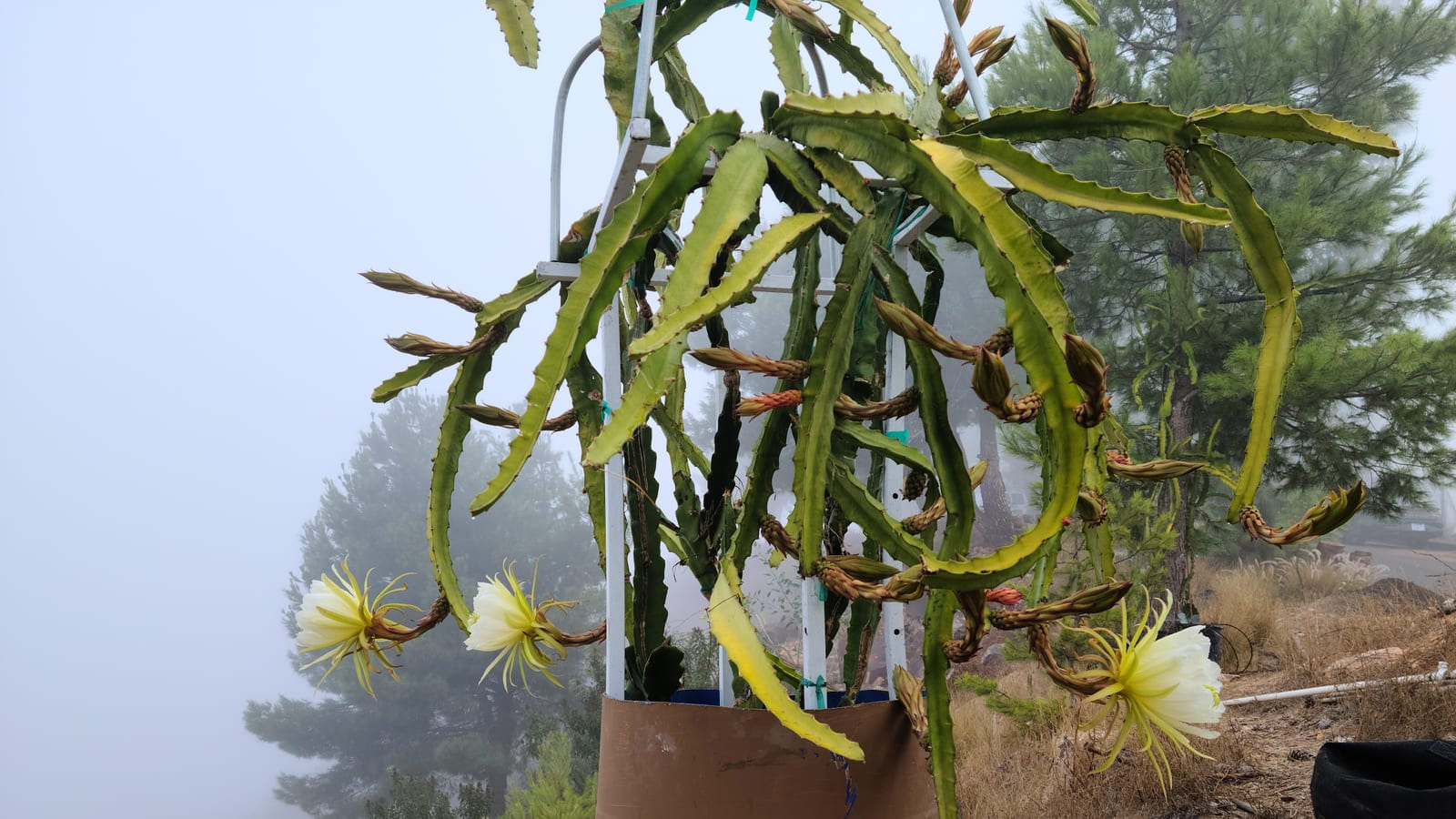
Establishment runs about 1 to 3 months in warm weather, followed by a climbing phase that lasts roughly 6 to 12+ months. The vine must reach its trellis and form a top canopy of mature, hanging branches where flowering occurs. First flowering typically happens at 12 to 24 months. Check our guide on building a strong trellis to ensure your plant has the support it needs to switch into that fruiting mode quickly.
The Short Answer: 1 to 2 Years
Under warm, well-managed conditions, a healthy dragon fruit cutting usually produces its first fruit in about 1 to 2 years. If your growing conditions are mediocre or the cutting started out small, 2 to 3 years is a realistic expectation. This timeline assumes the plant has successfully established itself and is actively building the mature stem mass required for flowering.
While the initial fruiting event is a milestone, the real payoff comes later. A plant that reaches good size and matures in the right conditions will typically produce a solid crop by year 3 or later. As the canopy matures and more hanging branches develop, yields increase significantly. You are not just waiting for a single fruit; you are waiting for the infrastructure of a productive vine.
Choosing the right variety can influence your experience during this waiting period. Some cultivars are self-fertile and fruit on their own, while others need pollen from a second variety. If you want to ensure your flowers turn into fruit without relying on a second variety, consider browsing our Sugar Dragon S8 page to see a fast, self-fertile option that fits many home gardens.
Cutting vs Seed: Why Clones Skip the Waiting Room
When you plant a dragon fruit cutting, you are planting a finished adult, not a baby. A cutting is a genetic clone of the parent plant. It already possesses the mature genetic programming required to flower. It does not need to spend years growing through a juvenile phase to unlock its reproductive potential. This is the fundamental reason cuttings are the standard propagation method for home growers. You are starting the clock at the finish line of the vegetative stage.
Seed-grown plants tell a very different story. A seedling must first establish itself as a young plant before it can even begin the transition to maturity. This juvenile phase is long and variable. It is common for seed-grown dragon fruit to take 5 years or more to produce their first fruit. For most gardeners, that is a wait that is too long to sustain interest.
| Propagation Method | Time to First Fruit | Key Advantage |
|---|---|---|
| Cutting | 1 to 2 years | Bypasses juvenile phase; predictable genetics |
| Seed | 5+ years | Genetic diversity; novelty |
The speed advantage of cuttings is not just about skipping the juvenile phase. It is also about consistency. Because a cutting is a clone, you know exactly what you are getting. If the parent plant is a fast, self-fertile variety, your cutting will share those traits. With seeds, you are rolling the dice on genetics. You might get a plant that is slow to fruit, self-sterile, or simply less vigorous than the parent. For a grower focused on getting fruit on the table as quickly as possible, the predictability of a cutting is invaluable.
If you want to maximize that speed advantage, the variety you choose matters. Some cultivars are naturally faster and more reliable in home gardens. If you are looking for a plant that will fruit quickly without the need for a second pollinator, check out our Sugar Dragon S8 page. It is a fast, self-fertile option that fits many home gardens.
The Full Timeline, Stage by Stage
While rooting happens quickly, the bulk of the wait is spent building the physical structure needed to support fruit. The timeline is not a straight line; it is a series of distinct phases where specific conditions must be met to move forward. If you miss a cue in one phase, the clock stalls until the plant recovers. Understanding these stages helps you identify exactly where your plant is and what it needs next.
Phase 1: Establishment and Rooting
This phase begins the moment the cutting is planted and ends when the plant produces new, healthy vegetative growth. In warm weather, this usually takes about 1 to 3 months. The primary goal here is not fruit production but survival and root development. The plant is using its stored energy to anchor itself and begin drawing nutrients from the soil. During this time, the stem may look slightly shriveled or soft as it adjusts. This is normal. The critical factor is that the soil must be fast-draining. Soggy conditions during this vulnerable stage can lead to rot, which resets the entire timeline. If you planted the cutting before the cut end had fully callused, you are at higher risk for this issue. A callus barrier protects the open wound from soil-borne pathogens. Skipping this step or overwatering a fresh cutting is one of the most common reasons a plant stalls in month one.
Phase 2: Climbing and Canopy Development
Once the plant has established roots and begins sending out new growth, it enters the climbing phase. This is the longest part of the process, lasting roughly 6 to 12+ months. The vine will grow vertically toward its support. This is where the quality of your trellis becomes critical. A secure post with a broad top allows the plant to switch from vertical growth into the hanging mature branches where flowering occurs. If your support is weak, missing, or installed too late, the plant will continue growing straight up or droop to the ground. Neither scenario is ideal for fruiting. A plant that cannot reach a stable, elevated position will delay its transition to the reproductive phase. The goal in this phase is to build a top canopy of mature, hanging branches. These branches are the "fruiting wood." They are older, thicker, and have the energy reserves needed to support flowers. You are essentially building the infrastructure of the vine. Without this mass of mature stem, the plant simply does not have the capacity to bloom.
Phase 3: Flowering and Fruit Set
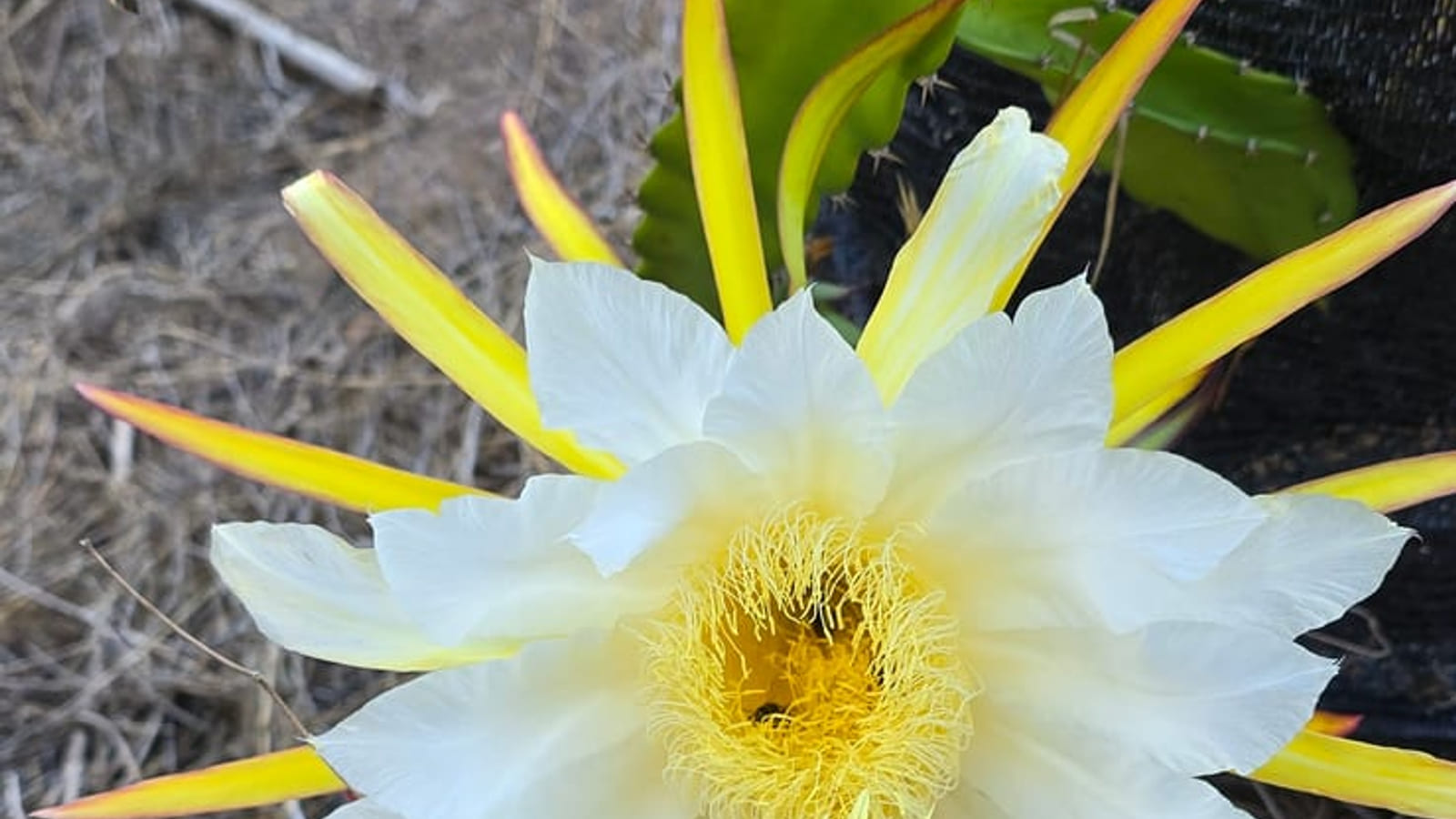
First flowering typically happens at 12 to 24 months. This event is triggered by a combination of mature stems and warm nights. Once the flowers open, the next hurdle is pollination. This is where variety selection matters. Some cultivars are self-fertile and will set fruit on their own. Others are self-sterile and require pollen from a second variety. If you have a self-sterile variety and no pollinator nearby, the flowers will drop without setting fruit. This can add a whole season to your timeline if you do not have a partner plant. If pollination is successful, the fruit begins to develop. Depending on the variety, ripening takes about 27 to 50 days. This is the final stage before harvest. A plant that reaches good size and matures in the right conditions will typically produce a solid crop by year 3 or later, with yields increasing as the canopy matures.
Several factors can push your timeline back significantly. Planting before callusing and overwatering fresh cuttings are the most common early errors. Heavy, poorly-draining soil slows root growth even if the plant survives. A weak or missing trellis support prevents the formation of the hanging branches needed for fruiting. Cold-stressed starts delay active growth until temperatures rise. Finally, growing a self-sterile variety without a pollinator means you may wait an entire season for flowers that never turn into fruit. Check our guide on Sugar Dragon S8 to see a fast, self-fertile option that avoids the pollination dependency issue.
Cutting vs. Seed: Why Cuttings Are the Fast Lane
The speed advantage of a cutting comes down to starting with a head start in biomass. While rooting is quick, typically taking only 2 to 4 weeks after callusing, the real work begins once the roots take hold. The plant must build enough mature stem mass to trigger flowering, and a thick, mature cutting from a productive parent carries stored energy that accelerates this process. A thin, freshly cut segment starts behind, requiring more time to bulk up before it can support fruit. Choosing a robust piece of stem is the single most effective way to shave months off your wait.
Soil conditions play a critical role in maintaining that momentum. Dragon fruit roots are sensitive to waterlogging, so fast-draining media with a pH around 6.0 to 7.0 is essential. Soggy root zones slow the plant down significantly, even if the cutting survives the initial shock. Healthy, aerated roots allow the vine to climb and form the top canopy of hanging branches where flowering occurs. If you are looking for a variety that pairs well with this fast-start approach, check out our Sugar Dragon S8 page for a self-fertile option that fits many home gardens.
Pro Tip: Do not plant a fresh cutting immediately. Allow the cut end to callus for 12 to 24 hours for small segments or up to a week for thick cuts. Skipping this step risks rot and can cost you months of progress.
What Actually Decides Your Speed
While the general timeline is 1 to 2 years, your specific start date depends on three concrete factors: the physical quality of the cutting, the environmental conditions during establishment, and the structural support you provide. These elements interact to determine whether your plant hits the fast end of the spectrum or drifts toward the slower side.
The Starting Material
The cutting itself sets the initial baseline. A thick, mature segment from a productive parent plant carries stored energy that fuels early growth. This type of cutting usually fruits on the fast end of the timeline because it starts with a head start in biomass. In contrast, a thin, freshly cut segment starts behind. It must build more tissue before it can support flowering. The size and maturity of the piece you plant directly correlate with how quickly it reaches the threshold for reproduction.
Environmental Triggers
Temperature and soil conditions dictate the pace of vegetative growth. Dragon fruit thrives in warm conditions, with active growth typically resuming when nights stay above 60 F. A start in a warm season allows the plant to establish roots and new shoots rapidly. Conversely, a cold-stressed start slows metabolic processes, extending the establishment phase. Soil drainage is equally critical. Soggy root zones, even if the plant survives, significantly slow down development. Fast-draining soil with a pH around 6.0 to 7.0 ensures the roots can access oxygen and nutrients without stress.
Structural and Nutritional Support
The transition from climbing to fruiting requires a specific physical architecture. A strong trellis installed early allows the vine to switch from vertical growth into hanging mature branches, which are the primary sites for flowering. Delayed support forces the plant to keep growing vertically, delaying the formation of the fruiting canopy. Nutrition also plays a role in this transition. While balanced fertilizer supports general growth, shifting toward higher phosphorus and potassium later in the cycle signals the plant to prioritize flowering over leaf production. If you are unsure which variety will best suit your pollination setup, check out our Sugar Dragon S8 page for a fast, self-fertile option that reduces external dependencies.
| Factor | Fast Track | Slow Track |
|---|---|---|
| Cutting Quality | Thick, mature, stored energy | Thin, fresh, low reserves |
| Temperature | Warm nights above 60 F | Cold-stressed start |
| Support | Strong trellis installed early | Weak or delayed support |
What to Do Year by Year
Since rooting is quick, your focus shifts immediately to building the physical structure that will hold the fruit. In the first few months after the cutting establishes, the goal is simple: get the vine climbing. Ensure your trellis is sturdy enough to handle the weight of a mature plant. A secure post with a broad top allows the stems to reach the peak and then drape over the edge. This transition from vertical growth to hanging branches is critical. Flowering occurs primarily on these mature, hanging stems, not on the young, upright shoots. If you delay installing proper support, you delay the formation of the canopy where the flowers will appear.
During this active growth phase, the plant is a heavy feeder. It needs consistent nutrition to convert energy into stem mass. Use a balanced fertilizer during the growing season to support vigorous vine extension. As the plant approaches the end of its first year and begins to mature, shift your feeding strategy. Move toward a formula with higher phosphorus and potassium levels. This change signals the plant to prepare for reproduction rather than just vegetative expansion. Consistent, appropriate feeding supports vigorous stem extension and flowering.
By the second year, the plant should have a well-developed canopy of hanging branches. This is when you monitor for flowering. If your variety is self-fertile, you can expect fruit to set once the flowers open. However, if you planted a variety that requires cross-pollination, ensure you have a compatible partner nearby. Without the right pollen source, the flowers will drop without setting fruit, adding an entire season to your wait. To avoid this uncertainty, consider a fast, self-fertile option like our Sugar Dragon S8, which is self-fertile.
Pro Tip: If your plant is growing vigorously but not flowering, check the maturity of the hanging branches. Flowers need mature stems.
Once the first fruits set, the real payoff begins. A plant that has reached good size and matured in the right conditions will typically produce a solid crop by year 3 or later. As the canopy continues to expand and more hanging branches develop, yields increase significantly. You are not just waiting for a single fruit; you are building the infrastructure for a productive vine that will keep giving for years.
Why Your Cutting May Be Slower Than Expected
Temperature is the single biggest variable you can control to speed up the process. Dragon fruit thrives in a preferred growth range of about 65 to 77 F. Active growth really gets going when nights stay above 60 F. If you start your cutting in the cold of winter, active growth stops until the soil and air temperatures rise. A late spring or summer start in a warm region like Southern California (zone 10a) is far faster than a cold winter start.
Soil conditions also play a critical role. Dragon fruit roots are sensitive to waterlogging. If your soil is heavy or poorly draining, the root zone stays soggy. This slows the plant down significantly, even if it survives. The ideal environment is fast-draining soil with a pH around 6.0 to 7.0. When roots are stressed by excess moisture, the plant slows down. It stays small and stunted, delaying the transition to the fruiting phase.
Nutrition matters, but timing is key. Dragon fruit is a heavy feeder for a cactus. During active growth, a balanced fertilizer like 6-6-6 or 10-10-10 applied every 4 to 6 weeks supports vigorous stem extension. Conversely, if you skip feeding during the climbing phase, the vine lacks the energy to reach the top of the trellis. Shifting to a higher phosphorus and potassium blend, such as 8-4-12, later in the season helps support flowering and fruit set, but only if the plant has already built a strong vegetative base.
Watch for these common setbacks: Planting before callusing, overwatering fresh cuttings, using heavy soil, or providing weak trellis support can all add months to your timeline. If your plant is not growing, check the soil moisture first. If it is dry and the temperature is warm, check your fertilizer schedule. If the plant is small and the trellis is weak, the vine may be struggling to anchor itself for vertical growth.
If you are in a cooler climate or starting late in the season, consider choosing a variety that is known for vigorous growth and self-fertility. A self-fertile variety avoids the need for a second variety, which can add a whole year to your wait. You can explore options like the Sugar Dragon S8 to find a cultivar that fits your specific conditions and helps ensure your flowers turn into fruit without relying on a second variety.
Bottom Line
You are not waiting for the plant to survive; you are waiting for it to build muscle. Rooting happens in weeks, but the vine needs months of active growth to create the mature, hanging stems that actually flower. If you start with a thick, well-cured cutting and provide a sturdy trellis immediately, you are setting the stage for fruit in the 1 to 2 year window. If the cutting is thin, the soil is soggy, or the support is weak, that timeline stretches toward 3 years or more.
The difference between a fast fruiting plant and a slow one usually comes down to the starting material and the environment. A mature cutting from a productive parent carries stored energy that a fresh, thin segment lacks. That head start allows the vine to climb and form its canopy faster. Meanwhile, the environment must support that growth. Warm nights, fast-draining soil, and consistent feeding during the active season keep the plant moving forward. Cold stress or waterlogged roots put the clock on pause, not because the plant is dying, but because it is conserving energy.
Remember that the first fruit is just the beginning. A plant that reaches good size and matures in the right conditions will typically produce a solid crop by year 3 or later. As the canopy matures and more hanging branches develop, yields increase significantly.
If you want to shorten the wait and ensure your flowers turn into fruit without relying on a second variety, consider browsing our Sugar Dragon S8 page. It is a fast, self-fertile option that fits many home gardens and removes the pollination variable from your timeline.