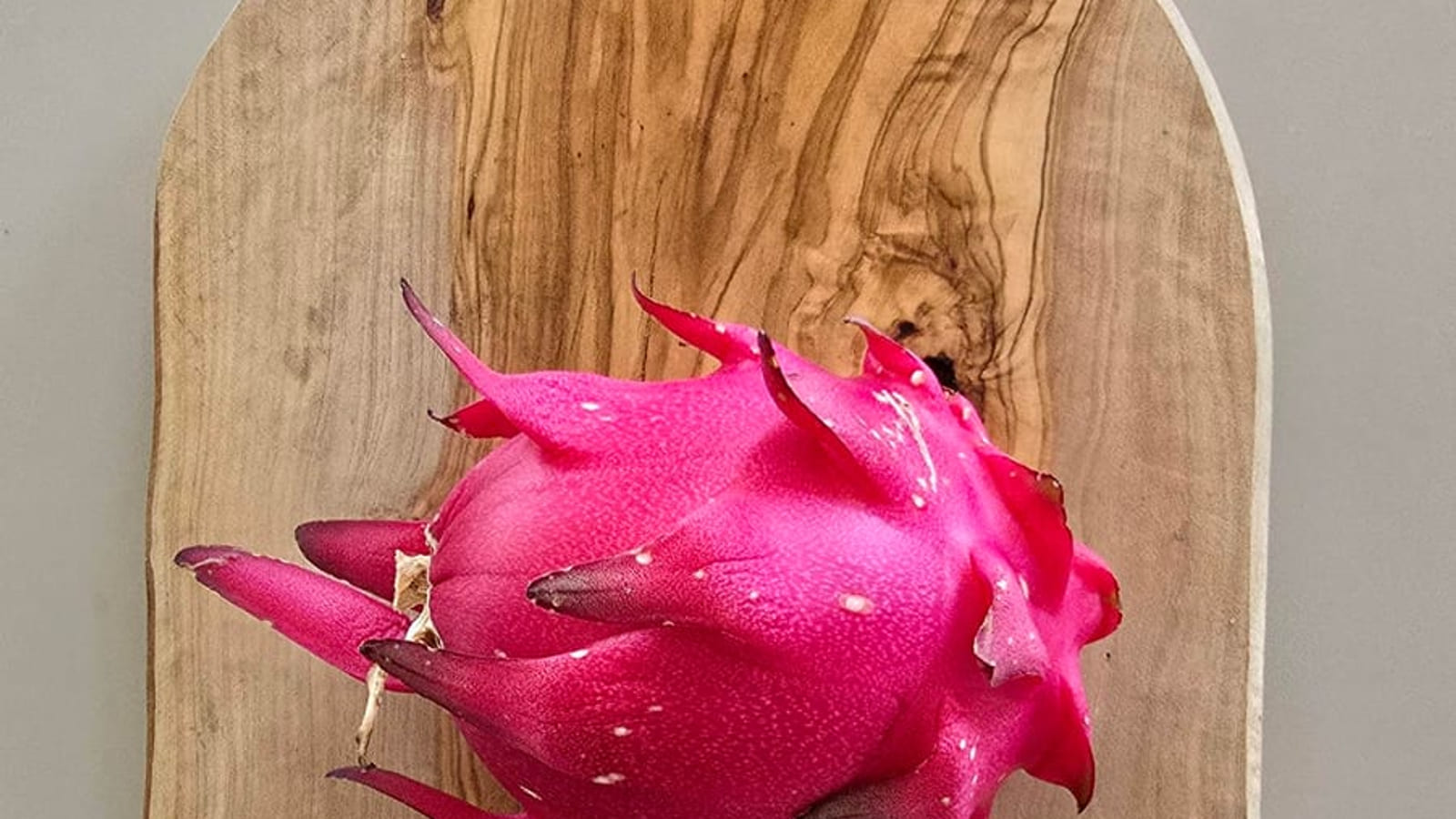
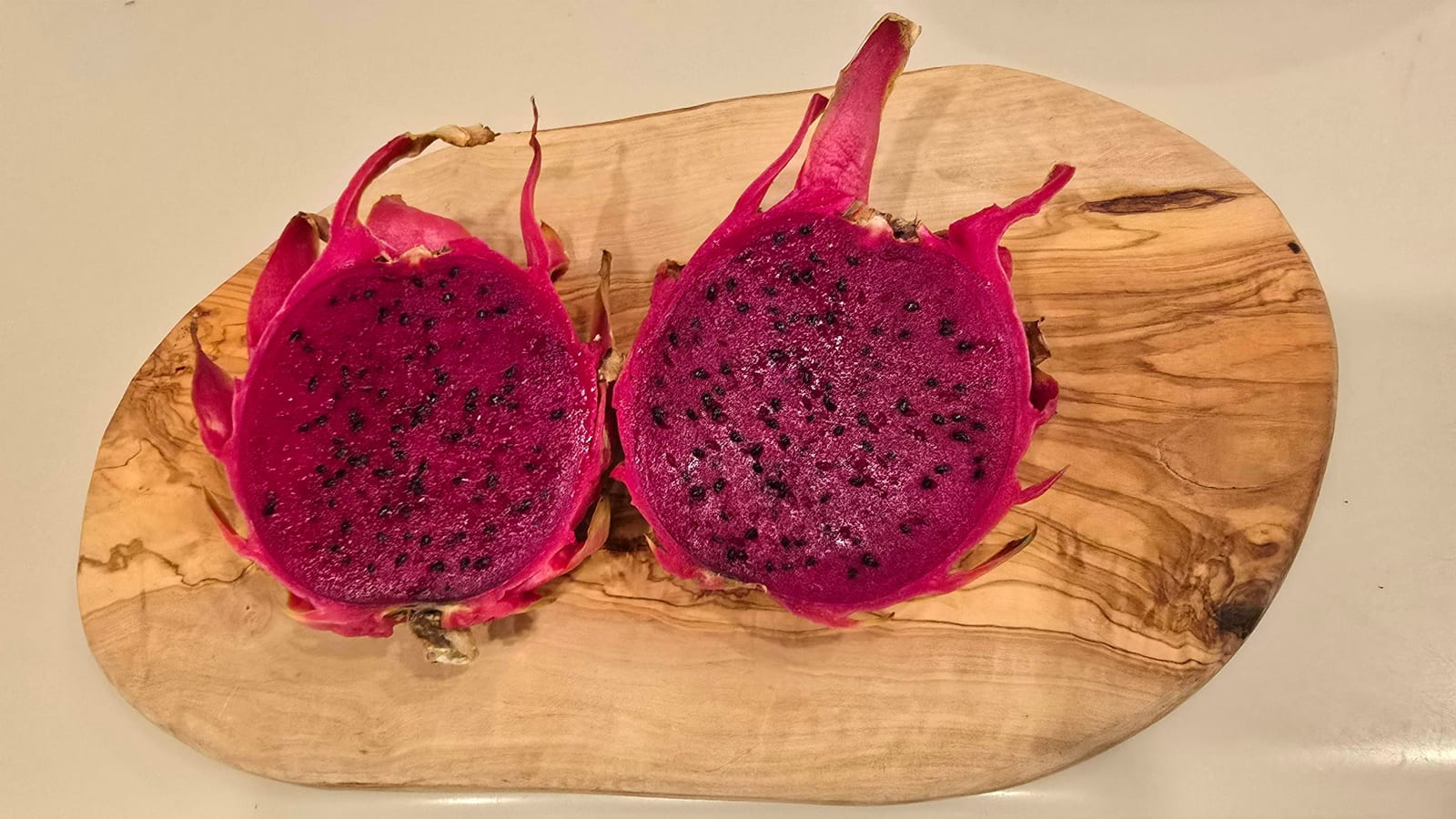
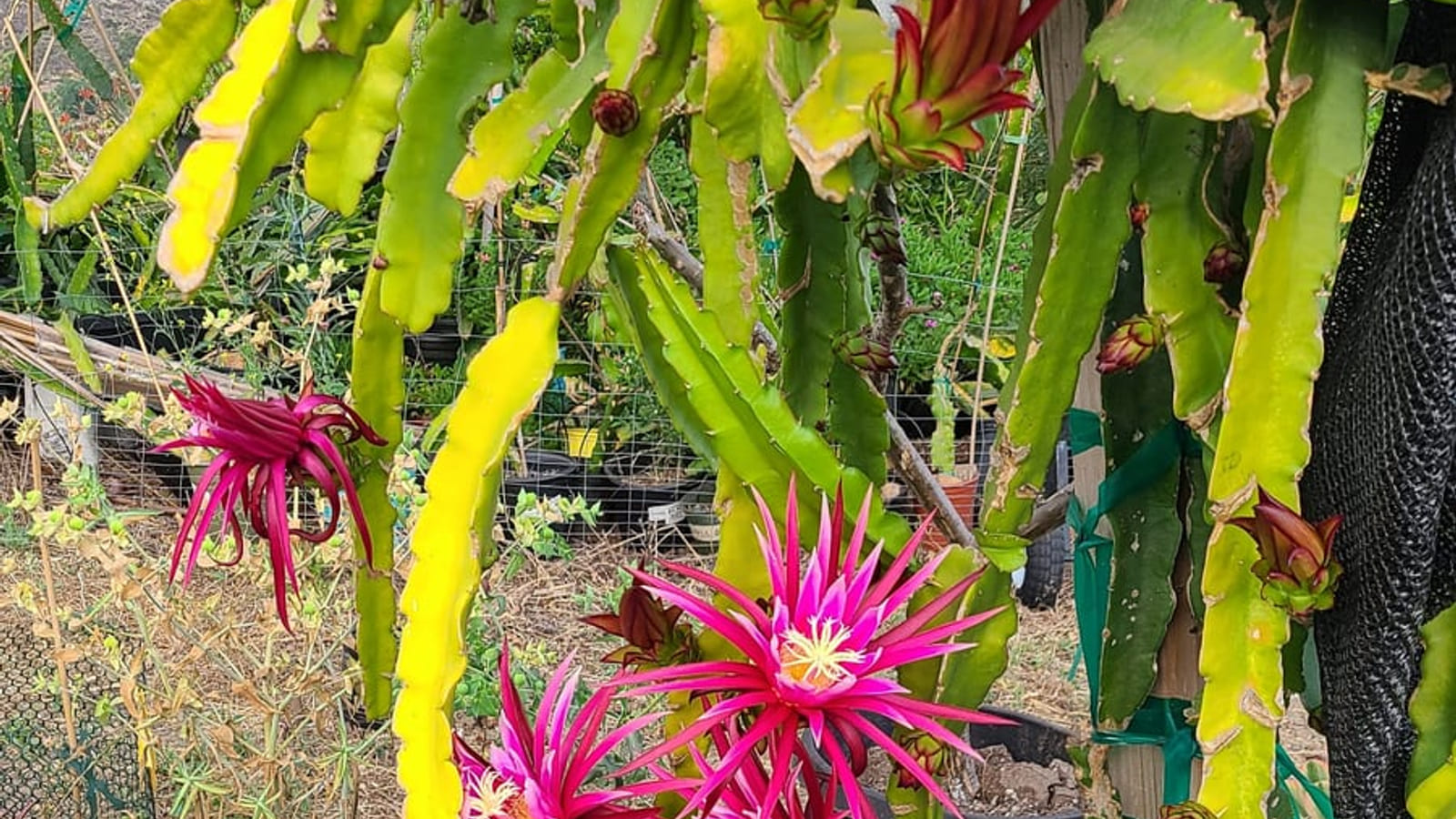
Yellow vs Red Dragon Fruit: Species, Not Color
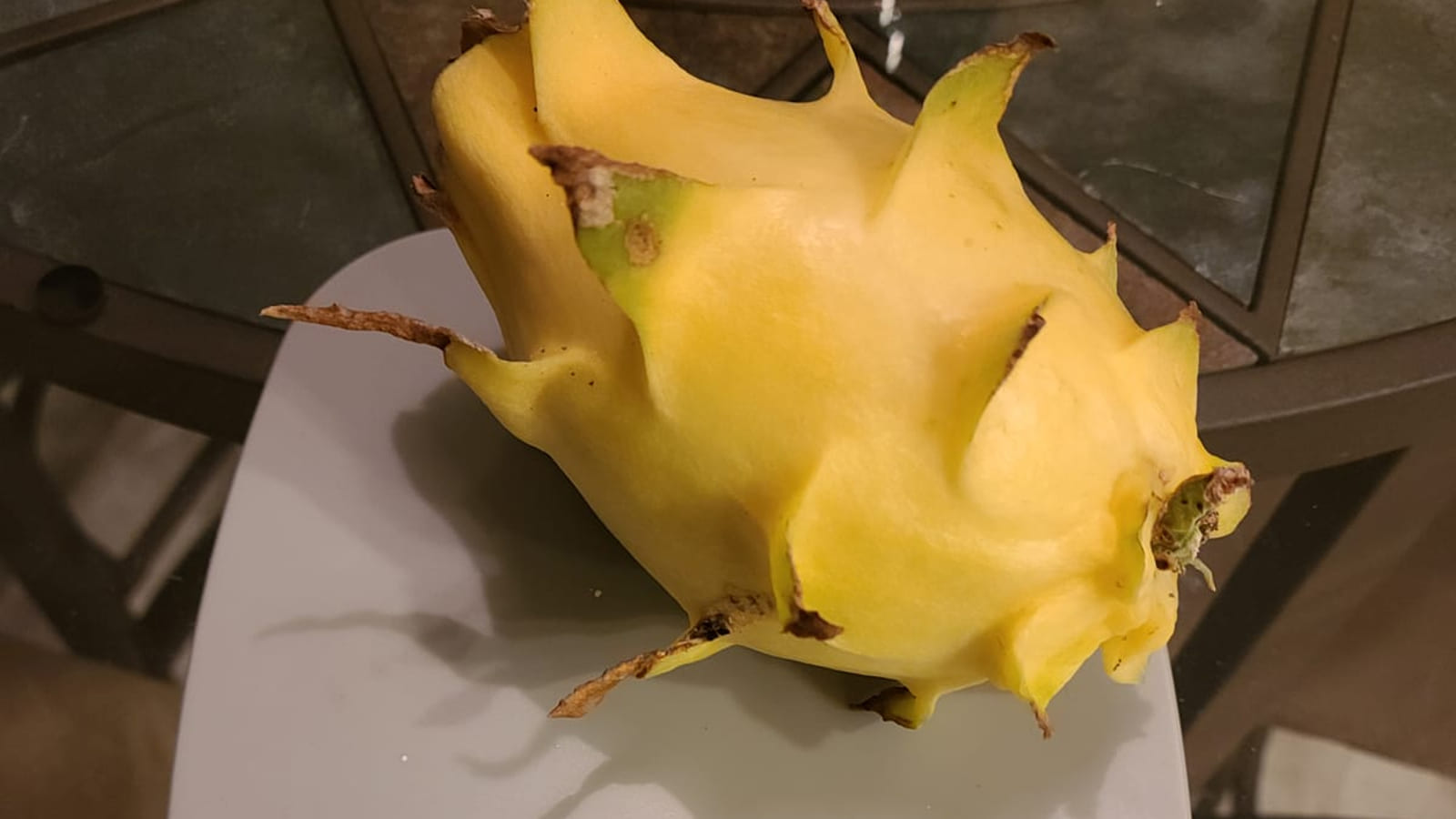
Yellow dragon fruit is Selenicereus megalanthus. It is significantly sweeter than red varieties, reaching up to 22 Brix, but it takes about 120 days to ripen after pollination. Red-skinned fruit, usually Selenicereus undatus or Selenicereus costaricensis, matures significantly faster than yellow. Red varieties typically produce higher tonnage per hectare. Yellow varieties require cross-pollination for large, well-filled fruit; self-pollination results in small, seed-poor fruit. See our guide to hand pollination for more details.
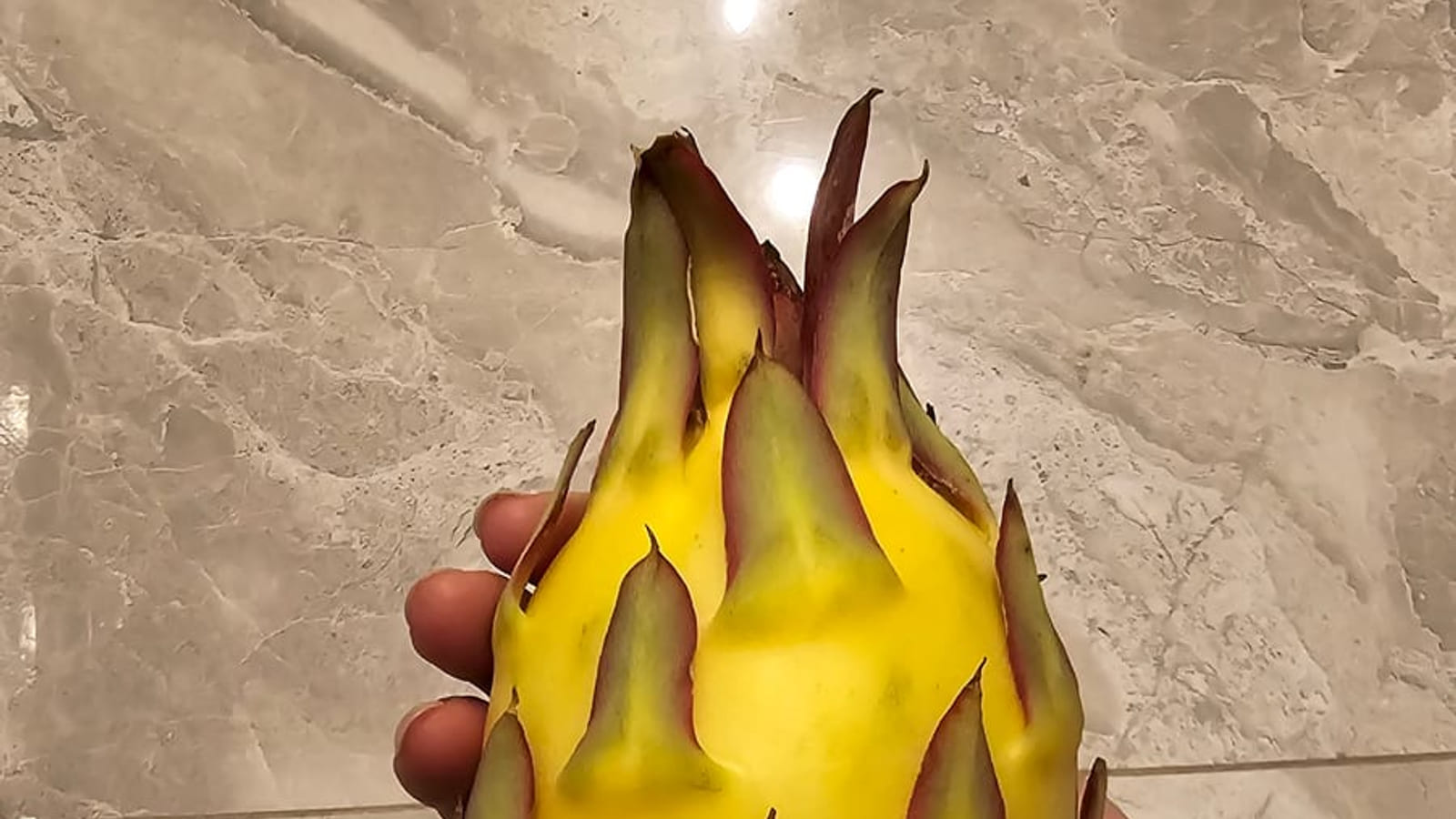
You are comparing two species, not two colours
Most shoppers assume yellow and red dragon fruit are just color variants of the same plant. They are distinct species with different genetics, origins, and handling requirements. The yellow fruit you see in specialty markets is almost always Selenicereus megalanthus. The common red-skinned fruit is typically Selenicereus undatus or Selenicereus costaricensis.
S. megalanthus is native to northern South America, ranging from Colombia to Peru. In the wild and in cultivation, it grows from near sea level up to about 1840 m elevation[1]. This high-altitude origin explains why it often prefers slightly cooler nights and why it behaves differently than lowland red varieties. It is the dominant commercial crop in Colombia, making up about 76.4% of plantings there, and is widely grown in Ecuador, Peru, Bolivia, and Venezuela[1].
Be wary of marketing names like "Australian Gold," which often refers to a yellow-peeled mutant of S. undatus, not S. megalanthus. S. undatus mutants have scaly, thornless fruit. True S. megalanthus has spines on the peel and ovary, which makes harvesting more difficult and requires protective gear[3]. If you buy a cutting labeled "Australian Gold," you are likely getting a red-species plant with a yellow skin, not the high-sugar yellow species.
| Species | Peel | Pulp | Origin |
|---|---|---|---|
| S. megalanthus | Yellow, spiny | White | Colombia to Peru |
| S. undatus | Red, scaly | White | Central America |
| S. costaricensis | Red, scaly | Red | Central America |
The chemistry backs up the taxonomy. In a three-species comparison, S. megalanthus had the highest total soluble sugar in the pulp at 8.72 g/100 g fresh weight[2]. This is why it tastes significantly sweeter. S. undatus had higher total carbohydrates and energy, but less of the simple sugars that drive flavor perception[2]. When you choose yellow, you are choosing a species bred by nature for sugar accumulation. When you choose red, you are choosing a species optimized for volume and rapid growth.
S. megalanthus is slower. S. undatus matures faster. These are not just differences in taste; they are differences in life history. One is a patient, high-altitude climber. The other is a fast-growing, lowland producer. Check your source carefully. If a nursery sells "yellow dragon fruit" without specifying the species, ask if it is S. megalanthus or a S. undatus mutant. The care instructions and flavor outcomes will differ. For more on selecting specific cultivars, see our blog/best tasting dragon fruit varieties.
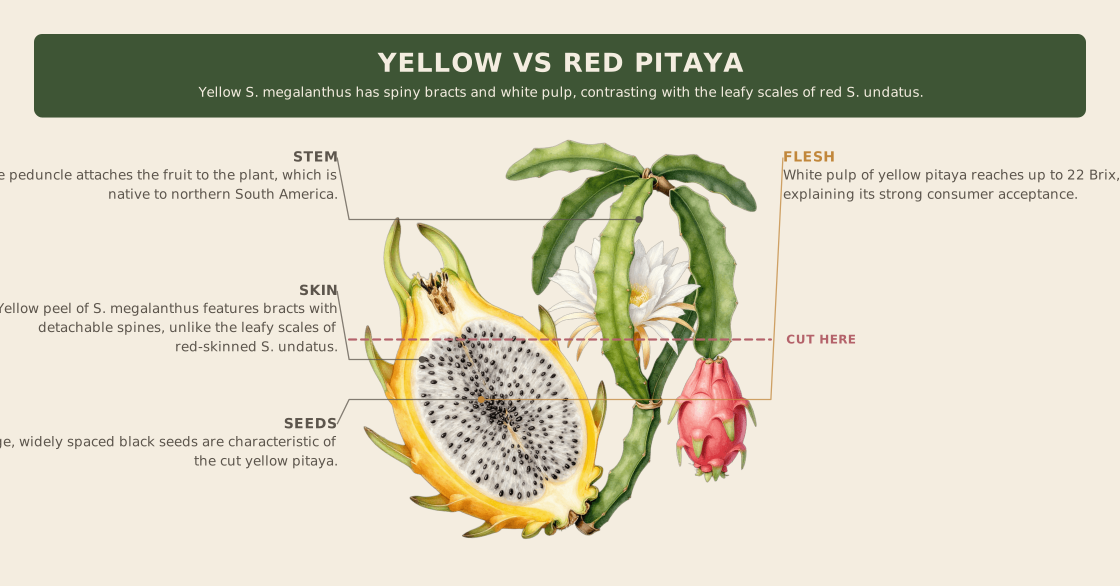
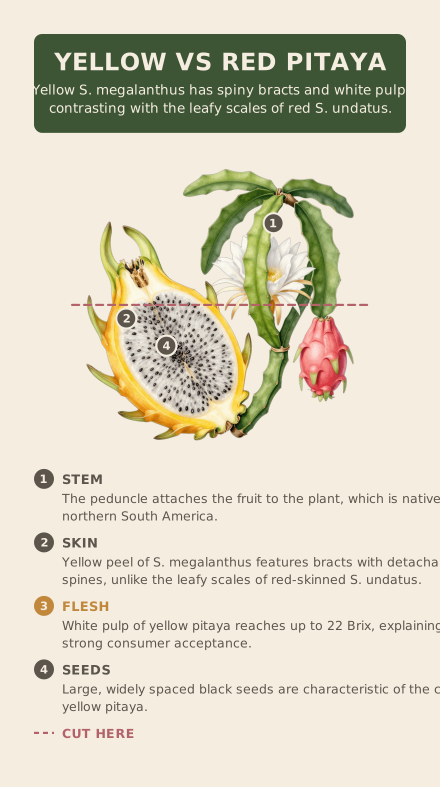
Diagram: yellow fruit anatomy
The fruit exterior of Selenicereus megalanthus is a bright yellow peel covered in small, sharp spines. These are not decorative. They are modified bracts that remain stiff and pointed throughout development. Unlike the soft, leafy scales found on S. undatus, these spines do not soften or flatten as the fruit ripens.
Handling note: The spines on yellow dragon fruit brush off easily with a firm rub or a quick rinse, but they can still prick skin during harvest. UF/IFAS recommends wearing leather gloves and long-sleeved shirts when picking thorny pitayas to avoid irritation.[3]
Inside the peel lies the white pulp, which is the edible portion. This flesh is dense and juicy, holding a high concentration of simple sugars. The pulp surrounds a central seed field. These seeds are small, black, and numerous. In yellow varieties, the number of viable seeds directly correlates with fruit weight. Cross-pollination is essential to maximize seed set and, consequently, fruit size and fill.[1]
The chemical distribution within the fruit is distinct from red-fleshed types. In red pitaya, the peel often contains more phenolic compounds than the pulp. In yellow pitahaya, this pattern reverses. The pulp holds the majority of the antioxidants, while the yellow peel is treated as a waste by-product stream rather than a nutritional asset.[8]
The spines are a physical barrier that demands respect. They are not a sign of poor health or immaturity. They are a permanent feature of the species. If you are growing yellow varieties, plan for protective clothing from the moment the fruit begins to swell. The payoff is a fruit with a complex, sweet profile that justifies the extra care. For more on selecting varieties with the best flavor profiles, see our blog/best tasting dragon fruit varieties.
Flavour and sugar, measured
Flavour is a chemical balance you can measure. The industry standard for sweetness is Brix, which tracks total soluble solids. Yellow dragon fruit, specifically Selenicereus megalanthus, is the sugar champion. It routinely hits high Brix levels, with reports of freshly harvested fruit reaching up to 20 Brix and consumer-accepted fruit often exceeding 15 Brix[1]. Red varieties, particularly S. undatus, are structurally different. They prioritize water and volume. While they can reach decent sugar levels, they rarely match the concentrated sweetness of yellow pitahaya.
Acidity matters just as much. The UC Davis quality index for top-grade dragon fruit requires a minimum TSS/TA ripening ratio of 40[4]. This ratio ensures the fruit has enough sugar to balance its natural acids. If the ratio is too low, the fruit tastes flat or sour, regardless of how sweet the sugar content appears on a refractometer. Red-fleshed varieties often have higher phenolic compounds, which can add astringency, but the primary driver of blandness in commercial red fruit is early harvest.
Dragon fruit is non-climacteric. It does not ripen after picking. Ethylene production is minimal and does not trigger sugar development or colour change post-harvest[4]. If you buy a hard, greenish-red fruit, it will never become sweet. It will only rot.
Commercial exporters often pick fruit early to survive shipping. In Ecuador, 'Palora' yellow pitahaya is sometimes harvested at a greenish-yellow stage, around 15% ripeness, for export[1]. Colombian growers, who often sell locally or with shorter supply chains, wait until the peel is 50-75% yellow[1]. That extra time on the vine allows sugar accumulation to finish. The Ecuadorian fruit arrives in Europe or North America looking pretty but tasting watery. The Colombian fruit arrives with the TSS/TA ratio already optimized for flavour.
Red varieties face an even steeper challenge. They mature quickly, often in 30 to 35 days after flowering[1]. Commercial operations prioritise yield over flavour, harvesting at the first sign of colour change. On-tree TSS in red varieties typically ranges from 8.7 to 13.7 Brix at commercial harvest[1]. This is barely enough to register as sweet to a discerning palate. Yellow varieties, with their longer 120-day maturation, have more time to concentrate sugars and develop aromatic compounds.
| Type | Typical Brix | Flavour Profile | Best Use |
|---|---|---|---|
| Yellow (S. megalanthus) | 15-20+ | Intense, tropical, aromatic | Eating fresh, desserts |
| Red (S. undatus) | 8-14 | Mild, watery, subtle | Smoothies, garnish |
| Red-fleshed (S. costaricensis) | 10-16 | Earthy, berry-like, tart | Jams, colouring |
If you are growing for flavour, harvest timing is everything. For yellow pitahaya, wait for the peel to turn uniformly yellow and the spines to dry out. For red varieties, wait until the skin is fully coloured and the fruit yields slightly to pressure. Do not rely on colour alone. Use a refractometer if you want to be sure. A reading below 12 Brix in red fruit usually indicates a bland experience. For yellow, anything under 15 Brix is disappointing. See our guide to best tasting dragon fruit varieties for cultivar-specific expectations.
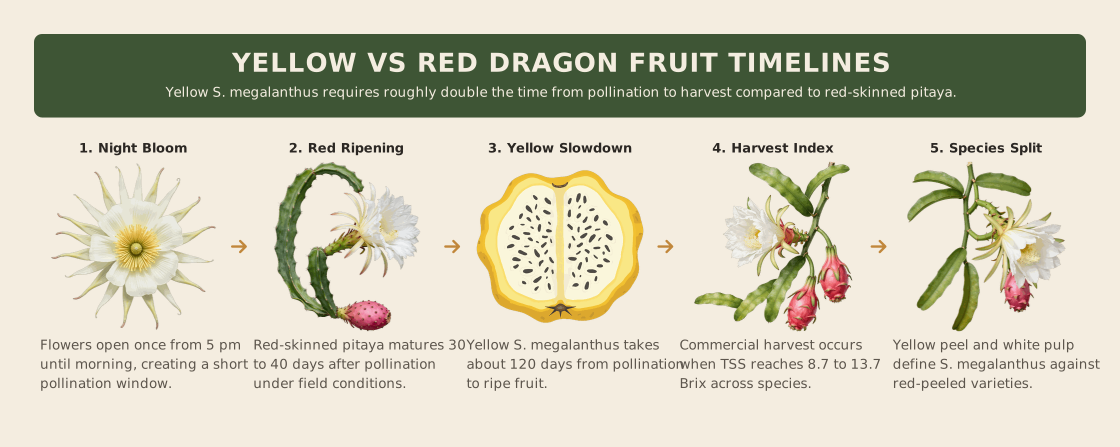
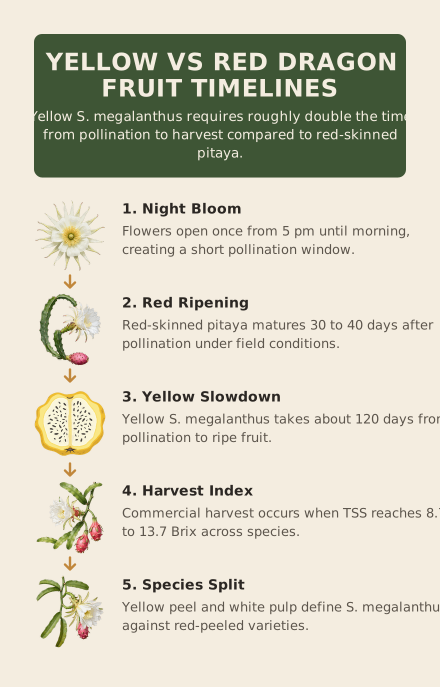
Diagram: flower to harvest timeline
The ripening gap makes the difference between these species concrete. Red dragon fruit matures in just 30 to 40 days after pollination. Yellow dragon fruit follows a much slower clock. Ripening time varies with temperature and season, but averages about 120 days.
The red timeline is stable across seasons because the species is adapted to rapid, high-volume production. The yellow timeline stretches or compresses with temperature and day length, reflecting its high-altitude origin where cool nights slow metabolic processes.
Why the gap matters: A short harvest window allows for succession-pollination of red varieties. A 120-day window means yellow fruit you pollinate today is a commitment for months. You cannot rush it, and you cannot leave it unattended. The long hang time on yellow fruit is also what allows sugars to accumulate to those high Brix levels we discussed earlier.
Dragon fruit is non-climacteric. Neither red nor yellow fruit will sweeten after picking, so the timeline is not just about convenience; it is about flavor. Picking yellow fruit at day 90 in summer or day 140 in winter is not a suggestion. It is the minimum threshold for the sugar development that makes the wait worthwhile. For red varieties, the 30 to 40 day window is equally firm. Harvest too early and you get the watery, bland fruit common in supermarkets. Harvest at the right day and you get a clean, refreshing flavor, even if it lacks the complexity of yellow.
Factor in this timeline difference when planning. If you want fruit for a specific holiday or event, count backward from the harvest date using the correct species timeline. Red gives you flexibility. Yellow demands a calendar. For more on choosing varieties that match your patience and climate, see our blog/best tasting dragon fruit varieties.
Nutrition: what actually differs
Macronutrients in dragon fruit are largely similar across species. You will not find a meaningful difference in calories, protein, or fiber between a white-fleshed yellow fruit and a red-fleshed red fruit. The real nutritional gap lies in the antioxidants and the specific pigments that give the flesh its color.
Red-fleshed varieties, typically Selenicereus costaricensis, contain betalains. These pigments are responsible for the deep red or magenta hue and act as potent antioxidants. Studies show that red-fleshed pitaya has significantly higher total soluble phenolics and stronger antioxidant activity than white-fleshed types. In one comparison, red-fleshed fruit showed antioxidant activity roughly 15 times higher than white-fleshed varieties[8]. The peel of red varieties also holds more phenolics than the pulp, whereas in yellow pitaya, the pulp is the primary antioxidant store[8].
Yellow dragon fruit (Selenicereus megalanthus) and white-fleshed red varieties (Selenicereus undatus) lack these betalains. Their antioxidant profile is lower, though they still provide vitamin C and other phenolic compounds. S. megalanthus generally has higher total soluble phenolics than S. undatus, but both fall well short of the red-fleshed species[2].
The oil in dragon fruit seeds is primarily an omega-6 and omega-9 source. The dominant fatty acids are linoleic acid (omega-6) and oleic acid (omega-9), with alpha-linolenic acid (omega-3) present only in minor amounts[10]. The seeds are, however, a good source of tocopherols, particularly alpha-tocopherol, which acts as a natural preservative for the oil[7].
| Nutrient/Compound | Red Flesh (S. costaricensis) | Yellow/White Flesh (S. megalanthus / S. undatus) |
|---|---|---|
| Betalains | High (red pigment) | None |
| Total Phenolics | High | Moderate to Low |
| Antioxidant Activity | Very High | Moderate |
| Seed Oil Profile | Omega-6 / Omega-9 | Omega-6 / Omega-9 |
| Tocopherols | Present in seeds | Present in seeds |
If you are looking for the highest antioxidant load, choose red-fleshed varieties. If you prefer sweetness and a milder flavor, yellow or white-fleshed types are better suited. For a broader look at flavor profiles, see our best tasting dragon fruit varieties.
Growing them: bearing age, yield, pollination
Yellow dragon fruit requires patience. Red varieties are fast growers. From a rooted cutting, you can expect the first red fruit in 6 to 9 months[1]. Yellow plants, however, typically begin bearing about 14 months after transplanting[1]. This delay is a biological reality of Selenicereus megalanthus, not a sign of poor care.
Once established, the yield profiles diverge sharply. Red plantings are volume machines, producing 4.5 to 6.5 t/ha in their first harvest year and ramping up to 11 to 12 t/ha from year three onward[1]. Yellow plantings do not match this tonnage per hectare, but they offer high-value, heavy fruit. Individual mature plants, regardless of species, can yield about 100 kg (220 lb) of fruit per year once they are three to four years old[3]. A well-maintained planting can remain productive for roughly 20 years[3].
Support matters: Mature stems reach about 6 m (20 ft) and a trellis must carry several hundred pounds of stem weight[3]. Ensure your structure is robust before the plant reaches bearing age.
The pollination puzzle
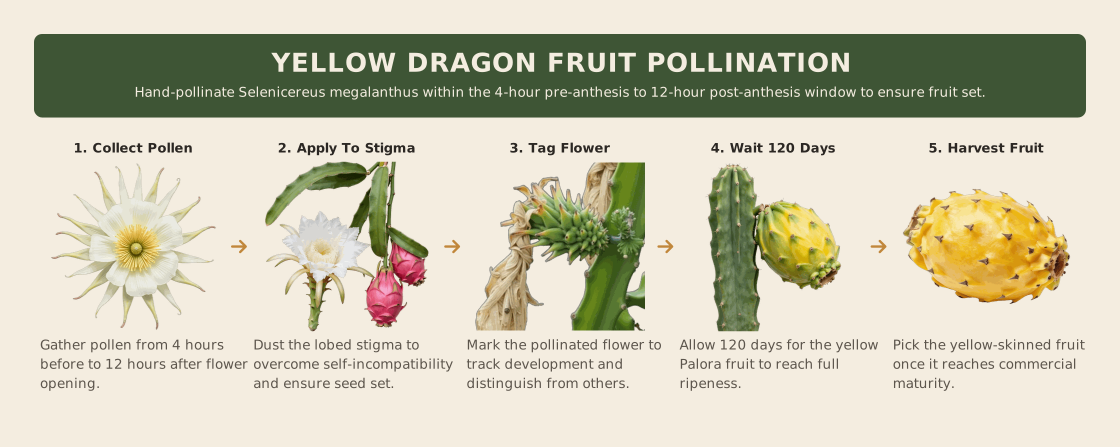
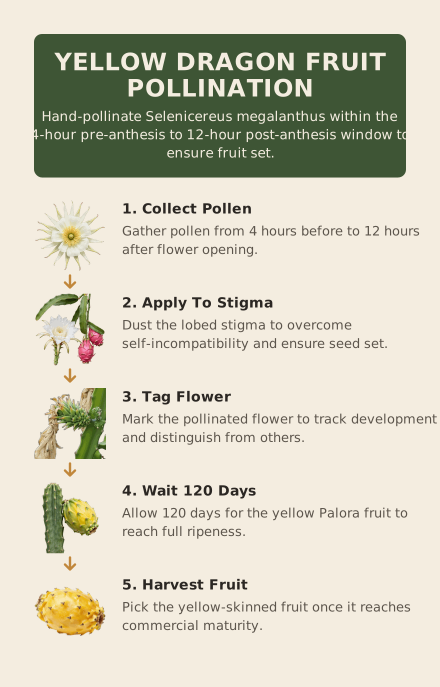
Both species struggle with self-pollination, but for different reasons. Many red nursery cultivars are self-incompatible, meaning they cannot set fruit with their own pollen[3]. You must plant two or three different genetic types, not clones of the same variety, to ensure cross-pollination[3]. While moths and bats are effective nocturnal pollinators, their visits are seldom observed, making hand pollination the reliable fallback[3].
Yellow dragon fruit presents a unique challenge. It is not self-pollinating and produces only 70 to 80% viable pollen[6]. Even with cross-pollination, seed set is naturally low. However, fruit weight correlates positively with the number of viable seeds, so successful cross-pollination is critical for large, well-filled fruit[6]. If you skip hand pollination, you will likely get small, underdeveloped fruit.
Timing is everything. Flowers open once, typically from about 5 pm until the following morning[1]. The window for successful pollen transfer is narrow. Research indicates that pollen viability and stigma receptivity are highest from 4 hours before to 12 hours after anthesis[5]. Target your hand pollination in the early evening or early morning for best results[5].
| Symptom | Likely Cause |
|---|---|
| Flowers drop without setting fruit | No compatible partner nearby (self-incompatibility) |
| Small, shriveled fruit | Lack of hand pollination or low seed set |
| Poor fruit quality or low yield | Excessive shade (more than 30% for established plants) |
| Stem rot or flower drop | Waterlogged soil (roots need drainage) |
Shade management is a delicate balance. UF/IFAS recommends about 30% shade for the first 3 to 4 months after planting to prevent sunburn, but warns that heavier shade cuts both yield and fruit quality[3]. Once established, these plants need full sun to drive the energy required for flowering and fruit development. If you are choosing between species for your specific climate, consider how your local pollinators interact with the nocturnal bloom cycle. For more on selecting specific cultivars, see our blog/best tasting dragon fruit varieties.
Climate fit and handling
Both species share a tropical physiology, but their tolerance limits and physical demands differ enough to change how you manage them. Pitaya is frost sensitive. Prolonged exposure to temperatures at or below -2 C (31 F) causes damage, though plants can often recover from light frost if the freeze is brief [3]. The sweet spot for growth sits between 18 and 25 C (65-77 F) [3]. Heat becomes a problem above 38 C (100 F), where injury occurs, though some species can tolerate up to 45 C if water is abundant [3].
Flowering is triggered by day length and warmth. Pitahaya is a long-day species, meaning it initiates flower waves once daylight exceeds night length and temperatures stay above 18 C [1]. This synchronization means both yellow and red varieties will often bloom in the same seasonal window, but the yellow Selenicereus megalanthus requires a much longer hang time on the vine to ripen, stretching the harvest season later into the year.
Watch the roots. Pitaya is highly sensitive to waterlogging. Heavy clay soils that hold water will suffocate the roots quickly, regardless of how well-drained the surface looks. Raised beds or mounded planting are safer bets than flat ground in wet climates.
Young plants need protection from harsh sun. UF/IFAS recommends about 30% shade for the first three to four months after planting if sunburn is a risk, but be careful not to over-shade. Heavier shade cuts both yield and fruit quality later on [3]. As the plant matures, it needs full sun to drive sugar accumulation, which is critical for the high-brix profile of yellow varieties.
Handling mature plants requires different gear depending on the species. Red varieties have scaly, thornless fruit that is easy to pick. Yellow S. megalanthus carries spines on the ovary and peel, making harvest a prickly affair. UF/IFAS explicitly recommends leather gloves and long-sleeved shirts for thorny pitayas [3]. The spines are modified bracts that do not fall off easily, so you must wear protection to avoid irritation.
Structural support is non-negotiable for both, but the load differs. Mature stems can reach 6 meters (20 feet), and a trellis must carry several hundred pounds of stem weight [3]. Because yellow varieties often produce heavier individual fruit (up to 800 g in some orchards) and have a longer ripening period, the vines may hold fruit for months at a time, adding sustained weight to the structure. Ensure your trellis is anchored deeply and built to handle this static load, not just the weight of the stems.
| Factor | Yellow (S. megalanthus) | Red (S. undatus/costaricensis) |
|---|---|---|
| Frost Tolerance | Low; damage at -2 C | Low; damage at -2 C |
| Heat Injury | Above 38 C | Above 38 C |
| Harvest Gear | Leather gloves, long sleeves | Standard garden gloves |
| Shade Needs | 30% for first 3-4 months | 30% for first 3-4 months |
| Water Sensitivity | High; avoid waterlogging | High; avoid waterlogging |
Buying: ripeness, season, storage
The spines on yellow fruit are not just a harvesting hazard; they are a ripeness indicator. When buying fresh produce, ignore the marketing labels and look at the bracts. For both species, you want firm, fleshy bracts that show no signs of drying or browning. The flesh inside should be firm, not mushy. If the skin is split or the fruit feels soft, it is likely overripe or damaged in transit.
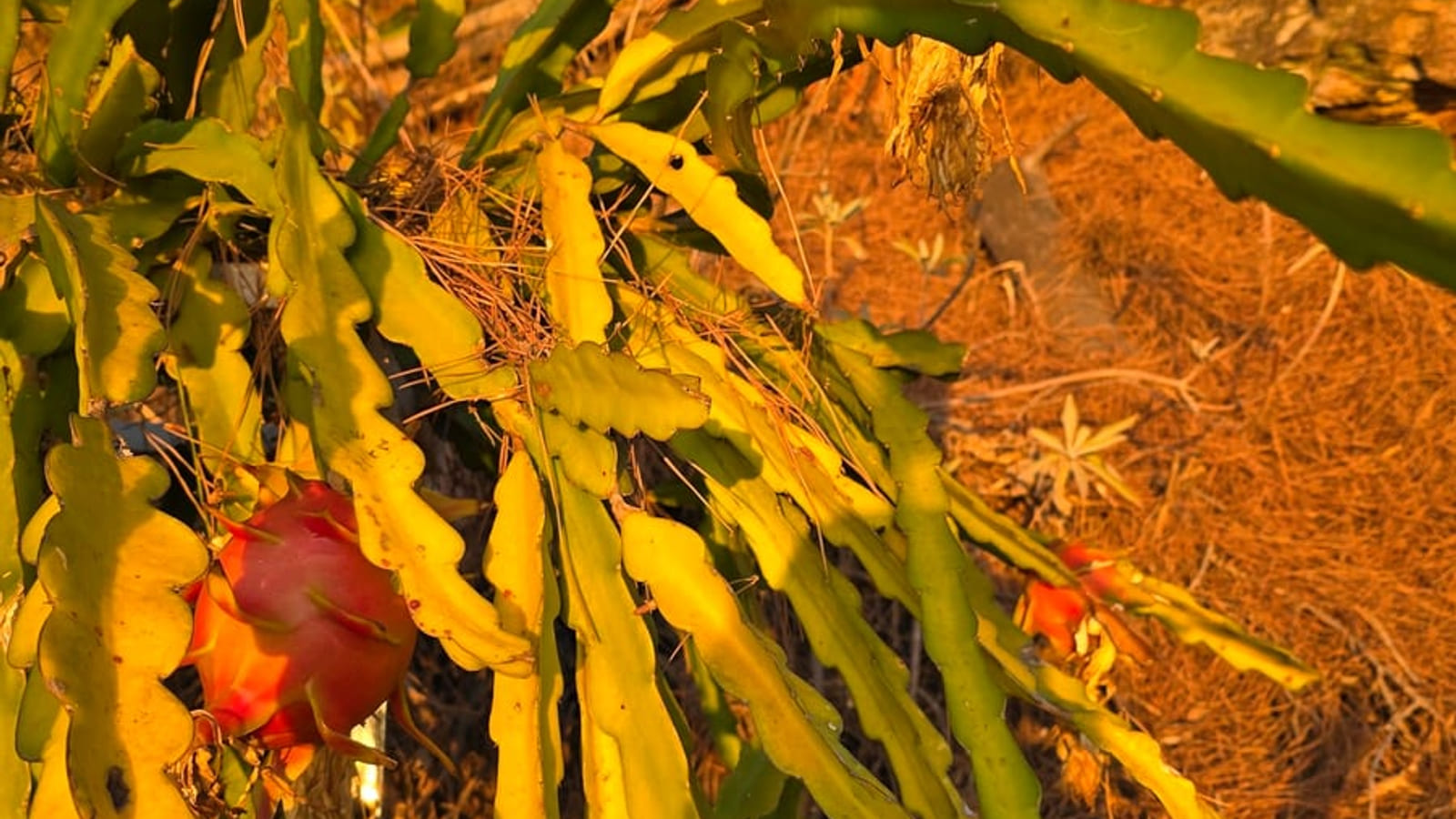
Yellow dragon fruit presents a unique visual challenge. Because it is non-climacteric, it will not sweeten further after picking. You must buy it ripe. Look for a uniform, bright yellow peel. If you see green shoulders or patches, the fruit was picked too early. It will remain bland and watery. True Selenicereus megalanthus fruit should be fully colored before it leaves the vine. Red varieties are more forgiving in appearance but still require firm flesh. Avoid any fruit with bruising, as the soft interior degrades quickly.
In Florida, red-skinned dragon fruit is a summer and fall crop, with the season running from June to November. Yellow fruit, however, has a distinct late-season window in south Florida, typically ripening from late November through February. If you are shopping outside this window, you are likely buying imported stock. Vietnam is the world’s largest exporter of red dragon fruit, shipping it year-round. This constant supply often means the red fruit on your shelf has traveled far and may have been picked at a lower maturity stage to survive the journey.
Storage requirements differ sharply between the two species. Yellow pitaya is significantly more sensitive to cold damage. It requires a warmer, more humid environment to stay fresh. Red pitaya is hardier but still needs careful handling. If you leave either type on the counter, you have a very short window before quality declines. Refrigeration extends life, but only if you use the correct temperature.
| Feature | Yellow (S. megalanthus) | Red (S. undatus/costaricensis) |
|---|---|---|
| Ripeness Signal | Uniform yellow peel, no green shoulders | Firm flesh, vibrant color, no splits |
| Bract Check | Firm, fleshy, not dried out | Firm, fleshy, not dried out |
| Optimal Storage | 6 C (43 F) at 85-90% RH | 10 C (50 F) |
| Counter Life | 4-5 days | 4-5 days |
| Refrigerated Life | Several weeks (in plastic bag) | Several weeks (in plastic bag) |
| US Season (FL) | Late Nov to Feb | June to Nov |
| Import Source | Colombia, Ecuador, Peru | Vietnam (year-round) |
Do not freeze fresh dragon fruit. The high water content in the pulp causes cell walls to rupture upon thawing, resulting in a mushy, unappealing texture. If you must store it long-term, puree it first.
In European markets, dragon fruit is considered a premium exotic item, often retailing around EUR 25 per kg. The global market for this crop was valued at USD 14.73 billion in 2024, driven by demand for both the visual appeal and the health benefits. Because yellow fruit is harder to grow and more sensitive to transport, it often commands a higher price than the ubiquitous red varieties.
When you are ready to plant, remember that the fruit you buy at the store is rarely the same genetic type you can grow from a cutting. For home growers, selecting the right variety is the first step toward a successful harvest. We recommend checking our blog/best tasting dragon fruit varieties to find a cultivar that matches your climate and flavor preferences.
Yellow Dragon Fruit Sweetness and Pollination
Is yellow dragon fruit actually sweeter? Yes. The high-altitude origin of Selenicereus megalanthus drives sugar accumulation, with pulp total soluble sugars measured at 8.72 g/100 g fresh weight, significantly higher than red-fleshed or white-fleshed red varieties.[2] You can expect brix levels up to 22 in well-managed fruit, which explains the distinct, rich aroma that commercial red varieties often lack.[9]
Is yellow dragon fruit self-fertile? No. It is strictly self-incompatible and requires cross-pollination from a different genetic type to set large, well-filled fruit.[6] While it produces viable pollen, fruit weight correlates directly with seed set, meaning a single plant will yield small, underdeveloped fruit without a partner.[6] You need at least two genetically distinct yellow plants, or a compatible red variety if cross-species pollination is confirmed for your specific cultivars, to ensure a harvest worth waiting for.
How long does it take to fruit? Patience is required. This is a long commitment compared to red varieties, which mature in 30 to 35 days.[1] If you plant a cutting, expect your first harvest about 14 months after transplanting, though some growers see fruit sooner under ideal conditions.[1] The wait is the price of entry for the superior flavor profile.
Can I store yellow and red dragon fruit the same way? Not quite. Yellow pitahaya is more sensitive to cold storage than red. While red varieties tolerate 10 C (50 F), yellow fruit prefers 6 C (43 F) at high humidity to avoid chilling injury.[4] Both are non-climacteric, meaning they do not sweeten after picking, so you must harvest at peak ripeness.[4] Look for uniform yellow color and slight softness before cutting the stem. If you are unsure about ripeness cues, check our guide to blog/best tasting dragon fruit varieties for variety-specific harvest indicators.
Why is my dragon fruit bland? If you picked early, that is the likely culprit. Red varieties are often harvested prematurely for transport, resulting in watery, flavorless pulp. Yellow fruit, however, rarely suffers from early picking because it takes so long to mature; if your yellow fruit is bland, the issue is usually insufficient light or water stress during the final weeks of development. Ensure your plant receives full sun and consistent moisture during the 17-week ripening window to maximize sugar content.
Yellow fruit delivers intense sweetness and complex aromas but demands patience and precise pollination. Red varieties provide rapid production and volume but often lack flavor depth unless harvested at peak ripeness. For growers seeking the best of both worlds, specific ecotypes within the yellow species offer notable advantages.
The Palora ecotype is a strong option. Grown in the Palora canton of Morona Santiago, Ecuador, this variety produces significantly larger fruit than the common Pichincha or Nacional types. While standard yellow pitahaya often weighs around 150 g, Palora fruit averages about 350 g[1]. This size difference makes it a compelling choice for home gardeners who want substantial harvests without sacrificing the high sugar content characteristic of Selenicereus megalanthus.
Palora fruit still requires the same care as other yellow varieties. You must hand pollinate the flowers, as the species is not self-pollinating. The reward is a heavy, sweet fruit with a distinct aroma that supermarket red varieties rarely match. If you are ready to grow a premium yellow dragon fruit, our blog/best tasting dragon fruit varieties guide covers more top-performing cultivars and sourcing tips.
Pro tip: When sourcing yellow dragon fruit cuttings, ask specifically for the Palora ecotype if you want larger fruit. Verify the species is Selenicereus megalanthus to avoid yellow-skinned S. undatus mutants, which lack the same sweetness and spine structure.
References
- Yellow Pitahaya (Selenicereus megalanthus Haw.): The Less Known of the Pitahayas (Foods 14(2):202, doi:10.3390/foods14020202, PMC11765378), MDPI Foods (Univ. Miguel Hernandez / ESPOCH Ecuador) (2025).
- Comparative analysis of nutrient composition and antioxidant activity in three dragon fruit cultivars (PeerJ 12:e17719, PMC11246028), PeerJ / Khulna University (2024).
- Pitaya (Dragonfruit) Growing in the Florida Home Landscape (HS1068/HS303), UF/IFAS Extension (2019).
- Produce Facts Sheets: Dragon fruit, UC Davis Postharvest Technology Center (2024).
- Floral and pollination biology of dragon fruit reveals strategies for enhancing productivity (Sci Rep, PMC12552510), Scientific Reports (2025).
- Breeding an underutilized fruit crop: a long-term program for Hylocereus (PMC9189603), Springer / Euphytica (Mizrahi, Nerd, et al.) (2022).
- Dragon Fruit (Hylocereus spp.) Seed Oils: Their Characterization and Stability Under Storage Conditions (doi:10.1007/s11746-012-2151-6), JAOCS / American Oil Chemists' Society (2012).
- Preharvest Elicitors as a Tool to Enhance Bioactive Compounds and Quality of Both Peel and Pulp of Yellow Pitahaya (Int J Mol Sci 25(10):5435), MDPI IJMS (2024).
- Bioactive Compounds, Antioxidant Capacity and Mineral Profile of Pulp and Peel from Diverse Selenicereus (Pitaya) Varieties in Brazil (doi:10.1007/s11130-026-01553-6), Plant Foods for Human Nutrition (Springer) (2026).
- Analysis of Lipids in Pitaya Seed Oil by UPLC-TOF-MS/MS (PMC9563927), MDPI Molecules (2022).