Best Tasting Dragon Fruit Varieties for Sweetness
If you want the absolute best tasting dragon fruit variety, start with Palora. This Ecuador Palora yellow-skinned variety consistently hits 22 to 24 Brix, making it the sweetest option available. Asunta 2 follows closely with scores of 22 to 23 Brix. Costa Rican Sunset also ranks high, delivering a wide sweetness range of 20 to 24 Brix. These three varieties lead the pack for pure sugar content. The Brix scale measures sugar by weight percentage. Growers use a refractometer to test these levels accurately. Yellow-fleshed Selenicereus megalanthus varieties generally score highest on this scale. Red-fleshed types usually range from 16 to 22 Brix. Choose your variety based on both sugar potential and flavor profile.
How Dragon Fruit Sweetness Is Measured
Growers rely on the Brix scale to quantify sugar content. This metric expresses sugar as a percentage of the fruit's total weight. The scale ranges from 0 to 32 for most varieties. To get an accurate reading, you need a refractometer. This small optical instrument analyzes a drop of juice to give you a precise number.
That number tells you how much sugar is present. It does not tell you how the fruit will taste. Flavor is a complex mix of sweetness, acidity, aroma, and texture. A variety with a lower Brix score can taste superior to a sweeter one if it has better balance. For example, some 14 Brix varieties taste better than 18 Brix varieties to certain palates. The tartness or floral notes might make the lower sugar content feel more refreshing.
Why Brix isn't everything: High sugar does not equal high quality. A fruit with 20 Brix and high acidity can taste vibrant and complex. A fruit with 20 Brix and flat acidity can taste cloying or one-dimensional. Always taste test your varieties.
Use the Brix score as a baseline for potential. Use your own palate to judge the result.
Top Sweetest Dragon Fruit Varieties
The varieties listed below round out the upper tier of flavor profiles. While they may not always hit the extreme sugar highs of the yellow-fleshed giants, they offer distinct aromatic qualities and reliable performance. Use this table to compare specific traits side by side.
| Variety | Brix Score | Flesh Color | Flavor Notes | Pollination |
|---|---|---|---|---|
| Dark Star | 19 | Purple | Grape-like undertones | Self-fertile |
| American Beauty | 18.51 | Red | Rosewater and berry | Self-fertile |
| Sugar Dragon | 18.35 | Red | Sweet rose | Universal pollinator |
| Delight | 18+ | Light pink | Mild and sweet | Self-fertile |
| Lisa | 18 | Red | Balanced flavor | Self-fertile |
| Robles Red | 17.6 | Red | Kiwi-grape with mild tartness | Self-fertile |
| Halley's Comet | 16.7 | Red | Standard red flavor | Self-fertile |
American Beauty stands out for its aromatic complexity. It scores 18.51 Brix according to Gardener's Path and delivers excellent flavor with distinct rosewater and berry undertones. Dark Star offers a unique purple flesh with grape-like notes and sits at 19 Brix. Sugar Dragon is a workhorse for the garden. It scores 18.35 Brix with a sweet rose flavor and serves as a universal pollinator for other varieties. Delight provides a consistent 18+ Brix with light pink flesh. Lisa earned its reputation in a UC San Diego Cooperative Extension blind taste test. It scored 18 Brix and ranked among the top varieties for overall flavor preference. Robles Red brings a kiwi-grape profile with mild tartness at around 17.6 Brix. Halley's Comet scores lower at 16.7 Brix but remains a favorite for its high productivity and tolerance for full sun.
Our Top Picks: Best Tasting Varieties We Carry
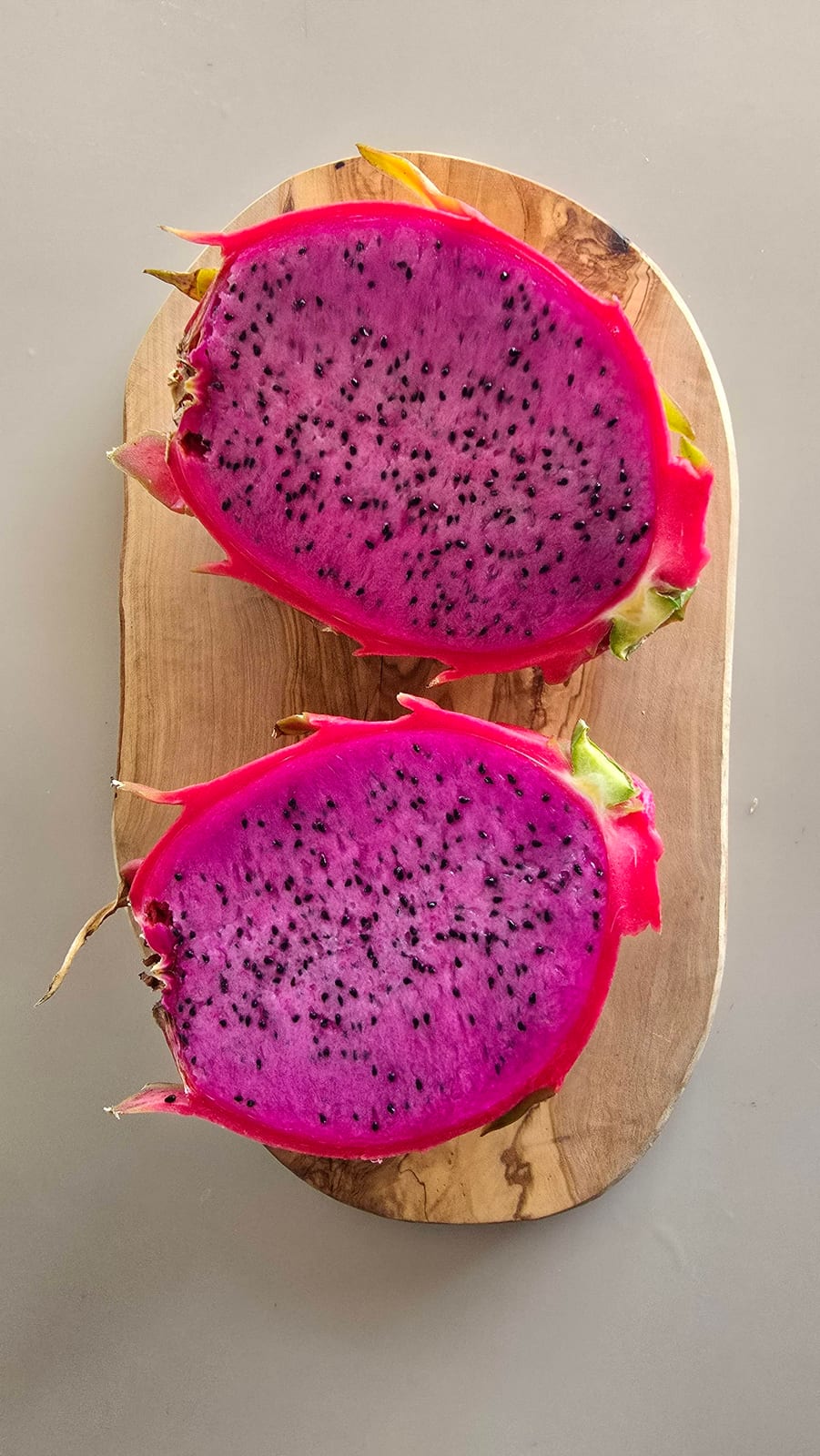
Knowing the science of sweetness helps you choose, but seeing the plants in our nursery confirms the choice. We stock the varieties that growers and eaters agree deliver the best flavor profiles. We start with the yellow-fleshed giants because they set the standard for sugar content. Then we move to the red-fleshed varieties that offer complex aromas and reliable performance.
The Yellow Standard
Yellow dragon fruit varieties generally score highest on the Brix scale. If you want pure sweetness, these are your best options.
| Variety | Flavor Profile | Key Trait |
|---|---|---|
| Palora | Intense honey sweetness | Highest sugar potential |
| Yellow Dragon (Colombiana) | Rich and sweet | Consistent performer |
Palora is the benchmark for sweetness. It consistently hits high Brix scores and delivers a honey-like flavor that is hard to beat. Yellow Dragon (Colombiana) offers a rich, sweet taste that many growers consider some of the best you can get. Both varieties require full sun and well-draining soil to reach their full potential.
Top Red-Fleshed Performers
Red-fleshed varieties offer more than just sugar. They bring acidity, aroma, and texture to the table. These picks balance sweetness with distinct flavor notes.
| Variety | Flavor Notes | Growing Note |
|---|---|---|
| Frankie's Red | Deep, complex sweetness | 20-22 Brix |
| Dark Star | Grape-like undertones | Unique purple flesh |
| American Beauty | Rosewater and berry | Aromatic complexity |
| Sugar Dragon | Sweet rose | Universal pollinator |
Frankie's Red stands out among red-fleshed types for its depth of flavor. It scores 20-22 Brix while maintaining a rich profile. Dark Star provides a unique experience with its purple flesh and grape-like notes. American Beauty is prized for its aromatic complexity, featuring distinct rosewater and berry undertones. Sugar Dragon is a garden workhorse. It tastes great with a sweet rose flavor and serves as a universal pollinator for other varieties.
Red-Fleshed vs White-Fleshed vs Yellow: Does Color Affect Sweetness?
Flesh color is a reliable indicator of sugar potential. The yellow-skinned Selenicereus megalanthus varieties generally produce the sweetest fruit. They tend to score highest on the Brix scale, often reaching the 20 to 24 range. This genetic advantage makes them the top choice for growers prioritizing pure sweetness.
Red-fleshed varieties, primarily Selenicereus costaricensis, usually fall into a slightly lower range of 16 to 22 Brix. While they may not always hit the extreme sugar highs of the yellow types, they offer a different reward. These varieties often possess more complex flavor profiles. You might find notes of rose, berry, or grape that add depth beyond simple sugar.
| Flesh Color | Typical Brix Range | Flavor Profile |
|---|---|---|
| Yellow | 20-24 | Highest sweetness, honey-like |
| Red | 16-22 | Complex, aromatic, balanced |
Color gives you a baseline for what to expect. Your growing conditions will determine the final result. Sunlight, soil quality, and harvest timing all shift the flavor profile. Use the color as a guide, but trust your own taste buds to decide the winner.
Tips for Maximum Sweetness When Growing Dragon Fruit
Genetics set the ceiling for sweetness, but your care determines how close you get to it. Dragon fruit sweetness varies significantly by growing conditions, soil quality, sunlight exposure, and ripeness at harvest. You can grow the sweetest variety in the world and still end up with bland fruit if the environment is wrong. Focus on these practical steps to maximize sugar accumulation.
Light and Soil Management
Dragon fruit needs intense light to produce sugar. Plant your cactus in full sun. Shade reduces photosynthesis and dilutes flavor. The soil must drain quickly. Dragon fruit roots rot in soggy conditions, and stressed plants do not produce sweet fruit. Use a gritty, well-draining mix. Avoid heavy clay or dense potting soils that hold water against the roots.
Do not overwater. Excess water dilutes the sugars in the fruit. Let the soil dry out between waterings. The plant should look slightly thirsty before you water again.
Pollination and Harvest Timing
Hand-pollination typically produces larger, sweeter fruit compared to self-pollination alone. Use a small paintbrush to transfer pollen between flowers in the evening. This ensures full seed development and better fruit set. Wait until the fruit is fully ripe on the vine. Dragon fruit does not sweeten after you pick it. The skin should turn dull and the scales should soften slightly. If you pick it early, it will stay tart.
- Check the fruit daily near the expected harvest window.
- Look for a change in skin sheen from glossy to matte.
- Test the fruit with a refractometer if you want precise data.
- Harvest immediately when the Brix reading peaks.
A refractometer is a simple tool that measures sugar content. It takes the guesswork out of harvest timing. Squeeze a drop of juice onto the prism and read the scale. This tells you exactly when the fruit has reached its peak sweetness. Use this data to refine your watering and feeding schedule for the next season. For a deeper look at how different genetics perform, check out our complete dragon fruit variety guide.