How Long to Fruit From a Cutting?
Most dragon fruit cuttings can produce fruit in about 1 to 2 years, but rooting speed, warmth, training, and variety all affect the real timeline.
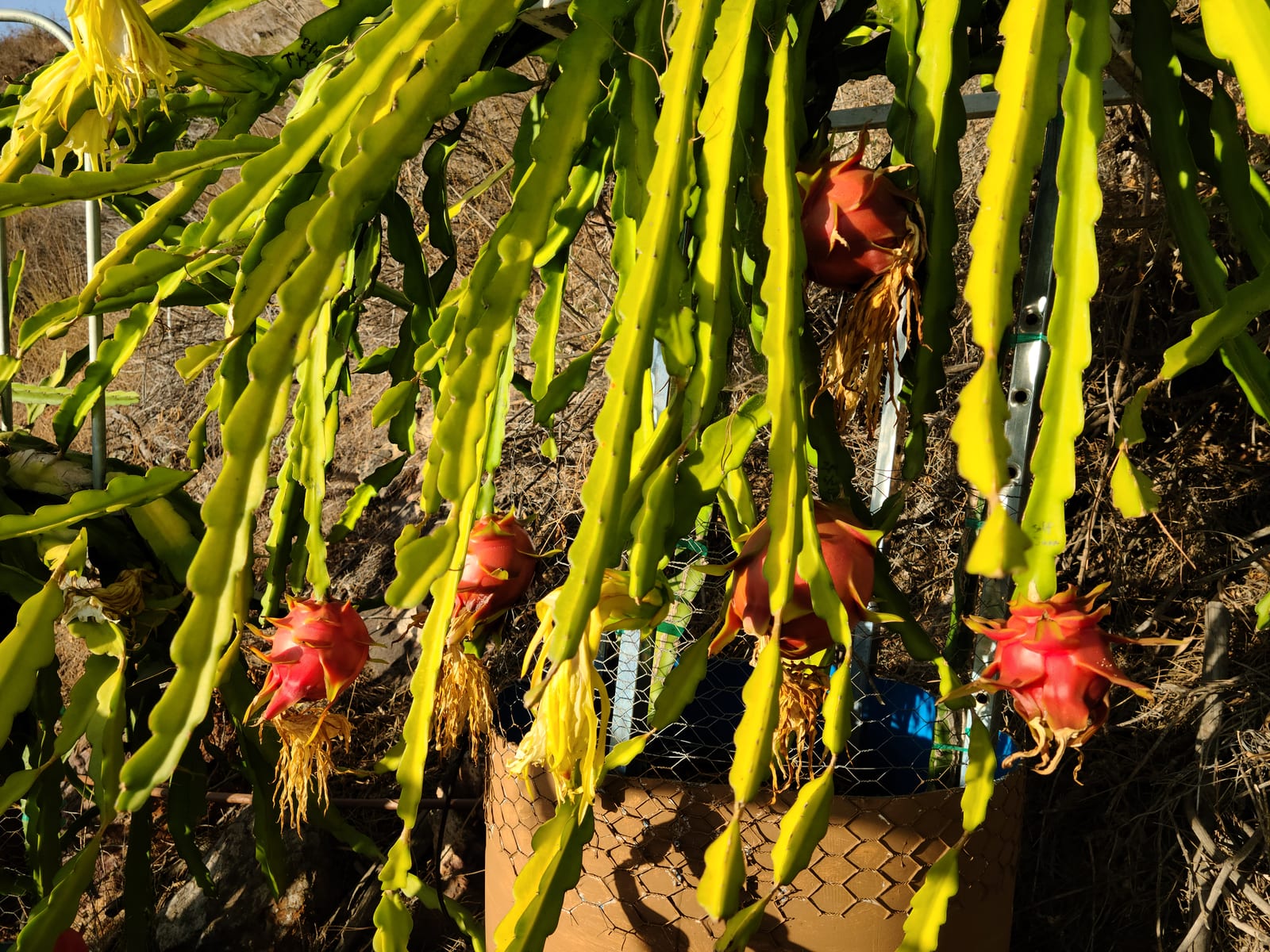
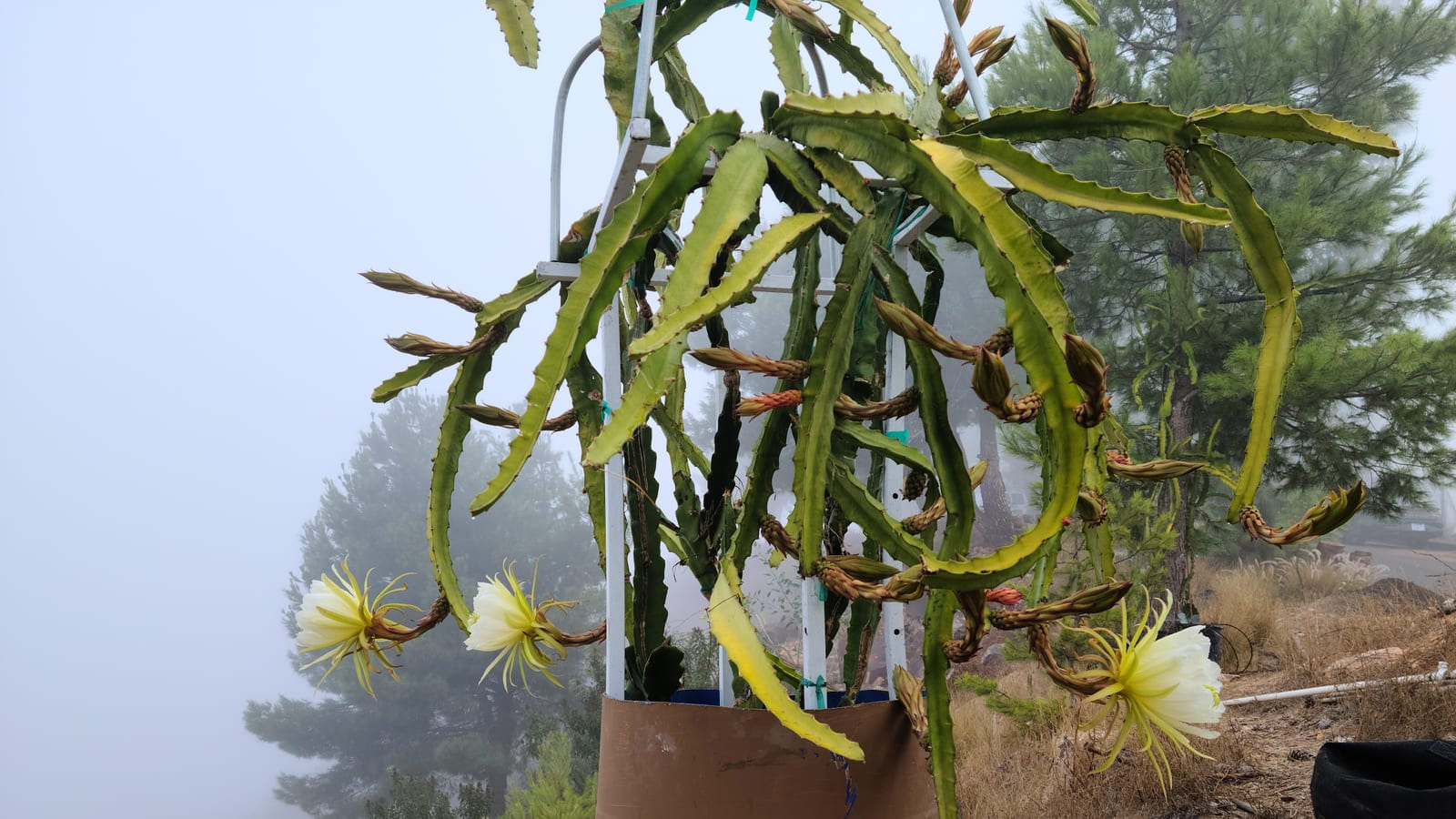
Most healthy dragon fruit cuttings can produce their first fruit in about 1 to 2 years under warm, well-managed conditions. Freshly planted cuttings usually root in about 2 to 4 weeks, then spend the next year building stems, climbing support, and reaching enough size to bloom. Seeds are much slower, often taking 5 years or more, which is why cuttings are the standard recommendation for growers who want fruit instead of a long experiment.
That answer is consistent across multiple sources. Epic Gardening states that cuttings root in roughly 2 to 4 weeks and can mature to fruiting in 1 to 2 years, while seed-grown plants may need 5 or more years. Greg notes that dragon fruit often needs about 2 to 3 years from a cutting before flowering reliably if conditions are not ideal, which is a useful reminder that 1 to 2 years is the fast lane, not a guarantee. In practical Southern California terms, a thick cutting planted into warm weather, fast-draining soil, and a good trellis can move quickly. A weak cutting planted into cold, soggy, or shaded conditions can take much longer.
At Sky Botanicals in Escondido, Southern California, USDA zone 10a, we grow 50+ varieties, and the biggest timeline mistake we see is people treating all cuttings like they start at the same place. They do not. A fat mature cutting taken from a productive parent is already carrying stored energy. A skinny fresh segment with poor callusing starts behind on day one. If you want a realistic timeline, you need to break the process into rooting, climbing, branching, flowering, fruit set, and harvest.
Quick timeline table: from cutting to first fruit
| Stage | Typical timing | What is happening | What speeds it up |
|---|---|---|---|
| Callusing after cutting | About 12 to 24 hours for some fresh cuts, up to several days or a week for thicker cuts | The wound dries and seals so rot risk drops | Dry shade and good airflow |
| Rooting | About 2 to 4 weeks | New roots form and anchor the cutting | Warm temperatures and fast drainage |
| Establishment | 1 to 3 months | New vegetative growth begins | Bright light, steady moisture, no overwatering |
| Trellis climb and canopy build | 6 to 12 months or more | The plant builds enough stem mass to branch and bloom | Support, pruning, balanced feeding |
| First flowering | Often 12 to 24 months, sometimes longer | Mature stems and warm nights trigger buds | Mature cutting, strong light, good nutrition |
| Harvest after bloom | About 27 to 50 days after flowering depending on variety | Fruit develops and reaches ripeness | Successful pollination and warm weather |
The short version is this: the cutting itself roots fast, but fruiting depends on how quickly the plant builds a mature canopy. Rooting is not the bottleneck. Plant size is.
What the 1 to 2 year estimate really means
When growers say a cutting fruits in 1 to 2 years, they are usually talking about a healthy named cutting from an established plant, grown in warm conditions with proper support. They are not promising that every fresh segment stuck in a random pot will bloom in 12 months.
Epic Gardening's propagation guide is helpful because it separates rooting from fruiting. The cutting may root in 2 to 4 weeks, but the plant still needs time to build enough vigorous stems to support flowers and fruit. Greg adds a useful reality check by noting that age around 2 to 3 years from a cutting is often needed before flowering if the plant is still maturing or conditions are mediocre. Those two ideas are not contradictory. They describe the fast case and the normal case.
At Sky Botanicals, we would frame it like this: 1 year is possible for a very strong cutting in a favorable setup, 2 years is a strong practical expectation for many home growers, and 3 years is not unusual if the cutting started small, got cold-stressed, or spent time rebuilding after poor early care.
The six stages that decide how fast you get fruit
1. Cutting quality
Cutting quality is the first major variable. Epic Gardening recommends cuttings around 7 to 10 inches long, with mature tissue and healthy green flesh. Longer, thicker segments carry more stored energy and usually establish faster than small or weak pieces.
A mature cutting is effectively a head start. It already has carbohydrate reserves and enough structural tissue to push aggressive new growth once rooted. A thin cutting may survive just fine, but it usually takes longer to become a fruiting-size plant.
2. Callusing and rot prevention
Fresh cuts need time to dry before planting. Epic Gardening notes about 12 to 24 hours of callusing for some flesh cuttings, while many experienced growers stretch that to several days depending on thickness and humidity. The reason is simple: wet tissue in wet soil rots.
This step does not add much time, but skipping it can cost months if the cutting stalls or dies. Fast timelines come from avoiding setbacks.
3. Rooting conditions
Epic Gardening places rooting at roughly 2 to 4 weeks, and that lines up well with warm-season propagation in Southern California. Rooting happens fastest when the cutting sits in airy media, bright but not scorching light, and temperatures that stay comfortably warm. Guam and UF references put ideal dragon fruit growth around 65 to 77°F, while Greg notes active growth really gets going when night temperatures stay above 60°F.
That means a late spring or summer start in Escondido is much more forgiving than a winter start in a cold patio corner. If you want speed, align the cutting with the season.
4. Trellis training
Dragon fruit is not just a cactus. It is a climbing fruiting vine. A cutting that roots well but never gets trained upward wastes time. The faster the plant reaches its vertical support and starts forming a top canopy, the sooner it can behave like a fruiting plant instead of a loose ground stem.
This is why support design matters so much. A secure post with a broad top lets the plant switch from vertical growth into hanging, mature branches, which is where much of the flowering happens. If your support is weak or delayed, your fruiting timeline gets delayed too. Our trellis guide covers this in depth.
5. Nutrition and soil
Dragon fruit wants more feeding than people expect from a cactus. Greg recommends balanced fertilizer such as 10-10-10 or 6-6-6 every 4 to 6 weeks during active growth, and notes that a shift toward higher phosphorus and potassium, such as 8-4-12, can support flowering and fruit set. The same source places dragon fruit in USDA zones 10a to 11b and treats it as a heavy feeder compared with desert cacti.
Soil matters too. Fast-draining media around pH 6.0 to 7.0 is a practical target for container or backyard culture. If the root zone stays soggy, the plant slows down even if it survives. If the media are extremely poor and the plant is never fed, it may stay alive but take much longer to flower.
| Input | Practical target | Why it matters |
|---|---|---|
| Preferred growth temperatures | About 65 to 77°F optimum, with active growth when nights stay above 60°F | Warmth drives rooting and stem extension |
| Heat ceiling | Best below about 100°F | Extreme heat can stress stems and slow progress |
| Soil pH | About 6.0 to 7.0 | Keeps nutrients available without waterlogging issues |
| General active-growth fertilizer | Balanced feeds like 6-6-6 or 10-10-10 | Supports vegetative structure needed before flowering |
| Bloom-support fertilizer | Higher P and K options like 8-4-12 | Helps shift mature plants toward bloom and fruit |
| Watering rhythm | Deep watering with dry-down between cycles | Encourages root health and avoids rot |
6. Variety and pollination behavior
Not all dragon fruit varieties are equal in vigor, earliness, or pollination habits. Some are naturally fast, productive, and self-fertile. Others may need more size before blooming or may need pollen from another cultivar to turn flowers into fruit.
If you want the shortest path to fruit, start with varieties known for strong performance such as Sugar Dragon, American Beauty, or Vietnamese White. Then read our self-pollinating varieties guide and pollination guide so a mature plant does not miss fruit simply because pollination was poor.
Fastest realistic timeline for Southern California
Here is the optimistic but real version for Escondido or similar inland Southern California conditions. You plant a thick, healthy cutting in late spring. It calluses properly, roots in 2 to 4 weeks, pushes strong new growth through summer, reaches the trellis, branches well, survives winter cleanly, then blooms the following warm season. In that best-case scenario, fruit in roughly 12 to 18 months is believable.
Now the more normal version. The cutting roots well, but its first season is mostly about establishment. It climbs and thickens, then really starts looking mature in year two. It blooms in its second warm season and fruits later that year. That is why 18 to 24 months is such a practical working expectation for many home growers.
If the cutting starts in autumn, gets overwatered in winter, sits in shade, or loses time to cold damage, the timeline can easily drift toward 24 to 36 months. Nothing is wrong with the plant. It is just rebuilding more than progressing.
How we speed up the path to first fruit at Sky Botanicals
We start with mature material
The single biggest accelerator is using strong named cuttings from mature productive plants. You are not just buying a piece of stem. You are buying time.
We match timing to the season
Warm-season planting matters. Rooting during active growth is faster and safer than asking a fresh cutting to survive cold, damp conditions first.
We trellis early
The plant gets trained immediately so every inch of new growth moves toward a fruiting canopy instead of sprawling aimlessly.
We feed like it is a fruiting vine
Dragon fruit is a heavier feeder than most people expect from a cactus. Balanced feeding during growth, then a bloom-support emphasis once the plant matures, saves time.
We avoid avoidable stress
Root rot, sunburn, poor drainage, and winter cold all steal months. The fastest way to get fruit is not chasing miracle fertilizer. It is avoiding setbacks.
Why some cuttings take much longer than expected
- The cutting was too small or weak when planted
- The cut was planted before callusing and partly rotted
- The mix stayed wet and anaerobic
- The plant never got a proper support post
- Night temperatures stayed too cool for active growth
- The plant was overfed with nitrogen and kept vegetative
- The variety needs a pollen partner and flowers were not pollinated
- The plant experienced winter cold or stem sunburn
When a grower says a cutting took three years to fruit, that does not automatically mean the species is slow. It often means the plant spent part of those years recovering from something preventable.
Timeline comparison: cutting vs seed
| Method | Rooting or sprouting | Time to mature plant | Time to first fruit | Genetics |
|---|---|---|---|---|
| Cutting | Roots in about 2 to 4 weeks | Often 1 year or more depending on vigor | Usually about 1 to 2 years, sometimes longer | Exact clone of the parent |
| Seed | Sprouts in days to weeks | Long juvenile phase | Often 5 years or more | Variable, not guaranteed true to type |
If your real question is whether a cutting is worth the premium over seeds, the answer is yes for almost everyone who wants fruit. We broke that down further in our cuttings vs seeds comparison.
What happens after the first flower appears?
Once the plant is mature enough to flower, the timeline tightens dramatically. The flower opens at night, pollination has to happen quickly if the variety is not self-pollinating, and then fruit development begins. From bloom to harvest, many common varieties run about 27 to 37 days, while some larger or yellow-fruited types go longer, often 40 to 50 days.
That means the long wait is mostly before the first bud, not after it. Once you see buds, you are in the final stretch. Use our bloom timing guide and harvest timing guide to finish the job cleanly.
How to know your cutting is on schedule
Month 1
The cutting should be stable, rooted, and beginning to show healthy turgid tissue with no sign of mushy decline.
Months 2 to 4
You should see clear new growth. If nothing happens and the cutting just sits there, inspect light, drainage, and temperature.
Months 4 to 12
The goal is vertical extension and thickening. The plant should be climbing, attaching, and becoming more structurally serious.
Year 2
Many healthy cuttings start behaving like mature plants in their second warm season, especially if they have built a good umbrella or crown on the trellis top.
If your plant is healthy but not flowering yet, do not panic. A strong vegetative framework is part of the timeline, not evidence of failure.
How We Grow It at Sky Botanicals
Because we are working with a collection of 50+ dragon fruit varieties in Escondido, we optimize for repeatability. That means thick cuttings, disciplined callusing, fast-draining soil, strong supports, and feeding that reflects the plant's real appetite. We would rather spend an extra week curing a cutting than lose two months to stem rot. We would rather build the right trellis once than lose a season to floppy growth. Those choices look boring, but they are what turn a vague 3-year maybe into a much more realistic 1-to-2-year path.
For growers starting out, the smartest approach is to stack the odds in your favor. Choose a proven variety, start in warm weather, train it hard, and solve pollination before you need it. That combination does more for speed than any single product or trick.
FAQ
How long does dragon fruit take to fruit from a cutting?
Most healthy cuttings can fruit in about 1 to 2 years, though 2 to 3 years is also common if growth conditions are less ideal.
How long does a dragon fruit cutting take to root?
Many cuttings root in about 2 to 4 weeks when planted in warm weather and fast-draining media.
What is the fastest way to get dragon fruit from a cutting?
Use a mature healthy cutting, plant in warm weather, give it a strong trellis, use fast-draining soil around pH 6.0 to 7.0, and feed it consistently during active growth.
Can a dragon fruit cutting fruit in the first year?
It can happen in the best cases, especially with large mature cuttings and ideal conditions, but most home growers should plan on closer to 1 to 2 years.
Why is my dragon fruit cutting growing but not flowering?
It may still be immature, short on light, overfed with nitrogen, too cool at night, or lacking the structure and size needed to support flowering.
Does pollination affect the timeline?
Yes. A mature plant can still fail to fruit if flowers are not pollinated, especially with self-sterile varieties.
Are cuttings better than seeds?
For speed and true-to-type fruit, yes. Seeds are better for experimentation and breeding, not for the quickest harvest.
For most Southern California growers, the real answer is encouraging: dragon fruit from a cutting is not a five-year project. If you set the plant up well from the start, it is often a one-to-two-year climb from stem segment to first harvest.