Hana Dragon Fruit: Sweet Melon Flavor & Fast Growth
If you want a dragon fruit that tastes like sweet melon with a floral finish instead of watery blandness, Hana is the variety for you. This rare white-fleshed cultivar comes from the species Hylocereus monacanthus and was collected along the Road to Hana on Maui. The plant grows fast and sets fruit quickly. You do not need a second plant because Hana is self-fertile. Its stems are thinner than common varieties and feature long thorns. The flowers are large and white with a unique pink blush at the base. We have Hana cuttings in stock now for growers who want this distinct flavor profile and vigorous growth habit in their garden.
Hana Dragon Fruit: Quick Facts
The earlier sections covered the history and flavor profile. This section provides the hard data for your garden planning. Hana is a vigorous climber with distinct physical traits. It thrives in warm coastal climates.
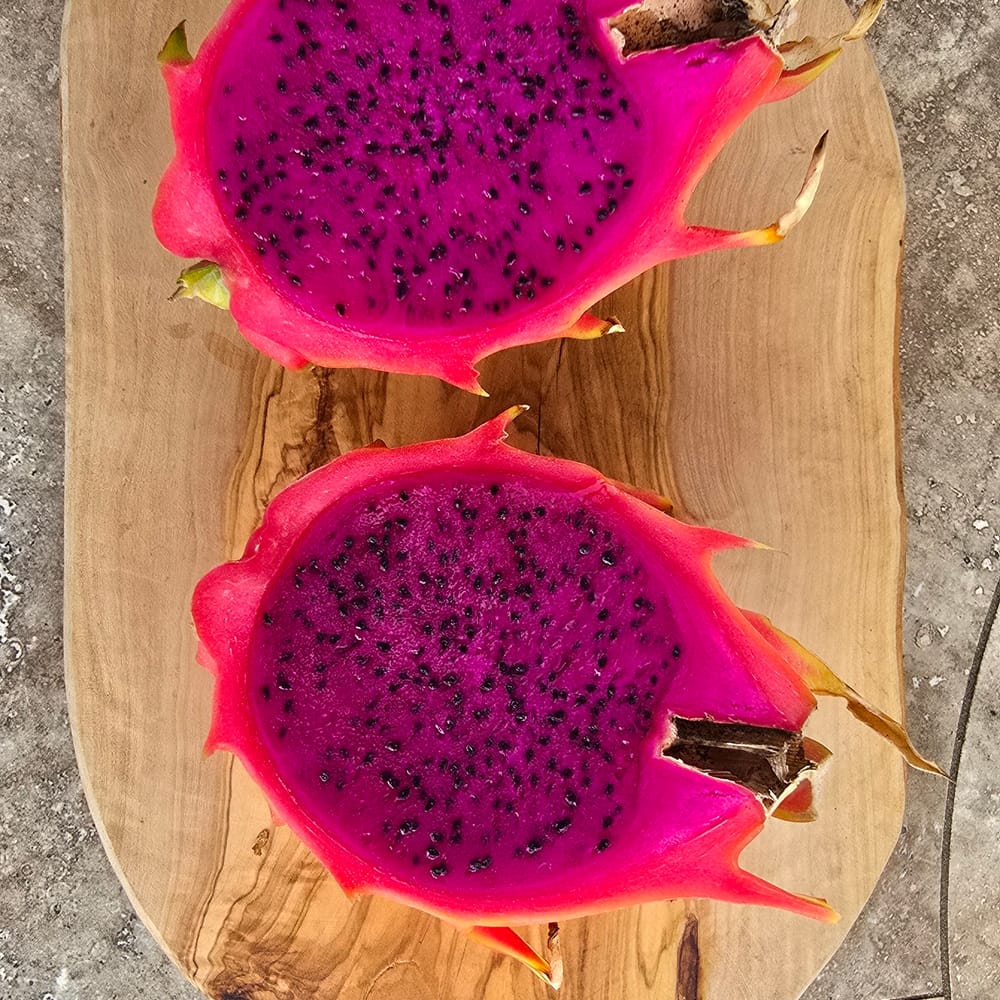
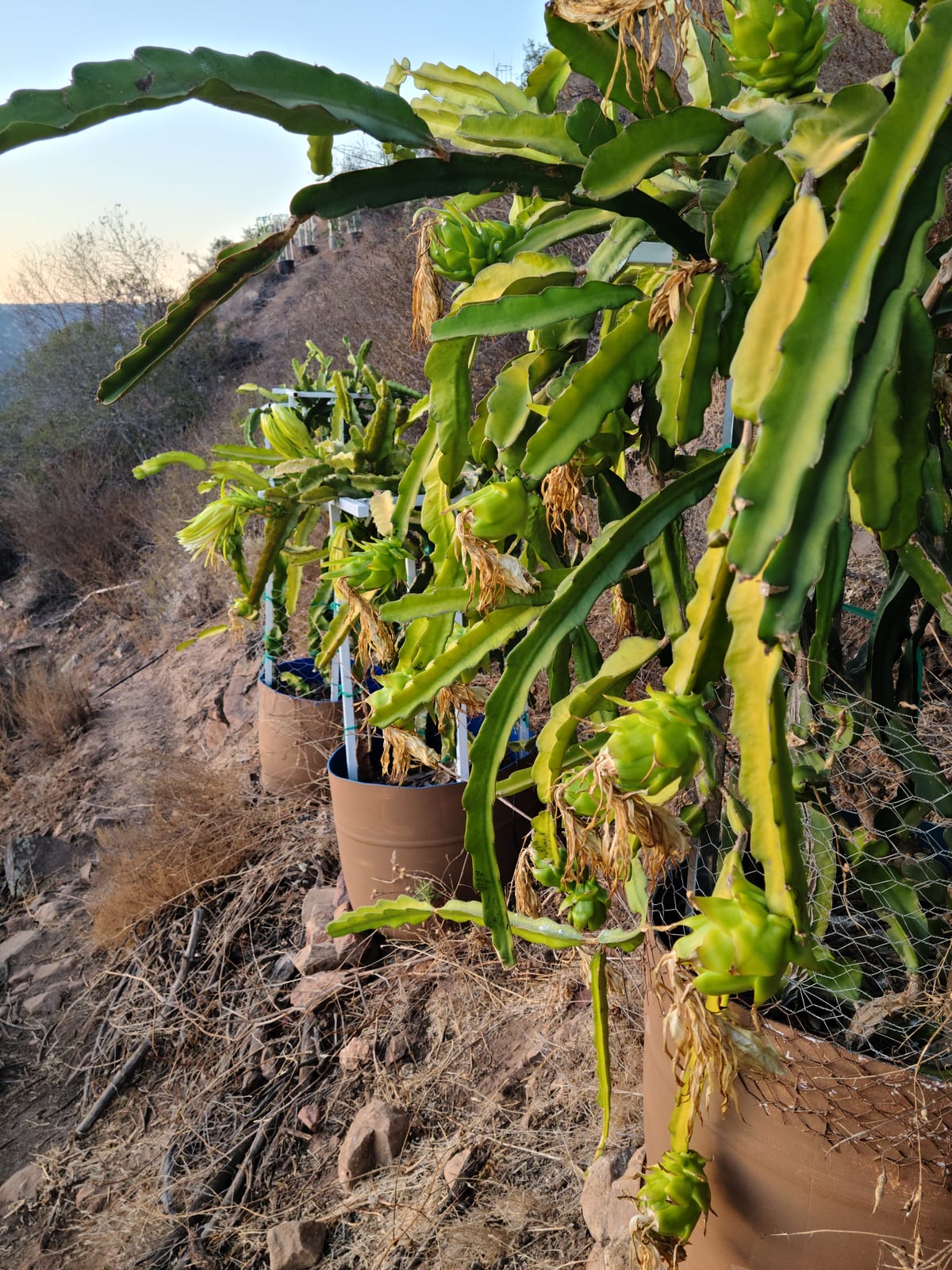
Hana fits well in USDA hardiness zones 10 to 12. It performs reliably in coastal Southern California. The San Diego and Escondido areas provide ideal conditions. Fruit is small to medium, averaging 0.4 lbs but often exceeding a pound. Bright pink skin features distinct green-tipped scales. This visual contrast makes the fruit easy to spot on the vine.
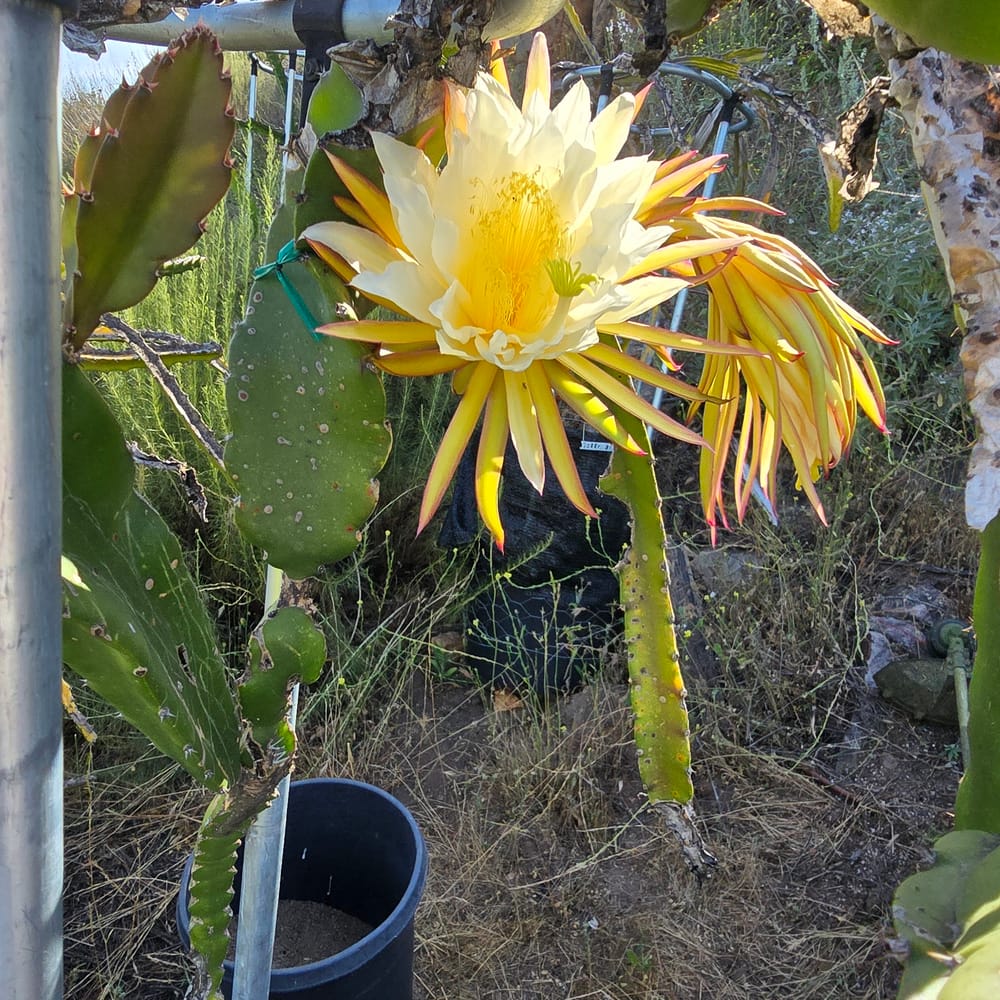
Hana grows aggressively, producing over 6 feet of new stem per year, so you need a sturdy support structure. Thinner stems carry long thorns, so handle the plant with care during pruning. Large nocturnal flowers are white with a unique pink blush at the base, a rare trait among dragon fruit species.
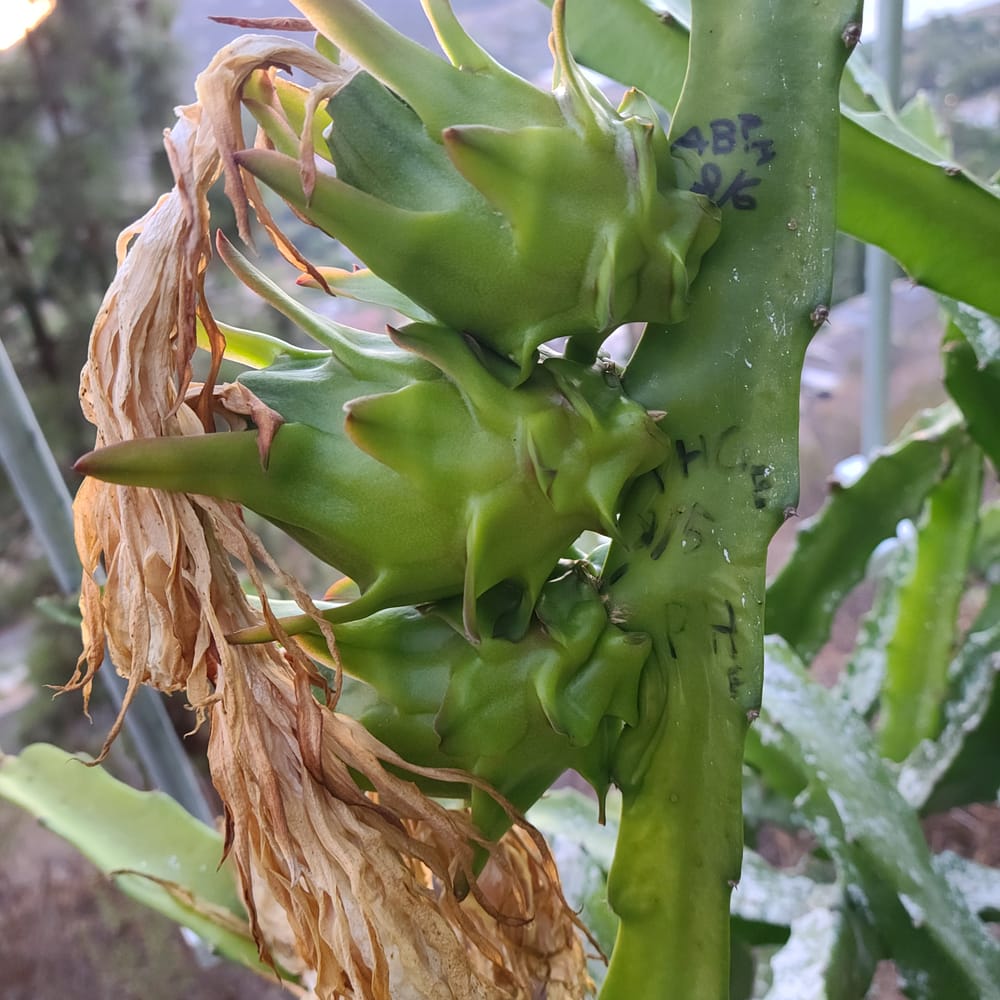
Fruit ripens in just 30 to 33 days from pollination, and you can expect your first harvest in about 14 months from a cutting. This is one of the fastest timelines in the genus.
Flavor and Taste: Why Hana Stands Out
Most white-fleshed dragon fruit varieties offer a mild, watery taste. Hana breaks that mold completely. The primary flavor is a rich sweet melon. This is followed by a distinct floral or rosy aftertaste. Many growers also detect subtle notes of lychee and rambutan. Some even find a grape-berry undertone in the flesh. This complex profile makes it a standout in the garden.
The sugar content explains the intensity. Standard white varieties usually measure between 10 and 13 brix. Hana averages 17 to 18 brix. This is a significant jump in sweetness. The sugar levels can climb even higher in larger fruit. Specimens often reach 20 to 22 brix. This places Hana in the same tier as premium red-fleshed cultivars.
| Attribute | Standard White | Hana |
|---|---|---|
| Average Brix | 10-13 | 17-18 |
| Peak Brix | ~13 | 20-22 |
| Primary Flavor | Mild, watery | Sweet melon |
| Secondary Notes | None | Floral, lychee, berry |
Size matters for sweetness in this variety. Larger fruit consistently tests higher on the brix scale. If you want the sweetest possible harvest, let the fruit grow to its full potential before picking. The combination of high sugar and complex aromatics defies expectations for a white-fleshed type. It offers a dessert-like experience that rivals many red varieties. See our list of Best Tasting Dragon Fruit Varieties to compare Hana with other high-sugar options.
The Flowers: Night-Blooming Beauty
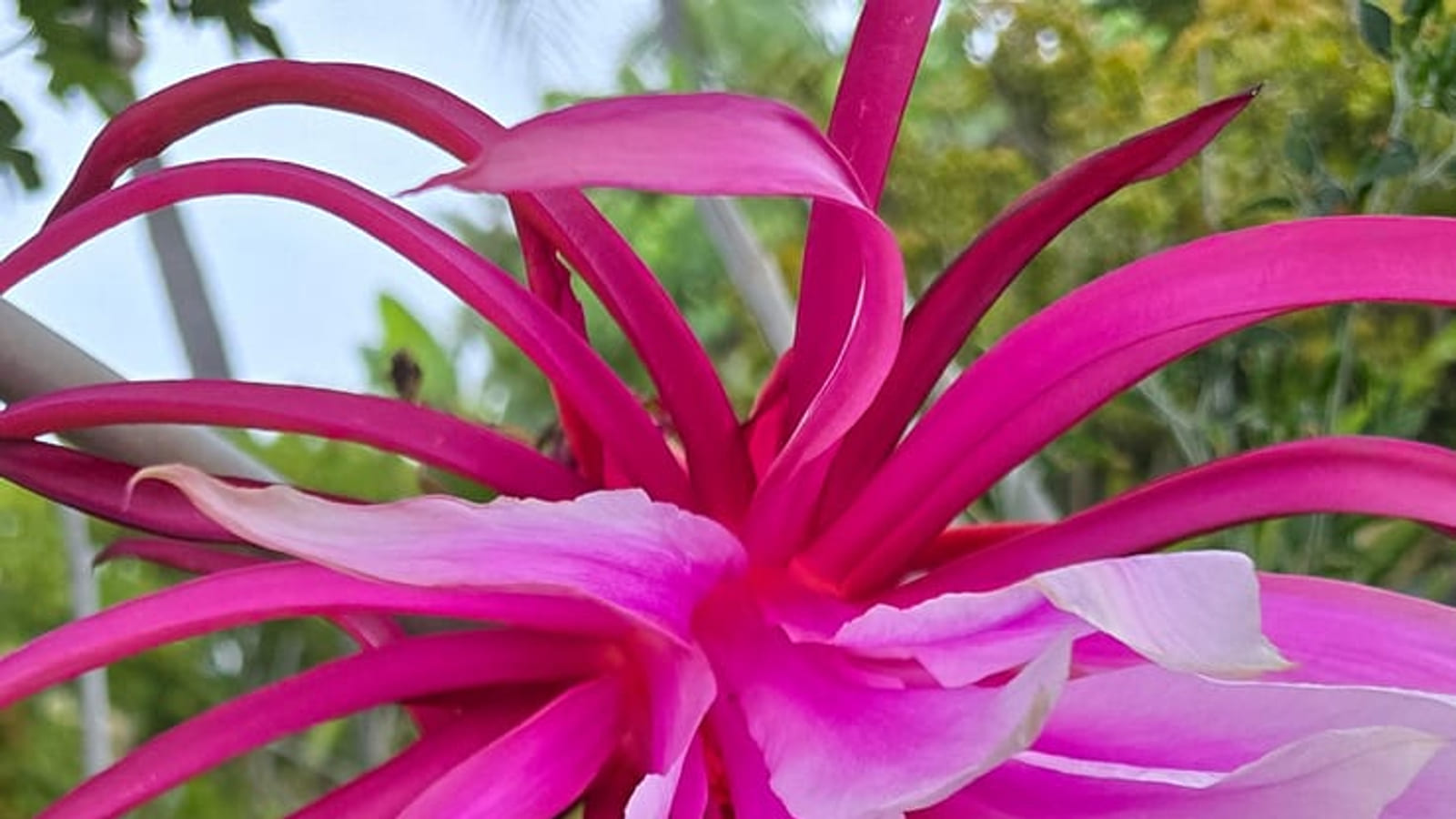
The bloom of Hana is an event. These large nocturnal flowers open after dark and release a sweet fragrance that fills the garden. The petals are white but fade to a soft pink base. This pink blush is unique among dragon fruit varieties. It sets Hana apart visually from common white-fleshed types.
Garden Strategy: Hana is self-fertile, so one plant will set fruit. However, it is also an excellent pollen producer. Plant it near self-sterile varieties to boost their yields.
Growers often keep Hana for the fruit, but the flowers alone justify the space. The visual contrast of the white petals against the pink base is striking. The scent is noticeable even from a distance. This makes it a valuable addition to any cactus collection.
Growing Hana Dragon Fruit
Hana demands a sturdy support system from day one. This is a climbing cactus that uses aerial roots to grip surfaces. A simple fence will not hold it. You need a heavy post, a concrete pillar, or a reinforced trellis. The plant will wrap around the structure and climb aggressively. Without a solid anchor, the vines will sprawl on the ground and rot.
Expect rapid vertical growth. Hana can produce over 6 feet of new stem in a single year. This speed makes it one of the fastest growers in cultivation. The stems are thinner than common varieties but they carry long sharp thorns. Handle the plant with thick gloves during training. Tie the stems loosely to the support as they grow. This prevents the thin stems from snapping under their own weight.
Climate and Flowering
Hana thrives in warm coastal climates. It performs reliably in USDA hardiness zones 10 to 12. The plant prefers temperatures between 65 and 80 degrees Fahrenheit. Extended cold below 31 degrees Fahrenheit causes damage. Protect the roots and lower stems during unexpected freezes.
Flowering is driven by weather patterns. Heavy rain combined with warm weather triggers the blooms. In the northern hemisphere, this typically happens from May through October. You cannot force the plant to flower with fertilizer alone. It responds to the natural cycle of storms and heat. Once the flowers open, pollination happens quickly. The fruit develops rapidly after that point.
Watch for the pink blush at the base of the white flowers. This is a unique trait of Hana. It signals a healthy bloom ready for pollination.
Fruit Development and Harvest
Hana moves fast from pollination to harvest, ripening in just 30 to 33 days, which is faster than many other varieties. The timeline is short and predictable.
Timing is critical for harvest. Dragon fruit does not ripen off the vine. The sugar levels lock in at maturity. If you pick the fruit early, it will remain firm and bland. Wait until the skin color is fully vibrant and the scales soften slightly. The fruit should feel heavy for its size. Check the vines frequently during the flowering season. A ripe Hana fruit can drop or rot if left too long.
| Stage | Timeframe | Key Action |
|---|---|---|
| Flowering | May-October | Ensure warm temps and rain |
| Development | 30-33 days | Monitor fruit growth |
| Harvest | At full ripeness | Pick when scales soften |
Care Guide: Growing Hana at Home
Hana is a vigorous climber that demands specific conditions to thrive. While it is self-fertile and fast-growing, its thinner stems and long thorns require careful management. The plant performs best when you mimic its native coastal environment. Consistent warmth and excellent drainage are non-negotiable for healthy growth and fruit set.
| Requirement | Specification |
|---|---|
| Sun | Full sun, 6+ hours |
| Soil | Well-drained cactus mix, sandy/loamy, pH 6.0-7.0 |
| Water | Deep but infrequent, dry between waterings |
| Fertilizer | Balanced in growing season, higher phosphorus for flowers |
| Temperature | 65-80 F optimal, protect below 31 F |
| Support | Trellis, post, or cage |
| Pruning | Light, manage growth direction |
| Propagation | Stem cuttings, 6-8 inch, callous 7-8 days |
Temperature and Soil
Hana grows best in temperatures between 65 and 80 degrees Fahrenheit. It is sensitive to cold. Extended exposure to temperatures below 31 degrees Fahrenheit causes damage. Protect the plant during unexpected freezes. Use frost cloth or move potted plants indoors if temperatures drop.
Soil structure is critical. Hana requires well-drained, sandy, or loamy soil. The ideal pH range is 6.0 to 7.0. Avoid heavy clay or waterlogged conditions. Root rot is a common issue if the soil stays wet for too long. A cactus-specific potting mix provides the necessary aeration. Ensure your containers have adequate drainage holes.
Watering and Feeding
Water deeply but infrequently. Allow the soil to dry out between waterings. Overwatering stresses the plant and reduces fruit quality. Reduce watering significantly during cooler months when growth slows. In the growing season, feed with a balanced fertilizer. Increase phosphorus levels to encourage flowering. This nutrient supports the large blooms that precede fruit set.
High demand for Hana cuttings often leads to stock shortages. Spicy Exotics lists prices between $25 and $35 but is currently out of stock. Tasty Dragons offers cuttings at $30. Check availability early in the season to secure your plants.
Hana vs. Other Dragon Fruit Varieties
Choosing the right dragon fruit depends on your goals. Some growers want massive yields. Others chase complex flavors. Hana sits in a unique spot. It bridges the gap between common white varieties and premium red-fleshed types. The table below compares Hana to three popular cultivars. This helps you see where it fits in your garden plan.
| Variety | Flesh Color | Brix | Flavor Notes | Self-Fertile | Growth Rate |
|---|---|---|---|---|---|
| Hana | White | 17-22% | Sweet melon, floral | Yes | Very Fast |
| Vietnamese White | White | 10-13% | Mild, watery | No | Moderate |
| Bruni | Red | High | Berry, sweet | Yes | Moderate |
| American Beauty | Red | High | Rich, fruity | Yes | Moderate |
| Standard White | White | 10-13% | Neutral | No | Moderate |
Hana wins on sugar content for any white-fleshed variety. Most white types taste bland because they lack sugar. Hana delivers a rich melon flavor that rivals red varieties. It also grows faster than the competition. You get fruit sooner and more of it. The plant is self-fertile. This means you do not need a partner plant to produce fruit. It also makes a great pollinator for other varieties in your garden. If you want high sugar and fast growth without the hassle of cross-pollination, Hana is a strong choice.
Grower Note: While Hana is self-fertile, cross-pollination can sometimes increase fruit size. Planting it near another variety like Bruni or American Beauty may boost your yield further.
Getting Started: Hana Cutting and Planting
You have your Hana cutting. Now you need to turn that stem into a rooted plant. The process is straightforward if you respect the drying phase. Rushing the soil contact invites rot. Patience here pays off with a vigorous vine.
- Select the stem. Use a healthy 6 to 8 inch section. Ensure the cut is clean.
- Mark the orientation. Label or mark the top of the cutting. It is easy to forget which end goes up once the stem dries out.
- Callous the wound. Place the cutting in a dry, shaded spot for 7 to 8 days. The cut end must form a hard seal before touching soil.
- Prepare the mix. Use a well-draining cactus or succulent potting mix. Standard garden soil holds too much water.
- Plant shallowly. Insert the calloused end into the soil. Do not bury the stem deeper than necessary.
- Add support. Place a stake or trellis next to the cutting immediately. Hana stems are thin and will flop over without help.
Container vs. Ground Planting
Hana grows fast. It can put on over 6 feet of growth in a single year. This speed dictates your planting strategy. In the ground, the roots have room to spread. The plant will climb aggressively. You need a heavy-duty support structure like a T-trellis or a sturdy post. The stems are thinner than common varieties but still gain significant weight as they lengthen.
Container growing offers more control. It is ideal for growers in zones that dip below freezing. You can move the pot to shelter. Use a large pot with excellent drainage. Hana does not tolerate wet feet. The roots need oxygen. A smaller root mass can actually encourage earlier fruiting in some cases. Monitor the soil moisture closely. Containers dry out faster than the ground.
| Method | Best For | Key Consideration |
|---|---|---|
| Ground | Warm zones (10-12) | Requires strong trellis |
| Container | Cooler climates / Renters | Needs frequent watering |
Once rooted, the clock starts on your harvest. Hana is one of the fastest varieties to produce. The self-fertile nature of Hana means you do not need a pollinator partner. A single plant will set fruit on its own.
Frequently Asked Questions
Growers often have specific questions about Hana before committing to a cutting. Here are the direct answers to the most common inquiries.
| Question | Answer |
|---|---|
| Is Hana self-fertile? | Yes. A single plant sets fruit without a pollinator partner. It is also an excellent pollen producer for cross-pollinating other varieties. |
| How sweet is it? | Average sugar content is 17-18 brix. Larger fruit can reach the low 20s. |
| How fast does it grow? | It is a vigorous climber that can grow over 6 feet per year under good conditions. |
| How long to fruit? | Expect your first harvest in about 14 months from a cutting |