White Crystals Dragon Fruit: What to Expect
White Crystals is a white-fleshed dragon fruit cutting available now at Sky Botanicals in Escondido, CA. It belongs to the classic Selenicereus undatus group, which produces pink-to-red skin with green-tipped scales and snowy white flesh. The flavor profile is mild and refreshing, similar to kiwi or melon, rather than intensely sweet. You can expect the classic white-flesh eating experience: crisp texture, fine black seeds, and a clean, refreshing sweetness. The fruit is best enjoyed chilled or blended into smoothies. If you are looking for a reliable white-fleshed option that is already rooted and ready to grow, this is a solid choice from our working farm.
White-fleshed dragon fruit is generally less sweet than red or yellow varieties. Many growers prefer the white flesh for its clean, crisp taste in fruit mixes. While most commercial white types are self-fertile, fertility can vary by clone. To guarantee fruit set, you can hand pollinate or plant a known pollen donor nearby. We recommend pairing your White Crystals cutting with a strong support structure, as mature plants can become quite heavy. For more details on choosing the right white variety, check out our dragon fruit varieties guide.
What White Crystals is (variety ID)
White Crystals is a white-fleshed selection in the Selenicereus undatus group, the species behind most white dragon fruit grown worldwide. We grow it on the farm in Escondido and propagate our cuttings from those plants, so the traits described here are the ones we see in our own fruit season after season.
White-fleshed undatus names overlap a great deal between sellers, so we keep White Crystals separate in our catalog from similar-sounding varieties such as Ocamponis Crystal, White King Hollywood and White Supreme. It is its own line, carried under SKU WC, and what you receive is propagated from our own stock plants.
You are buying a specific clone with pink-to-red skin, green-tipped scales and snowy white flesh. The flavor is mild and refreshing, closer to kiwi or melon than to the intense sweetness of the red-fleshed types, and it sits in the moderate band on sugar. For a broader look at how this compares to other options, check out our dragon fruit varieties guide.
It is important to distinguish this cutting from the "superfruit" marketing often applied to red-fleshed varieties. White flesh contains less anthocyanin and betacyanin, so it does not carry the same antioxidant profile as red types. Its value lies in its crisp texture and clean taste, which makes it ideal for smoothies or fruit mixes. If you are looking for a reliable, rooted white-fleshed option from a working Southern California farm, this is the specific product we offer under this name.
Fruit and flavor
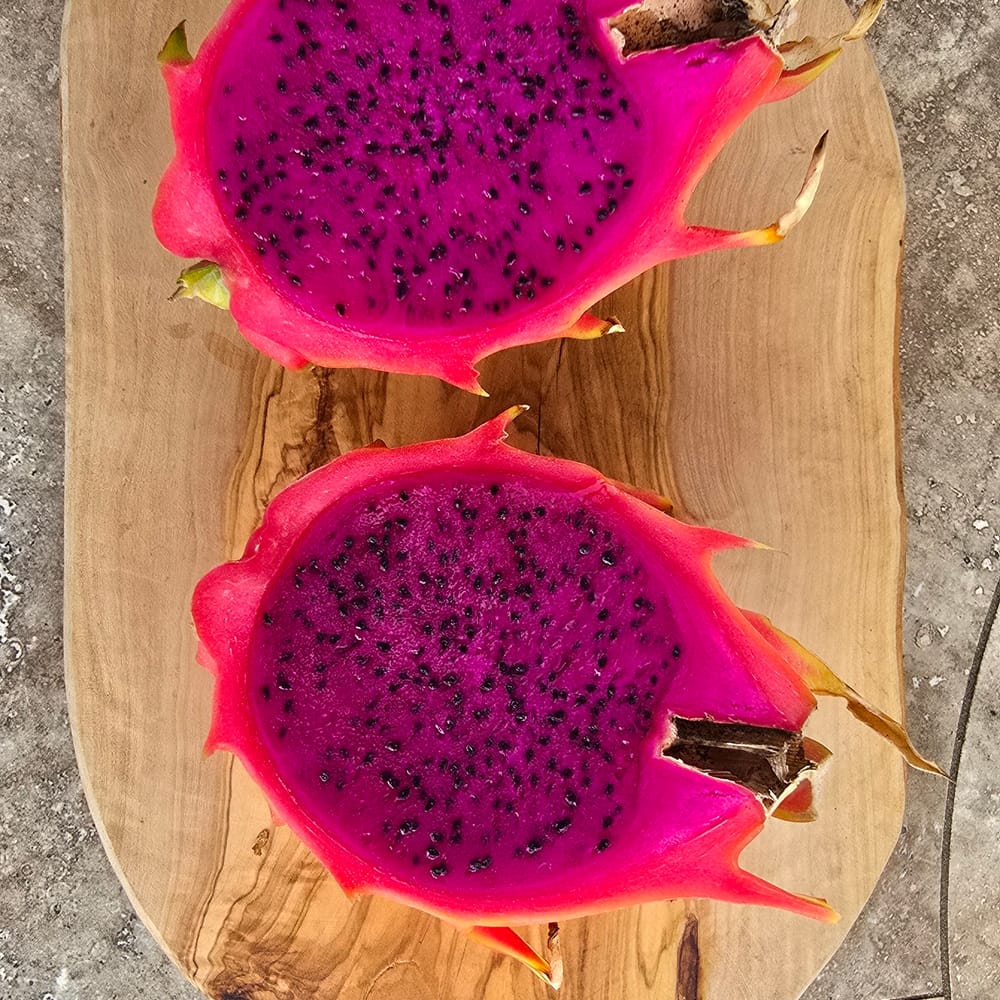
White Crystals produces the classic white-fleshed profile: pink-to-red skin with green-tipped scales, enclosing snowy white flesh dotted with fine black seeds. The taste is mild and slightly sweet, with a refreshing quality similar to kiwi or melon. It is not dessert-sweet. Most growers find this flesh best enjoyed chilled, blended into smoothies, or used as a base for fruit mixes. The more intense red and yellow varieties are typically the go-to for eating straight off the vine, while white flesh shines in prepared applications where its clean, crisp texture is an asset.
Fruit size for common white Selenicereus undatus types generally runs about 0.5 to 1 lb per fruit. Keep in mind that fruit weight is driven more by pollination quality and thinning practices than by the variety name alone. A well-pollinated, properly thinned plant will produce larger, heavier fruit regardless of the specific white-fleshed clone.
| Trait | White Crystals (White Flesh) | Red/Yellow Flesh Types |
|---|---|---|
| Flavor Profile | Mild, refreshing, kiwi/melon-like | Intense, dessert-sweet, tropical |
| Best Use | Chilled, smoothies, fruit mixes | Eating fresh off the vine |
| Antioxidant Content | Lower (less anthocyanin/betacyanin) | Higher (rich in pigments) |
| Grocery Store Presence | Base for most commercial products | Niche or specialty markets |
White-fleshed dragon fruit is the base fruit for most grocery-store "dragon fruit" products. It is high in fiber, vitamin C, B vitamins, and magnesium, while remaining low in calories. Its pale flesh and distinctive black-seed look make it a staple in smoothie bowls. However, because white flesh contains less anthocyanin and betacyanin than red flesh, it does not carry the same "superfruit" antioxidant pitch. Its value lies in its crisp texture and clean taste rather than pigment density. For a broader look at how these profiles compare across the species, check out our dragon fruit varieties guide. If you are looking for a direct comparable, the Vietnamese White is the closest standard white-flesh variety in the trade.
Growing White Crystals: from cutting to fruiting plant
White Crystals grows on the standard protocol for Selenicereus undatus. You are not dealing with a rare species that requires exotic care. You are managing a vigorous cactus that needs space, light, and structural support. The primary difference between this cutting and a generic white type is that you are starting with an established clone from a working Southern California farm. This means the plant is already adapted to local conditions, which often shortens the initial acclimation period.
Establishing the root system
When your cutting arrives, it is ready to go into the ground or a large container. If you are in a region with cold winters, keep the plant in a pot for the first year. This allows you to move it indoors if temperatures drop. In warmer zones, you can plant it directly into the soil. The key is drainage. Dragon fruit roots rot quickly if they sit in wet soil. Use a mix that drains fast. A standard cactus mix works well. Add extra perlite or pumice if your local soil is heavy clay. Water deeply but infrequently. Let the top inch of soil dry out completely between waterings. Overwatering is the most common mistake new growers make. Underwatering is rarely fatal if the plant is established.
Support and structure
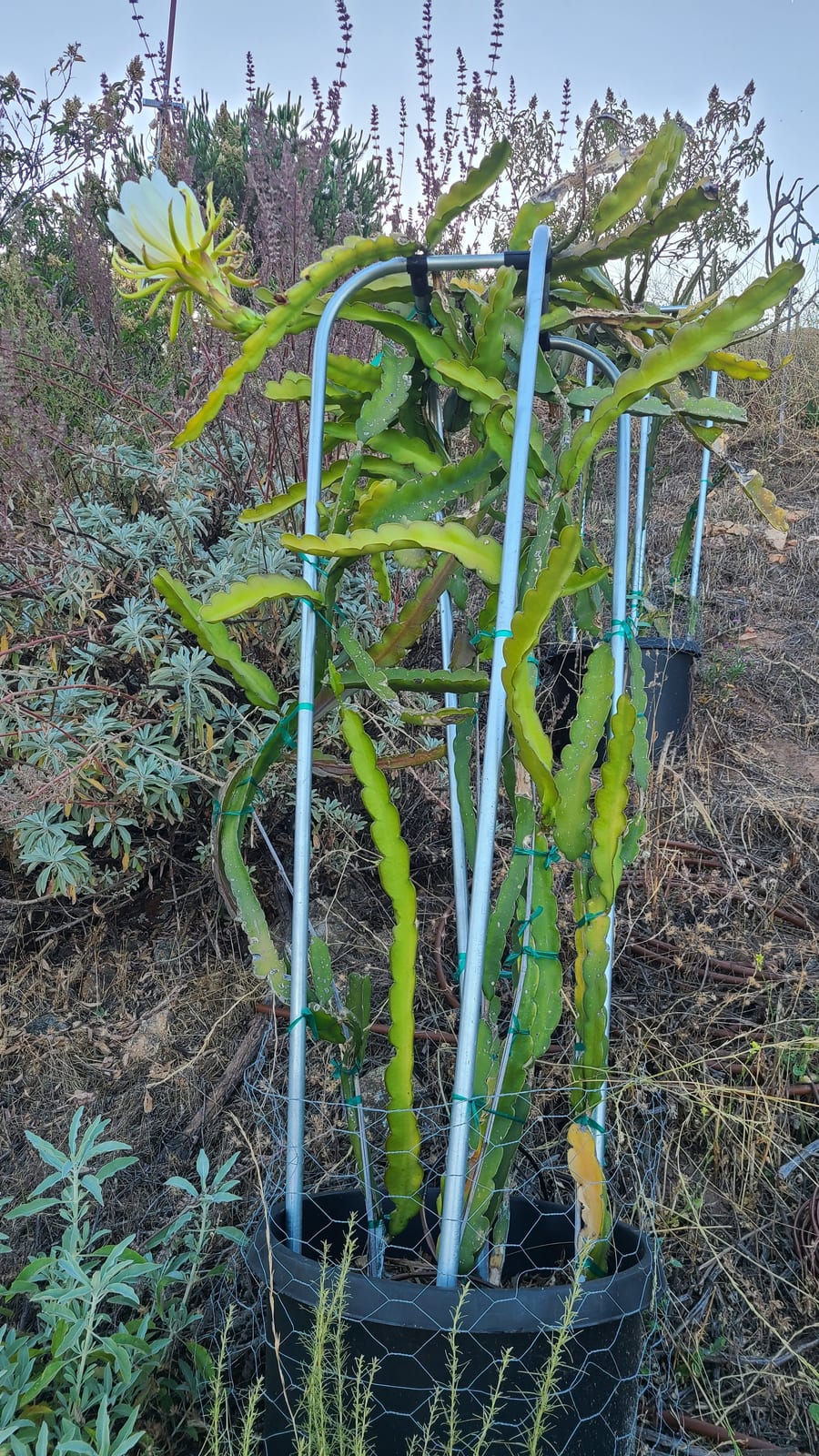
Dragon fruit is a climbing cactus. It does not grow upright on its own. It needs a vertical structure to climb. A burlap totem is the most popular choice because it is cheap and effective. A wooden post wrapped in burlap works just as well. The structure must be sturdy. A mature White Crystals plant can become heavy. The stems are thick and woody as they age. If your support is flimsy, it will lean or fall over. This can damage the stems and break the plant. Install the support before you plant the cutting. It is much harder to install a heavy post around an existing plant than to plant around a fresh post. The plant will wrap its aerial roots around the burlap and climb. You do not need to tie it. It will find its way up.
Timeline to fruit
Patience is required. A new cutting does not fruit immediately. It needs time to build a strong root system and develop enough vegetative growth. Expect the first flowers within one to two growing seasons after planting. This timeline assumes the cutting is healthy and receives adequate sun. If the cutting arrives already rooted and mature, you may see flowers sooner. Meaningful fruit production usually begins the season after the first blooms. The plant needs to reach a certain size before it commits energy to reproduction. Do not rush this process. Do not over-fertilize to force growth. Excess nitrogen leads to lush, green growth that is prone to disease and does not fruit well. Focus on consistent care and let the plant grow at its own pace.
Light requirements: White Crystals needs full sun. Aim for at least six to eight hours of direct sunlight daily. In very hot climates, some afternoon shade can prevent sunburn on young stems. In cooler climates, maximum sun exposure is critical for fruit set. If the plant is leggy and stretching toward the light, it is not getting enough sun.
Pollination and fruit set
Most white-fleshed dragon fruit varieties are self-fertile, but fertility can vary by clone. We do not have verified data on the self-fertility of the White Crystals cutting specifically. To guarantee fruit set, you have two options. The first is hand pollination. This is simple and effective. You need a small paintbrush or cotton swab. Collect pollen from the anthers of a flower and apply it to the stigma of another flower. This works even if the plant is self-fertile. It ensures that every flower has the best chance of setting fruit. The second option is to plant a known pollen donor nearby. Sugar Dragon or Vietnamese White are standard choices. If you plant one of these next to your White Crystals, you will have cross-pollination insurance. This is especially useful if you want a larger harvest. For more details on choosing the right companion, check out our dragon fruit varieties guide.
Comparing your options
White Crystals fits into a specific niche in the white-fleshed category. It is not the largest fruit, nor is it the sweetest. It is a reliable, mild option. If you want a classic beginner white, Vietnamese White is a strong alternative. It is self-fertile and produces consistent fruit. If you want a larger fruit, Seoul Kitchen is a good choice. It is one of the largest white varieties and tastes best when chilled. If you want a unique flavor, Connie Mayer offers a coconut-like taste and has green skin. If you actually want sweet dragon fruit, you should look at yellow types like Ecuador Palora or Yellow Thai. White Crystals is a solid choice if you want a crisp, refreshing fruit for smoothies or fruit mixes. It comes as an established rooted cutting, which gives you a head start compared to buying a bare stem.
The annual bloom and fruit calendar
Dragon fruit does not bloom continuously. It follows a distinct annual rhythm driven by day length and temperature. In Southern California, you will typically see a short flower flush in late spring (May). This is often a test run for the plant. The main flush arrives in late summer (August), which produces the bulk of the year's fruit. In warm winters, a smaller fall flush may occur in October. Each flower opens at night and lasts only one evening. For fruit to set, the plant needs cool nights during this window. If nights stay too warm, the flowers may drop without setting fruit.
Once pollination is successful, the fruit takes roughly 30-50 days to ripen. This timing means the main harvest lands in fall, specifically September through November in our region. If you are planning to eat your own dragon fruit, this is the window to watch. The fruit will change color and soften as it ripens on the vine. You can pick them when the skin turns a deeper pink or red and gives slightly under gentle pressure.
| Phase | Timing | Activity |
|---|---|---|
| Spring Flush | May | Short bloom period; often limited fruit set |
| Main Flush | August | Peak flowering; primary fruit production |
| Fall Flush | October | Smaller bloom; dependent on warm winter conditions |
| Ripening | 30-50 days post-pollination | Fruit develops and ripens on the vine |
| Harvest | September-November | Main harvest window in Southern California |
Timing for new cuttings: If you plant a new cutting, expect the first flowers within 1-2 growing seasons. Meaningful fruit usually arrives the season after that. A rooted cutting that is already mature may bloom sooner, but the annual cycle still applies to when you can expect a full harvest.
Getting fruit set: pollination check
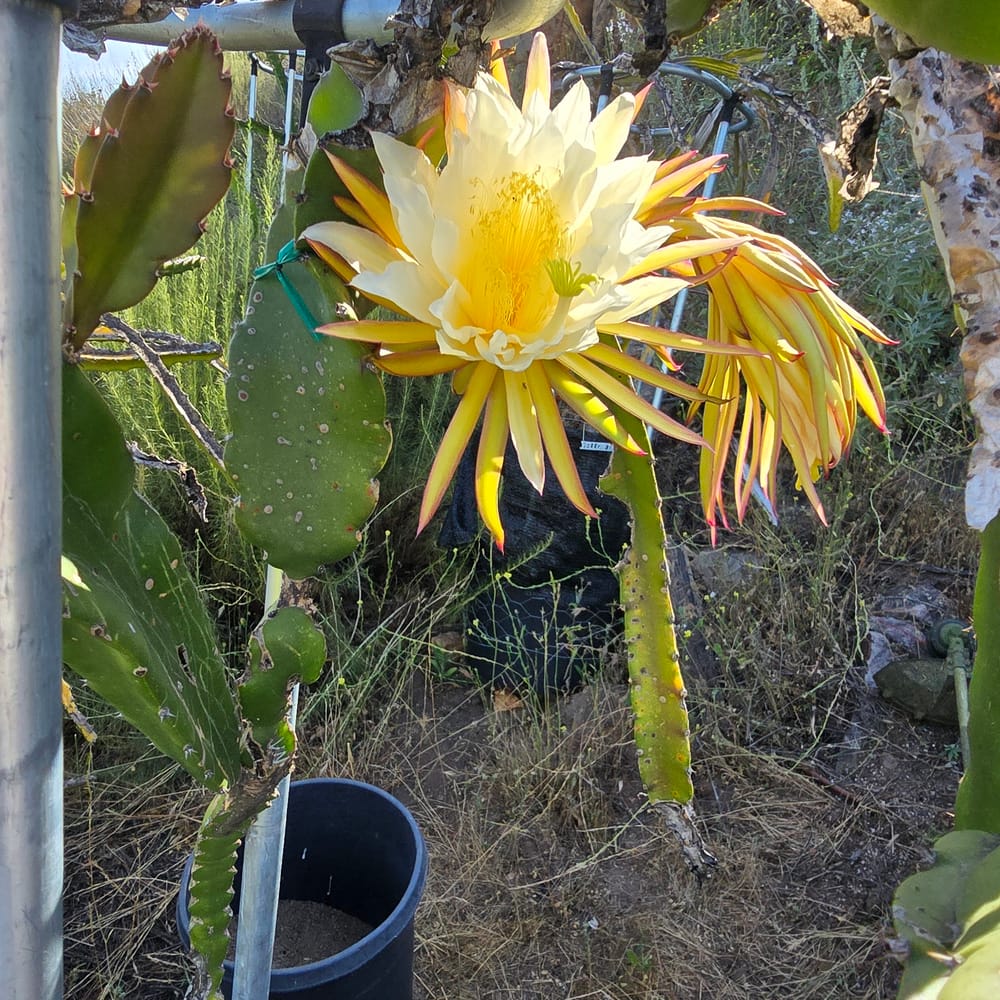
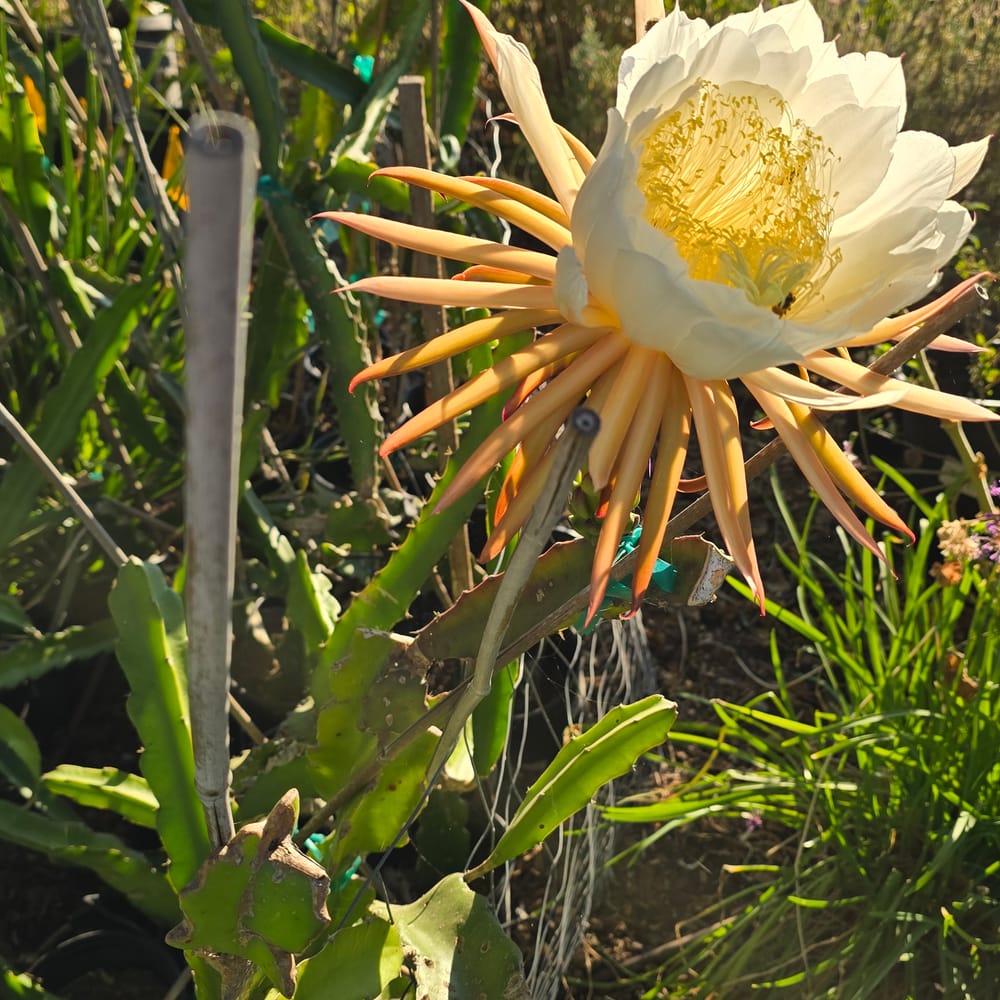
Dragon fruit flowers are ephemeral, opening at night and closing by morning. This single evening window is your only chance to secure a crop for that specific bloom. Many white-fleshed varieties are self-fertile, but fertility varies by clone and by season, so it is worth checking rather than assuming your plant will set fruit unaided.
The most reliable method to guarantee fruit set is hand pollination. This process takes less than a minute per flower and eliminates the guesswork of whether the plant is self-fertile or if pollinators are active. If you prefer not to hand pollinate, planting a known pollen donor nearby is the standard insurance policy. Vietnamese White or Sugar Dragon are the typical choices for this role. These varieties are proven pollen sources for the Selenicereus undatus group. Having a donor plant within reach ensures that even if your White Crystals cutting is sterile, cross-pollination will occur naturally when the flowers open.
How to hand pollinate
Hand pollination is straightforward and requires only a small, soft brush or a cotton swab. The goal is to transfer pollen from the anthers (the pollen-producing parts) to the stigma (the receptive part at the center of the flower). Here is the practical workflow:
- Identify the parts. Locate the cluster of stamens surrounding the central pistil. The stigma is the three-lobed structure at the very top of the pistil. It should look slightly sticky or moist when the flower is fresh.
- Collect pollen. Gently brush the anthers to gather pollen. If you are using a donor plant, collect pollen from the donor flower first. If you are self-pollinating, collect from the same flower.
- Apply to the stigma. Dab the collected pollen onto the three lobes of the stigma. Ensure you cover all three sections. A light dusting is sufficient; you do not need to force the pollen in.
- Repeat if necessary. If the flower is large, you may need to repeat the process a few times to ensure adequate coverage. This increases the likelihood of multiple seeds developing, which often leads to a larger, more symmetrical fruit.
After pollination, the flower will close and the ovary at the base will begin to swell. This is the first sign of success. If the ovary does not swell and the flower drops without a fruit forming, pollination likely failed. This can happen if the flower was too old, if the pollen was not viable, or if the plant was under stress. In such cases, try again with the next flower that opens.
For growers in cooler zones or those with a single plant, hand pollination is not just a backup; it is the primary strategy. It gives you control over the outcome. If you are planting multiple white-fleshed varieties, consider the specific combinations. While most white types are compatible, some growers report better fruit set with specific pairings. However, for a single White Crystals cutting, the safest bet is to hand pollinate every flower or ensure a compatible donor is present.
Care quick reference
White Crystals follows the standard care protocol for Selenicereus undatus. Because this is a white-fleshed type, it does not require the extra humidity or shade often needed by red-fleshed hybrids. The table below summarizes the core requirements for keeping this cutting healthy and productive in a home garden setting.
| Factor | Requirement | Notes |
|---|---|---|
| Sunlight | Full sun | Minimum 6 to 8 hours daily. More light drives better flowering. |
| Soil | Fast-draining cactus mix | Sandy texture is ideal. Avoid heavy clay that holds water. |
| Watering | Moderate and deep | Water when the top inch of soil feels dry. Reduce frequency in winter. |
| Temperature | 65 to 85 F | Active growth range. Protect from sustained freezing temps. |
| Support | Strong trellis or totem | Mature canopies become heavy. Use a load-bearing structure. |
| Fertilizer | Balanced cactus feed | Apply during active growth. Avoid high-nitrogen formulas. |
Seasonal adjustments
Your care routine should shift with the seasons. In the active growing phase, the plant will drink more and produce new stems rapidly. This is the time to ensure the soil is not compacted and that the trellis can handle the new weight. As days shorten and temperatures drop, the plant enters a slower phase. You should reduce watering significantly during this time to prevent root rot, as the plant is not actively transpiring water. In cooler zones, this is also the period to move container-grown plants indoors or provide frost protection.
Tip: White-fleshed types like White Crystals are generally hardy, but they are not frost-proof. If you live in a zone where temperatures dip near freezing, plan to bring your potted plant inside or cover the trellis during cold snaps.
Using and eating white-flesh fruit
White-fleshed dragon fruit has a distinct culinary role compared to its red or yellow counterparts. Because the flesh lacks the intense anthocyanin pigments found in red varieties, it offers a cleaner, more neutral flavor profile. This makes it an excellent base for blending or mixing rather than a standalone dessert fruit. The texture is crisp and juicy, with a mild sweetness that pairs well with stronger flavors. Many growers find that the fruit tastes best when served chilled, as the cold temperature enhances its refreshing, melon-like quality.
Best uses for the kitchen
The pale flesh and visible black seeds make white-fleshed fruit visually striking in smoothie bowls and fruit salads. It holds up well in these preparations without overpowering other ingredients. You can also slice it into chunks for fresh fruit mixes or use it as a garnish for tropical cocktails. While you can eat it straight off the vine, the flavor is subtle. For a more intense experience, try pairing it with citrus or mango. The fruit is also low in calories and high in fiber, making it a healthy addition to breakfast routines. Since the skin is thin, you can easily peel it by hand or cut the fruit in half and scoop out the flesh with a spoon.
Flavor expectations
Do not expect the high sugar content of yellow sweet types. White-fleshed varieties generally fall in the moderate sweetness band. The taste is often described as similar to kiwi or cantaloupe, with a slight tartness. This mildness is a feature, not a bug, for many home growers. It allows the fruit to complement other flavors in recipes without dominating the dish. If you are looking for a fruit that is intensely sweet on its own, you might prefer a red or yellow variety. However, for versatility in the kitchen, the white flesh is hard to beat. For a broader look at how these flavors compare across different types, check out our dragon fruit varieties guide.
Frequently Asked Questions
Is White Crystals self-fertile?
Most commercial white-fleshed cultivars are self-fertile, but fertility can vary by clone. We have not verified the specific fertility of the White Crystals cutting. To guarantee fruit set, you can hand pollinate the flowers or plant a known pollen donor nearby. Standard pollen-insurance choices include Sugar Dragon or Vietnamese White. If you want to see how these options compare, check out our dragon fruit varieties guide.
How long until I get fruit from a cutting?
A freshly received cutting stays in a pot and establishes roots over roughly 2-4 months before it is planted permanently. Once planted out, expect the first flowers within 1-2 growing seasons. Meaningful fruit usually arrives the season after the first blooms. If the cutting arrives already rooted and mature, this timeline may be shorter.
What is the difference between White Crystals and other white varieties?
White Crystals is a white-fleshed Selenicereus undatus selection we grow and propagate ourselves. It shares the standard traits of white-fleshed types: mild flavor, pink-to-red skin, and snowy white flesh. It is distinct from similar-sounding names in our catalog, such as Ocamponis Crystal or White King Hollywood. For a deeper look at how white types stack up against reds and yellows, see our dragon fruit varieties guide.
Do I need a special trellis for this plant?
Yes. All dragon fruit plants need a strong load-bearing support structure. A mature canopy can weigh hundreds of pounds. We recommend a sturdy trellis or a burlap totem. The specific weight of the White Crystals plant will depend on its growth and fruit load, but the structural requirement is the same for all Selenicereus undatus types.
Get your White Crystals cutting
Ready to start growing? White Crystals is currently in stock at our nursery in Escondido, CA. This is a rooted cutting, meaning it has already established its root system and is ready to be planted into your garden or a large container. You are getting a specific clone from our working farm, not a generic stem segment that requires months of curing and establishment. Because it is already rooted, you can skip the initial waiting period and focus on acclimating the plant to your local light and water conditions.
Pro tip: Since fertility for this specific named cutting is not publicly verified, we recommend pairing your White Crystals with a known pollen donor like Vietnamese White or Sugar Dragon. This guarantees fruit set regardless of the plant's self-fertility status. If you are unsure about your pollination plan, our team can help you choose the right companion plant.
When you order, we include specific care instructions for the first few weeks to help the plant transition from our greenhouse to your environment. We also offer guidance on trellis selection, as mature white-fleshed plants can become quite heavy. If you need help choosing a support structure or have questions about hand pollination techniques, reach out to us. We are growers, not just sellers, and we want to see your plant thrive.
Check out our dragon fruit varieties guide if you are still comparing white-fleshed options. But if you are ready for a reliable, mild-flavored white dragon fruit that is ready to grow, the White Crystals cutting is a solid choice. Order now to secure your plant for the upcoming growing season.
Illustration generated for this article