Orange Giant Dragon Fruit: Taste and Care Guide
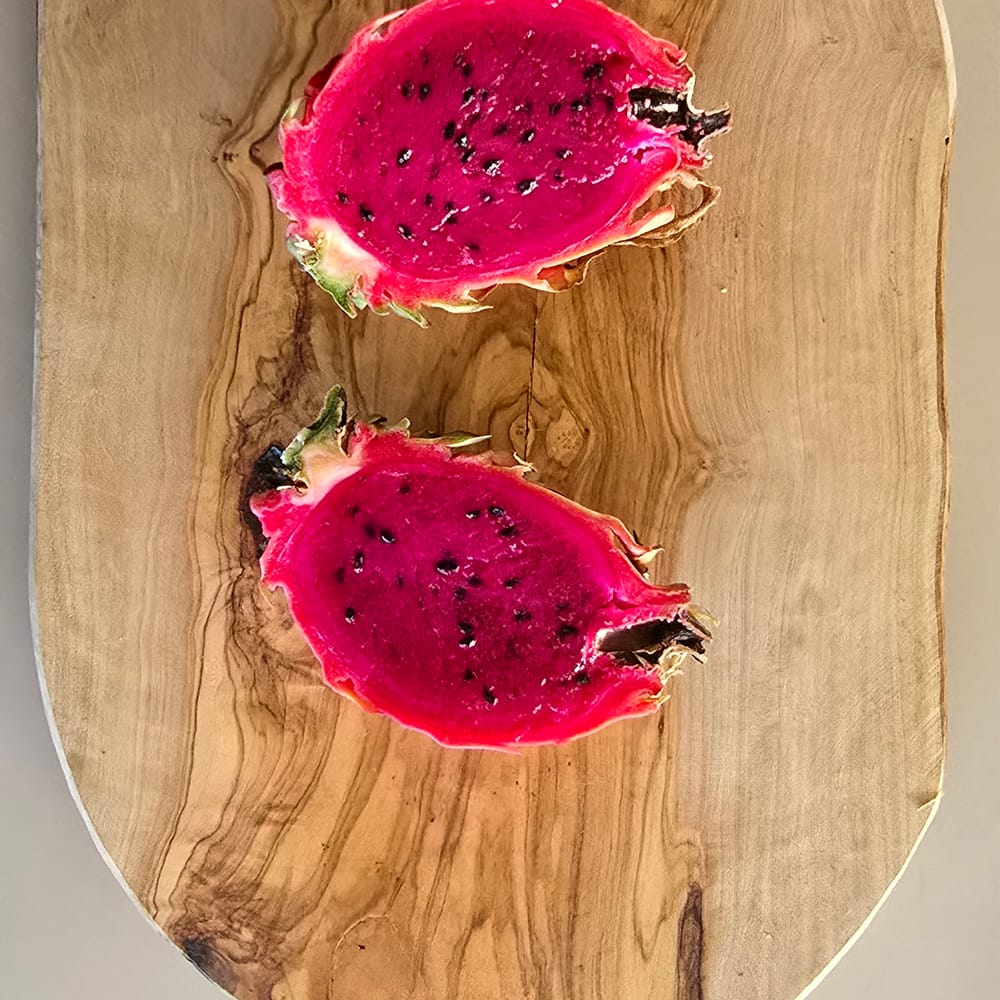
Orange Giant dragon fruit is a rare cultivar prized for its large, sweet fruit and robust growth habit. This variety features orange to orange-red skin and reddish-purple to purple flesh. The fruit averages around 400 g and delivers a sweet, berry-like flavor with distinct orange overtones. It is a Selenicereus megalanthus cross that thrives in warm, dry climates. Because it is a climbing cactus, it requires a heavy support structure and fast-draining soil. You can learn more about proper care in our dragon fruit care guide.
Fruit, flesh, and flavor (the money section)
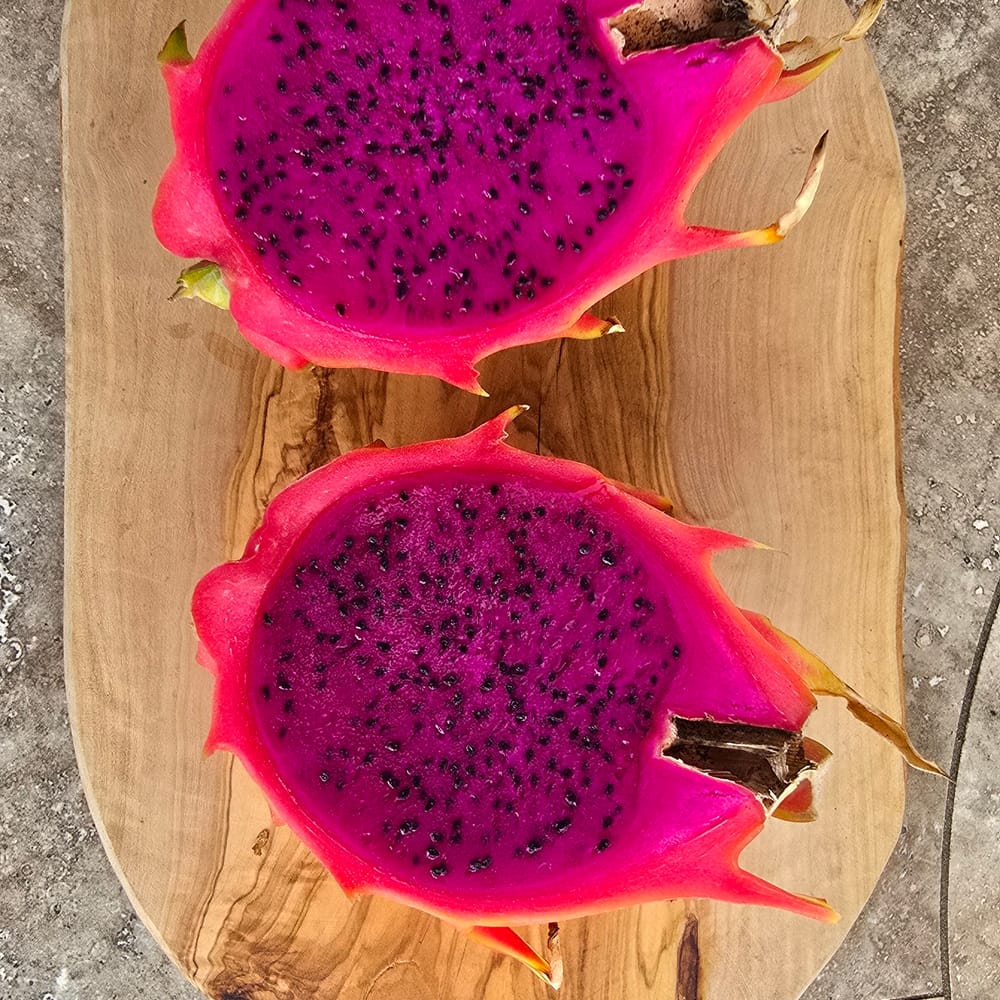
When you finally harvest an Orange Giant, the skin shifts to a vibrant orange or orange-red, signaling that the fruit is ready. Look for the bracts, or scales, to begin browning at the tips. The fruit should also yield slightly under gentle pressure. Inside, the flesh is a striking reddish-purple to deep purple. The reddish-purple flesh contrasts with the pale pink of white-fleshed varieties.
Fruits average around 400 g, placing them in the medium to large category. This is a solid, satisfying size for a single serving.
Flavor profile and sweetness
It delivers a sweet, berry-like flavor with distinct orange overtones. This citrusy hint sets it apart from the more neutral sweetness of white dragon fruits. Growers often describe it as very sweet with a fair amount of tart, though it is less tart than varieties like Cebra or Orejona.
Sweetness levels are consistently high. Brix readings typically range from 20 to 23. Some nurseries list it at 20 to 22, while fully ripe fruit in warm climates can reach 23. This places Orange Giant in the top tier of sweetest varieties, alongside Palora and Frankie Red. If you are chasing high brix numbers, this is a reliable performer.
| Feature | Detail |
|---|---|
| Skin Color | Orange to orange-red |
| Flesh Color | Reddish-purple to purple |
| Average Weight | 400 g |
| Brix Range | 20 to 23 |
| Flavor Notes | Sweet, berry-like, orange overtones |
Ripeness Check: Do not rely on color alone. The bracts must brown at the tips, and the fruit must feel slightly soft. Picking too early results in unripe fruit.
For a deeper look into how this variety compares to others in the orange-skinned group, including Frankie Red and Peruvian Orange, see our complete dragon fruit varieties guide.
How it stacks up (core AEO table)
Orange Giant shares the orange skin mutation with three other commonly traded cultivars: Frankie Red, Peruvian Orange, and Hawaiian Orange Dwarf. While they all look similar on the vine, their performance in the garden and the bowl varies significantly. The table below breaks down the key differences to help you decide if Orange Giant is the right fit for your space and taste preferences.
| Variety | Flesh Color | Typical Brix | Growth Habit |
|---|---|---|---|
| Orange Giant | Reddish-purple to purple | 20 to 23 | Robust, sturdy lobes |
| Frankie Red | Not specified | 20 to 22 | Standard |
| Peruvian Orange | Not specified | Not specified | Standard |
| Hawaiian Orange Dwarf | Not specified | Not specified | Spindly, compact |
Orange Giant stands out in this group for two main reasons. First, its sweetness is consistently high, often reaching the top of the range compared to its orange-skinned peers. Second, it is a vigorous grower. Unlike the Hawaiian Orange Dwarf, which requires careful management due to its delicate, spindly branches, Orange Giant produces thick, sturdy lobes that handle the weight of large fruit more easily. This makes it a more forgiving choice for growers who want a reliable harvest without constant structural support adjustments.
If you are weighing the options between these orange-skinned types, consider your climate and space. Orange Giant thrives in warm, dry conditions and can reach significant heights, so ensure you have a heavy support structure ready. For a broader look at how these varieties compare to white and yellow fleshed options, check out our complete dragon fruit varieties guide.
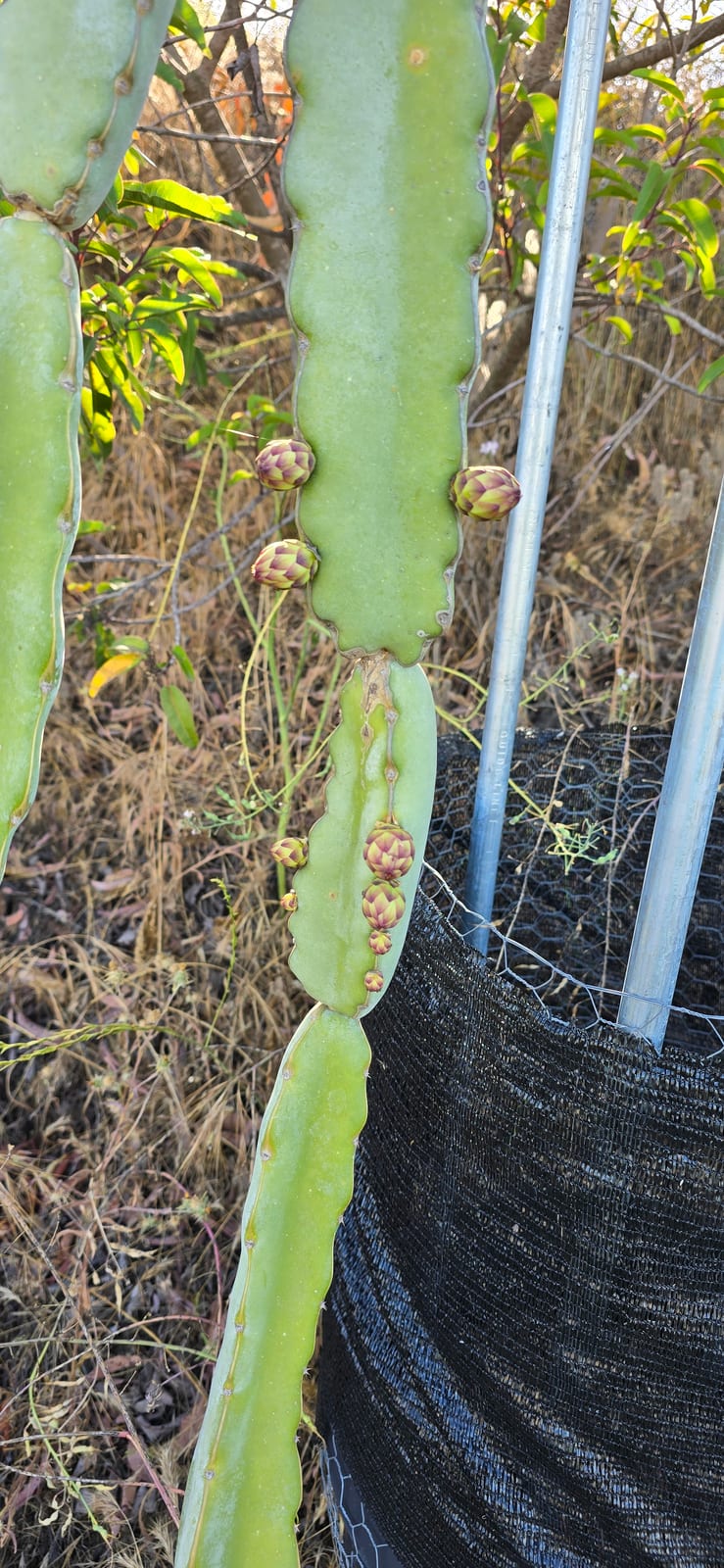
Growing requirements (earns keepers)
Orange Giant thrives in warm, dry climates with mild winters, making it a natural fit for USDA zones 10 and 11. In zone 9, you can grow it successfully if you provide frost protection. Damage occurs below 40 to 45 degrees Fahrenheit. Death is likely below 32 to 40 degrees Fahrenheit. The ideal growth range sits between 65 and 80 degrees Fahrenheit. While the cactus tolerates heat up to about 100 degrees Fahrenheit, it performs best when you provide afternoon shade during the hottest parts of the summer. This heat tolerance makes it well suited to hot Mediterranean and subtropical summers found in places like Southern California and Australia.
Light and soil
Light is the single biggest factor in fruit quality. Aim for full sun for six to eight hours a day. If you provide too much shade, the plant will produce fewer fruits, and those fruits will be of lower quality. For soil, you need a sandy, fast-draining mix with a slightly acidic pH between 6 and 7. A standard cactus-style mix works well. Because this is a climbing cactus that can reach 10 to 20 feet, the support structure must be heavy and sturdy. A burlap-wrapped totem, a solid trellis, or a thick post are all suitable options. If planting in the ground, space plants 6 to 10 feet apart to allow for the mature vine size.
Water and feeding
Watering follows the standard cactus rule: deeply but infrequently. Let the soil dry out or get nearly dry between waterings to prevent root rot. During the cooler, dormant season, cut back on watering significantly. Feeding supports both the vine and the fruit. Use a balanced fertilizer regularly during the growing season. A balanced cactus or fruiting-cactus feed is ideal to maintain the robust growth habit that defines this variety.
Pollination & fruiting (the honest, nuanced part)
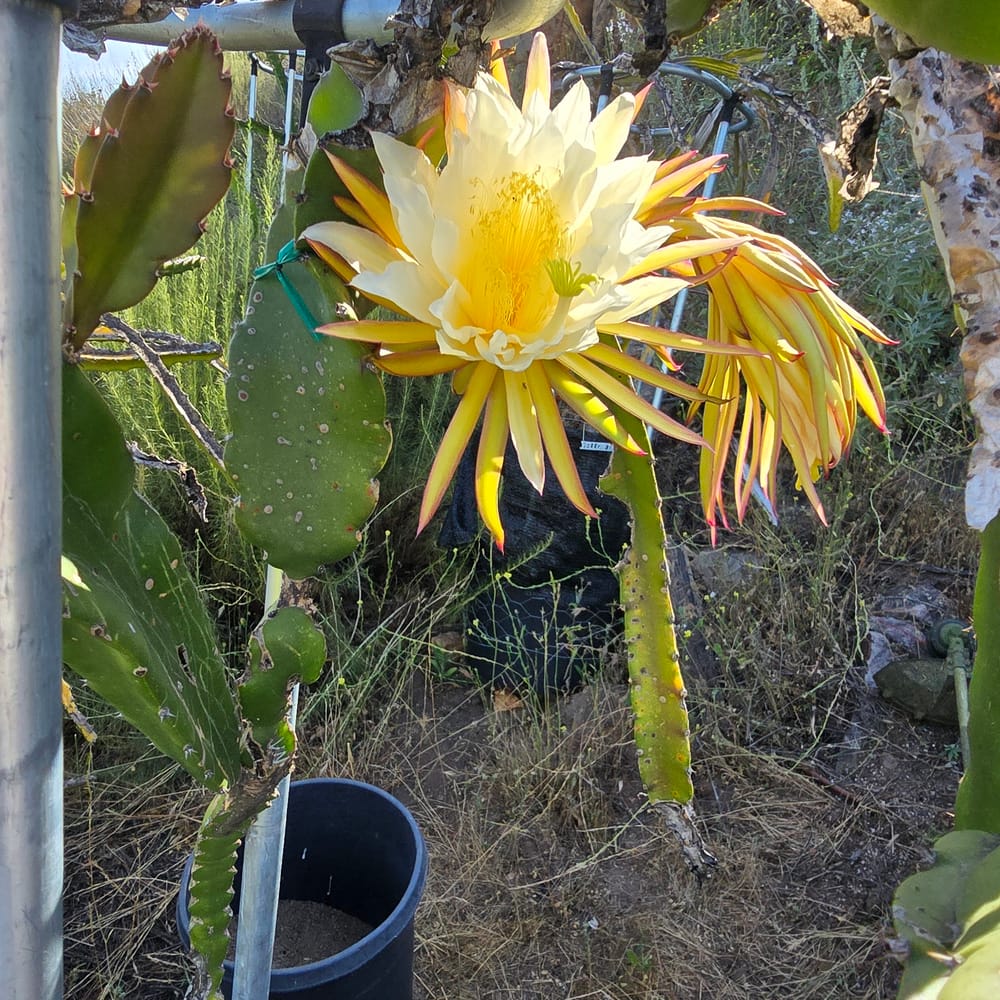
Getting fruit from Orange Giant requires a bit of detective work because its self-pollinating status is not definitively confirmed. Some grower groups list it as "not yet confirmed," which means you cannot rely on the plant to set fruit on its own. The flowers open at night and close by morning, lasting only a single evening. Natural pollinators like moths and bats are often unreliable in home gardens, so hand pollination is the recommended practice for a reliable crop. Use a small, soft brush to transfer pollen from the anthers to the stigma while the flower is open. If you have a second compatible variety nearby, cross-pollination can improve both the set rate and the final size of the fruit.
Timing the harvest
In a warm climate, the fruiting window runs from spring through autumn. Once pollination is successful, the fruit develops over a period of about 30 to 50 days, with 35 to 45 days being typical. If you are starting from a cutting, expect to wait 1 to 3 years for the first fruit, depending on the starting size of the plant. Patience is key here, as the vine needs time to establish a robust structure before it can support heavy fruit loads.
Buying / where it comes from
Orange Giant is a scarce cultivar that you will rarely find in big-box garden centers. It is primarily traded as cuttings among specialty nurseries and dedicated dragon fruit growers. Because it is a rare variety rather than a commodity crop, stock levels fluctuate by season and seller. Currently, Sky Botanicals has this variety in stock. If you are looking to secure a plant, checking with specialized sellers like Tasty Dragons or monitoring online marketplaces where 12-inch unrooted cuttings occasionally appear is your best bet. Prices vary by seller, with examples around $75 in the US and $20 in Australia.
Climate fit and sourcing
Before you buy, verify that your local climate supports the plant. Orange Giant thrives in USDA zones 10 through 11. If you live in zone 9, you can still grow it, but you must provide frost protection during the colder months. In areas like Escondido (zone 10a), the Mediterranean climate is a natural fit for this cultivar.
For growers in cooler regions or those growing in containers, temperature management is critical. The optimal growth range is 65 to 80 degrees Fahrenheit. If you are keeping the plant indoors or in a pot, an ideal range is 65 to 85 degrees Fahrenheit. Be mindful of the lower limit. Prolonged exposure to temperatures below 32 to 40 degrees Fahrenheit will damage or kill the plant. Protecting your Orange Giant from frost is non-negotiable if you are outside the warmest zones.
Sourcing Tip: Since exact parentage is community-sourced and not settled science, buy from sellers who provide clear care instructions and honest descriptions. Look for rooted cuttings if you want the fastest start, or unrooted cuttings if you prefer to cure them yourself. Always check the seller's reputation for shipping healthy cactus material.
Internal link + next steps
You now have the full picture on Orange Giant, from its top-tier sweetness to its specific growing needs. If you are still deciding between this cultivar and other orange-skinned options like Frankie Red or Peruvian Orange, our complete dragon fruit varieties guide breaks down the nuances of each so you can pick the best fit for your climate and taste preferences.
Ready to get started? Sky Botanicals currently has Orange Giant cuttings in stock. Because this variety is rare and hard to source, securing a healthy starter now ensures you can begin the rooting process without waiting for the next shipment. Once your cutting arrives, keep it in a warm, dry spot until roots form. Then, plant it on a sturdy support in fast-draining soil. With proper care and hand pollination, you can look forward to large, sweet fruit in a few years.
FAQ
Finally, buyers often ask about availability. Orange Giant is a rare and hard-to-source variety. It is not a commodity crop. Most sellers offer it as cuttings. Prices and stock vary by seller and season. Sky Botanicals currently has this variety in stock. For a broader look at how this cultivar fits into the wider market, check out our complete dragon fruit varieties guide.