Neon Dragon Fruit: The True 8-S Hybrid Guide
Neon dragon fruit is the self-fertile 8-S hybrid that delivers vivid red-magenta flesh with a sweet-tangy berry flavor. It sets fruit with its own pollen, so you do not need a second plant for pollination. The variety is vigorous and grows quickly, though the fruit stays small. At our farm in Escondido, we keep Neon in stock because it is a reliable producer that handles heat well. Note that some sellers label a different Hylocereus polyrhizus as Neon, so verify the cultivar before buying. This guide covers the true 8-S line. See our [dragon fruit care guide] for general growing tips.
The identity fan-out (the core of the topic)
Buying "Neon" dragon fruit is complicated by a naming collision that confuses even experienced growers. In the specialty community, the name primarily refers to the 8-S hybrid, also known as Sugar Dragon or Voodoo Child. This is the cross between Hylocereus setaceus (Houghton) and Hylocereus guatemalensis (Rixford), originally created as Paul Thomson's 8th seedling. This is the line we stock and recommend for its vigorous growth and reliable self-fertility.
However, at least one major nursery sells a plant branded "Neon Dragon Fruit" that is actually Hylocereus polyrhizus. This variant features deep maroon skin with red-tipped scales and produces fruit averaging 0.4 to 0.7 lb. The 8-S line also has dark skin, but it lacks the distinct red-tipped scales found on the polyrhizus variant. If you order "Neon" without verifying the cultivar, you might receive either identity depending on the seller. Always check the scientific name or parentage before purchasing to ensure you are getting the 8-S/Sugar Dragon line.
| Feature | 8-S / Sugar Dragon (True Neon) | Polyrhizus Variant (Seller-dependent) |
|---|---|---|
| Parentage | Houghton x Rixford | Hylocereus polyrhizus |
| Fruit Size | Often under 100 grams | 0.4 to 0.7 lb |
| Key Trait | Vigorous, self-fertile, "universal pollinator" | Deep maroon skin, red-tipped scales |
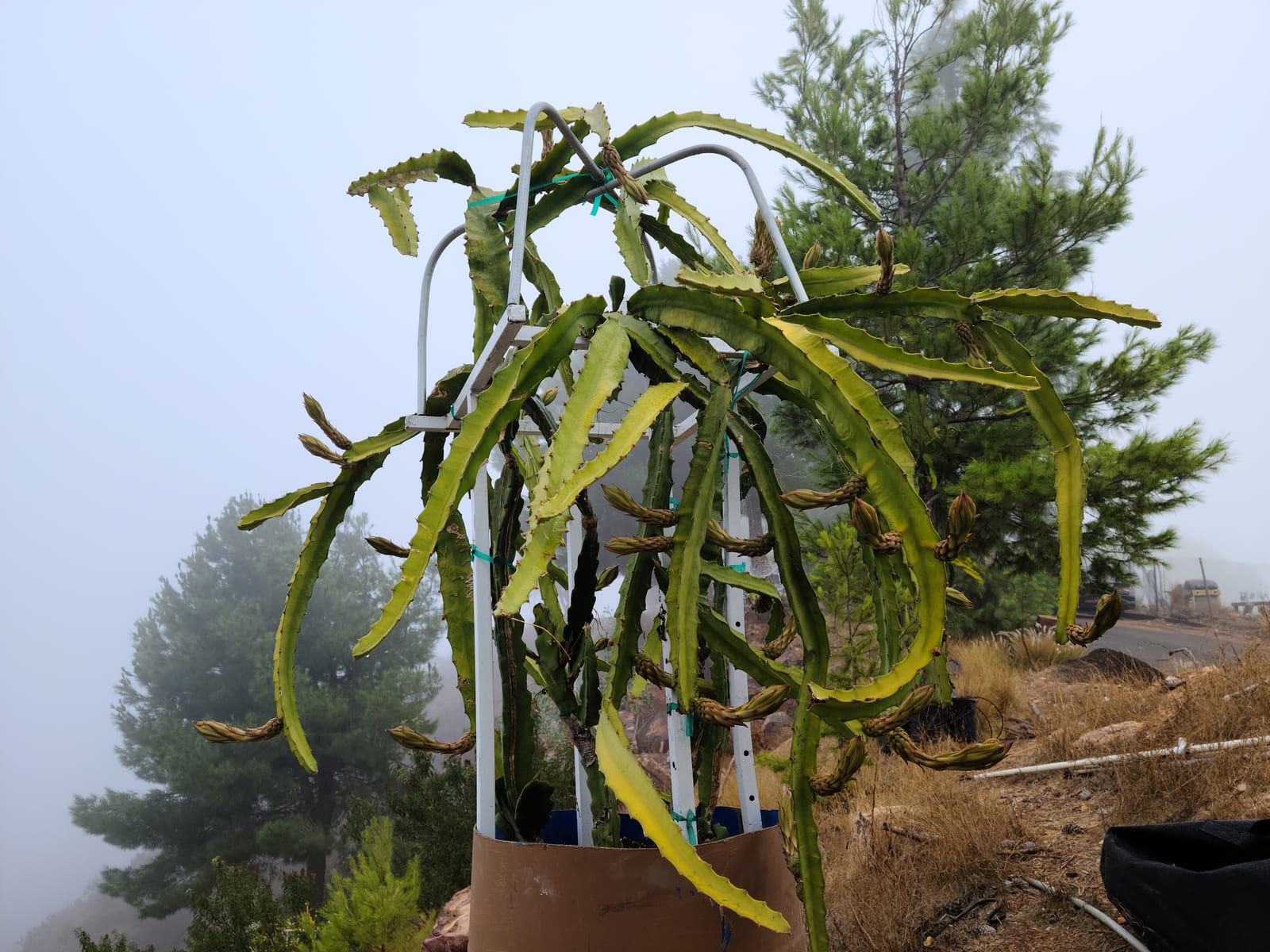
The 8-S line is distinct in its growth habit and reproductive behavior. It is a vigorous grower that can reach stem widths of about 3 inches, earning the reputation of growing "like a beast." This vigor is paired with high heat tolerance, making it a strong candidate for warm climates. While the fruit is small, the plant compensates with high production and a strongly berry-like, sweet-tangy flavor profile. The plant also produces an abundance of usable pollen, which the community calls a "universal pollinator" capable of hand-pollinating most other dragon fruit varieties.
Understanding the specific identity of your plant matters for care and expectations. The 8-S line is self-fertile, meaning it sets fruit with its own pollen and does not require a second plant. However, because the stigma protrudes well away from the anthers, hand-pollination is recommended for reliable fruit set. If you are interested in the specific flavor profile and growth habits of this hybrid, you can read more about its characteristics in our guide to Voodoo Child dragon fruit.
Fruit profile
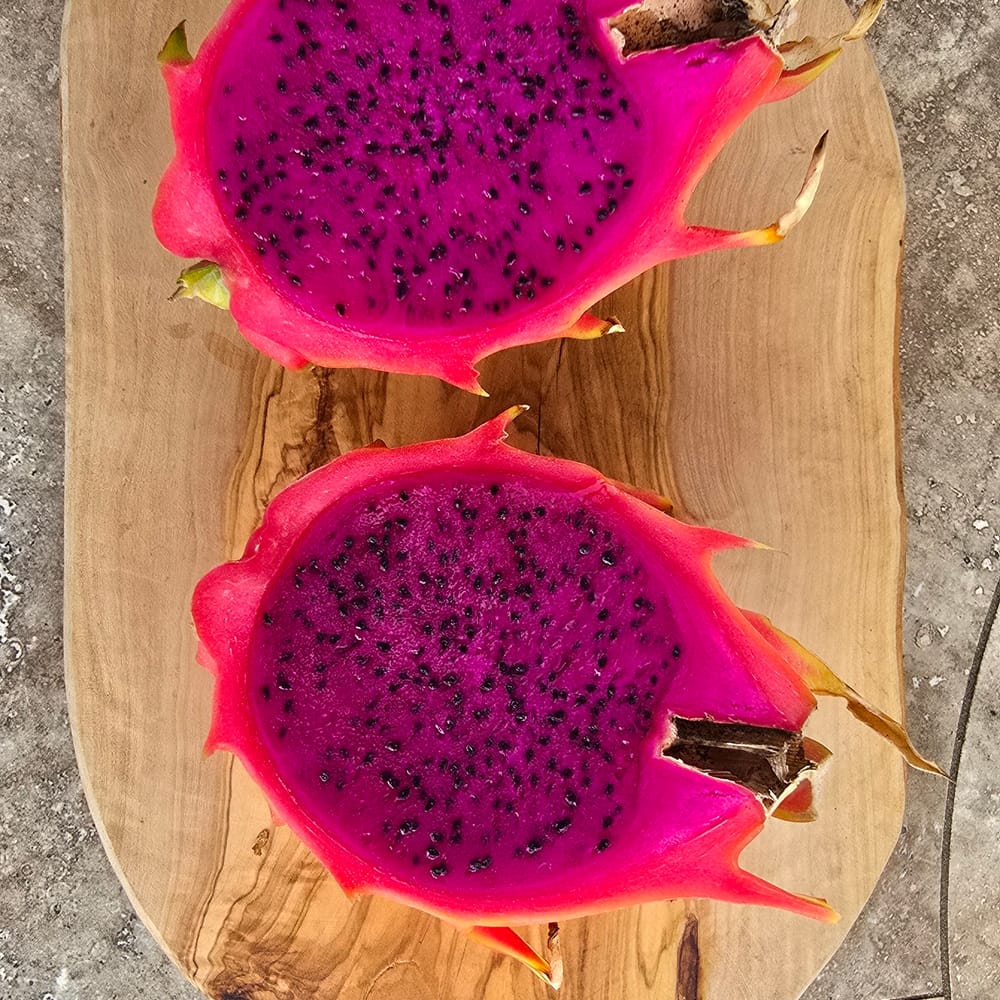
The true 8-S line produces fruit that is visually striking but physically compact. While the skin presents a deep maroon or red hue, the interior is where the variety earns its reputation. The flesh is a vivid red-magenta, sometimes leaning toward dark magenta. This coloration is consistent across the fruit, offering a visual contrast to the white-fleshed varieties many growers start with. The size is the primary trade-off for this cultivar. Fruits from the 8-S line are often under 100 grams. This compact size is not a flaw in the community; it is a characteristic that pairs with the plant's high production rate. You get more, smaller fruits rather than fewer, larger ones.
Flavor and texture
The taste profile is distinct from the mild, pear-like flavor of common white dragon fruit. Neon delivers a strongly berry-like experience with a sweet-tangy, grape-like quality. There is a mild earthiness that grounds the sweetness, making the flavor complex rather than one-dimensional. The texture is juicy, with high sugar and water content. This makes the fruit refreshing and easy to eat. If you are looking for a dragon fruit that tastes like a berry rather than a mild melon, this is the variety to grow.
| Attribute | 8-S / Sugar Dragon | Polyrhizus Variant |
|---|---|---|
| Flesh Color | Vivid red-magenta | Varies by specific polyrhizus strain |
| Flavor Profile | Sweet-tangy, berry-like, grape-like | Typical polyrhizus profile |
| Fruit Weight | Often under 100 grams | Averages 0.4 to 0.7 lb |
| Key Trait | High sugar, strong flavor | Deep maroon skin, red-tipped scales |
Understanding the difference between these two identities is crucial for setting expectations. If you are buying from a seller who labels their stock as "Neon" but provides Hylocereus polyrhizus, you will receive a different fruit. The polyrhizus variant tends to be larger, averaging 0.4 to 0.7 lb, and has a distinct appearance with deep maroon skin and red-tipped scales. The 8-S line, however, offers the specific berry-like flavor and high sugar content that defines the "Neon" experience in the specialty community. For a deeper look at the specific characteristics of this hybrid, you can read more in our guide to Voodoo Child dragon fruit.
Growing requirements (this is where it earns keepers)
Neon thrives in warm conditions but has specific boundaries. The optimal growing temperature range is roughly 65-77F (18-25C). While the plant tolerates heat up to about 100F (38C), sustained temperatures near or above that mark benefit from partial afternoon shade. It is not frost-tolerant. Light frost is recoverable, but damage occurs below 40-45F (4-7C), and prolonged freezes will kill the plant. In USDA zones 10-11, it can remain outdoors year-round. If you are below zone 10, keep the plant in a pot and bring it indoors when daytime temperatures drop below 65F and frost risk appears.
Light and soil
Provide 6-8 hours of sun daily. In moderate climates, full sun works well. Where it runs near 100F, partial afternoon shade prevents stress. Too much shade results in fewer and lower-quality fruits. The soil must be nutrient-rich but fast-draining. A cactus or potting mix works best. A reliable blend is about 50% potting mix, 25% perlite or pumice, and 25% compost. The roots are superficial and develop aerial anchoring roots, so the medium needs to hold moisture without staying soggy.
Container and support
Start with a 5-7 gallon container and size up to 15-20 gallons as the plant grows. Because Neon is a vigorous climber, it needs a sturdy support. Options include a burlap-wrapped totem, a trellis, or a sturdy tree. The support must handle the weight of the thick stems and the fruit load. For more on how this hybrid performs in the garden, see our guide to Voodoo Child dragon fruit.
Watering tip: Water deeply but infrequently. Let the soil dry between waterings to avoid root rot. In fall and winter, reduce watering as the plant goes semi-dormant.
Pollination
Neon is self-fertile, meaning a single plant can produce fruit without a partner. However, the flower structure creates a mechanical challenge. The stigma sits well away from the anthers, which prevents natural wind or insect pollination from being consistently effective. For reliable fruit set, hand-pollination is the standard practice among growers of this line.
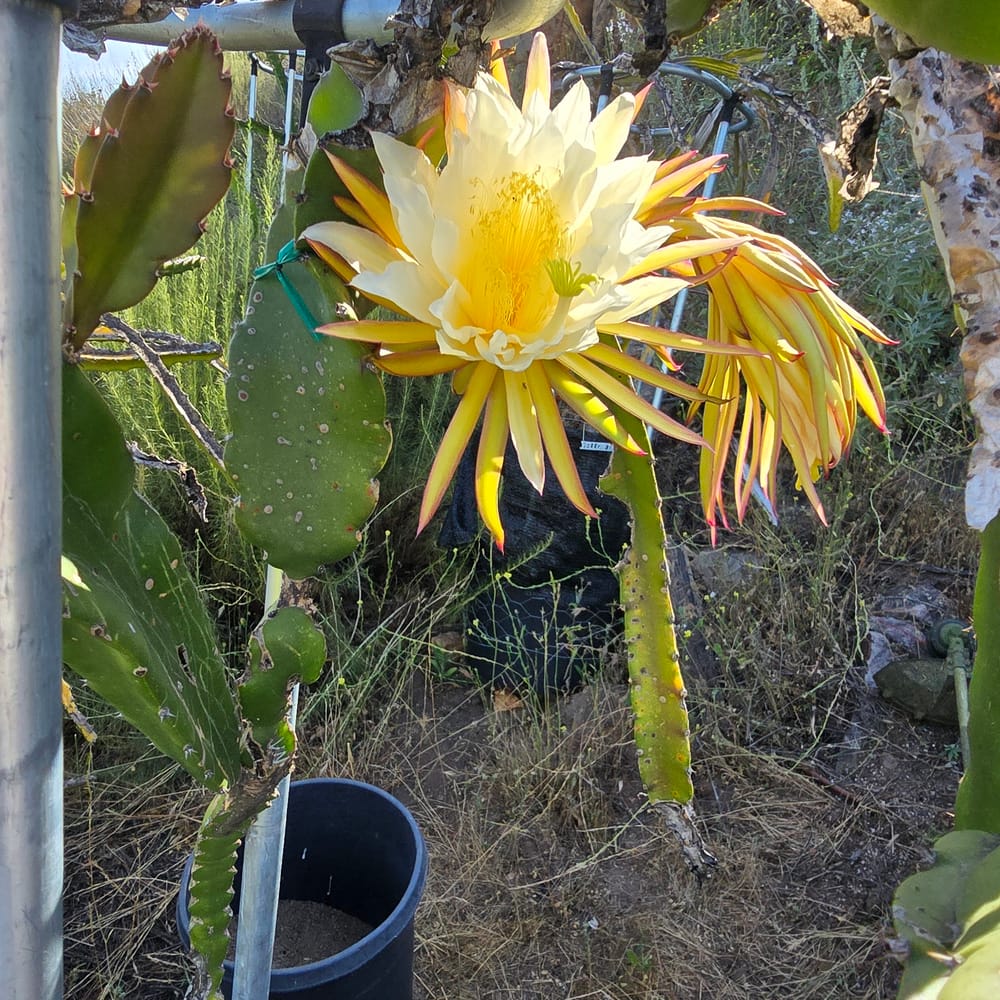
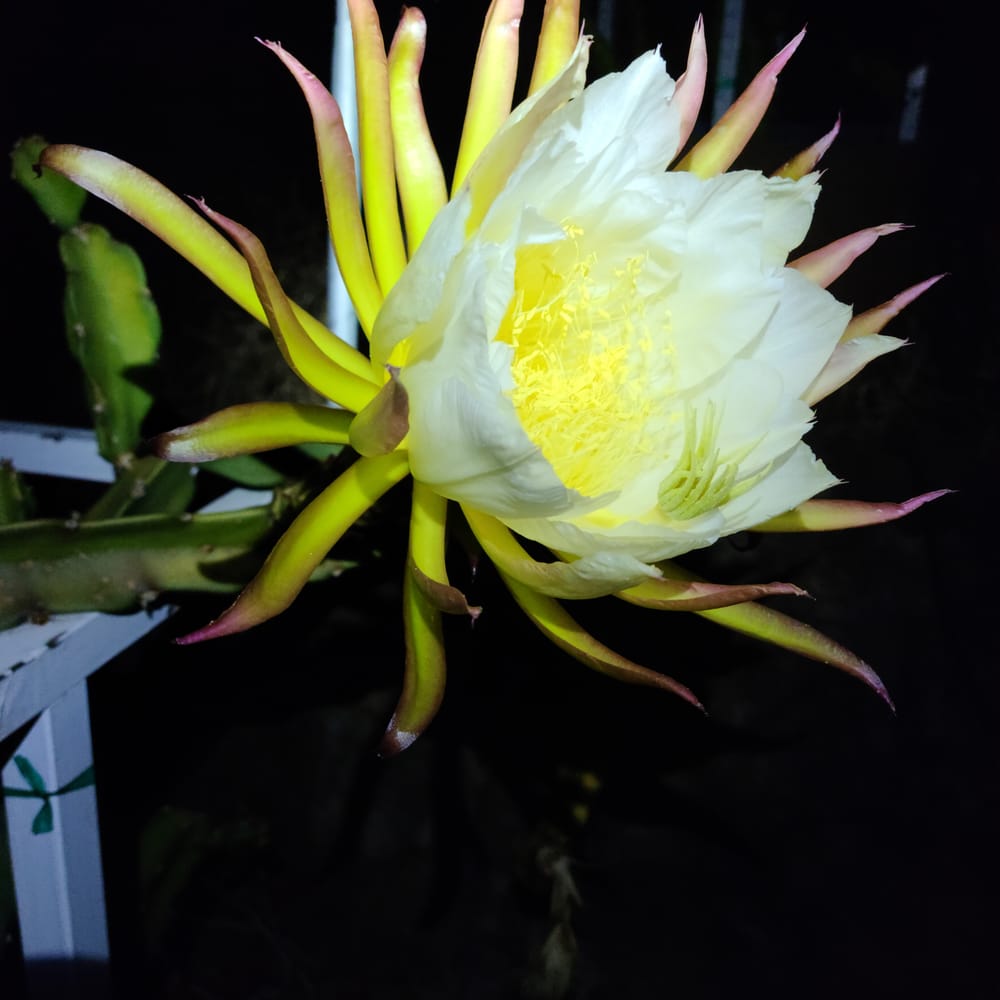
The flowers open at night and are large, often exceeding 15 inches across. They are brilliant white with a yellow-to-orange tinge on the sepals and carry a strong fragrance. Because they are nocturnal, you must work in the dark or use a flashlight. The blooms usually last only a single evening, so timing is critical. If you miss the window, the flower closes and drops, and that potential fruit is lost.
- Wait for the flower to fully open, typically in the evening.
- Collect pollen from the anthers using a small brush, cotton swab, or your finger. The pollen is abundant and easily accessible.
- Transfer the pollen to the stigma. Since the stigma protrudes away from the anthers, you must physically move the pollen to the sticky surface at the tip of the style.
- Repeat the process for each flower on the plant.
Tip: Neon produces an abundance of usable pollen. In the community, this line is often called a "universal pollinator" because its pollen is compatible with most other dragon fruit varieties. If you have a different dragon fruit that is not setting fruit, try using Neon's pollen on it.
Once pollinated, the flower closes and the ovary begins to swell. Buds start as small bulbs with a reddish tinge before revealing bright green sepals. The ripening process for Neon is slower than typical white or red varieties but faster than yellow pitaya. You will know the fruit is ready to harvest when it changes color and loosens on the stem. That looseness is the primary signal that the fruit has reached maturity.
Because the plant is vigorous and produces many flowers, you may see last season's fruits ripening alongside new buds. This continuous cycle is a hallmark of the 8-S line. If you are interested in the specific flavor profile that results from this reliable pollination process, see our guide to Voodoo Child dragon fruit.
How it stacks up
Choosing the right dragon fruit often comes down to balancing size, vigor, and flavor. Neon sits in a specific niche that appeals to growers who prioritize taste and plant health over sheer fruit weight. It is a high-yield producer that is one of the most reliable and vigorous in the garden. For many, the trade-off of smaller fruit for a plant that grows "like a beast" and delivers a distinct berry flavor is a worthwhile exchange.
| Attribute | Neon (8-S Line) | Standard White/Red Varieties |
|---|---|---|
| Fruit Size | Often under 100 grams | Typically larger |
| Growth Vigor | Extremely vigorous, stems up to ~3 inches wide | Moderate to high |
| Flavor Profile | Strongly berry-like, sweet-tangy, grape-like | Mild, pear-like, subtle |
| Pollination | Self-fertile, abundant pollen | Varies, often requires cross-pollination |
| Heat Tolerance | Very hardy, tolerates ~100F | Varies by cultivar |
Why the small size works
The compact fruit size is the primary trade-off for this cultivar. While you will not harvest the large, heavy fruits associated with commercial white dragon fruit, the plant compensates with high production rates. You get more, smaller fruits rather than fewer, larger ones. This characteristic pairs well with the flavor profile. The flesh is vivid red-magenta and offers a strongly berry-like experience with a sweet-tangy, grape-like quality. There is a mild earthiness that grounds the taste, making it distinct from the mild, pear-like flavor of common white varieties. For a grower focused on eating quality rather than shelf presence, this is a significant advantage.
Performance in the garden
Neon is a vigorous grower that handles heat well. At our farm in Escondido, we see it thrive in the warm climate, producing stems that can reach widths of about 3 inches. This rapid growth means it requires a heavy support structure to manage its weight and direction. The plant is also easy to containerize, making it a good fit for growers with limited space or those who need to move plants indoors during cooler months. It roots easily from cuttings, which allows for quick propagation and expansion of your collection.
The reproductive behavior of the 8-S line is another factor in how it stacks up against other varieties. It is self-fertile, meaning it sets fruit with its own pollen and does not require a second plant for pollination. This makes it a low-maintenance option for single-plant gardens. Additionally, the plant produces an abundance of usable pollen. The community often refers to it as a "universal pollinator" because this pollen can be used to hand-pollinate most other dragon fruit varieties. If you are growing multiple types, having a Neon plant nearby can improve fruit set across the board.
Internal link + next steps
Now that you have identified the true 8-S line and understand its vigorous growth habit, you can move from identification to action. The most effective next step is securing a verified cutting or plant from a source that explicitly lists the parentage as Houghton x Rixford. This ensures you are growing the self-fertile hybrid rather than the polyrhizus variant. Once your plant arrives, focus on establishing a sturdy support structure immediately. Neon grows quickly and requires a heavy trellis or totem to manage its weight as the stems thicken. Do not wait until the plant is large to provide support, as the weight of the stems can pull the plant out of the pot or damage the aerial roots.
For growers interested in the broader context of this hybrid, our detailed guide to Voodoo Child dragon fruit offers additional insights into the flavor profile and specific care nuances of this lineage. Since Neon is the same genetic line, that resource provides a deeper look at the berry-like taste and the "universal pollinator" traits you can leverage in your garden. If you are planning to hand-pollinate other varieties, keep in mind that Neon produces an abundance of usable pollen. You can harvest this pollen during the bloom window and store it for later use, making your Neon plant a valuable asset for the entire collection.
Pro Tip: Because Neon is easy to root from cuttings, consider propagating a backup plant early in the season. This provides insurance against potential winter damage and allows you to share cuttings with other growers. The rapid rooting process means you can have a new, independent plant established within 3 to 4 weeks of taking the cutting.
As you settle into the growing season, monitor the plant's response to your local climate. In zones where temperatures drop below the safe threshold, prepare to move the container indoors. In warmer zones, ensure the plant receives adequate afternoon shade during peak heat to prevent stress. By combining the correct cultivar with proper structural support and climate management, you set the stage for the high production and vivid fruit that define this variety.
FAQ
Growers often ask if they need a second plant to get fruit from Neon. You do not. The 8-S line is self-fertile and sets fruit with its own pollen. However, the stigma sits well away from the anthers, which can make natural pollination inconsistent. For a reliable harvest, we recommend hand-pollinating the flowers. If you are growing other varieties, Neon is also a "universal pollinator." It produces an abundance of usable pollen that can help set fruit on many other dragon fruit types.
Many buyers worry about the small fruit size. While individual fruits are often under 100 grams, the plant compensates with high volume. You will get more, smaller fruits rather than fewer, larger ones. This compact size pairs well with the intense, berry-like flavor profile. If you are looking for a specific flavor comparison, you can read more about the characteristics in our guide to Voodoo Child dragon fruit.
Neon is a vigorous grower that handles heat well. It is not frost-tolerant. Light frost is recoverable, but damage occurs below roughly 40-45F. If you live in a zone where temperatures drop that low, keep the plant in a container. Move it indoors when daytime temperatures drop below 65F and frost is a risk. In warm climates like our farm in Escondido, it thrives outdoors year-round.
How fast does it root from cuttings? Neon roots quickly. A grower reported rooting in 3-4 weeks and throwing pups by about 7 weeks. It is easy to containerize and propagate. The stems can reach widths of about 3 inches, so provide a sturdy support like a totem or trellis early on.
When do the flowers open? The blooms are large, brilliant white with a yellow-to-orange tinge. They are nocturnal and usually last a single evening. Buds can form early in spring and late in fall. In warm climates, the bloom window stretches from early spring through fall. You might even see last season's fruits alongside new buds on the same plant.
How do I know when the fruit is ready? Watch the skin color. Ripening is slower than typical white or red varieties but faster than yellow pitaya. Once the fruit changes color, it will quickly loosen from the stem. That looseness is the signal to harvest.