La Catrina Dragon Fruit: Care and Pollination
La Catrina is a yellow-skinned, white-fleshed pitaya that demands a pollination partner to fruit. Attributed to Selenicereus ocamponis, this variety traces its wild origins to Jalisco and Michoacán. You cannot grow it alone; without a compatible cross-pollinator, you will get flowers but no harvest. This plant suits experienced growers who already cultivate other pitayas and can manage night-time hand pollination. Beginners seeking a single-plant solution will be frustrated. The documented record is thin, relying heavily on vendor observations rather than extensive trial data. See our La Catrina cutting page for current stock.
| Claim | What is documented |
|---|---|
| Yellow skin, white flesh, elongated fruit | Consistent across vendor descriptions and trade records. |
| Wild origin in Jalisco and Michoacán | Traced to Mexican growers; no formal breeding program record. |
| Longer thorns than Albino | Vendor observation; no comparative trial data exists. |
| Self-sterile | Confirmed by nursery data; requires cross-pollination. |
| Specific Brix or yield numbers | No La Catrina-specific measurements published; relies on species averages. |
The name on the label: Hylocereus, Selenicereus and what ocamponis actually means
You will often see La Catrina sold under the genus Hylocereus. That label is outdated. A 2017 molecular phylogenetic revision proved that Hylocereus is nested inside Selenicereus. Consequently, every dragon fruit formerly sold as a Hylocereus is now technically a Selenicereus, even though many nursery descriptions still print the old genus name.[3] The accepted scientific name for this species is Selenicereus ocamponis (Salm-Dyck) D.R.Hunt. It belongs to the family Cactaceae and order Caryophyllales, and the Global Biodiversity Information Facility (GBIF) records it as an accepted species with that specific authority string.[4]
Understanding the genetics explains why a yellow-skinned La Catrina is botanically plausible without being a commercial yellow pitaya. The key difference lies in chromosome count. S. ocamponis is diploid, carrying 2n = 22 chromosomes, just like the common red and white vine cacti. In contrast, the commercial yellow pitaya, S. megalanthus, is tetraploid with 2n = 44 chromosomes.[5] Ploidy is the fastest way to distinguish these two yellow stories.
Despite the difference in chromosome numbers, the two are close cousins. Cytological and genomic-in-situ-hybridization work at Ben-Gurion University found that the overall sequence composition of the tetraploid S. megalanthus is similar to that of S. ocamponis and S. grandiflorus. The study postulated that S. megalanthus is an allotetraploid derived from natural hybridization between closely related diploid taxa.[6] This means the yellow-fleshed wild plants from Mexico and the supermarket yellow pitayas share a close, crossable gene pool.
Why this matters for your garden: The same study produced viable triploid, pentaploid, and hexaploid hybrids from reciprocal crosses between S. megalanthus and diploid species.[6] This confirms that S. ocamponis, S. megalanthus, and the commercial whites and reds can all cross-pollinate. A yellow S. ocamponis-type from western Mexico sits inside the same genetic neighborhood that commercial yellow pitaya came from. You are growing a plant that fits into the broader dragon fruit breeding landscape.
Where it came from, and how little is on paper
La Catrina did not emerge from a university greenhouse or a corporate breeding lab. The trade traces its roots to the wilderness regions of Jalisco and Michoacán in Mexico. US nurseries do not buy from a breeder; they buy from growers. One prominent seller states it acquired its original cutting directly from Israel Barragan, the founder of Pitahayas Cotija in Michoacán.[1] The provenance is clear, but there is no formal registration.
There is no published variety registration for La Catrina. No peer-reviewed description exists. Every trait specific to this clone, from its thorn length to its flesh color, rests on nursery pages and vendor observations.[2] The species-level biology of Selenicereus ocamponis is documented, but the clone itself is not. When you buy a La Catrina cutting, you are buying a named plant with a provenance story, not a standardized cultivar with a trial record.
The thinness of the record is visible in the data sheets. The main US nursery that has sold this variety lists its growth, flower, and fruit sections as "more information coming soon."[2] The data sheet is effectively empty, confirming how little is known about this clone.
The flesh-color disagreement. Vendor descriptions consistently call La Catrina a white-fleshed pitaya. However, the grower-maintained Dragon Fruit Directory carries a cultivation record for ocamponis that describes red flesh.[7] This is a live disagreement in the trade record. The directory entry is not a La Catrina page, but it is the closest species-level reference available. Until a trial is run, you are relying on the seller’s word that your specific cutting is the white-fleshed selection.
Despite the lack of formal registration, the plant is buyable and established. Sky Botanicals lists La Catrina in stock as a rooted cutting under its laca-cutting product page.[10] You are purchasing a cutting with a known origin, not a mystery seedling. The risk is not that the plant is fake; the risk is that the performance data is anecdotal.
The fruit: what you get, and what is in the skin
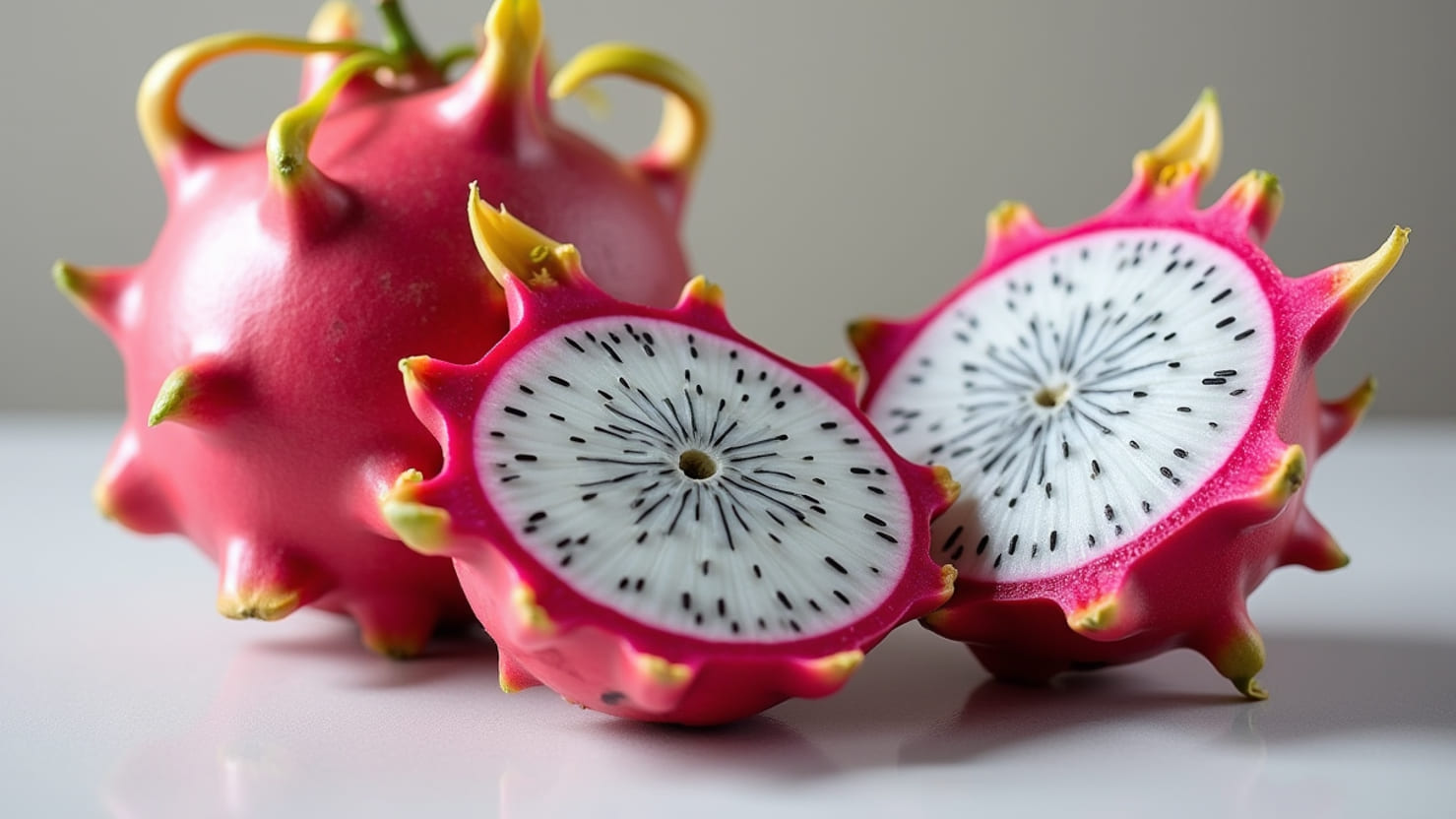
La Catrina produces elongated fruit with a yellow exterior and smooth white flesh. The taste is described as sweet and refreshing. While no La Catrina-specific Brix measurements exist in public records, the species complex generally runs 12-18 Brix. The grower-maintained Dragon Fruit Directory logs ocamponis at 14-16 Brix.[5] Fruit size typically falls between 220 and 840 grams, with pulp pH ranging from 4.6 to 5.5.[5]
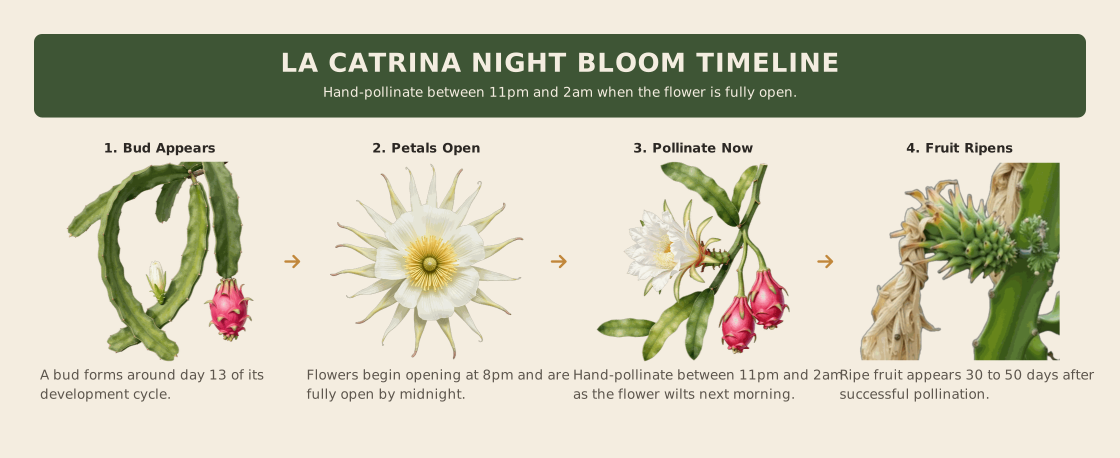
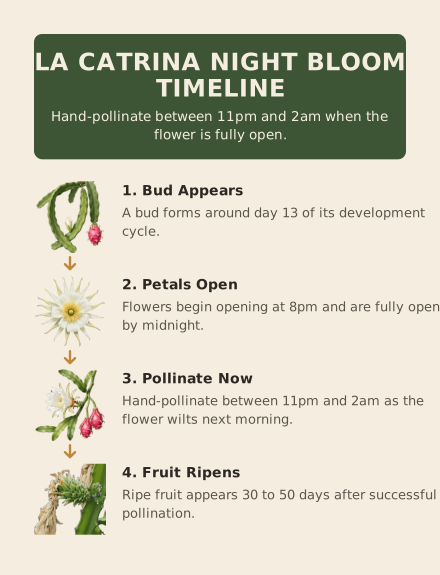
Timing your harvest requires attention to the season. For the species complex, fruit ripens 30 to 50 days after pollination. In summer, you can expect to pick 30 to 35 days after anthesis. In autumn, the process slows, and you should wait 40 days or more.[5] Do not confuse this with the commercial yellow pitaya, Selenicereus megalanthus, which takes about 120 days from pollination to ripe fruit.
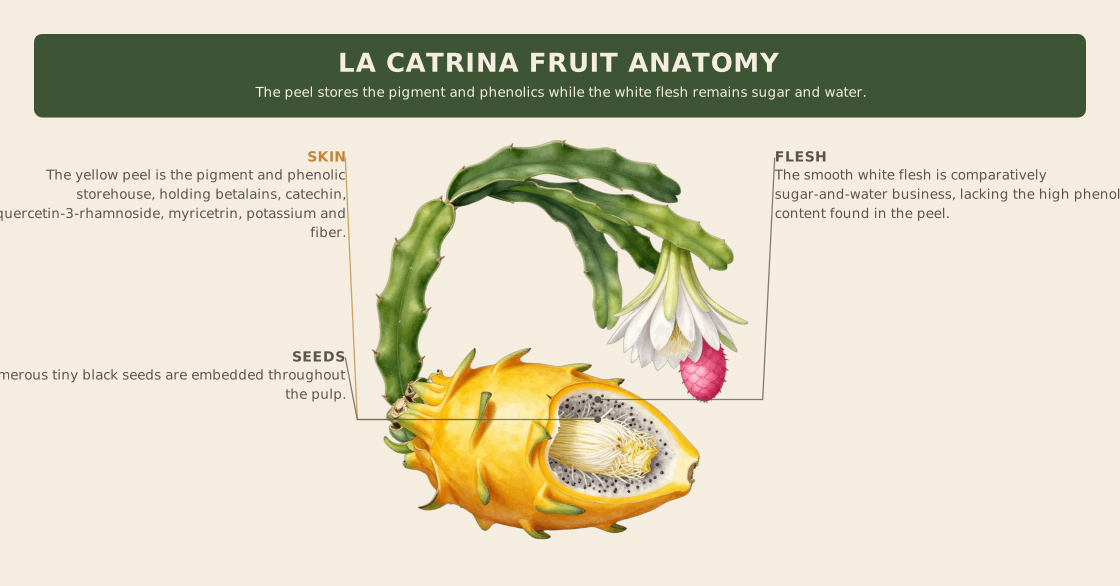
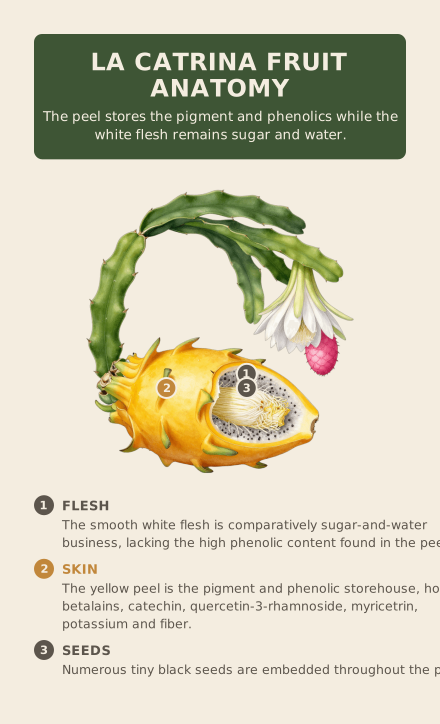
One question that comes up constantly in grower forums is why the skin on a white-fleshed La Catrina sometimes develops red blotches as it ripens. Is the plant turning red-fleshed? Did you get a mislabeled cutting? The answer lies in the peel, not the pulp. A 2024 study published in Molecules analyzed flours milled from the peel and flesh of Hylocereus ocamponis fruit. The peel flour contained significantly more protein, ash, and dietary fiber than the flesh flour. More importantly, the peel carried the betalains and polyphenols, including catechin, quercetin-3-rhamnoside, and myricetrin.[8]
This chemical profile explains the red blotching. The pigment and phenolic wealth of an ocamponis fruit is concentrated in the peel, not the white flesh. This is consistent with pitaya generally. If your La Catrina skin is turning red, it is behaving exactly as the species should. The flesh remains white.
| Feature | La Catrina | Ecuador Palora | Albino |
|---|---|---|---|
| Species Label | Selenicereus ocamponis | Selenicereus megalanthus | Selenicereus ocamponis (trade name) |
| Flesh | White | White | White |
| Peel | Yellow with red blotching | Yellow | Yellow |
| Pollination | Self-sterile; needs partner | Self-sterile; needs partner | Self-sterile; needs partner |
| Documentation | Thin; vendor observations | Extensive; commercial standard | Thin; vendor observations |
Self-sterile: the fact that decides whether you succeed
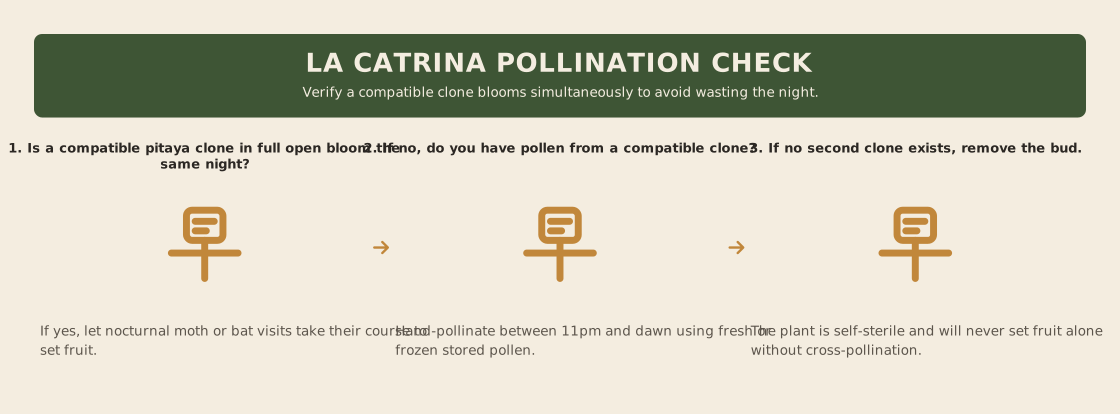
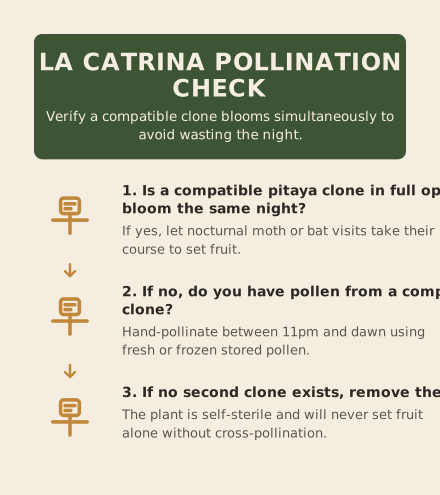
La Catrina will not set fruit from its own pollen. This is not a quirk of poor care or a lack of fertilizer. It is a biological lock. The plant produces spectacular blooms, but without a genetic partner, those flowers drop and the season ends empty. Spicy Exotics, a primary source for this variety, flags La Catrina as self-sterile and requiring pollen from a compatible variety to trigger fruit set.[2]
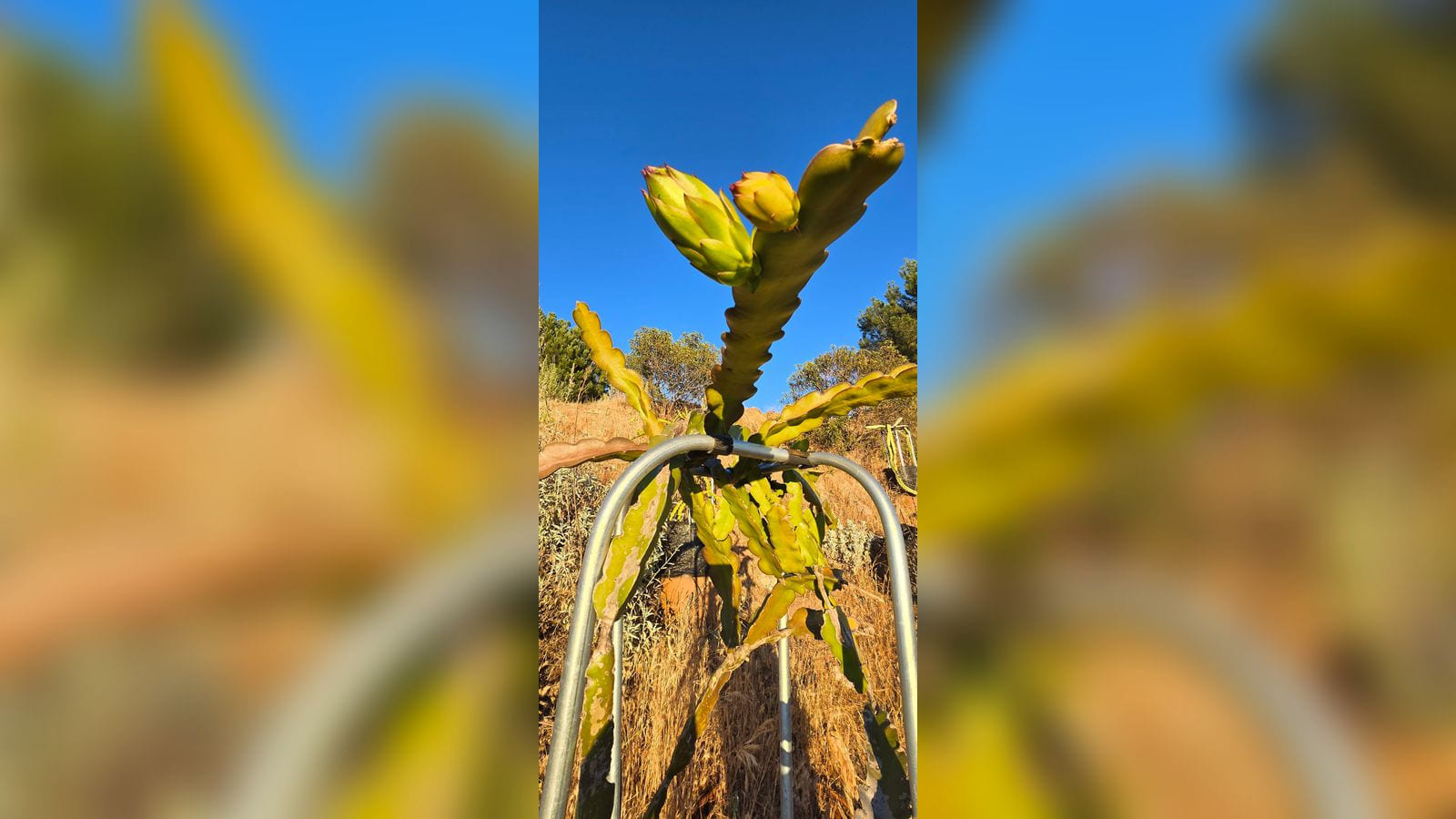
To succeed, you must understand the nocturnal clock. The window for pollination is narrow and happens entirely in the dark. Buds form in 13 days, then take another 16-17 days to open.[5]
The timing shifts with the seasons. In summer, flowers begin to open around 8:00 PM. In autumn, they start closer to 7:30 PM. By midnight, the blooms are fully open. The critical period for pollination closes by roughly 2:00 AM. If you miss this window, the stigma dries out and the opportunity is gone for that flower.
Do not rely on wildlife. Moths and bats are the natural pollinators for night-blooming pitayas. However, visits from these creatures are seldom observed in home gardens. Relying on them usually results in zero fruit.[9]
The fix is either structural or manual. The University of Florida IFAS extension recommends planting two or three different genetic types rather than multiple clones of the same plant. This ensures cross-pollination can occur naturally between distinct varieties.[9] If you only have one La Catrina, or if your other plants are clones, you must hand-pollinate.
Manual cross-pollination is the standard practice for self-incompatible cultivars. It measurably improves fruit set, size, and development.[5] The large flowers make this task physically easy. The working window runs from about 11:00 PM until morning. You can collect pollen or whole stamens from a donor flower and apply them directly to the stigma lobes of the La Catrina bloom.[9]
Because self-incompatibility in named cultivars is poorly documented, you often have to test compatibility yourself. UF/IFAS notes this gap in data, which applies directly to La Catrina.[9] If you are unsure which of your other pitayas will work, consult our guide on which dragon fruit varieties are self-fertile and which need a partner to build a reliable pollination group.
Growing La Catrina: site, water, feed, trellis
La Catrina follows the same husbandry rules as any other pitaya. You do not need special soil or exotic inputs. You need a stable environment and consistent care. The plant is a vigorous climber that will eventually weigh hundreds of pounds. Plan your support structure before you plant the cutting.
Vendors often claim this clone has strong resilience to heat and cold. That is plausible for a wild Mexican selection, but it remains unproven in independent trials. Treat it with the same caution you would give any other variety. Optimum growth happens between 65 and 77 F. Injury occurs above 100 F. Extended exposure below 31 F causes damage, though the plant recovers quickly from light freezes. Provide about 30% shade for the first 3 to 4 months after planting to prevent sunburn on the new stems.[9]
Drainage note: Do not add gravel, stones, or pot shards to the bottom of your container. This creates a perched water table that keeps the root zone wetter than it should be. Fill the pot with one free-draining mix all the way down and ensure it has a drainage hole.
Water and moisture management
Pitaya requires the equivalent of 25 to 50 inches of annual rainfall. If you are in a drier climate, you must irrigate twice a week. Consistency is critical. Uneven soil moisture during fruit development causes the fruit to split. Over-watering is just as dangerous. It leads to root rot, fungal disease, and fruit drop. Check the top inch of soil. If it is dry, water deeply. If it is damp, wait.
Trellis and training
Build a sturdy trellis. It must be strong enough to carry several hundred pounds of stem weight. Never use bare wire, as it cuts into the growing stems. Plant your trellis 15 to 25 feet away from trees, structures, and power lines to ensure adequate clearance. Tie the main stem to the post. Once it reaches the top, tip-prune it to force the growth of fruiting laterals. Prune the plant one to three times a year to keep light penetrating the canopy and to prevent a tangled mess.[9]
Fertilizer ladder
Begin feeding about a month after planting. In year one, apply 0.25 lb of fertilizer per plant every two months. Use a balanced formula like 6-6-6, 8-3-9, or 8-4-12. Supplement with well-decomposed manure. As the plant matures, increase the frequency and amount. From the fourth year onward, apply 0.50 to 0.75 lb per plant three or four times a year. Properly managed plants can produce about 220 lb of fruit per plant per year at 3 to 4 years of age. A healthy planting lasts around 20 years.[9]
| Care Factor | Requirement | Failure Mode |
|---|---|---|
| Temperature | 65-77 F optimum; 30% shade for first 3-4 months | Injury above 100 F; damage from extended exposure below 31 F |
| Water | 25-50 inches annual equivalent or twice-weekly irrigation | Fruit splitting from uneven moisture; root rot from over-watering |
| Support | Sturdy trellis; 15-25 ft clearance from obstacles | Stem damage from bare wire; structural failure from weight |
| Feed (Year 1) | 0.25 lb every 2 months (6-6-6, 8-3-9, or 8-4-12) | Slow establishment; nutrient deficiency |
| Feed (Year 4+) | 0.50-0.75 lb three or four times a year | Reduced yield; poor fruit quality |
How to know your plant is the real thing
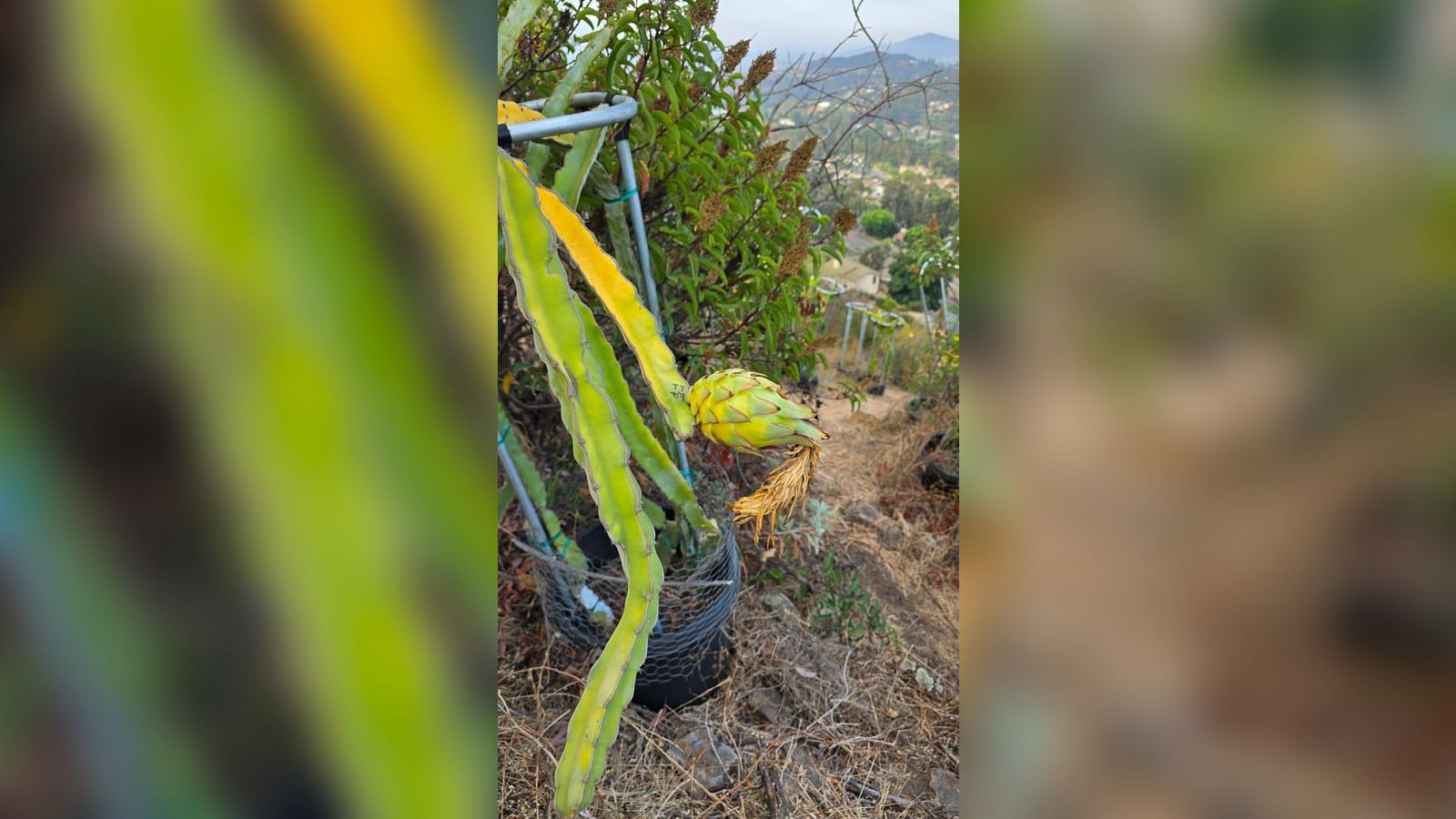
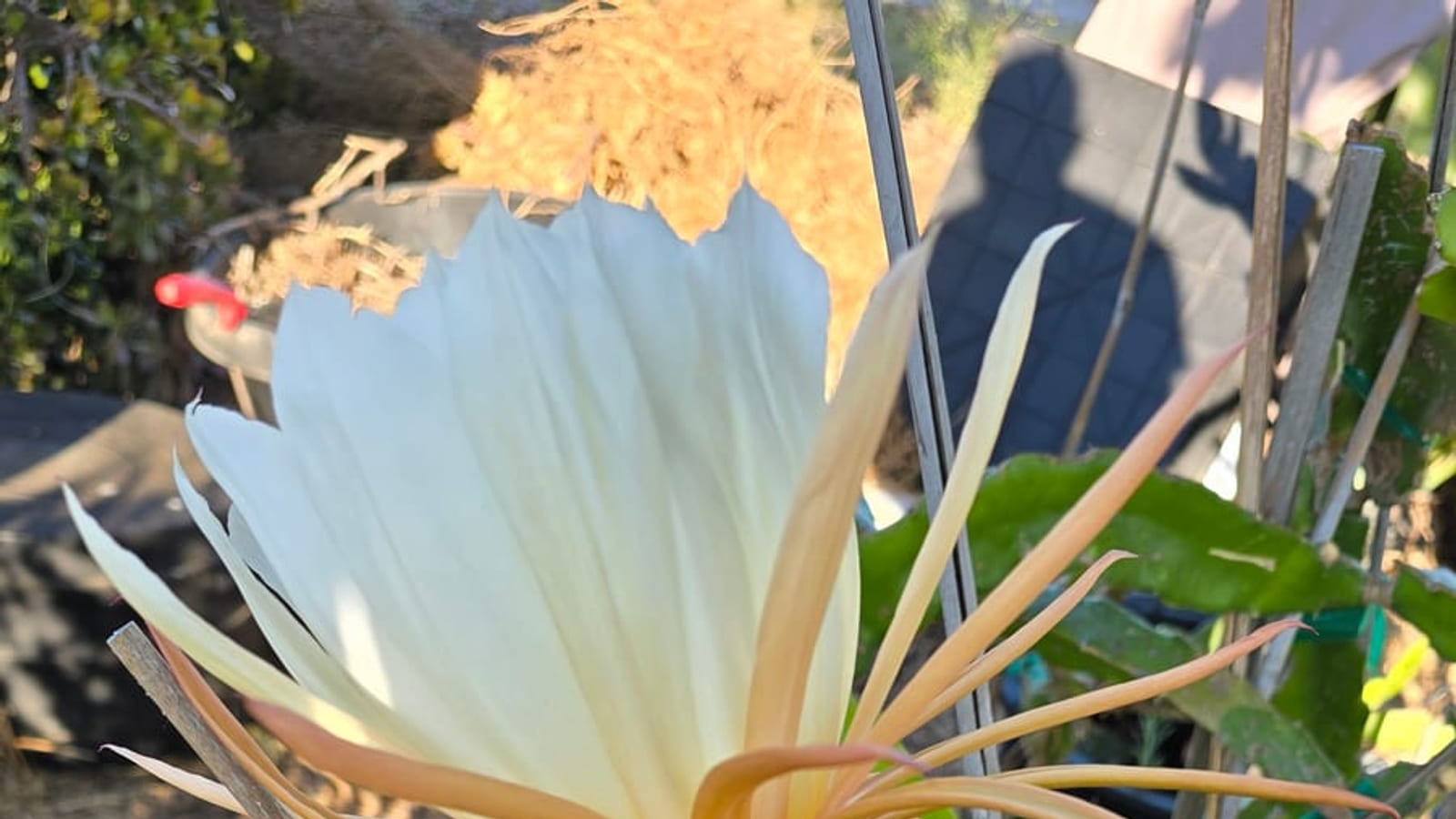
Identifying La Catrina in the garden relies on visual cues that are distinct but not universally standardized. The most reliable field marker is the stem. Look for a light-colored coating on the stems, a trait described by vendors as a key differentiator from other yellow varieties. The plant exhibits a strong climbing habit, typical of the species, and requires a heavy support structure to manage its growth. [7]
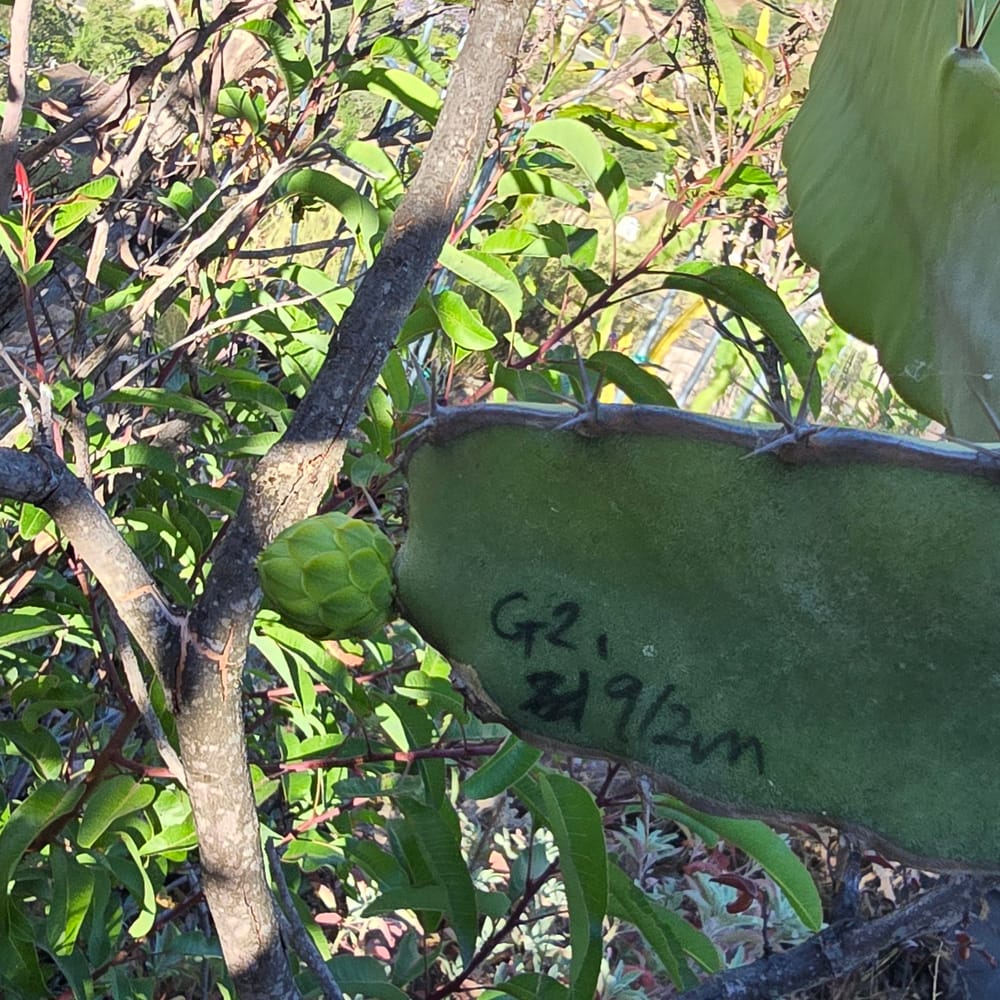
Fruit morphology offers the next layer of confirmation. Authentic La Catrina produces elongated fruit with a yellow exterior. Vendors describe longer thorns than those on the similar Albino clone. This thorn length is the primary trade distinction between the two. However, treat this as vendor observation rather than botanical law. No comparative trial data exists to quantify the difference. [1]
The Red Flesh Discrepancy
Be cautious if your plant produces red-fleshed fruit. The grower-maintained Dragon Fruit Directory lists an ocamponis cultivation record describing red flesh, small fruits, and a focus on genetic diversity. This contradicts the white-flesh description of La Catrina. If your 'La Catrina' fruits red, you likely have a different ocamponis variant or a mislabeled cutting. Buy the description, not just the name. [3]
There is no published diagnostic key for La Catrina. No one outside the nurseries has formalized a set of traits that guarantees authenticity. The documented record is thin. If a plant labeled La Catrina sets fruit from its own pollen, it may not be La Catrina. [2]
For a broader comparison of yellow pitayas and their specific growing requirements, refer to our varieties guide. That resource details how to manage pollination partners and distinguish between look-alike clones in a mixed planting.
Should you buy a La Catrina cutting?
Decide based on your existing collection and your tolerance for uncertainty. La Catrina is not a standalone solution for a beginner or a grower looking for a guaranteed harvest from a single plant. Because it is self-sterile, it requires a compatible pollination partner to set fruit. If you do not already have a bloom-overlapping clone, you must be prepared to stand outside at midnight with a brush to hand-pollinate. The flowers open around 8pm in summer and are fully open by midnight, with the working window closing around 2am. Without a partner and this manual effort, you will get flowers but no harvest.
Buy this cutting if you want a documented-lineage Mexican yellow rather than a commercial megalanthus. The trade traces La Catrina to the wilderness regions of Jalisco and Michoacán, with US nurseries acquiring stock directly from growers like Israel Barragan of Pitahayas Cotija. This origin story appeals to collectors interested in the genetic diversity of Selenicereus ocamponis. The variety sheet is thin, relying on vendor observations rather than extensive trial data, but the plant fits into the broader dragon fruit breeding landscape. You are growing a diploid species that shares a close, crossable gene pool with commercial whites, reds, and tetraploid yellow pitayas.
Skip this purchase if it would be your only plant. You cannot grow La Catrina alone. Also skip it if you need certainty on flavor or hardiness. No La Catrina-specific Brix measurements have been published, so sweetness relies on species averages of 12-18 Brix. While vendors describe strong resilience to heat and cold, no comparative trial data exists for this specific clone. If you need yield numbers now, look elsewhere. A properly managed planting of pitaya can return about 220 lb of fruit per plant per year, but La Catrina has no published yield record. You are buying potential and lineage, not a proven production machine.
Price context: La Catrina cuttings have retailed between $40 and $60 in the trade. This reflects its status as a rare variety with limited documented history. You are paying for the genetic material and the challenge, not for a standardized commercial product.
Key takeaways
Before you buy, decide if you can commit to the night shift. A La Catrina cutting is a beautiful plant, but it is a puzzle piece that needs a partner. If you are not ready to track bloom windows and hand-pollinate, stick to self-fertile varieties. For those who are ready, our pollination guide breaks down exactly how to manage the timing and technique.
References
- La Catrina product page: rare variety from wilderness regions of Jalisco and Michoacan, elongated yellow fruit, white flesh, sweet refreshing flavor, light-colored stem coating, heat and cold resilience, longer thorns than Albino, stock acquired directly from Israel Barragan of Pitahayas Cotija, Leewi Farms (US dragon fruit nursery) (2026).
- La Catrina dragon fruit cutting: listed as genus Hylocereus species ocamponis, self-sterile and requiring pollen from another compatible variety, growth/flower/fruit sections 'more information coming soon', price range $40-60, Spicy Exotics (Lafayette, LA nursery) (2026).
- Taxonomic revision of the vine cacti: molecular phylogeny shows Hylocereus is nested within Selenicereus and synonymizes it; all Hylocereus species transferred to Selenicereus (Korotkova, Borsch, Arias et al.), Phytotaxa 327(1):1-40 (2017).
- Selenicereus ocamponis (Salm-Dyck) D.R.Hunt: accepted species, Cactaceae, order Caryophyllales, basionym Cereus ocamponis Salm-Dyck, published in Cactaceae Systematics Initiatives 36:34 (2017), GBIF (Global Biodiversity Information Facility, intergovernmental organization) (2023).
- Pitaya Nutrition, Biology, and Biotechnology: A Review (H. ocamponis diploid 2n=22 while H. megalanthus tetraploid 2n=44; fruit 220-840 g, pH 4.6-5.5, 12-18 Brix; 30-50 d pollination to ripening, harvest 30-35 d after anthesis in summer and 40+ d in autumn; floral buds ~13 d plus anthesis 16-17 d; flowers open 8pm summer / 7:30pm autumn, fully open by midnight, pollination complete about 2am; manual pollination 11pm to morning improves fruit set, size and development; 25-50 in annual rainfall or twice-weekly irrigation, uneven moisture splits fruit, excess water causes root rot and fruit drop), International Journal of Molecular Sciences 24(18):13986, PMC10530492 (2023).
- Genetic relationships among Hylocereus and Selenicereus vine cacti (Cactaceae): evidence from hybridization and cytological studies (H. megalanthus postulated allotetraploid 2n=4x=44 from natural hybridization between diploid taxa; GISH shows its overall sequence composition similar to H. ocamponis and S. grandiflorus; reciprocal crosses with diploids yield viable triploid, pentaploid, hexaploid and aneuploid hybrids; Tel-Zur, Abbo, Bar-Zvi, Mizrahi, Ben-Gurion University), Annals of Botany 94(4):527-534, PMC4242237 (2004).
- Hylocereus Ocamponis cultivar record: red-fleshed, 14-16 Brix, needs cross-pollination, flowering May-September, bud to flower ~25 days, harvest 30-35 days after flowering, rare wild species with small fruits, intense tropical flavor, climbing habit, mainly a breeding and genetic-diversity plant; no separate La Catrina entry in the directory, The Dragon Fruit Directory / Tendra grower community (2026).
- Pitahaya (Hylocereus ocamponis)-Peel and -Flesh Flour Obtained from Fruit Co-Products: Assessment of Chemical, Techno-Functional and In Vitro Antioxidant Properties (peel flour 6.72 g/100 g protein, 11.63 ash, 56.56 dietary fiber vs flesh flour 6.06, 3.63, 8.22; peel richer in minerals, betalains and polyphenols with potassium 4.43 g/100 g, catechin 25.85 mg/g, quercetin-3-rhamnoside 11.66 mg/g, myricetrin 12.10 mg/g; peel and pulp flours proposed as food-enrichment ingredients), Molecules 29(10):2241, PMC11124103 (Reyes-Garcia et al., TecNM/UMH/UV) (2024).
- Pitaya (Dragonfruit) Growing in the Florida Home Landscape (self-incompatibility documented in several nursery cultivars and 2-3 different genetic types recommended; moths and bats are the nocturnal pollinators but visits seldom observed; hand pollination by transferring pollen or stamens to the stigma at night/early morning; 6-15 in cuttings cured 7-8 days, 4-6 months to rooted plant, fruiting 6-9 months, seed up to 7 years; optimum 65-77 F, injury above 100 F, damage below 31 F of long duration with rapid recovery from light freezing, ~30% shade first 3-4 months; trellis withstanding several hundred pounds, no bare wire, plant 15-25 ft from structures; prune 1-3 times per year; fertilize from one month after planting at 0.25 lb every 2 months in year one up to 0.50-0.75 lb 3-4 times a year from year four; 3-4 year old plants about 220 lb per plant per year, planting life about 20 years), UF/IFAS Extension (Crane, Maguire, Balerdi) (2023).
- La Catrina Dragon Fruit Cutting product page (in-stock listing for the variety on the Sky Botanicals store), Sky Botanicals (own store listing) (2026).