Desert Princess Dragon Fruit: Sweetness & Care Guide
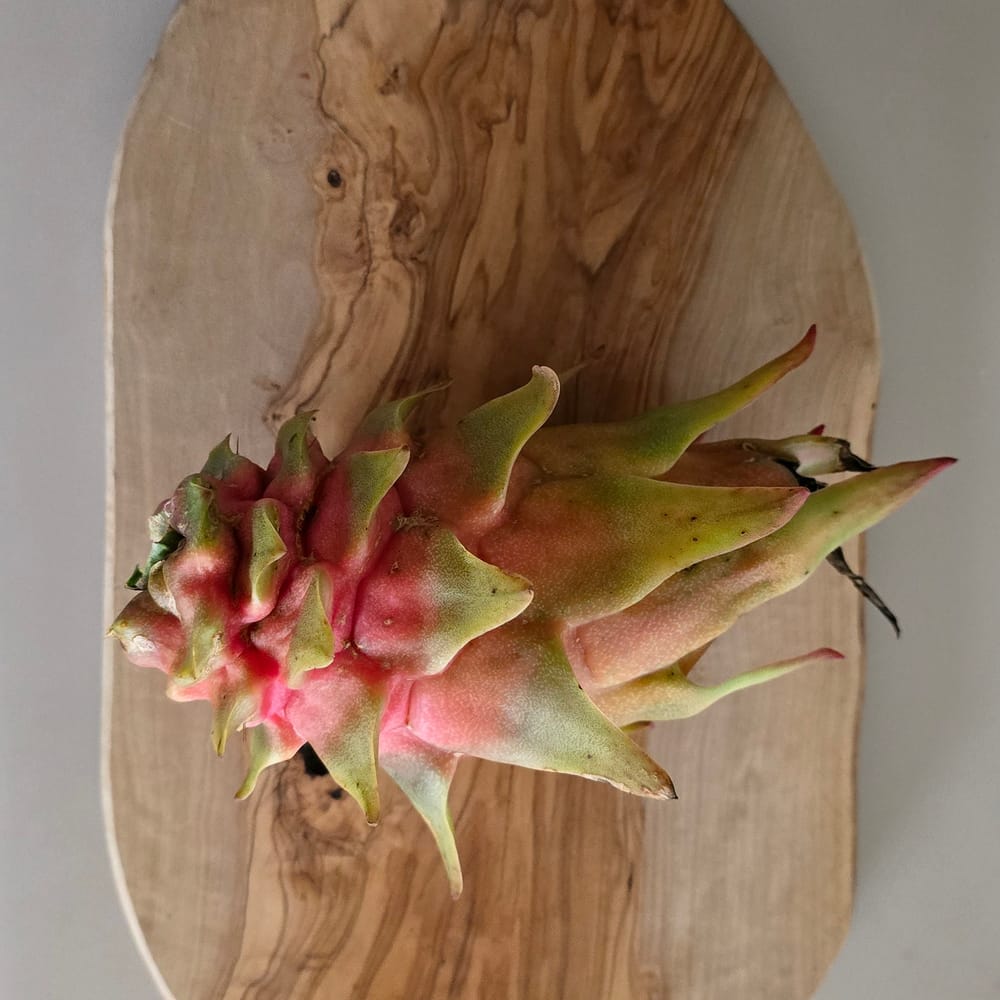
Desert Princess is a sweet, white-fleshed dragon fruit hybrid with distinctive orange to yellowish skin. It produces large fruits that can reach up to 600 grams and features a very soft, melting texture rather than a crisp bite. This climber belongs to the Desert King breeding line and is considered one of the sweeter varieties available. It is currently out of stock, so this guide covers what to expect from the plant and what to do if you cannot get one right now.
Because it is a terrestrial cactus, Desert Princess needs a sturdy trellis or pole to support its fleshy stems. If you are looking for a similar option while you wait for restock, check out our other dragon fruit plants that share these easy-care traits.
This table summarizes the core specifications for Desert Princess. The high sugar content is a defining trait, placing it firmly in the sweetest category of white-fleshed options. If you are comparing it to other top performers, see our guide on the best tasting dragon fruit varieties for context on where this hybrid ranks.
Where Desert Princess Fits in the Dragon Fruit Family
Dragon fruit cultivation revolves around four primary species, each defined by a specific combination of skin and flesh colors. Hylocereus undatus features the classic pink skin with white flesh. Hylocereus costaricensis offers red skin and red flesh. Selenicereus megalanthus is distinct for its yellow skin and white flesh. Finally, Hylocereus polyrhizus produces pink or magenta flesh. Most named cultivars found in nurseries are bred selections derived from these foundational lineages.
| Species | Skin Color | Flesh Color |
|---|---|---|
| H. undatus | Pink | White |
| H. costaricensis | Red | Red |
| S. megalanthus | Yellow | White |
| H. polyrhizus | Varies | Pink/Magenta |
Desert Princess belongs to the H. undatus lineage, specifically the white-fleshed branch. It is a hybrid developed within the Desert King family, a breeding line known for high sugar content. Desert King is a famous cultivar, often labeled S-75, that fruits during the winter months from late October to April. It is prized for its intense sweetness, frequently reaching 20 to 23 Brix when fully ripe. Desert Princess shares this genetic heritage, placing it firmly in the high-sugar category of white-fleshed dragon fruits. If you are interested in how this compares to other top performers, see our guide on the best tasting dragon fruit varieties.
Taste and Texture: What Desert Princess Tastes Like
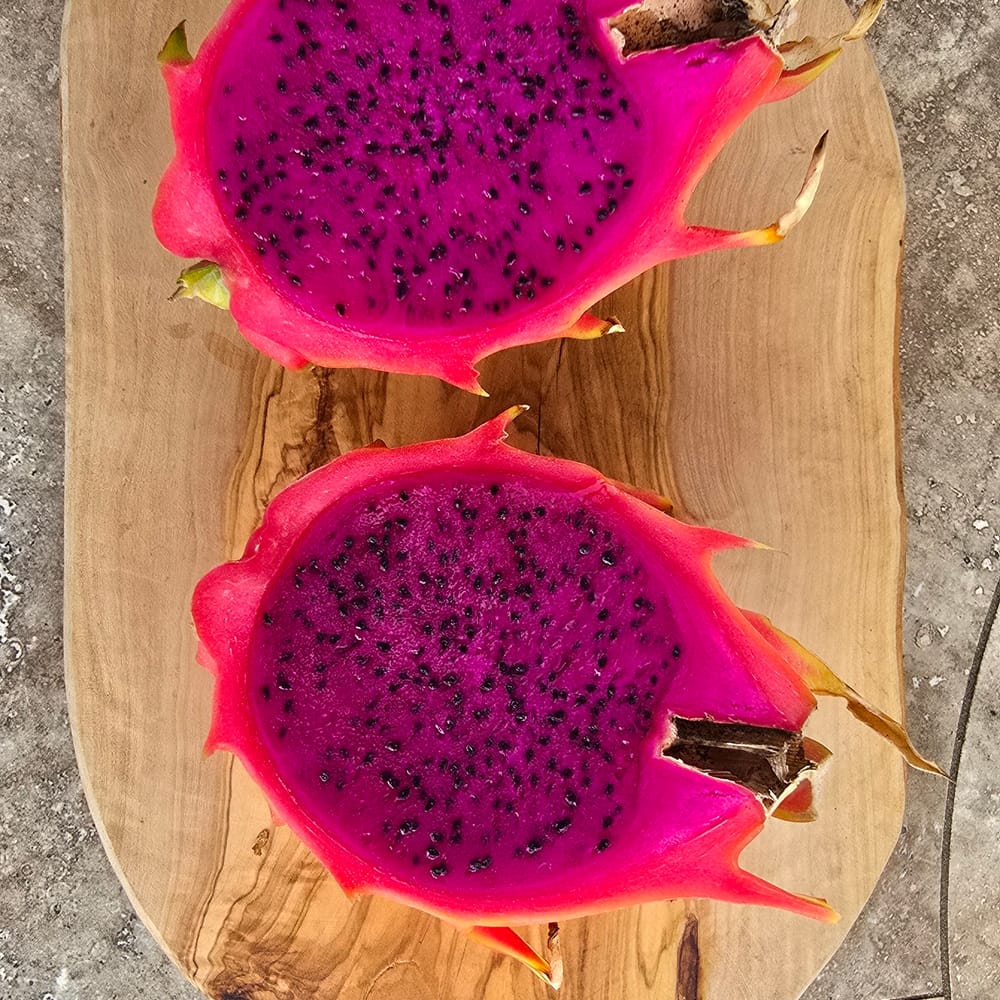
Most white-fleshed dragon fruits offer a crisp, crunchy bite with distinct, hard seeds. Desert Princess breaks that pattern. The flesh is exceptionally soft and creamy, almost melting on the tongue rather than requiring a heavy chew. This smoothness is a key differentiator from standard H. undatus selections, which often feel more granular due to their firmer structure.
The flavor profile matches the texture. The Desert King breeding line is renowned for high sugar content, and Desert Princess inherits this trait. To understand what "very sweet" means in this context, look at the Brix scale, which measures dissolved sugars in fruit. A Brix reading of 0 is pure water, while 32 is extremely sweet. Common sweet cultivars typically land between 16 and 22 Brix. Desert King, a close relative, is frequently quoted at 20 to 23 Brix when fully ripe. This places the Desert line firmly in the upper tier of sweetness for white-fleshed varieties. You can expect a rich, honeyed flavor without the tartness found in less mature or different species.
Judging Ripeness for Peak Flavor
Because the sugar content is so high, timing your harvest is critical. An under-ripe fruit will be bland and firm, lacking the signature creamy texture. The most reliable indicator is the skin. Wait until the orange to yellowish skin is fully developed and the bracts, or wings, begin to soften and flatten against the fruit. If the bracts are still sharp and green, the fruit is not ready. Once the skin color is deep and the bracts soften, the fruit has reached its peak sugar accumulation. Harvesting at this stage ensures you get the full 20+ Brix sweetness and the soft, melting texture that defines the variety. For a broader comparison of how this sweetness stacks up against other options, see our guide on the best tasting dragon fruit varieties.
How to Grow Desert Princess from a Cutting
Propagating Desert Princess is straightforward if you respect the drying period. Start by selecting a healthy, mature stem segment. Use clean, sharp pruning shears to make a straight cut, avoiding any stems that show signs of rot or disease. The goal is a vigorous piece of vine that will establish roots quickly once planted.- Prepare the cutting: Cut a stem segment from a healthy vine.
- Callus the cut end: Place the cutting in a warm, dry spot. Allow the cut end to dry out and form a hard callus. This step is critical to prevent rot when the cutting meets soil moisture.
- Plant the cutting: Insert the callused end into a pot filled with a well-draining cactus mix containing perlite. Ensure the pot has drainage holes to keep the roots healthy.
- Water and light: Water lightly to settle the soil, then place the pot in bright light. Avoid direct, scorching sun for the first few days while the cutting adjusts, but provide ample indirect light to encourage root development.
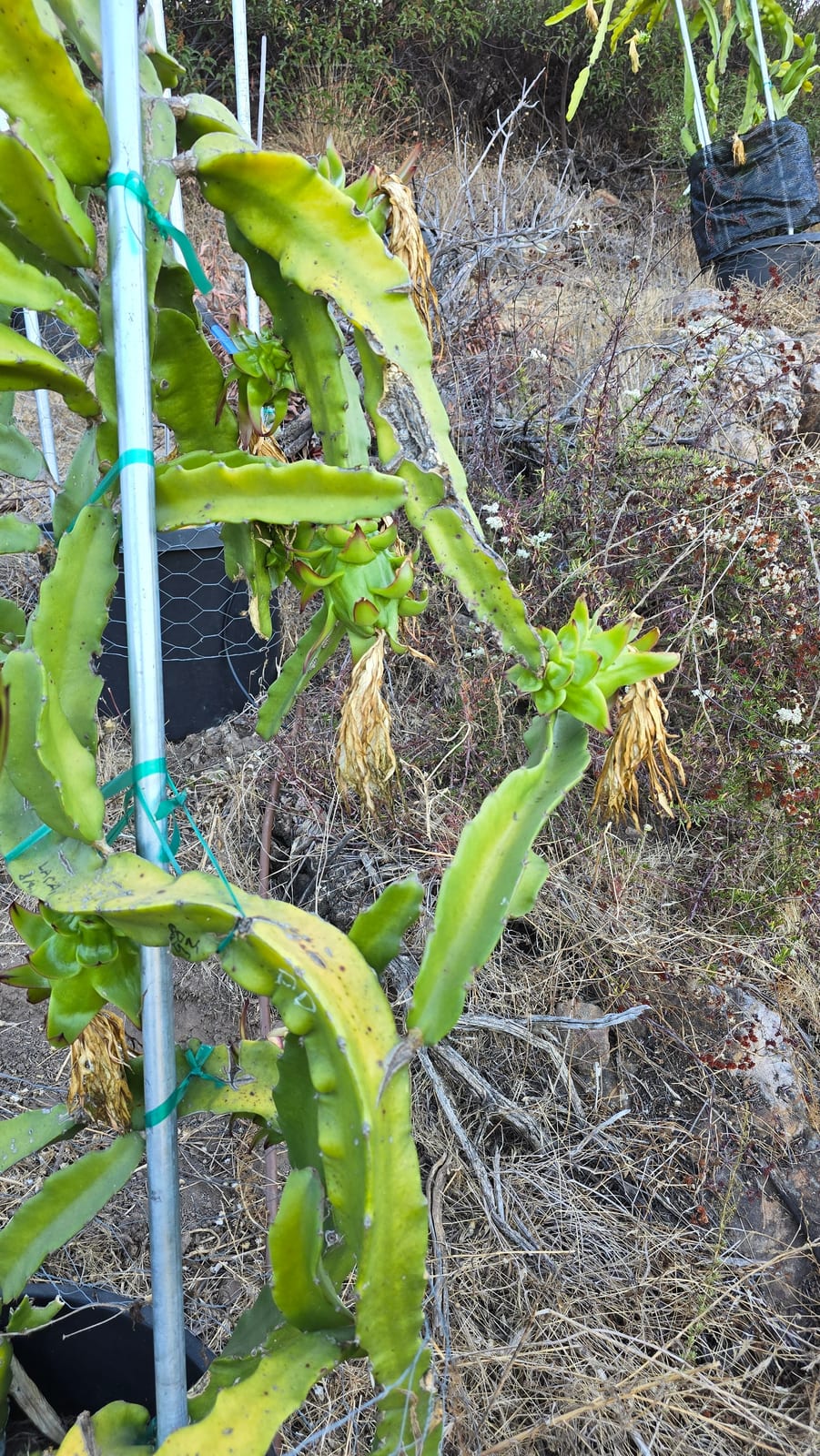
Watch for the signature twist: As the cutting begins to grow, look for new shoots that curl and twist. This spiral growth pattern is a hallmark of the Desert Princess variety. Seeing this distinctive shape confirms you are growing the correct cultivar and indicates the plant is actively establishing itself.
Desert Princess Care: Sun, Water, Soil, and Support
Desert Princess thrives in conditions that mimic its native subtropical habitat. Because it is a terrestrial cactus, the plant stores water in its fleshy stems. The primary goal in care is to provide intense light and consistent warmth while allowing the root zone to dry out between waterings. This balance prevents the rot that is the most common cause of failure in dragon fruit cultivation.
| Factor | Requirement |
|---|---|
| Sunlight | Full sun, 6+ hours of direct light daily |
| Water | Allow soil to dry between waterings; avoid waterlogging |
| Soil | Well-draining cactus mix, slightly acidic |
| Support | Sturdy trellis or pole to hold climbing stems and heavy fruit |
| Fertilizer | Balanced NPK (e.g., 10-10-10) every 2-3 months in season |
| Temperature | Frost-free; protect if temperatures drop below freezing |
| Pruning | Trim to maintain airflow and prevent rot at trellis contact points |
Managing Light and Temperature
Direct sunlight drives the energy needed for flowering and fruit set. Aim for at least six hours of direct exposure each day. In extremely hot regions, some afternoon shade can help prevent leaf scorch, but the plant generally prefers maximum light. Temperature is equally critical. Desert Princess is not frost-hardy. If you live in a zone where temperatures dip below freezing, you must move potted plants indoors or provide frost protection. Cold stress can damage the stems and delay or stop fruit production entirely.
Watering and Soil Dynamics
Watering is where most growers make mistakes. The stems of Desert Princess are succulent and hold significant water reserves. Overwatering leads to root rot and stem decay. Check the soil before watering; water only when the top inch feels dry, and wait if it remains moist. Ensure your pot or planting bed has excellent drainage. A standard potting mix is too dense. Use a cactus or succulent blend that drains quickly. The soil should be slightly acidic to support nutrient uptake. If you are growing in a container, ensure the pot has drainage holes and sits on a saucer that you empty after watering to prevent the roots from sitting in standing water.
Support and Pruning for Health
As the plant matures, its stems become heavy and vigorous. A sturdy trellis or pole is non-negotiable. The weight of the stems, combined with the mass of the fruit, can snap weak supports. Train the stems to climb the support early. Pruning keeps the plant manageable and improves airflow. Dense foliage can trap humidity against the stems, creating an environment where rot thrives. Prune any stems that are growing too close to the support structure or where air circulation is poor. This simple maintenance step significantly reduces the risk of disease.
Tip: Apply a balanced fertilizer like NPK 10-10-10 every 2-3 months during the active growing season. This supports the energy demands of flowering and fruit set. Avoid fertilizing during dormancy or cold periods.
Flowering, Pollination, and Harvest Timeline
Desert Princess is self-fertile, so you do not need to plant a second variety for cross-pollination. A single healthy plant can set fruit reliably on its own. In favorable warm conditions, the vine will produce multiple fruiting rounds throughout the year. This continuous cycle means that once the plant is established, you can expect a steady supply of fruit rather than a single massive harvest.
The Bud to Bloom Sequence
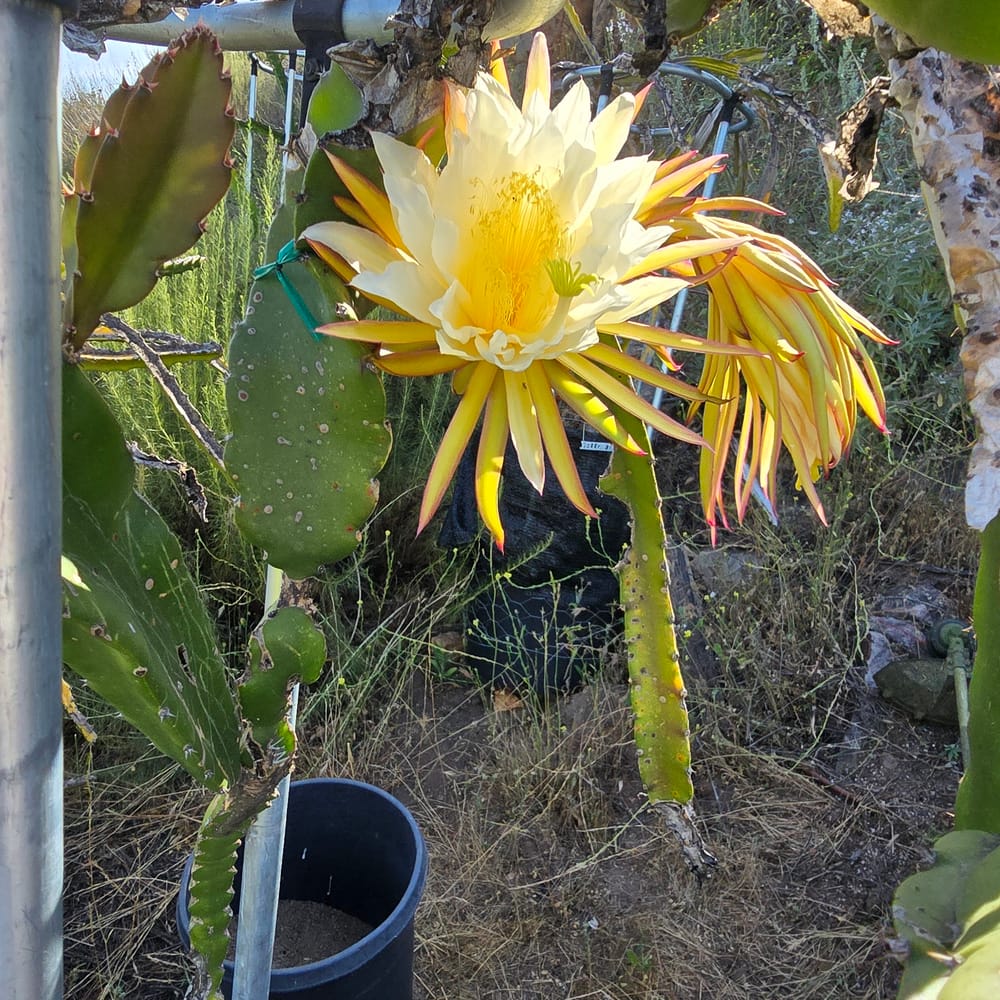
The process begins when the vine initiates a flower bud. These buds take roughly 2 to 3 weeks to mature and open. During this period, the bud swells and the petals begin to separate. You will notice the flower opening in the evening. Dragon fruit flowers are nocturnal, meaning they are most active and receptive during the night hours. The large white petals unfurl to release pollen and nectar, attracting nocturnal pollinators like moths and bats. If you are growing in a region with fewer natural pollinators, or if you want to ensure maximum fruit set, you can hand-pollinate the flowers with a small brush during this active window.
From Pollination to Harvest
Once pollination is successful, the flower closes and the ovary begins to develop into a fruit. The fruit matures approximately 30 to 50 days after pollination. During this time, the fruit grows in size and accumulates sugar. You can track progress by watching the skin color deepen and the bracts, or wings, along the fruit surface begin to soften.
Timing Your First Harvest: If you are starting from a cutting, be patient. It typically takes 1 to 2 years for a young plant to reach the maturity needed to produce its first fruit. Ensure the vine is well-established on its support and receiving consistent care during this waiting period.
- Monitor Buds: Watch for new buds forming on the vine. They will take 2 to 3 weeks to open.
- Observe Nightly: Check for open flowers in the evening. They are nocturnal and most receptive at night.
- Wait for Development: After the flower closes, the fruit will grow for 30 to 50 days.
- Check for Ripeness: Look for full skin color and softening bracts before picking.
Understanding this timeline helps manage expectations. You are not waiting for a single event but participating in a recurring cycle. As the plant matures, it will continue to produce new buds, leading to successive harvests. For more context on how this variety compares to other options in terms of flavor and yield, see our guide to the best tasting dragon fruit varieties.
Desert Princess vs. Other Sweet White-Fleshed Varieties
Choosing the right white-fleshed dragon fruit often comes down to balancing sweetness, fruit size, and texture. While many cultivars in the H. undatus lineage offer reliable production, Desert Princess stands out for its specific combination of traits. It shares the high-sugar genetics of the Desert King line but differentiates itself with a distinct skin color and a notably softer flesh. For a broader look at how these options rank in terms of flavor, see our guide on the best tasting dragon fruit varieties.
| Variety | Skin | Flesh | Self-Fertile | Typical Brix | Fruit Size | Flavor Notes |
|---|---|---|---|---|---|---|
| Desert Princess | Orange to yellowish | White | Yes | ~20-23 | Up to ~600g | Very sweet, honeyed, melting texture |
| Other White-Fleshed Varieties | Pink | White | Yes | Varies | Medium | Generally crisp, balanced sweet-tart profile |
Why the Differences Matter
The table above highlights why Desert Princess appeals to growers who prioritize intensity over standard crispness. Most common white-fleshed types rely on a crunchy texture and a balanced sweet-tart profile. Their Brix levels are respectable, often landing in the mid-to-high teens. Desert Princess, however, pushes into the upper tier with readings comparable to its Desert King relative. This higher sugar concentration is directly linked to its softer, almost creamy flesh.
Size is another practical differentiator. At up to 600 grams, Desert Princess produces fruits that are significantly larger than the average white-fleshed cultivar. This matters for commercial growers or those who want fewer, larger fruits to manage. The orange to yellowish skin also serves as a visual cue for ripeness that is distinct from the standard pink skin of other H. undatus selections. While all these varieties are self-fertile and easy to pollinate, the Desert Princess line offers a premium flavor profile that justifies the wait for restock if you are seeking the absolute sweetest white-fleshed option available.
Common Growing Problems and Fixes
Dragon fruit is resilient, but it has specific needs that, if missed, lead to predictable issues. If you notice problems, use the table below to diagnose the cause and apply the correct fix.
| Symptom | Likely Cause | Fix |
|---|---|---|
| Yellowing or soft stems | Overwatering or root rot | Stop watering immediately. Check drainage. Remove affected tissue if rot is visible. |
| No flowers | Too little sun or too much nitrogen | Ensure full sun exposure. Reduce nitrogen-heavy fertilizers; use a balanced mix. |
| Rot at trellis contact | Poor airflow or drainage at the base | Prune lower stems to improve air circulation. Ensure the base of the trellis is not sitting in standing water. |
| Small or bland fruit | Picking too early or under-fertilized | Wait until skin color is fully developed and bracts soften. Apply balanced fertilizer during the growing season. |
| Curling stems that look odd | Normal growth habit for this variety | No action needed. This is a signature trait of Desert Princess, not a disease. |
Harvest Timing and Flavor Development
One of the most frequent complaints from new growers is fruit that lacks the expected sweetness. This is almost always a timing issue. For more context on what to expect from top performers, see our guide to the best tasting dragon fruit varieties.
Tip: If your plant is healthy but not flowering, check your fertilizer. Excess nitrogen promotes leafy growth at the expense of blooms. Switch to a balanced fertilizer and ensure the plant is receiving adequate sunlight.
Out of Stock? What to Do and Close Alternatives
Desert Princess is currently unavailable at our nursery. Since this hybrid is part of a specialized breeding line, restocks depend on the propagation cycle of our mother plants. The best course of action is to check back periodically. We update inventory as
Illustration generated for this article