Santa Barbara Red Dragon Fruit: Self-Fertile & Sweet
Santa Barbara Red is a self-fertile dragon fruit variety that lets a single plant set fruit without a pollinator partner. This trait makes it a good pick for home growers who want dependable production without managing a cross-pollinator. The fruit features deep red skin and crimson flesh that tastes sweet with a refreshing, kiwi-like finish. It is a distinct cultivar selected in California, not a mystery cutting, and is currently in stock at our nursery as a rooted cutting.
This climber vine grows well on a burlap-wrapped totem pole or trellis. It thrives in zones 9b-11 and adapts easily to a wide range of soils and growing conditions. If you are in a cooler zone, you can grow it in containers and move it indoors before frost. For more details on care and propagation, check out our guide to growing dragon fruit.
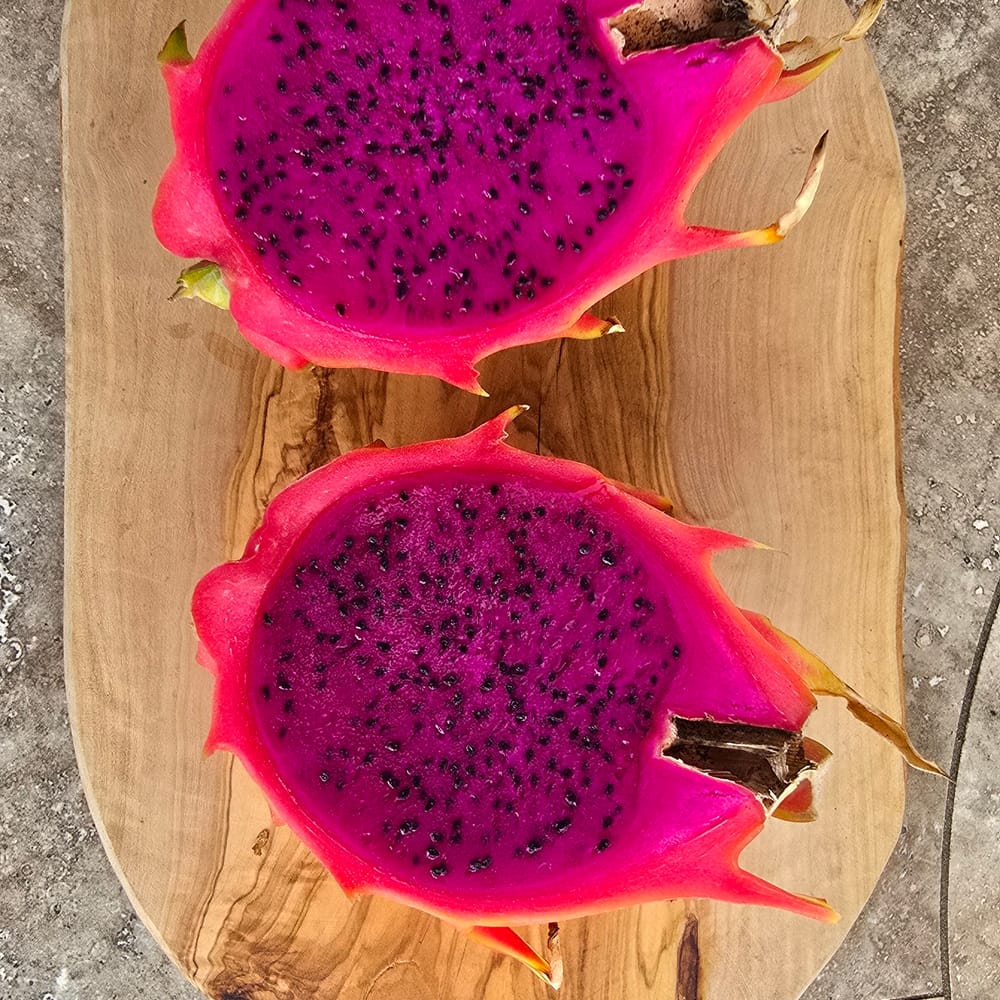
Santa Barbara Red is a distinct cultivar born from a cross between the red-fleshed Hylocereus polyrhizus and the white-fleshed Hylocereus undatus. This lineage gives the plant its signature crimson interior while maintaining the vigorous growth habit of its parents. Because it is a named variety selected by a California grower, you are planting a known quantity rather than an unverified cutting. The fruit itself is medium-sized, typically weighing between 0.5 and 1.0 lb. The skin is deep red with red-tipped fleshy scales, revealing dark red to deep crimson flesh inside.
Production and Pollination
One of the most practical features of this variety is its self-fertility. Unlike many red-fleshed dragon fruits that require a second plant for pollination, Santa Barbara Red can set fruit on its own. While hand pollination can still boost fruit set, you do not need to manage a cross-pollinator to get a harvest. The plant offers a medium, reliable yield with consistent fruit set, which is ideal for home growers seeking dependable production.
Growth and Care Specs
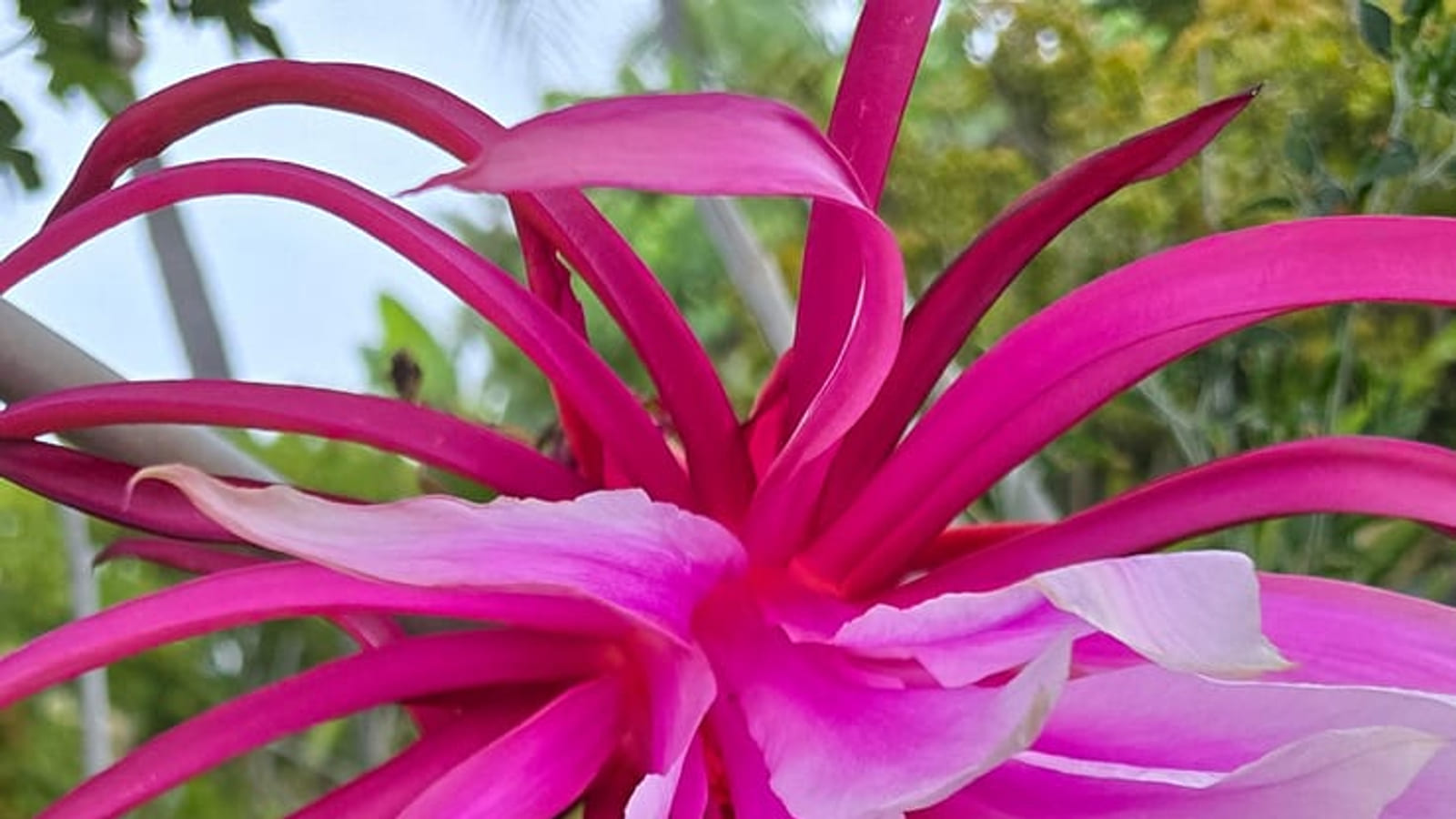
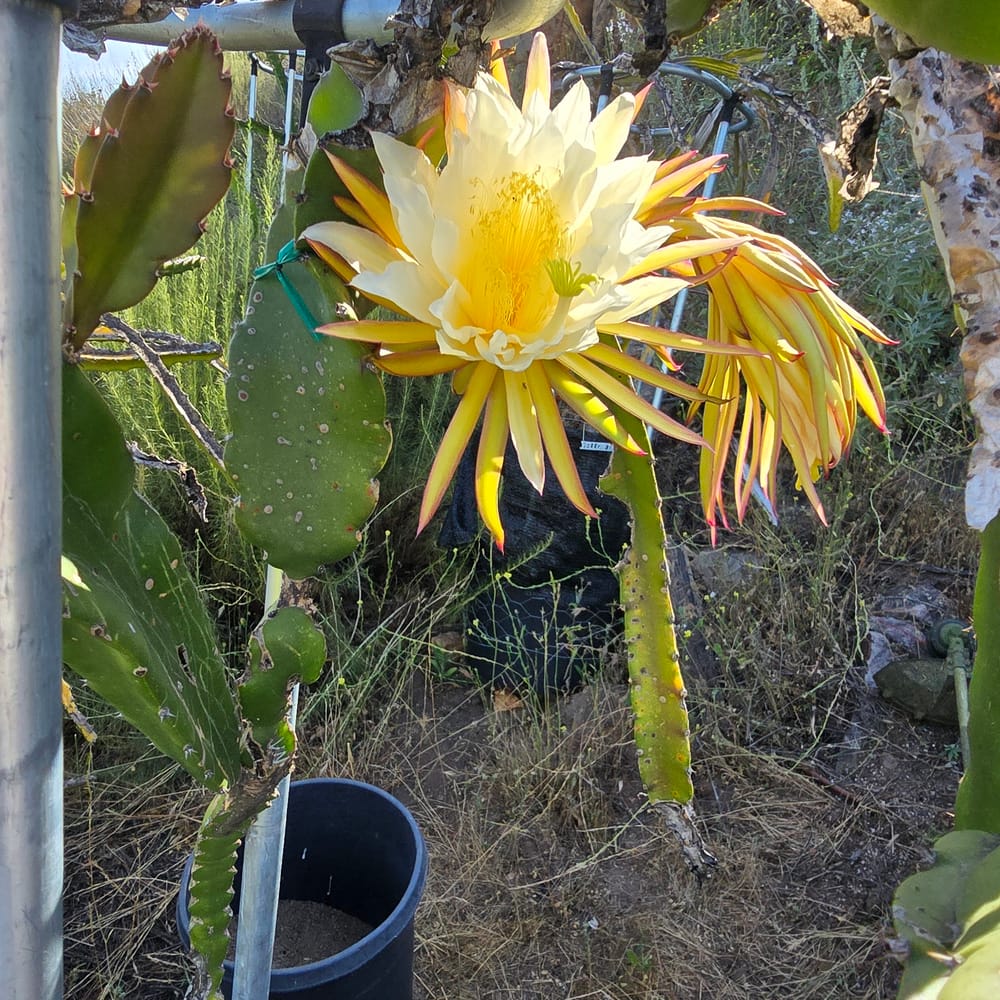
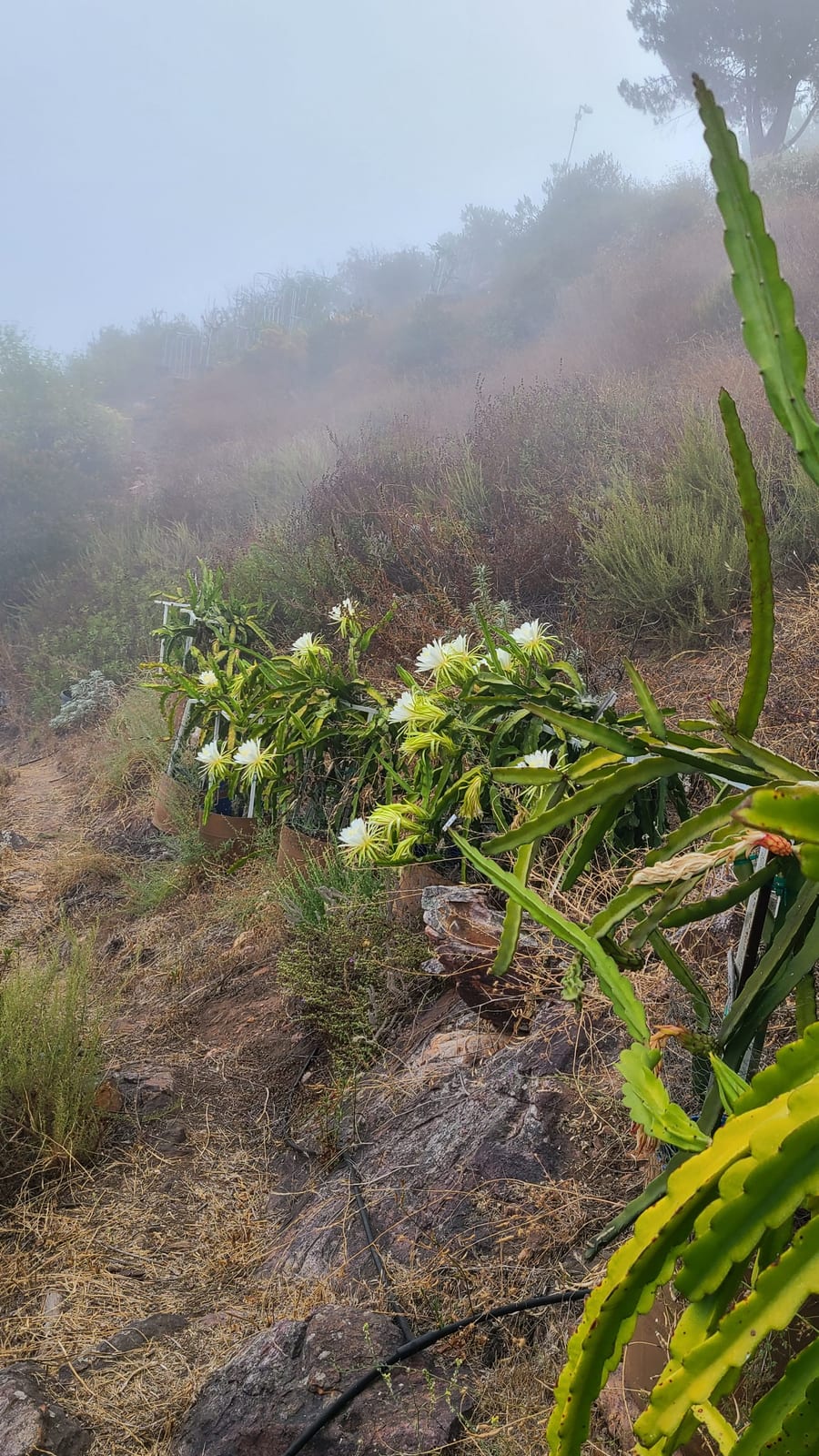
The vine grows as a climber, reaching roughly 5 to 10 ft of stems at maturity. It thrives in half-day to full sun and prefers well-drained, high-organic loamy soil with a pH around 6 to 7. If you are in a cooler climate, the plant adapts well to containers, allowing you to move it indoors before frost. The flowers are large, round, and intensely fragrant, opening at night. Fruit on healthy plants ripens roughly 30 to 50 days after a bloom, with the potential for several flushes per season. For more options, see our list of self-pollinating dragon fruit varieties.
Taste and Flavor: What Does It Actually Taste Like
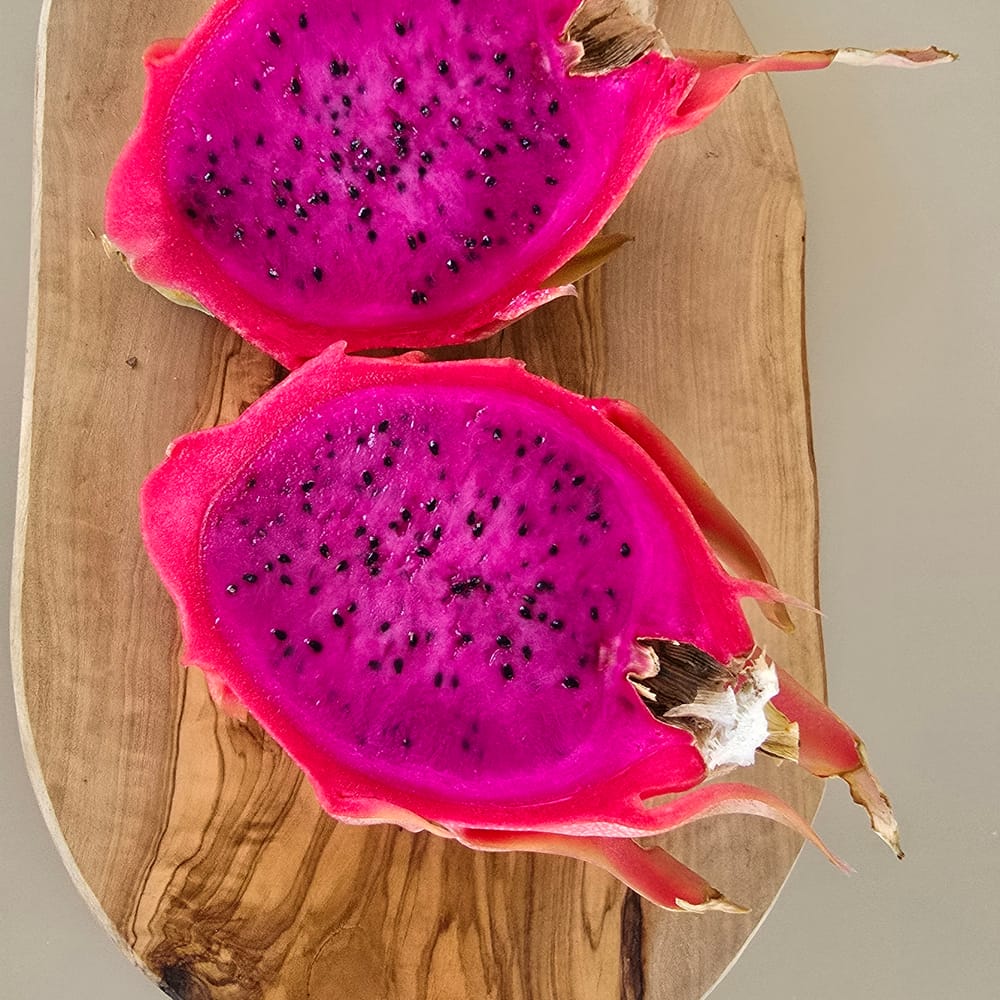
When you cut into Santa Barbara Red, the first thing you notice is the vibrant crimson flesh. The flavor profile is distinctly sweet, but it is not cloying. Growers often describe the taste as resembling kiwi, with a refreshing quality that sets it apart from milder white-fleshed varieties.
The texture is soft and pulpy, with small, edible black seeds scattered throughout the flesh. Because the fruit is so refreshing, it is excellent eaten straight off the vine.
Pro Tip: While the fruit is delicious fresh, it also holds up well in smoothies and salsas. It is a versatile addition to your kitchen.
Sweetness and Sugar Content
Specific Brix or sugar content data has not been published for this cultivar. However, the sweetness is consistent and noticeable. The hybrid lineage contributes to a balanced flavor that is sweet enough to stand on its own but bright enough to pair well with other fruits. If you enjoy kiwi or pineapple, you will likely find the flavor profile of Santa Barbara Red appealing.
Since this variety is self-fertile, you can focus entirely on the quality of the fruit rather than managing pollination. For more options with similar traits, see our list of self-pollinating dragon fruit varieties. The result is a reliable harvest of fruit that tastes as good as it looks.
How It Compares to Other Red-Fleshed Varieties
Red-fleshed dragon fruit is a crowded category in the nursery world. Many cuttings arrive at growers' doors with vague names or no name at all. Santa Barbara Red stands out because it is a distinct, recognized cultivar. You can find the same named variety stocked at several established US nurseries, including Flying Fox Fruits, UrbanTropicals, Kens Nursery, and Planting Justice. This widespread availability confirms that it is a stable, proven plant rather than a mystery cutting from an unknown source.
The most significant difference between Santa Barbara Red and many of its red-fleshed counterparts is its pollination requirement. Most red-fleshed varieties are self-sterile, meaning you must plant two different cultivars side by side to get fruit. Santa Barbara Red is self-fertile. A single plant can set fruit on its own. This trait makes it a practical choice for home growers. If you are looking for other options that offer this convenience, check out our guide to self-pollinating dragon fruit varieties.
| Feature | Santa Barbara Red | Typical Red-Fleshed Varieties |
|---|---|---|
| Pollination | Self-fertile | Often self-sterile (needs partner) |
| Origin | Named cultivar from Santa Barbara, CA | Often unnamed or regionally specific |
| Availability | Stocked by multiple US nurseries | Varies by region and grower |
| Fruit Size | 0.5 to 1.0 lb | Varies widely by cultivar |
While specific taste profiles can vary slightly between red-fleshed cultivars, Santa Barbara Red maintains the signature sweet, kiwi-like finish that growers expect from this group. It is not the same as Robles Red, American Beauty, or Natural Mystic, though they all share the red-fleshed trait. The key advantage here is reliability. You are planting a known quantity with a track record of performance in California and similar climates. This makes it a safer bet for home growers who want consistent results without the guesswork of unverified genetics.
Growing Santa Barbara Red: Climate, Soil, and Support
Santa Barbara Red is a vigorous climber that needs a sturdy structure to hold its weight as it matures. The vine typically reaches 5 to 10 ft of stems, so a heavy support is essential to prevent the plant from toppling under the load of its own growth. A burlap-wrapped totem pole is the classic choice for dragon fruit, as the rough texture gives the aerial roots something to grip. You can also use a sturdy trellis or train the vines up a large, healthy tree. The key is to ensure the support can handle the weight of the stems and the fruit they will eventually produce.
Site Selection and Soil Preferences
This variety thrives in half-day to full sun. More light generally means more energy for the plant to push out new stems and support fruit development. While Santa Barbara Red adapts easily to a wide range of soils, it performs best in well-drained, high-organic loamy soil. The ideal pH range is about 6 to 7. Because dragon fruit roots are sensitive to waterlogging, drainage is the most critical factor in your soil choice. If your native soil is heavy clay or tends to hold water, consider amending it heavily with compost and perlite or building a raised mound to improve aeration and drainage.
Hardiness and Container Growing
Santa Barbara Red is hardy in USDA zones 9b-11. In these warmer regions, you can plant it directly in the ground where it will remain evergreen and active year-round. If you live in a cooler zone where frost is a regular occurrence, growing the plant in a container is the best approach. This allows you to move the pot indoors before the first frost arrives, protecting the plant from cold damage. When growing in containers, choose a large pot with excellent drainage holes and use a cactus or succulent potting mix to ensure the roots stay dry enough between waterings.
Tip: If you are in a marginal zone, consider placing your container in a sheltered spot against a south-facing wall during the winter months. This can provide a few extra degrees of warmth and help the plant stay healthier until spring.
From Cutting to Fruit: What to Expect
When you bring home a Santa Barbara Red rooted cutting, you are starting with a plant that is already established but still young. These cuttings are the standard way this variety is propagated and sold, with rooted plants typically ranging from $20 to $25. We carry this cultivar as a rooted cutting under product code SBR, and it is currently in stock. Because it is a distinct named variety rather than a mystery cutting, you can expect the vigorous growth habit and crimson fruit described in earlier sections.
Early Establishment
Once planted, the cutting will focus its energy on developing a robust root system and extending its stems. During this phase, the vine may appear slow, but this is normal. It is building the structural foundation necessary to support the weight of future fruit. The plant will begin to climb its support structure, reaching for light and space.
The First Blooms and Fruit Set
As the plant matures and reaches a sufficient size, it will begin to produce flowers. These large, round blooms open at night and are intensely fragrant. Since Santa Barbara Red is self-fertile, a single plant can set fruit without the need for a second variety. You can explore more options in our list of self-pollinating dragon fruit varieties if you are considering adding more plants later. However, for this cultivar, one healthy vine is often enough to get a harvest.
From Bloom to Harvest
Once a flower pollinates, the fruit ripens roughly 30 to 50 days after the bloom. Because the variety is self-fertile, you do not need to manage a cross-pollinator, which simplifies the growing process. You can expect several flushes of fruit per season, providing a consistent supply of sweet, kiwi-like fruit for your table.
Why Santa Barbara Red Makes Sense for Your Garden
Choosing a dragon fruit variety often comes down to balancing flavor, effort, and space. Santa Barbara Red hits a sweet spot for the home grower by combining a distinct, vibrant taste with low maintenance requirements. You get the visual and nutritional appeal of a red-fleshed fruit without the logistical headache of managing multiple plants for pollination. This makes it an efficient choice for home growers who want reliable production without complex cross-pollination strategies.
The self-fertile nature of this cultivar is a major practical advantage. Many red-fleshed varieties are self-sterile, meaning you must plant a compatible partner nearby to ensure fruit set. With Santa Barbara Red, a single vine can produce a harvest on its own. While hand pollination can still boost yield, you are not dependent on a second plant or specific bee activity to get a crop. This independence simplifies your garden layout and reduces the risk of a failed season due to pollination issues. If you are looking for other options that offer similar convenience, you can explore our list of self-pollinating dragon fruit varieties.
Reliable Production and Versatile Growth
Beyond pollination, the plant offers a medium, reliable yield with consistent fruit set. This predictability is valuable for home growers who want dependable production. The vine adapts easily to a wide range of soils and growing conditions. It thrives in half-day to full sun and prefers well-drained, high-organic loamy soil. If you are in a cooler zone, the plant adapts well to containers, allowing you to move it indoors before frost. This flexibility means you can grow it in the ground in warm climates or in a large pot in marginal zones.
The fruit itself is medium-sized, typically weighing between 0.5 and 1.0 lb. The skin is deep red with red-tipped fleshy scales. Inside, the dark red to deep crimson flesh offers a sweet, kiwi-like flavor that is refreshing and distinct from milder white-fleshed types. Because the fruit is so versatile, it works well eaten fresh, in smoothies, or in salsas.
Where to Get Santa Barbara Red
Because Santa Barbara Red is a distinct cultivar selected in California, you have several reliable options for sourcing a plant. At Sky Botanicals, we carry this variety as a rooted cutting under product code SBR. It is currently in stock and ready to ship.
Buying a rooted cutting simplifies the early stages of growth. You do not need to worry about the delicate process of rooting a fresh cutting in sand or water. Instead, you can plant the cutting directly into your prepared soil or container. While prices vary by nursery, rooted cuttings for this variety typically range from $20 to $25 per plant.
Tip: When ordering online, check the listing details to confirm you are receiving a rooted cutting rather than a bare stem.
Other Reputable Nurseries
You are not limited to a single supplier. Several other US nurseries stock the same named variety, which confirms its status as an established cultivar rather than a mystery cutting:
- Flying Fox Fruits
- UrbanTropicals
- Kens Nursery
- Planting Justice
Why Source a Named Cultivar?
Dragon fruit is often sold as generic "red" or "white" varieties, which can lead to disappointment if the plant does not perform as expected. Santa Barbara Red is different. It is a specific selection with known traits. By buying from a nursery that stocks this named variety, you are securing a plant that is self-fertile, meaning a single vine can produce fruit without a pollinator partner.
If you are interested in other options that offer this convenience, you can explore our list of self-pollinating dragon fruit varieties. However, for those who want the specific kiwi-like flavor and deep crimson flesh of Santa Barbara Red, sourcing a rooted cutting from a trusted nursery is the best path to a successful harvest.
FAQ
Do I need two plants to get fruit?
No. Santa Barbara Red is self-fertile, meaning a single plant can set fruit without a pollinator partner. This is a significant advantage over many other red-fleshed varieties that are self-sterile. While hand pollination can sometimes boost fruit set, you do not need to manage a second vine to achieve a harvest. For more options in this category, see our list of self-pollinating dragon fruit varieties.
Is Santa Barbara Red the same as Robles Red or American Beauty?
No. Santa Barbara Red is a distinct cultivar selected in California. It is not the same as Robles Red, American Beauty, or Natural Mystic, even though they all produce red-fleshed fruit. The name refers to its origin in Santa Barbara. It is a recognized named variety propagated from cuttings, not a mystery cutting.
How big do the fruits get?
You can expect medium-sized fruit, typically weighing between 0.5 and 1.0 lb (230-450g) each. The skin is deep red with red-tipped fleshy scales. Inside, the flesh is dark red to deep crimson.
What does the flavor profile look like?
The taste is sweet with a bright, slightly kiwi-like finish. It is refreshing and soft. There is no published Brix or sugar content data for this specific cultivar, but the sweetness is consistent and noticeable without being cloying.
How long does it take from bloom to ripe fruit?
On healthy plants, fruit ripens roughly 30 to 50 days after a bloom. The flowers are large, round, and intensely fragrant, opening at night and usually lasting just one evening. A single plant can produce several flushes per season.
Can I grow this in a cooler climate?
If you are in a zone cooler than 9b, grow the plant in a container. This allows you to move it indoors before frost. The vine adapts easily to a wide range of soils and growing conditions.
Is this variety high in antioxidants?
Yes. Red-fleshed dragon fruits in general are prized for higher antioxidant content, including betacyanins and lycopene, compared to white-fleshed types. They also provide vitamin C, fiber, and potassium.