Red Jaina Dragon Fruit: The Pollination Reality
Red Jaina is a red-fleshed pitaya grown for deep crimson pulp and heavy cropping, but it is also one of the few varieties whose pollination failure is measured, not debated. In a controlled greenhouse trial, unaided fruit set was just 14.3%, while hand pollination with compatible pollen raised it to 77.4%. The fruit weight jumped from 40.64 g to 164.70 g, proving this vine needs pollen from another genotype to produce marketable fruit. While growers report 15.3-16.2 Brix, measured soluble solids were lower at 12.70-12.78%, and harvest occurs 33-37 days after bloom. The critical correction for growers: Red Jaina is the plant that needs the pollen, not the plant that gives it. If you want a dark-fleshed variety that sets fruit reliably and offers similar antioxidant depth, try Physical Graffiti, which we stock and which tested highly for phenolics and fruit mass.
| Trait | Value | Source Type |
|---|---|---|
| Fruit Set (Unaided) | 14.3% | Controlled Trial |
| Fruit Set (Hand Pollinated) | 77.4% | Controlled Trial |
| Fruit Weight (Hand Pollinated) | 164.70 g | Controlled Trial |
| Soluble Solids | 12.70-12.78% | Controlled Trial |
| Harvest Window | 33-37 Days | Controlled Trial |
What Red Jaina actually is
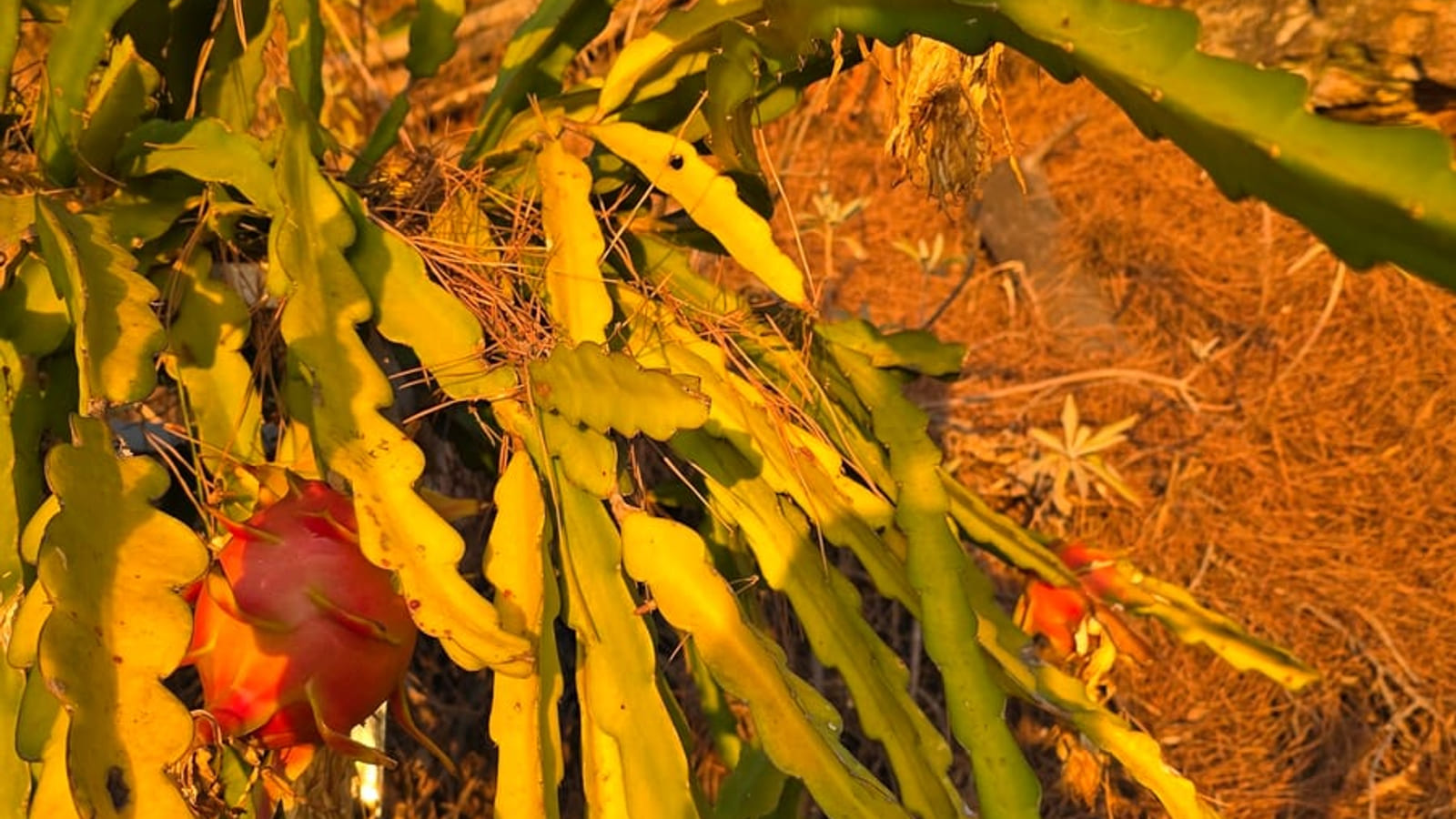
Red Jaina is a cultivated clone, not a wild discovery. The only controlled experiment to measure its biology assigned it to Hylocereus polyrhizus (synonym Selenicereus costaricensis)[1]. That trial ran in a greenhouse at Akdeniz University in Antalya, Turkey, on plants transplanted in November 2020 and tested from May to August 2025[1]. Despite this scientific classification, the US nursery that sells it lists Red Jaina simply as a Hylocereus of unknown species, acquired from a tropical nursery in California[7]. There is no documented breeder, introduction year, parentage, or plant patent in the trade record[7]. You are buying a verified clone with a murky lineage.
The name itself is a trap. 'White Jaina' and 'Red Jaina' are two different cultivars of two different species with opposite pollination biology[1]. White Jaina is Hylocereus undatus, self-compatible, and sets 50-60% of flowers without help[1]. Red Jaina is self-sterile and needs a partner. Buying 'a Jaina' without specifying flesh color is a coin toss. One variety will fruit on its own; the other will bloom heavily and set nothing unless you hand-pollinate it.
| Feature | White Jaina | Red Jaina |
|---|---|---|
| Species | H. undatus | H. polyrhizus (assigned) |
| Pollination | Self-compatible | Self-sterile |
| Unaided Set | 50-60% | 14.3% |
| Max Fruit Weight | 328.30 g | 164.70 g |
Be cautious with absolute labels. UF/IFAS Extension warns that information on the self-incompatibility of named cultivars is poorly documented industry-wide, which makes variety recommendations unreliable at best[2]. The honest framing is that the one controlled trial that tested Red Jaina found a self-incompatible plant, not that every nursery plant carrying that name has been genetically verified[2]. Treat the 'self-sterile' label as a grower category to test, not a guarantee. If you are building a reliable dark-fleshed planting, consult our full dragon fruit variety guide for options with clearer documentation.
The fruit: colour, flavour and what the pigment really is
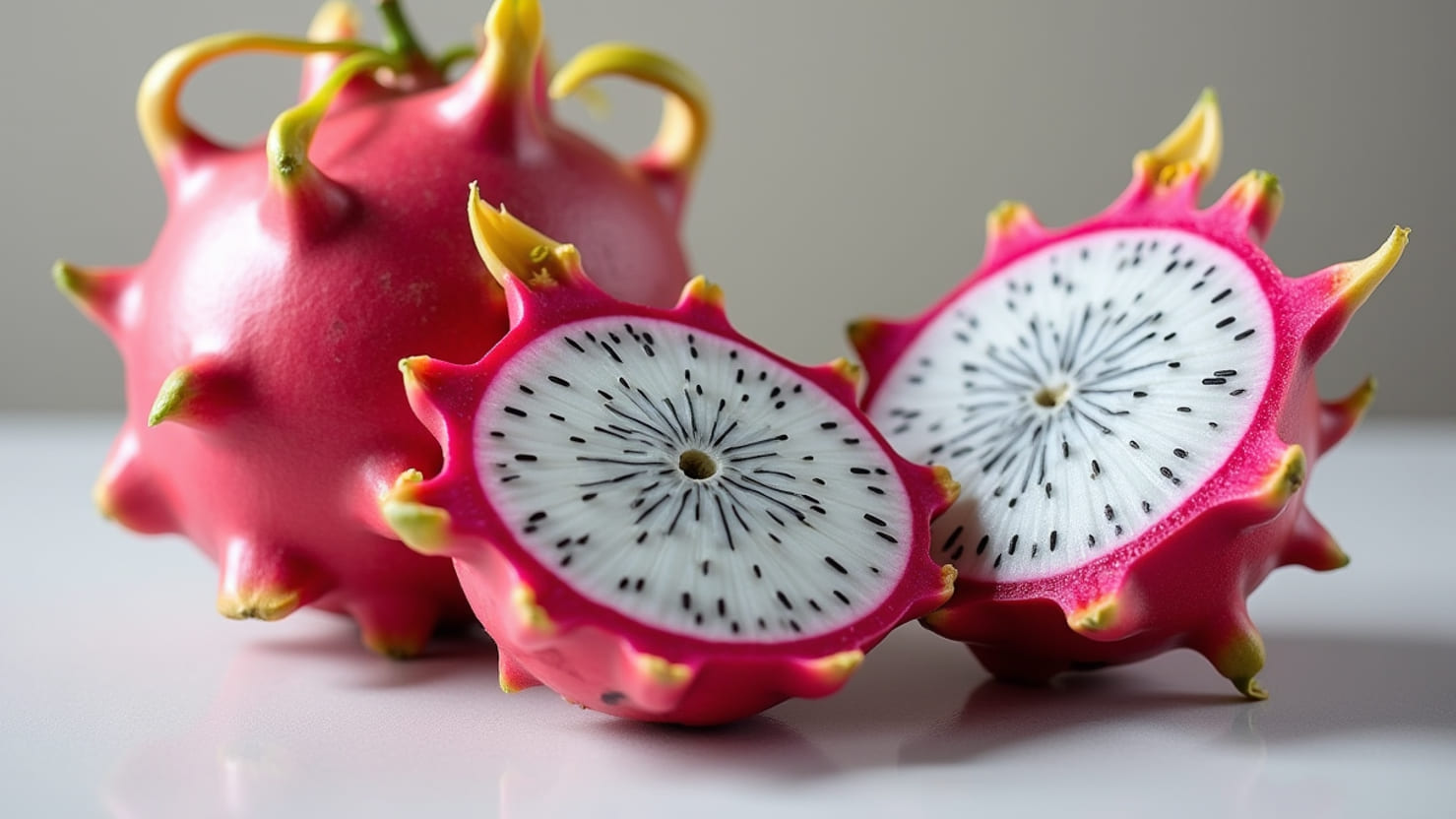
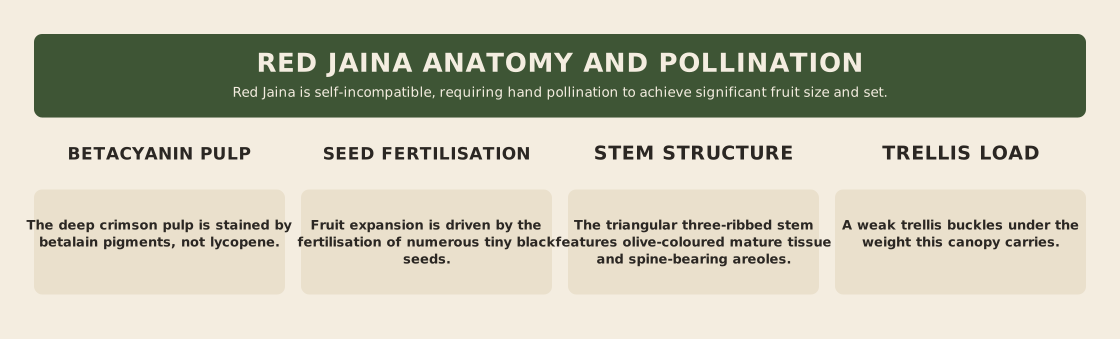
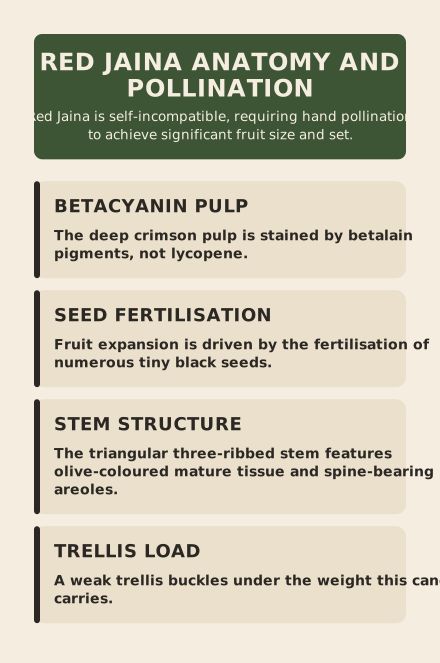
Cut open a Red Jaina and you are looking at deep crimson to magenta flesh, a thin rind, and tiny black edible seeds scattered through the pulp. The colour is not a trick of the light or a sign of over-ripeness. It is caused by betalain pigments of the betacyanin class, the same pigment family found in beetroot[9]. This is a common point of confusion. Many assume the red comes from lycopene, the carotenoid that colours tomatoes and watermelon. It does not. Dragon fruit betacyanins are chemically distinct and are extracted commercially as natural red food colourants[9].
The flavour profile is semi-sweet with a distinct acid edge, often described as strawberry-like. This complexity is not accidental. Research comparing red-fleshed H. polyrhizus (the species assigned to Red Jaina) with white-fleshed H. undatus shows that sugar, phenolics, and citric acid accumulate together[1]. In the head-to-head analysis, the red-fleshed fruit scored higher on total phenolics, total flavonoids, and antioxidant activity than their white-fleshed counterparts[6]. Because the pigment, the sugar, and the acid move in tandem, the fruit tastes sweet-and-tart rather than flat or one-dimensional.
Calibrating your expectations on sweetness. Red Jaina measured 12.70-12.78% soluble solids in controlled trials[1]. While trade reports sometimes cite 15.3-16.2 Brix, the typical band for red- and white-fleshed pitaya is 13.2-13.7 Brix[3]. For context, yellow-skinned Selenicereus megalanthus can reach 22 Brix[3]. A reading of 15-16 Brix on a home refractometer means you have grown a well-ripened, high-quality specimen of the type, not that the variety is inherently sweeter than the category average.
The sensory consequence is most obvious when you juice the fruit. The dark flesh yields a vibrant, magenta liquid that is visually striking and complex on the palate. However, betacyanins are sensitive to processing. Light degrades the pigment in both juice and concentrate[10]. To retain the colour, the best tested conditions involve a pH of 4.0, pasteurisation at 65 C for 30 minutes, and the addition of 0.25% ascorbic acid[10]. For the home juicer, this translates to a simple rule: drink it fresh, keep it cold, keep it dark, and add a splash of lime or ascorbic acid to protect the magenta from fading to brown.
The tiny black seeds are not just filler. They are the fruit’s growth engine. Successful fertilisation drives ovule and seed formation, and seed number directly influences final fruit size and weight[3]. This is why the pollination discipline discussed earlier matters so much for yield. If you want to explore other dark-fleshed options that offer similar antioxidant depth but different handling characteristics, see our full dragon fruit variety guide.
The pollination reality: Red Jaina receives, it does not give
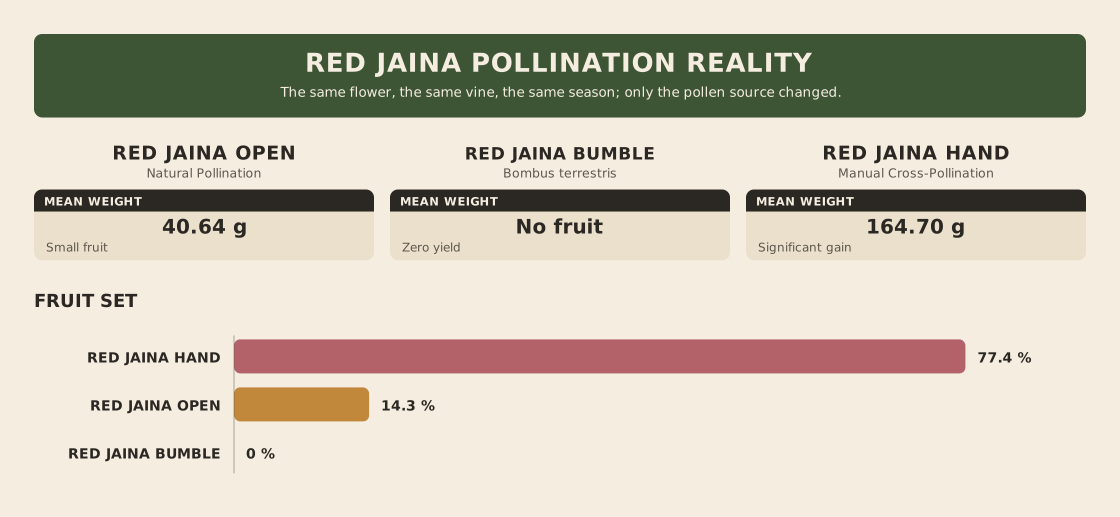
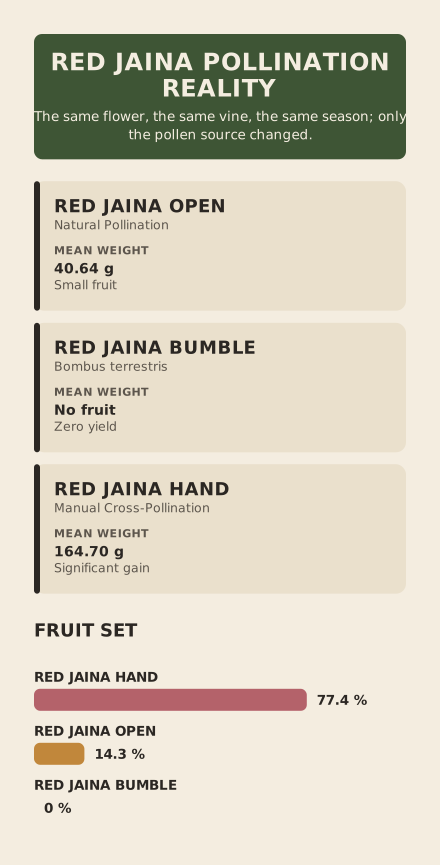
The most persistent myth in dragon fruit cultivation is that any two plants will cross-pollinate. For Red Jaina, this is false. This vine is a pollen receiver, not a donor. In a controlled trial, unaided fruit set was a mere 14.30%, while hand pollination with compatible pollen raised it to 77.40%[1]. The difference was not just in quantity but in quality. Hand-pollinated fruits weighed 164.70 g on average, compared to 40.64 g for those set without help[1]. The diameter and length also increased significantly, from 38.90 mm to 58.65 mm and 45.95 mm to 73.24 mm respectively[1].
Only two fruits developed without human intervention in that trial, and researchers attribute them to incidental pollination by vectors such as ants[1]. This makes the untreated comparison statistically weak and confirms that an unassisted self-sterile vine is effectively a non-bearing vine. Commercial bumblebees (Bombus terrestris) produced zero fruit set on Red Jaina, likely due to a mismatch between the flower’s nocturnal timing and the bees’ daytime activity[1]. A pollinator hotel or a hired hive is not a substitute for compatible pollen.
| Treatment | Fruit Set | Mean Weight | Diameter | Length | Verdict |
|---|---|---|---|---|---|
| Open Pollination | 14.30% | 40.64 g | 38.90 mm | 45.95 mm | Unreliable, tiny fruit |
| Bumblebees | 0% | N/A | N/A | N/A | Total failure |
| Hand Pollination | 77.40% | 164.70 g | 58.65 mm | 73.24 mm | Marketable, heavy crop |
Why the mechanics force this outcome
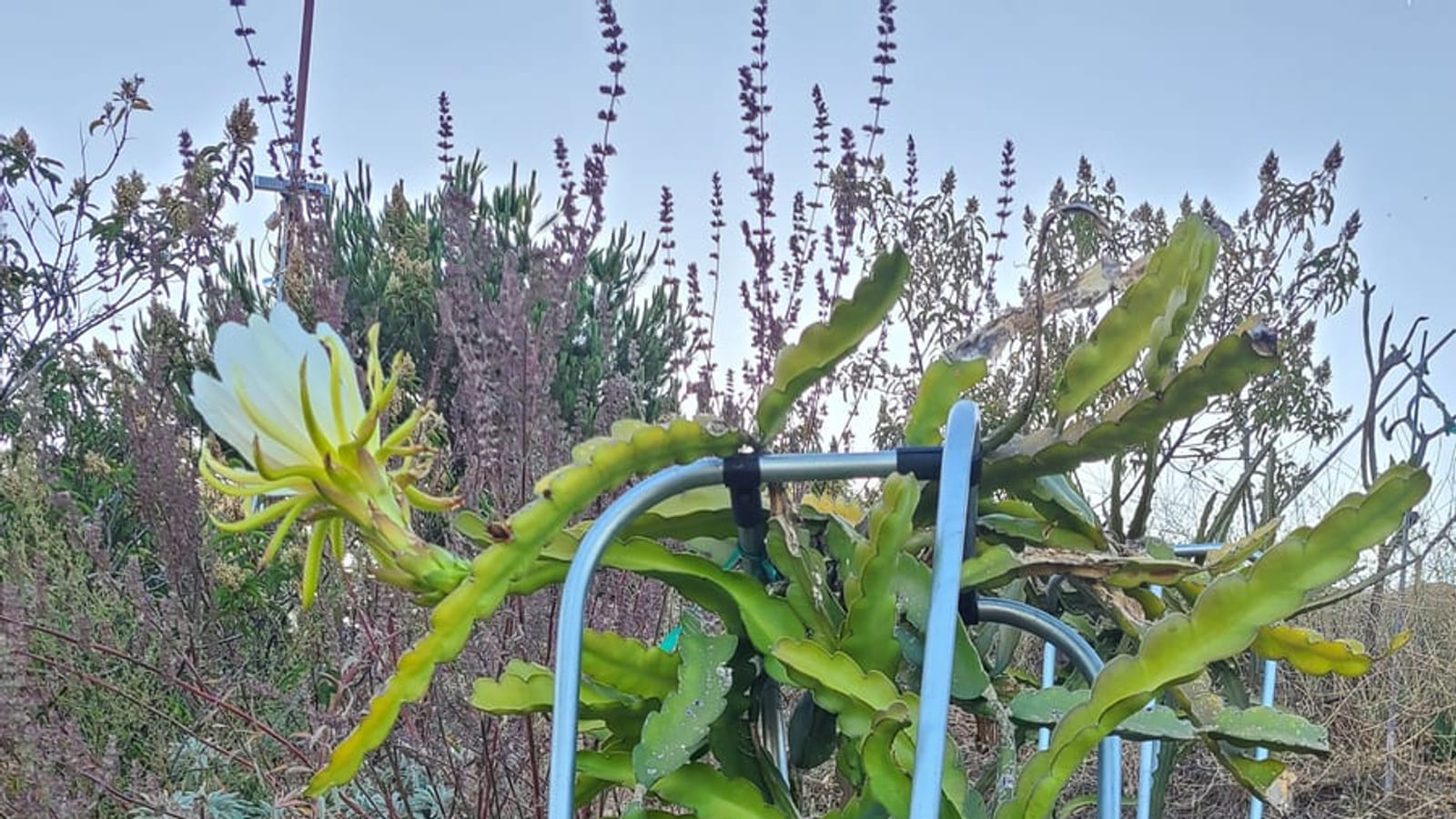
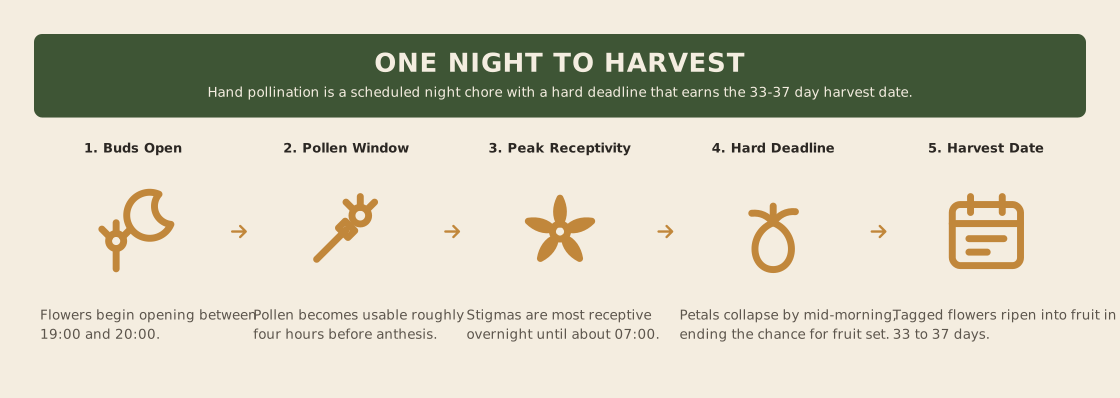
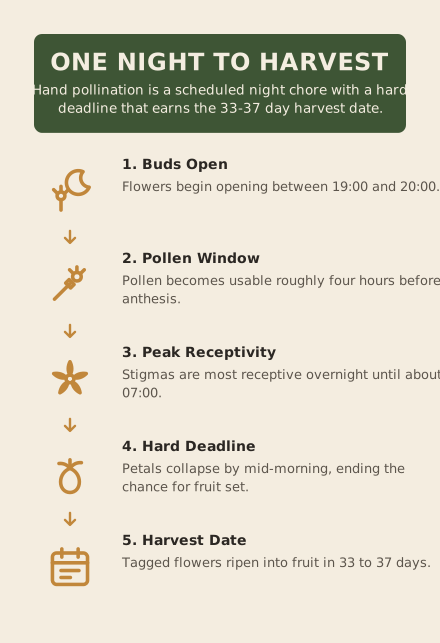
Pitaya flowers are nocturnal and short-lived. Opening generally begins between 19:00 and 20:00, and the flower remains receptive until roughly 07:00 the next morning, or possibly 09:00 on cloudy days[1]. This gives a Red Jaina grower one night, not a season, to move pollen. The usable window is roughly 4 hours before to 12 hours after anthesis[4]. A casual daytime brush around the trellis misses the target entirely.
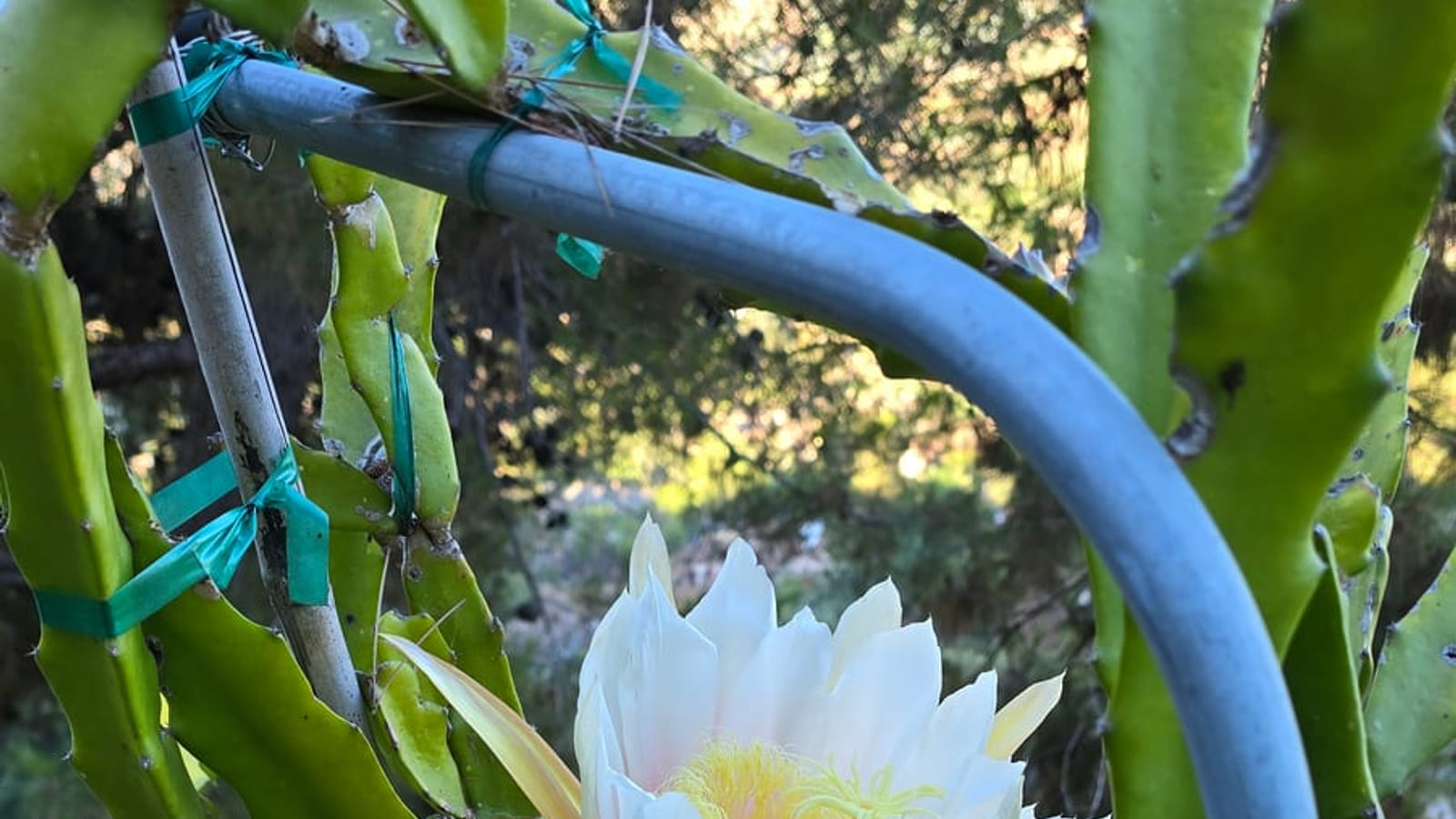
The flower structure itself prevents self-pollination. Pitaya blooms are hermaphroditic but very large, reaching up to 14 inches (36 cm) long. In many self-incompatible types, the stigmas sit physically above the anthers, making it mechanically difficult for the plant to pollinate itself[2]. While moths and bats are natural pollinators, they are rarely observed doing the job effectively in cultivation, and bees only visit cultivars whose flowers remain open in the morning[2].
The correct model: Red Jaina is a self-sterile plant that needs a partner. UF/IFAS Extension recommends planting two or three different genetic types to secure fruit set[2]. If you want a donor, you need a self-fertile variety, not another Red Jaina.
This pattern is not unique to one greenhouse. A two-year study in subtropical India confirmed that red-fleshed clones show strict self-incompatibility and require cross-pollen to set fruit at all[4]. White-fleshed clones, by contrast, were self-compatible but produced heavier fruit when cross-pollinated[4]. The practical reading for a Red Jaina grower is clear: the pollen must be moved deliberately, and it must come from a different genotype. For those building a reliable dark-fleshed planting, consult our full dragon fruit variety guide to identify self-fertile partners that can serve as both pollen donors and productive crops.
How to hand-pollinate it in one night
Red Jaina flowers are nocturnal and short-lived. They typically open between 19:00 and 20:00 and remain receptive until roughly 07:00 the next morning, or slightly later on cloudy days[1]. You do not have a season to fix a missed connection; you have one night. Because the vine is self-sterile, a compatible donor blooming on the same night is mandatory. Without a partner, the flower will drop regardless of how healthy the vine looks.
Before you start, understand what you are actually moving. Successful fertilisation creates seeds, and those seeds are the engine that drives fruit expansion[3]. The tiny black specks in Red Jaina pulp are not filler; they are the biological signal telling the ovary to grow. If pollination is poor, you will not get zero fruit. You will get a small, corky, underdeveloped fruit because there were not enough fertilised ovules to trigger the growth response. Hand pollination changes the size and count of your harvest dramatically, but it does not necessarily change the sweetness. In controlled trials, soluble solids measured 12.78% under hand pollination versus 12.70% under natural pollination, a difference that was not statistically significant[1]. You are pollinating for volume, not for sugar.
- Identify the donor. Find a different genotype blooming on the same night. Red Jaina cannot pollinate itself. If you only have Red Jaina vines, you must have a compatible partner variety nearby.
- Collect the pollen. Use a small brush or cotton swab to gather pollen from the anthers of the donor flower. Alternatively, you can pluck whole stamens from the donor and use them directly as a brush[2].
- Apply to the stigma. Gently dust or paint the pollen onto the receptive stigma of the Red Jaina flower. The stigma is the star-shaped structure at the center, often sitting above the anthers in self-incompatible types[2]. Work between early evening and mid-morning while the flower is fully open.
- Tag the flower. Mark the stem with the date of pollination. This is critical for tracking harvest windows later.
- Wait for sizing. Expect the fruit to size up over 33-37 days[1]. If the fruit stops growing or turns yellow and drops within a few days, the pollination failed or the donor was incompatible.
- Harvest correctly. Cut the fruit when it reaches full colour. Slice the peduncle flush with the fruit surface so no stub remains, which prevents rot and damage to other fruit[2].
Why bees won't help. Commercial bumblebees produced zero fruit set on Red Jaina in trials, likely due to a mismatch between the flower's morphology and the bee's activity pattern[1]. Do not rely on a pollinator hotel or a hired hive. The pollen must be moved by hand from a different genotype.
Once the fruit sets, storage is straightforward but time-sensitive. Harvested Red Jaina fruit lasts 4-5 days at room temperature or several weeks in plastic bags in the refrigerator[2]. Because the pigment is sensitive to light and heat, keep the fruit dark and cool if you are not eating it immediately. For growers looking to simplify their planting, consider pairing Red Jaina with a self-fertile dark variety that can serve as both a pollen donor and a reliable producer. You can find options in our full dragon fruit variety guide.
Growing Red Jaina: climate, water, support
Red Jaina is a vigorous vine that demands specific conditions to reach its heavy-cropping potential. While it shares the general hardiness of pitayas, its status as a self-sterile, high-yield clone means that care mistakes here result in lost harvests rather than just slow growth. The following specifications are drawn from UF/IFAS Extension guidelines for commercial and home production.
| Requirement | Specification | Consequence of Error |
|---|---|---|
| Climate & Zones | Optimum growth 65-77 F (18-25 C). Injury above 100 F (38 C). Damage below freezing (31 F / -2 C) of long duration. Zone 10-11 or movable container. | Heat stress halts growth. Long-duration freezing kills stems. Light frost causes rapid recovery if brief. |
| Sun Exposure | Full to nearly full sun. About 30% shade for the first three to four months. Whitewash stems in high-insolation sites. | Sunburn scars invite soft rots. Young stems bleach and stop growing without initial shade. |
| Water Rhythm | Dry winter/early spring for bloom induction. Periodic watering from flowering through harvest. | Overwatering causes root rot. Timed lawn sprinklers are a classic killer. Drought during flowering drops fruit set. |
| Support Structure | 4-6 inch pressure-treated post with metal cap grid. 10-15 ft from structures. 15-25 ft from trees/lines. No bare wire. | Weak trellis buckles under several hundred pounds of stem weight. Bare wire cuts stems. Stems reaching 20 ft can pull down lines. |
| Fertility | UF/IFAS rates by age. Year 1: ~0.25 lb (118 g) of 6-6-6/8-3-9/8-4-12 every two months + 4 lb compost. Mature: 0.50-0.75 lb across 3-4 applications. | Heavy lawn fertilizer nearby reduces fruiting. Underfeeding limits the 220 lb/year potential. |
| Pruning | 1-3 times a year, soon after harvest. Treat cuts. Remove stems from site. | Uncut stems reach the soil, inviting rot. Crowded vines shade out fruiting wood. |
The Water and Sun Balance
Pitayas are cacti, but they are not desert plants in the traditional sense. They have a fairly high water requirement that shifts with the seasons. UF/IFAS prescribes a dry period in winter and early spring to trigger abundant bloom induction. Once the plant flowers in late spring and summer, drought costs production, so periodic watering is essential from flowering through harvest.[2] The most common failure mode is not underwatering, but overwatering. Lawn sprinklers on a timer, which keep the root zone constantly wet, cause root rot and decline. Plants with root rot show poor drought tolerance, sunburn readily, stop growing, and produce smaller fruit.[2]
Sun management is equally critical for young Red Jaina cuttings. While mature vines tolerate full sun, young stems can be sunburned. UF/IFAS recommends about 30% shading for the first three to four months after planting in high-insolation sites.[2] In very hot climates, whitewashing the stems protects the tissue. This is not just cosmetic; sunburn scars are entry points for bacterial soft rots like Xanthomonas campestris and Erwinia carotovora, which hollow out the vine.[5]
Support Engineering for a Heavy Cropper
Red Jaina is described as a very heavy producer, and the support structure must match that biology. A three- to four-year-old plant can produce about 220 lb (100 kg) of fruit per year, and the planting is estimated to last about 20 years.[2] This yield is supported by a canopy that can carry several hundred pounds of stem weight. UF/IFAS specifies a four- to six-inch pressure-treated pole with a strong metal grid at the top.[2] A weak trellis will buckle under a mature plant.
Placement matters as much as construction. Plants should be sited 10-15 feet from other plants and structures, and 15-25 feet from trees and power lines because stems can reach about 20 feet (6.1 m).[2] Do not use bare wire for support; it cuts into the expanding stems and creates wounds that invite disease. The goal is a
Pests and problems that show up on a red-fleshed vine
A declining, non-bearing vine is rarely the work of a single culprit. In California, problems converge. Excess moisture weakens the plant, opening the door for bacteria and fungi, while nematodes and viruses attack from below and within. Understanding the relationship between these threats helps you diagnose the issue before the whole trellis collapses.
The primary horticultural risk is excess soil moisture. Overwatering, including lawn sprinklers on a timer, causes root rot and decline. Plants with root rot show poor drought tolerance, sunburn readily, stop growing, produce smaller fruit, and become susceptible to other diseases[2].
The Phytophthora tell: If your vine is wilting and the color is dull, check the soil. If it is wet, you likely have root or crown rot. Unlike a water-stressed plant, a vine with Phytophthora or Pythium collar rot does not recover when you irrigate it[5]. Root and collar rot are reported but not well understood in California; the practical defense is drainage and irrigation discipline rather than a fungicide program[5].
Once the plant is stressed, secondary infections take hold. Soft rots of stems and blades are caused by Xanthomonas campestris and Erwinia carotovora. These bacteria enter through injured tissue, such as sunburn scars or anthracnose lesions. Control involves pruning out dying stems, applying copper sprays, and whitewashing stems before the problem starts[5].
Fungal diseases also target weakened vines. Anthracnose (Colletotrichum gloeosporioides) creates reddish-brown lesions with chlorotic haloes on rib edges that can hollow out the vine. Botryosphaeria dothidea causes brown stem spot, starting as chlorotic specks that enlarge to spots up to 5 cm across. Bipolaris, Fusarium, and Alternaria are also recorded on California pitaya[5].
Below ground, the southern root-knot nematode (Meloidogyne incognita) is a universal threat. A UC ANR program evaluating twenty pitaya cultivars found that all tested cultivars were susceptible, showing considerable root galling, good nematode reproduction, and reduced new shoot weight relative to pathogen-free controls[8].
The most insidious threat is Cactus Virus X. There are three known strains, and no known insect vectors. Transmission is primarily mechanical through pruning, harvesting, and propagation, plus plant-to-plant contact and root grafting below the soil. This makes clean stock and sanitized tools the whole program, mattering more than any spray schedule[8].
| Symptom | Likely Cause | Action |
|---|---|---|
| Wilting, dull color, no recovery after watering | Phytophthora or Pythium collar rot | Improve drainage; reduce irrigation frequency[5] |
| Soft, wet rot at sunburn scars or lesions | Xanthomonas or Erwinia | Prune dying stems; apply copper; whitewash[5] |
| Reddish-brown lesions with haloes on rib edges | Anthracnose (Colletotrichum) | Remove affected tissue; improve air flow |
| Chlorotic specks enlarging to 5 cm spots | Brown stem spot (Botryosphaeria) | Sanitize tools; remove infected stems[2] |
| Reduced shoot weight, galled roots | Southern root-knot nematode | Monitor; consider resistant rootstock if available |
| Streaking, mottling, general decline | Cactus Virus X | Remove plant; sanitize tools; buy clean stock[8] |
California’s aridity is a significant advantage for the home grower. The dry climate helps suppress the fungal and bacterial issues that plague tropical growers, who often cannot skip a fungicide schedule. In a dry-climate setting, strict irrigation discipline and tool sanitation are usually enough to keep a Red Jaina vine healthy and productive.
Red Jaina versus the dark-fleshed varieties we do carry
Red Jaina is a compelling plant on paper, but it is not one we stock. If you are looking for a dark-fleshed pitaya that delivers similar antioxidant depth and a bright, complex juice profile without the pollination headache, you have better options in our nursery. The same peer-reviewed variety trial that profiled Red Jaina’s relatives measured our stocked purple-fleshed cultivars, 'Purple Haze' and 'Physical Graffiti'. The data shows a clear trade-off: these purple varieties tested lower in soluble solids than the red-fleshed entries, but they carried higher concentrations of phenolics and flavonoids, along with higher antioxidant activity[3]. 'Physical Graffiti' specifically showed the highest mineral macronutrient levels of any variety tested and produced the heaviest fruit among the dark types[3].
The acidity factor is where these varieties shine for juicing. The trial recorded the purple types as having the more acidic pulp of the set[3]. Published composition data places pitaya pulp pH generally between 4.8 and 5.4, a range that attributes the mild acidity characteristic of the fruit to that specific chemical balance[3]. This is why a tart red variety like Red Jaina reads bright rather than sour in a smoothie. If you want that tart, bright, complex juice profile that makes Red Jaina famous, you can get a defensible version of it from varieties we actually sell[3].
| Variety | Flesh | Measured Chemistry | Pollination | Availability |
|---|---|---|---|---|
| Red Jaina | Deep Crimson | 12.70-12.78% Soluble Solids; High Betalains | Self-sterile (14.3% unaided set) | Not stocked |
| Physical Graffiti | Purple | High Phenolics/Flavonoids; Highest Minerals; High Fruit Mass | See variety guide | In stock |
| Purple Haze | Purple | High Phenolics/Flavonoids; Higher Acidity | See variety guide | In stock |
| Dark Star | Red | Reliable production; Fresh eating focus | See variety guide | In stock |
| Robles Red | Red | Reliable production; Fresh eating focus | See variety guide | In stock |
| Frankie's Red | Red | Reliable production; Fresh eating focus | See variety guide | In stock |
For growers who prioritize reliable production and fresh eating over the specific juicing traits of Red Jaina, we recommend Dark Star, Robles Red, and Frankie's Red. These red-fleshed alternatives are stocked and known for consistent cropping. Unlike the blanket assumption that all dark varieties are self-fertile, each of these has specific pollination requirements that are documented in our full dragon fruit variety guide. We do not state that our substitutes are universally self-fertile or have compatible partners; instead, we point you to the specific status of each plant so you can plan your trellis accordingly.
Juicing Note: The colour in dark-fleshed pitaya is a processing variable. Betacyanins are destroyed by light and heat. To keep your juice magenta rather than brown, drink it fresh, keep it cold, keep it dark, and add a splash of lime or ascorbic acid to protect the pigment[10].
It is also worth noting the nutritional reality of these fruits. Pitaya pulp is a low-calorie, high-water food. Per 100 g of fresh pulp, published composition is roughly 83-89% water, 0.16-0.5 g protein, 0.1-0.61 g fat, 0.3-0.9 g fibre, 6-10 mg calcium, 16-36 mg phosphorus and 0.3-0.65 mg iron[2]. The honest health claim for Red Jaina or its purple counterparts is pigment and antioxidant load plus potassium, not protein or fibre. Potassium is the predominant macronutrient in pitaya across varieties, with the highest concentrations measured in the peel rather than the pulp[3]. This is why the dark flesh and the discarded skin are both nutritionally interesting, though most growers eat only the pulp.
Should you grow Red Jaina
Plant Red Jaina if you already have a self-fertile dark or white cultivar on the same post and you are willing to be the bee for one night, one flower at a time. This vine is a receiver, not a giver, and its value lies in the deep crimson pulp and heavy antioxidant load it delivers to juice and smoothies. The pigment is a processing variable, so you must drink the harvest fresh, keep it cold, and protect the magenta with a splash of lime or ascorbic acid to prevent fading [10]. If you want that specific colour and tart complexity, and you have a compatible partner to provide the pollen, Red Jaina is a rewarding addition to a mixed trellis.
Skip it if you want a set-and-forget single plant or if Red Jaina would be the only cultivar on your property. Without a different genotype to provide pollen, you will get flowers and nothing else, as commercial bumblebees produced zero fruit set on this variety due to a mismatch in floral morphology and activity patterns [1]. You also need to be willing to buy named cuttings from a specialist and stake a heavy trellis, because a weak support will buckle under the weight of a mature vine. There is a germplasm liability here too: Cactus Virus X moves on the same pruning shears you use to manage the plant, so buying clean stock is essential to avoid infecting your entire collection [8]. If you prefer a simpler path, consult our full dragon fruit variety guide for self-fertile options that do not require nightly hand-pollination.
Where to get Red Jaina, and what to buy instead
If you are determined to grow Red Jaina specifically, you will find it as a live catalogue item at specialist US nurseries rather than a lost cultivar. It is sold as stem cuttings in graded lengths and is frequently out of stock. This scarcity is a biological reality: a heavy-cropping red-fleshed clone like this must be propagated from stem segments, so supply is limited by how many cuttings can be taken from the mother plant without killing it [7]. Because there is no documented breeder or plant patent to lean on, you are buying a verified clone with a murky lineage. The only protection you have is the reputation of the seller. Buy from a nursery you trust to be true to name, and expect to wait.
We do not stock Red Jaina. The self-sterile biology documented in earlier sections makes it a high-maintenance choice for most home growers. If you want the deep crimson pulp, the antioxidant load, and that tart-bright flavour profile without the nightly pollination chore, we recommend three dark-fleshed varieties that are self-fertile or reliably cross-compatible. These options are backed by the same peer-reviewed comparison that profiled Red Jaina’s relatives, giving you measured data rather than trade folklore.
| Variety | Why it works | Best for |
|---|---|---|
| Physical Graffiti | Highest fruit mass of the dark types tested; highest mineral macronutrient levels; high phenolics and antioxidant activity [3]. | Growers who want volume and nutrition without hand-pollinating. |
| Purple Haze | High phenolics and flavonoids; more acidic pulp than the red types, delivering the tart, complex juice profile Red Jaina is famous for [3]. | Smoothies and juicing where acidity balances sweetness. |
| Robles Red | A sweeter fresh-eating red option that avoids the strict self-incompatibility trap of some red-fleshed clones. | Fresh eating and reliable home production. |
Physical Graffiti and Purple Haze are the strongest substitutes for the Red Jaina experience. In the trial data, these purple-fleshed varieties carried lower soluble solids than the red entries but scored higher on every nutrition-relevant measure, including total phenolics, flavonoids, and antioxidant activity [3]. The purple types were also recorded as the more acidic pulp of the set [3]. This acidity is the mechanistic basis for the strawberry-sweet-and-tart tasting note growers report on dark varieties: the colour, the sugar, and the acidity move together [6]. You get the complex, bright flavour without the 14.3% unaided fruit set rate.
The mixed-post strategy. If you do plant a self-sterile variety like Red Jaina, or if you want to maximize fruit size on any dark-fleshed vine, plant a self-fertile donor next to it. UF/IFAS recommends planting two or three different genetic types to secure fruit set and size [2]. Use a self-fertile dark variety as the pollen donor and the productive partner. Treat any self-sterile plant on the post as the one that receives pollen. This ensures you have compatible pollen on hand when the flowers open at night.
For a full breakdown of these varieties and their specific care requirements, see our full dragon fruit variety guide. We stock cuttings of Physical Graffiti, Purple Haze, and Robles Red, all graded for length and cured for planting.
FAQ
Is Red Jaina self-pollinating? No, it is self-sterile. The controlled trial data proves this: unaided fruit set was only 14.3%, while hand pollination with compatible pollen raised it to 77.4%. Without a partner, you will get blooms but almost no fruit.
Is Red Jaina a good pollinator for other varieties? No. It is the receiver, not the giver. You need a self-fertile variety to provide the pollen. Planting two Red Jainas together will not solve the problem because they are clones of the same genotype[2].
How sweet is it? Measured soluble solids in trials were 12.70-12.78%, though growers often report 15.3-16.2 Brix[1]. This sits slightly below the 13.2-13.7 Brix category norm for red pitayas and well below the 22 Brix ceiling of yellow pitayas[3]. Expect a semi-sweet flavor with a distinct acid edge rather than pure sugar.
How big is the fruit? Trade descriptions list 0.5-1 lb (roughly 340-450 g)[3]. In the young trial plants, hand-pollinated fruit averaged 164.7 g[3]. Typical species range is 250-600 g, so mature, well-pollinated vines should hit the upper trade estimates[3].
How fast from flower to table? Harvest occurs 33-37 days after full bloom[1]. This is a quick turnaround, so keep an eye on the calendar once the flowers open.
What makes the flesh red? Betacyanin betalains, not lycopene[9]. These pigments are chemically distinct from carotenoids and are the same family found in beetroot[9]. Note that light and heat degrade them in juice, so drink fresh and keep it dark and cold[10].
Can I grow it in a container? Yes, if you are in zones 10-11 or can move the pot indoors during freezes. The main risks are overwatering and freezing. Pitayas need a dry period in winter for bloom induction but regular water once flowering starts[2]. Excess moisture causes root rot, which is the primary killer of container vines[2]. Ensure excellent drainage and avoid letting the pot sit in a saucer of water.
References
- Determination of the effects of bumblebee (Bombus terrestris), hand, and natural pollination on fruit set, yield, and quality in pitaya (Hylocereus spp.) cultivation under subtropical conditions. BMC Plant Biology 26:999, doi:10.1186/s12870-026-08831-0 (Yolcu, Atmaca, Baysal & Ozturk), BMC Plant Biology (peer-reviewed; trial at Akdeniz University, Manavgat, Turkiye, May-August 2025) (2026).
- Pitaya (Dragonfruit) Growing in the Florida Home Landscape, HS303 (Crane, Balerdi & Majid; rev. 2016/2019), University of Florida IFAS Extension (2019).
- Bioactive Compounds, Antioxidant Capacity and Mineral Profile of Pulp and Peel from Diverse Selenicereus (Pitaya) Varieties in Brazil. Plant Foods for Human Nutrition 81:103, doi:10.1007/s11130-026-01553-6 (Vieites & Acevedo; profiles 'Costa Rica', 'Nicaragua', 'Purple Haze', 'Physical Graffiti', 'Imperial', 'Connie Mayer', 'Golden de Israel'), Plant Foods for Human Nutrition (Springer), open access (2026).
- Floral and pollination biology of dragon fruit reveals strategies for enhancing productivity through pollination management and reproductive window extension. Scientific Reports 15:37296, doi:10.1038/s41598-025-21168-2 (Jadhav et al.), Scientific Reports (Nature Portfolio) (2025).
- Pitahaya Diseases, 33 pp. extension deck (James Downer, UCCE Ventura County, adapted from Gary Bender, UCCE San Diego County); plus UC IPM Phytophthora Root and Crown Rot pest notes (updated 01/2025), UC Agriculture and Natural Resources / UC Cooperative Extension (with https://ipm.ucanr.edu/home-and-landscape/phytophthora-root-and-crown-rot/) (2016).
- Comparative analysis of pomological and phytochemical characteristics in white- and red-fleshed pitaya (Hylocereus spp.), with molecular docking insights into key bioactive compounds. J Sci Food Agric 106(4):2200-2210, doi:10.1002/jsfa.70322 (Mertoglu et al.), Journal of the Science of Food and Agriculture (Wiley), open access collection (2026).
- Red Jaina - Hylocereus spp. (cultivar listing: self-sterile flag, heaviest-cropping note, three-quarters to one pound fruit, juicing use, olive stems with purple new growth, acquired from a tropical nursery in California), Spicy Exotics (specialist dragon fruit nursery, Texas; accessed 2026-10-09) (2026).
- Pitahaya or Dragon Fruit (Hylocereus spp.): A New Water Efficient Crop for Southern California Small Scale Farmers (Lobo, Fernandez de Soto, Aguiar & Tanizaki; 20-cultivar evaluation at South Coast REC, Meloidogyne incognita susceptibility, Cactus Virus X), UC Agriculture and Natural Resources / UC Cooperative Extension (2017).
- Betalains: A Narrative Review on Pharmacological Mechanisms Supporting the Nutraceutical Potential Towards Health Benefits. Foods 13(23):3909, doi:10.3390/foods13233909 (Martinez et al.; Hylocereus spp. as a primary betalain source), Foods (MDPI), open access (2024).
- Effects of heat, pH, antioxidant, agitation and light on betacyanin stability using red-fleshed dragon fruit (Hylocereus polyrhizus) juice and concentrate as models. J Food Sci Technol 52(5):3086-3092, doi:10.1007/s13197-014-1362-2 (Wong & Siow), Journal of Food Science and Technology (Springer) (2015).