Esmeralda Dragon Fruit: Sweet White Flesh Guide
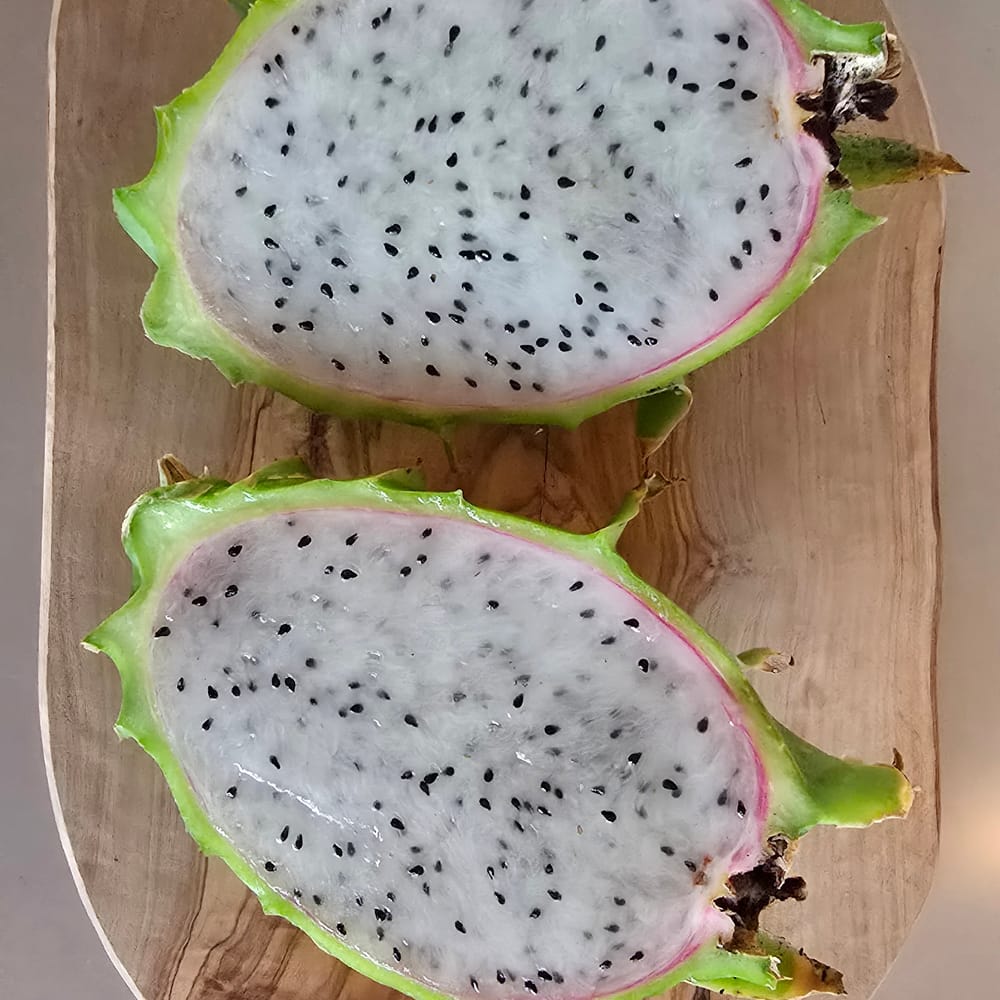
Esmeralda is a natural white-fleshed variety of Selenicereus undatus that stays green-skinned when ripe, with sweet, juicy white flesh. That green rind at full ripeness is its signature: most white-fleshed dragon fruit turns pink or magenta as it ripens, so a fruit that is ready to eat while still emerald green is unusual and is what the variety is named for. Originating in Mexico as a natural selection, it offers a distinct taste profile often described as a blend of kiwi and berry notes. The average fruit weighs about 1.5 lb and reaches roughly 18 brix, which is significantly sweeter than the 10 to 12 brix typical of store-bought white dragon fruit. If you want a reliable, high-sugar white variety that climbs on a sturdy trellis, this is the one to grow. We currently have Esmeralda cuttings out of stock, but you can learn more about general care in our dragon fruit care guide.
Where Esmeralda Fits in the Dragon Fruit World
Dragon fruit comes from three main species, each with distinct traits. Knowing its species explains its flavor and growth habits. It belongs to the Selenicereus undatus group, the same species as the pink-skinned white-fleshed fruit you find in grocery stores. This distinguishes it from the red-fleshed Selenicereus costaricensis and the yellow-skinned Selenicereus megalanthus (often sold as strictus).
The key distinction for growers is that Esmeralda is a natural selection, not a hybrid. It originated in Mexico as a naturally occurring variant of S. undatus. It was not created by crossing two different species or cultivars. Instead, it is a specific plant found in the wild that exhibited superior sugar content and skin coloration compared to its neighbors. This "found-in-the-wild" status means it carries the genetic stability of the base species while offering a more intense flavor profile than the average supermarket fruit.
| Species | Skin Color | Flesh Color | Flavor Intensity |
|---|---|---|---|
| S. undatus | Pink/Magenta | White | Mild to Moderate |
| S. costaricensis | Red/Pink | Red | High |
| S. megalanthus | Yellow | White | High/Acidic |
White-fleshed dragon fruit generally has a subtler, milder flavor than its red-fleshed counterparts. Because of this, a high-sugar selection like Esmeralda stands out significantly within its class. For a broader overview of these differences, see our dragon fruit varieties guide.
What Does Esmeralda Taste Like?
Cutting into Esmeralda reveals a flavor profile that is distinctly different from the pale, watery white dragon fruit often found in supermarkets. The taste is a complex blend of kiwi and berry notes, creating a bright, fruity experience that feels light on the palate. One grower reviewer described the fruit as sweet, light, and juicy, comparing its overall character to angel food cake. This comparison captures the delicate, airy sweetness that defines the variety, setting it apart from the heavier, more cloying flavors of some red-fleshed cultivars.
The Science of Sweetness
The primary reason Esmeralda stands out is its sugar content. In horticulture, we measure this using brix, a scale that indicates the percentage of dissolved solids in the fruit. Most store-bought white dragon fruit registers between 10 and 12 brix. Esmeralda, however, reaches an average of 18.2 brix. That jump makes the sweetness immediate and intense, so you do not have to work for the flavor. The higher sugar concentration balances the natural acidity of the fruit, resulting in a taste that is rich yet refreshing. This makes homegrown Esmeralda taste much better than standard grocery fruit.
Texture and Mouthfeel
Texture plays a huge role in flavor perception, and Esmeralda flesh is soft and juicy, breaking easily under the teeth. It is speckled with tiny black seeds that are edible and add a subtle, pleasant crunch. The high water content keeps the fruit moist, preventing the dry, mealy texture that can sometimes plague under-ripened dragon fruit. The combination of the soft flesh, the crisp seeds, and the high sugar content creates a balanced sensory experience that is both satisfying and light.
Grower's Note: The "angel food cake" comparison is not just about sweetness. It refers to the delicate, non-sticky nature of the flesh. Unlike some tropical fruits that can be sticky or dense, Esmeralda eats cleanly. The juice is abundant but not runny, and the flesh separates easily from the skin.
How to Grow Esmeralda
Esmeralda grows at a moderate pace, which is a distinct shift from the vigorous, rapid expansion you might see in some commercial white selections. This steady growth rate means you are building a long-term investment rather than chasing quick results. The stems will eventually trail and climb using aerial roots, reaching lengths of 10 to 20 feet. Because these stems become heavy with age and fruit, a sturdy trellis or a dedicated tree is essential. A weak support structure will bend under the weight, potentially snapping the stem or damaging the fruit.
Light and Soil
Place your plant in full sun, aiming for at least 6 to 8 hours of direct light daily. This intensity drives the photosynthesis needed for that high sugar content. The soil must drain fast. Use a cactus mix or a sandy blend with a pH between 6.0 and 7.0. Water deeply during active summer growth, then let the top layer dry out before watering again. In winter, taper the water significantly as the plant enters dormancy. Overwatering in cool months is the fastest way to rot the roots.
Cold Protection
Esmeralda is hardy to roughly 40 to 45 F. Below that threshold, stems suffer cold damage, and hard freezes will kill the plant. If you are in USDA zones 10 to 12, you can plant in the ground. If you are in a cooler zone, grow it in a pot. Container growing gives you the flexibility to move the plant indoors or to a sheltered area when temperatures drop. This simple adjustment protects your investment and keeps the plant healthy for the next growing season.
When Will Your Esmeralda Fruit?
Dragon fruit growing requires patience. When you start from a cutting, the plant focuses its energy on establishing a robust root system and building vegetative mass before it considers reproduction. You will likely see a few years of green growth before the first bloom. For most Esmeralda cuttings, fruiting may start 3 to 4 years after planting.
The Nightly Bloom
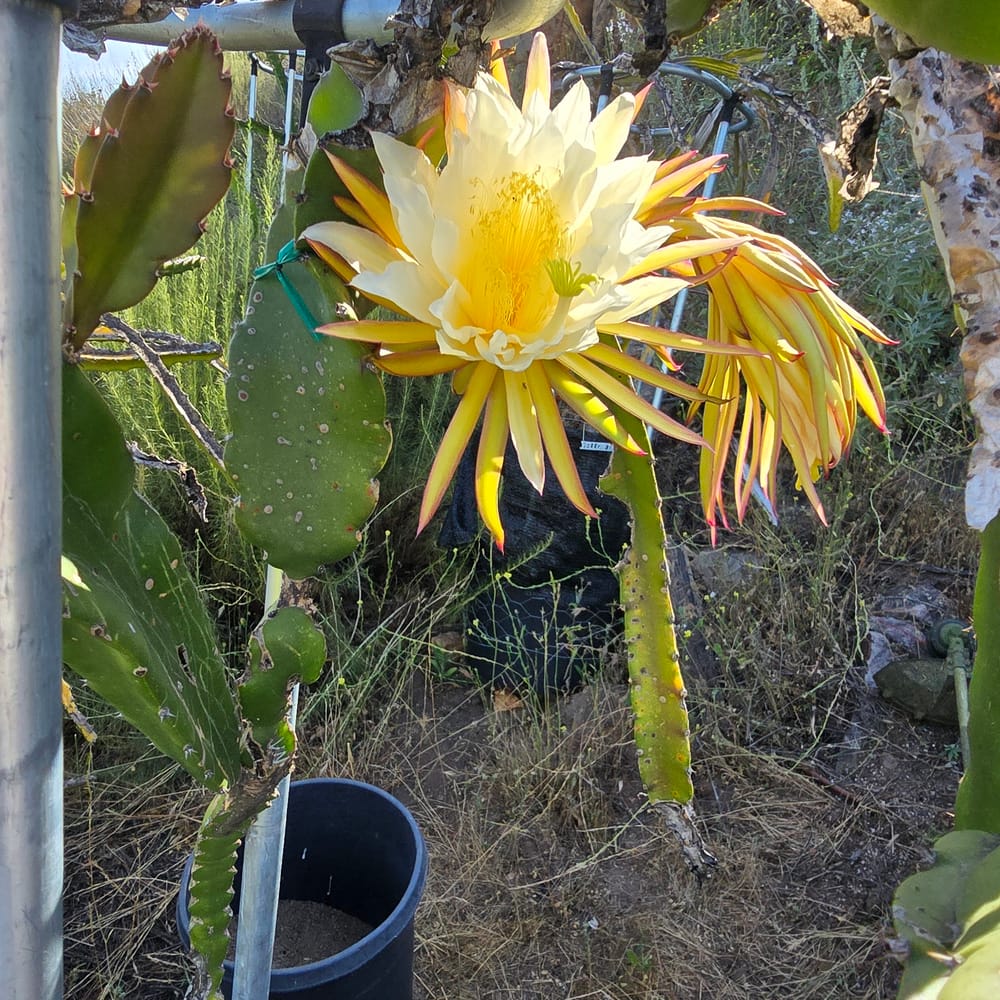
Once the plant is ready, the flowers are a spectacle in themselves. Typical of the Selenicereus undatus species, Esmeralda produces large, white, nocturnal blooms. These flowers open at night, releasing a strong, sweet fragrance that can fill a garden. They are short-lived, often closing by morning, but they do their work quickly. Because Esmeralda is self-fertile, you do not need a second plant for pollination. The single plant will set fruit on its own pollen, saving you the trouble of hand-pollinating or managing a companion variety.
From Pollination to Harvest
After the flower closes, the fruit development clock starts. It takes roughly 30 to 50 days from pollination for the fruit to ripen fully; about 45 days is typical in southern California. During this period, the fruit will change color and texture as it matures. Under good conditions, a mature plant can become a significant producer. While growth rates are moderate, a well-established S. undatus can live for about 20 years. In the third or fourth year after planting, a healthy plant may produce on the order of 100 kg (220 lb) of fruit per year. This long-term yield makes the wait worthwhile.
Is Esmeralda Worth Growing?
If you are growing a single plant and want white-fleshed fruit that actually has sugar, Esmeralda is a strong pick. You get the high brix levels and distinct flavor profile without the complexity of a multi-plant pollination strategy.
The main tradeoff is the growth pace. Esmeralda grows at a moderate rate, which is slower than some vigorous commercial selections of S. undatus. If you are looking for a plant that fills a large trellis quickly, this may not be the fastest option. However, the slower growth often correlates with the genetic stability of a natural selection. You are trading speed for a consistent, high-quality fruit that stands out in the white-fleshed category.
Stock Status: Esmeralda cuttings are currently out of stock at Sky Botanicals. We will restock as soon as new cuttings are ready.
For a deeper comparison of growth habits and flavor profiles across different species, check out our dragon fruit varieties guide. It helps you pick the right plant for your space.
Illustration generated for this article