Thick King Dragon Fruit: A Grower's Guide
Thick King dragon fruit is a self-sterile cultivar from the Selenicereus setaceus lineage that requires hand pollination at night to set fruit. This hardy South American variety, locally known as Cerrado Giant, features olive-green stems and small spines. Its fruit develops with bright pink shoulders against green skin, maturing to a maroon hue. The flavor is a unique mix of kiwi and passion fruit. Because the flowers only open at sunset and fade by sunrise, you must perform hand pollination in the dark to ensure a harvest. We currently have Thick King cuttings in stock for growers looking to add this distinct variety to their collection. For more information on compatible partners for your garden, check out our guide to dragon fruit pollination.
Where it comes from: the Cerrado and setaceus
Thick King belongs to the Selenicereus setaceus lineage, often called the Cerrado group. This hardy South American species is the breeding parent behind many modern cultivars, including Houghton, Sugar Dragon, and Baby Cerrado (Sweet-21). Understanding this heritage helps explain why Thick King behaves the way it does in your garden.
The Cerrado habitat
In Brazil, this variety is locally known as Cerrado Giant. It grows naturally on rocky mountains, old tree trunks, and sandy soils in the high fields of the Cerrado biome. The native range spans several states, including Minas Gerais, Bahia, Goias, Distrito Federal, Mato Grosso, and Tocantins. These environments feature distinct wet and dry seasons, which likely contributes to the plant's hardiness and ability to handle variable conditions.
Botanical characteristics of the setaceus group
The growth pattern of Thick King is typical of the setaceus group. You will notice olive-green stems with very small spines. In warm US climates, the stems often remain relatively small, whereas the mature mother plants in South America develop very large branches. This difference in scale is common among tropical species when transplanted to subtropical or temperate zones.
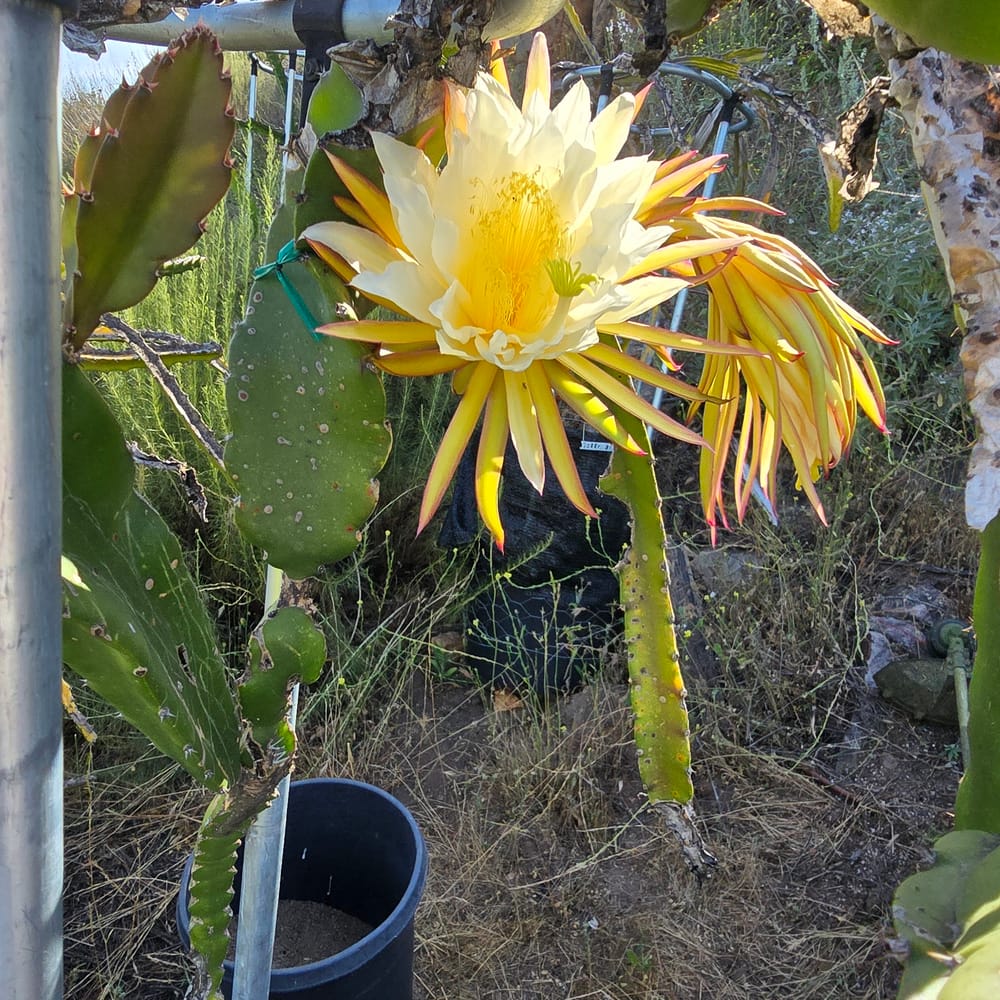
Flower development follows a specific trajectory unique to this lineage. Buds emerge as hairy buttons. As the buds grow, these hairs are replaced by spines at the base of the flower. The flowers themselves are small, similar in size to fellow Cerrado varieties like Baby Cerrado (Tasty). When open, they release a sweet pollen aroma, a trait shared across the group.
| Variety | Lineage | Key Trait |
|---|---|---|
| Thick King | S. setaceus | Hardy, small spines |
| Houghton | S. setaceus | Popular cultivar |
| Baby Cerrado | S. setaceus | Small flowers, sweet aroma |
| Sugar Dragon | Paul Thomson lineage | Descended from setaceus |
The setaceus species serves as a foundational parent in dragon fruit breeding. It appears in the Paul Thomson lineage, contributing to varieties like Sugar Dragon, Voodoo Child, and Pink Panther. If you are exploring other options from this hardy group, our dragon fruit varieties guide covers more of these related cultivars.
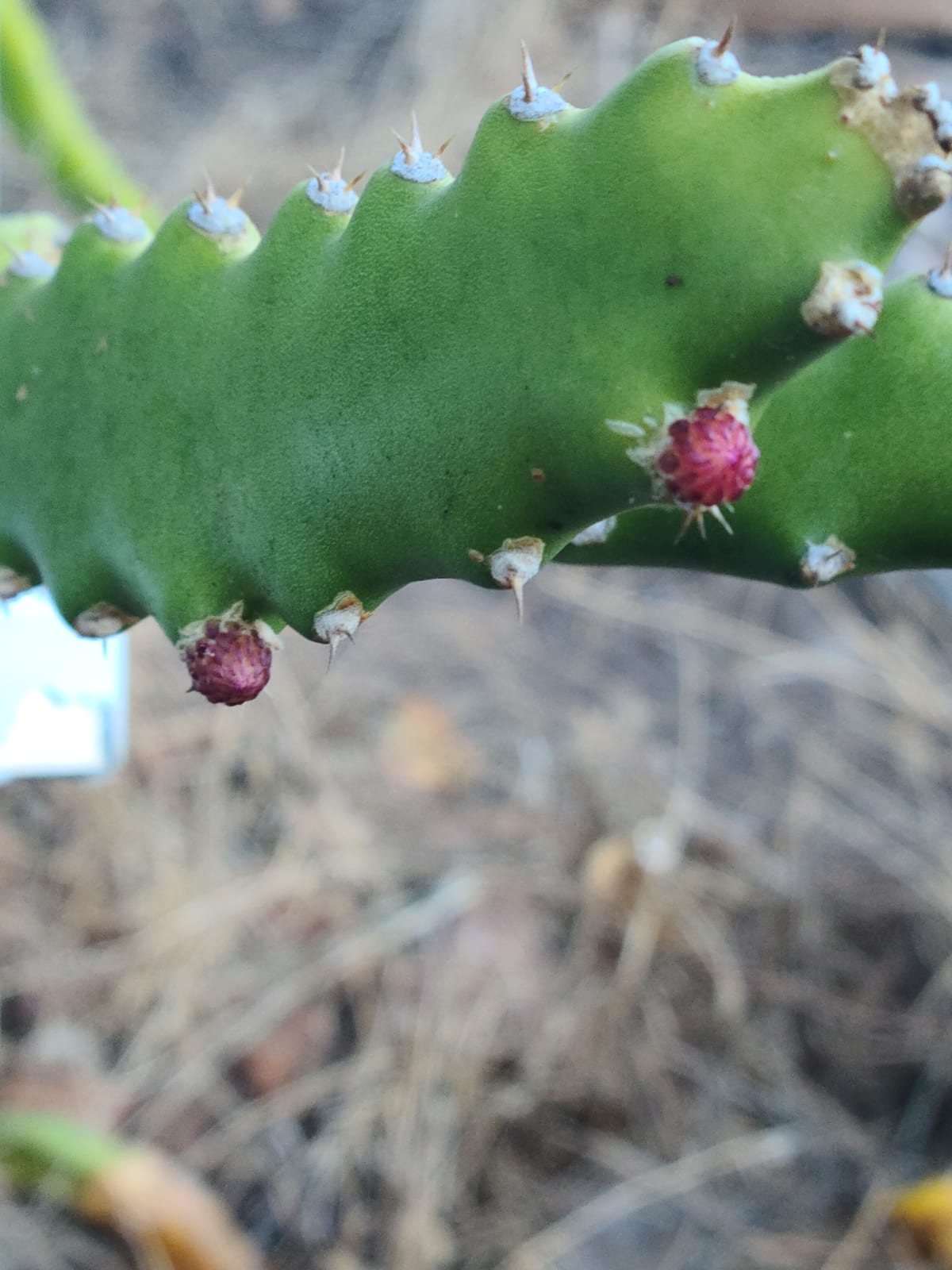
Growth habit and how it looks
Thick King follows the classic setaceus growth pattern, which means you are looking at a climbing cactus that needs vertical support to thrive. The stems are olive-green with very small spines, giving the plant a slightly softer appearance than some of its pricklier relatives. In warm US climates, the stems tend to remain relatively small and manageable. This is a common trait for tropical species moved to subtropical zones. However, the mature mother plants in South America develop very large branches, so the plant has significant potential for size if conditions are right.
Visual cues for maturity
As the plant matures, the visual changes are subtle but important for a grower to notice. The stems may thicken, and the overall structure becomes more robust. You will see the characteristic olive-green color persist, but the density of the growth increases. The small spines remain a defining feature, distinguishing it from varieties with larger, more prominent areoles. This hardy nature is a direct result of its Cerrado origins, where it evolved to withstand variable conditions on rocky terrain and sandy soils.
Tip: Because Thick King stems can stay relatively small in US gardens, do not judge the plant's health by size alone. Look for consistent new growth and the characteristic olive-green color. A smaller plant that is actively producing new pads is often healthier than a larger, stagnant one.
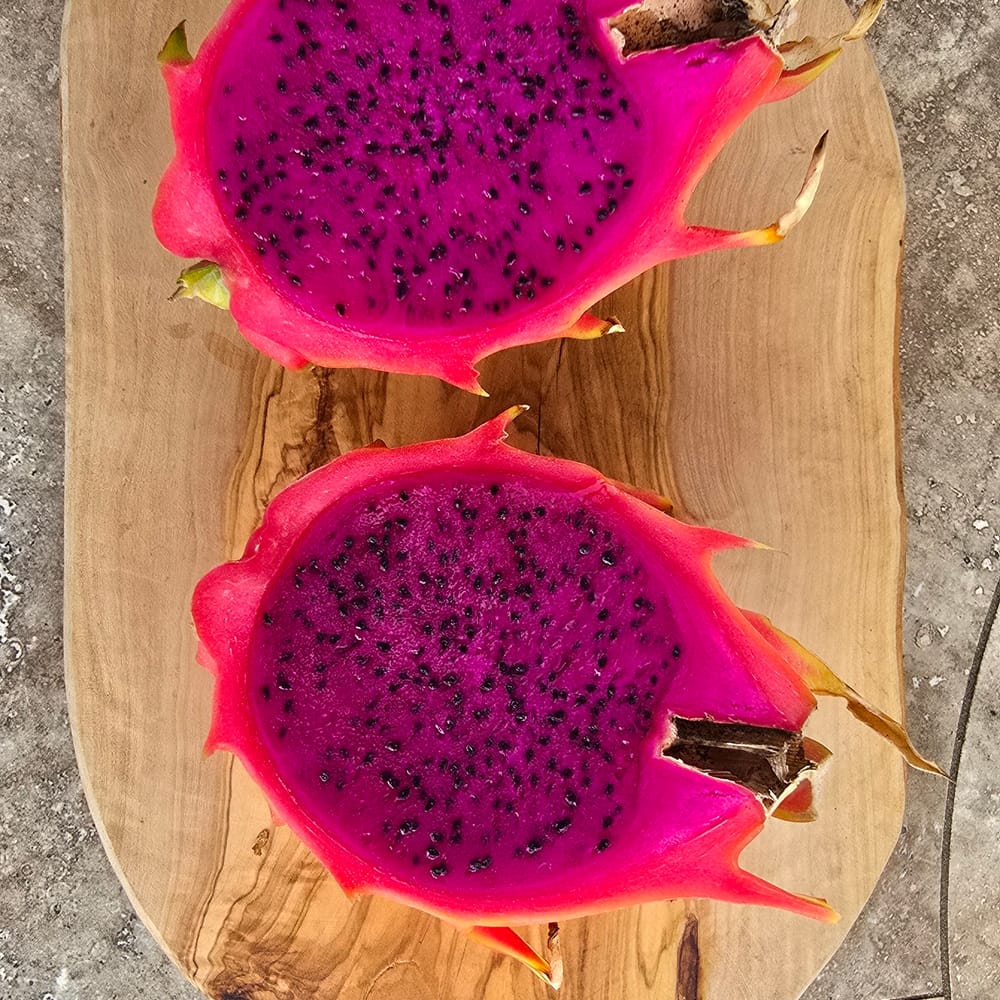
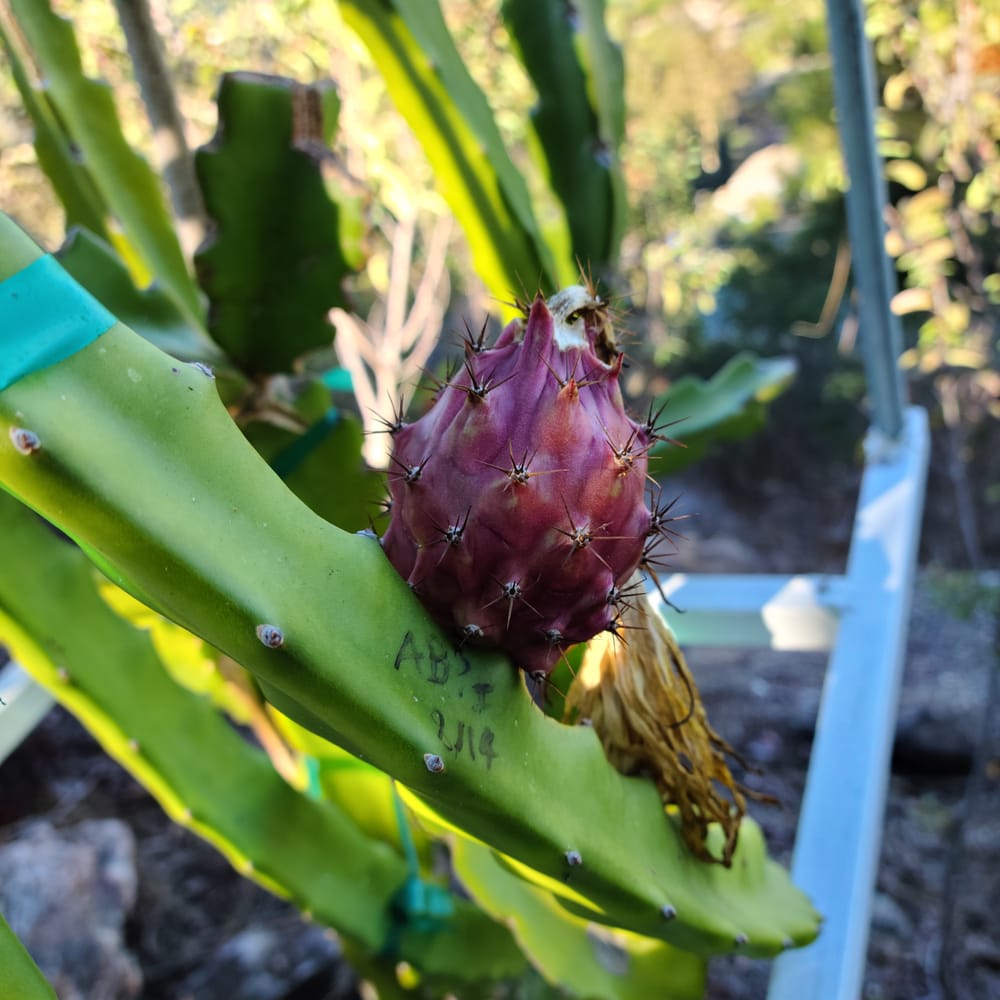
The fruit development provides another layer of visual interest. As the fruit forms, you will see bright pink shoulders developing against the radiant green skin. This contrast is one of the most appealing aspects of the variety. As the fruit approaches harvest, the skin transitions to a deep maroon hue. The spines on the fruit are present but brush off easily, making handling straightforward. This visual progression from green to maroon with pink accents is a reliable indicator that the fruit is nearing its prime eating window.
Understanding this growth habit helps in planning your garden layout. Since the stems are not excessively large in typical US conditions, Thick King fits well in standard trellis systems. It does not require the heavy-duty support structures needed for some of the larger, faster-growing cultivars. This makes it a practical choice for growers who want a distinctive variety without the infrastructure of a massive cactus. For a broader look at how different growth habits compare, you can check out our dragon fruit varieties guide.
Flowering and the self-sterile catch
Because Thick King is self-sterile, a single plant will never set fruit on its own. You need pollen from a compatible partner. The challenge is timing. The flowers open at sunset and fade by sunrise, giving you a narrow window in the dark to work. This is why hand pollination is the standard practice for this cultivar. Hand pollination is the practical way to ensure a set in a home garden setting.
Identifying the bloom window
Watch the buds closely. They start as hairy buttons. As they expand, those hairs are replaced by small spines at the base of the flower. When the bloom opens, it releases a sweet pollen aroma. The flowers are small, similar in size to Baby Cerrado. You will need a light source to see what you are doing. A headlamp or a strong flashlight works well. The petals are delicate, so handle them with care.
The hand pollination process
You need a compatible male flower from another plant. Houghton and Baby Cerrado are common partners in the setaceus group. Once both flowers are open, use a small soft brush or a cotton swab. Collect pollen from the anthers of the male flower. Transfer that pollen to the stigma of the Thick King flower. You want to ensure the pollen makes contact. This process takes only a few minutes per flower.
Tip: Check our dragon fruit varieties guide for a list of compatible partners.
After pollination
Once pollinated, the flower will close and wither. The fruit begins to develop from the base of the flower. You will see the small fruit start to swell. The skin will initially be green with bright pink shoulders. As it matures, the color deepens to maroon. The spines on the skin will brush off easily at harvest.
Flavor and fruit quality
The taste profile of Thick King is distinct. Growers and tasters describe it as a complex mix of kiwi and passion fruit. This combination sets it apart from the hundreds of dragon fruits Spicy Exotics have tasted. Spicy Exotics noted that this specific flavor profile is unique among the dragon fruits they have evaluated.
Market appeal and visual cues
Beyond the taste, the fruit offers strong visual appeal that supports its market potential. The skin develops bright pink shoulders against a radiant green background before maturing to a deep maroon hue at harvest. This coloration is striking. In local markets, Thick King is often considered to have better commercial potential than Yellow Dragon due to this combination of visual interest and distinct flavor.
The maroon skin at harvest is not a sign of overripeness. It indicates the fruit is ready for picking. The small spines on the skin brush off easily during handling, leaving a smooth surface for display or consumption.
As the plant matures, the fruit quality is expected to improve. First-year fruit averaged 0.5 to 0.75 lbs. More sweetness is expected with maturity. If you are comparing this profile to other options in the Cerrado group, our dragon fruit varieties guide offers more details on how these traits compare across related cultivars.
From cutting to first harvest
Getting Thick King from a bare cutting to a ripe fruit requires patience. Because this cultivar is self-sterile, the timeline depends heavily on establishing a compatible pollination partner. The flowers open at sunset and fade by sunrise, creating a narrow window for action. You must be ready to hand pollinate in the dark to secure a set. If you do not have a partner plant, the flowers will open and close without producing fruit.
Establishing the plant
Before you worry about fruit, the cutting needs to establish a strong root system. In warm US climates, Thick King stems tend to remain relatively small and manageable compared to their massive South American counterparts. This makes the early years easier to handle. Focus on building a sturdy structure. The olive-green stems with their small spines need vertical support to climb. A heavy support system prevents the plant from sprawling or breaking as it gains weight. Once the roots are established and the stems are actively growing, the plant becomes more resilient to the variable conditions of the Cerrado biome it is adapted to.
The flowering window
When the plant reaches maturity, you will see buds emerge as hairy buttons. As these buds grow, the hairs are replaced by spines at the base of the flower. This is a key visual cue that the bloom is approaching. The flowers themselves are small, similar in size to other Cerrado varieties like Baby Cerrado. They are not the giant, showy blooms of some other dragon fruits. Instead, they rely on a sweet pollen aroma to attract pollinators in the wild. In your garden, you are the pollinator. You need to identify the compatible partner and be prepared to transfer pollen during the night hours. This step is non-negotiable for this variety.
First fruit and maturity
Once pollinated, the fruit begins to develop. You will notice bright pink shoulders against the green skin as it grows. At harvest, the skin turns maroon, and the spines on the surface brush off easily. In the first year, fruit size can be modest. At Spicy Exotics, first-year fruit averaged half to three-quarter pounds. As the plant matures, you can expect larger fruit and increased sweetness. The average brix measured 16 in early tests, with more sweetness anticipated as the plant ages. The flavor profile is a unique mix of kiwi and passion fruit. This distinct taste is what makes Thick King stand out among the hundreds of dragon fruits Spicy Exotics tasted. If you are looking for more options from this hardy group, check out our dragon fruit varieties guide to find the best pollination partners for your garden.
Growing Thick King in Southern California
Thick King is a hardy Cerrado cultivar. The region's mild winters and abundant sunshine align well with the plant's preference for warmth. Because Thick King originates from the Cerrado biome, which features distinct wet and dry seasons, it is naturally adapted to handle variable conditions. This hardiness makes it a resilient choice for California gardens.
During the hot months, the soil can dry out rapidly. You must monitor moisture levels closely. The goal is to keep the root zone consistently moist without allowing the soil to become waterlogged. Overwatering is a common mistake. If you are planting in the ground, consider amending the soil with organic matter to improve drainage and water retention. For container growers, using a well-draining cactus mix is essential. Water deeply but infrequently, allowing the top layer of soil to dry out between waterings. This mimics the natural rhythm of the Cerrado and encourages a healthy root system.
Managing Temperature and Frost
While Southern California is generally warm, coastal areas and higher elevations can experience occasional cold snaps or light frosts. Thick King is hardy, but it is not immune to cold damage. Young plants are particularly vulnerable. As the plant matures, it becomes more tolerant of cooler temperatures. The olive-green stems can suffer from cold stress, which may delay flowering or reduce fruit set in the following season.
Another consideration for Southern California growers is the intense summer heat. While Thick King loves warmth, extreme heat can stress the plant if it is not adequately watered. Providing some afternoon shade can also help protect the plant from scorching, especially if it is in a full-sun location. However, do not over-shade the plant, as it needs plenty of light to produce flowers and fruit. A balance of full sun and adequate water is key to success in this climate.
Tip for Southern California Growers: Keep the mulch a few inches away from the stem.
Finally, keep in mind that Thick King is a self-sterile cultivar. This means that even in the perfect Southern California climate, it will not produce fruit without a compatible pollinator. You will need to plant a compatible variety nearby or be prepared to hand pollinate the flowers at night. The flowers open at sunset and fade by sunrise, so you must be ready to perform pollination during this narrow window. This is a crucial step that many new growers overlook, leading to disappointment when no fruit sets. By ensuring you have a compatible partner and a plan for pollination, you can maximize your chances of a successful harvest in your Southern California garden. For more information on selecting the right companion plants, check out our dragon fruit varieties guide.
Thick King vs the varieties people compare it with
Growers often ask how Thick King stacks up against other popular Selenicereus setaceus cultivars. While they share the same hardy lineage and nocturnal flowering habits, the visual and flavor profiles differ significantly. The most common comparisons involve Houghton and Baby Cerrado, both of which are also descendants of the Cerrado group.| Variety | Skin Appearance | Flavor Notes |
|---|---|---|
| Thick King | Maroon with pink shoulders | Kiwi and passion fruit |
| Houghton | ||
| Baby Cerrado |
While Houghton is a popular cultivar, Thick King is often preferred for its distinct flavor and visual appeal. If you are looking for a variety that stands out in the market or on your table, Thick King’s maroon skin and kiwi and passion fruit profile are hard to match.
Common Thick King mistakes
Because Thick King is self-sterile, the most frequent error is assuming it will fruit on its own. Growers often wait for natural pollination that never happens, leading to dropped buds and frustration. You need a compatible partner nearby to provide pollen. If you do not have one, you must hand pollinate every single night during the bloom window. Missing even one night of active pollination can mean losing that specific flower's potential. Check our dragon fruit varieties guide to find a compatible cultivar that flowers at the same time.
Timing and technique errors
Another common pitfall is trying to pollinate during the day. The flowers open at sunset and fade by sunrise. You must work in the dark, using a flashlight if necessary, to ensure the pollen transfers correctly. Additionally, many growers use the wrong tool. A small, soft brush or cotton swab works best. Using a large paintbrush can damage the delicate stigma or fail to pick up enough pollen from the anthers. Be gentle. The flower is small and fragile, similar to Baby Cerrado.
Support and structural issues
While Thick King stems remain relatively small in US climates, they still require sturdy vertical support. A common mistake is using a weak trellis that cannot handle the weight of the fruit as it develops. The fruit hangs heavily, and if the support fails, the stem can snap. This is especially true if the plant has been growing for several years and the stems have thickened. Ensure your support structure is robust enough to handle the load of multiple fruits, even if the stems themselves look slender.
Watering and environmental stress
Thick King is hardy, but it is not indestructible. Overwatering is a frequent mistake, particularly in containers. The roots need to dry out between waterings. Conversely, under-watering during the fruiting stage can cause the fruit to drop or fail to develop properly. Monitor the soil moisture carefully. The plant is from a region with distinct wet and dry seasons, so it tolerates some drought but does not like constant saturation. Adjust your watering schedule based on the season and your local climate.