Sin Espinas Dragon Fruit: Taste, Growth & Purple Haze
Sin Espinas dragon fruit offers a sweet cherry raspberry flavor with nearly thornless stems. It is an excellent choice for home gardeners who want manageable plants and firm deep red flesh. The name means without thorns in Spanish. The plant actually retains tiny vestigial spines. Originating in Nicaragua, this variety produces round fruit with glossy pinkish red skin. The flesh holds its shape beautifully for presentations. While it is not a high yielder, its compact growth habit makes it well suited for protected or indoor growing. We do not stock Sin Espinas. We recommend Purple Haze as a close alternative. It shares the deep red flesh and high sweetness level you seek. Buy Purple Haze cuttings here.
Sin Espinas Dragon Fruit: At a Glance
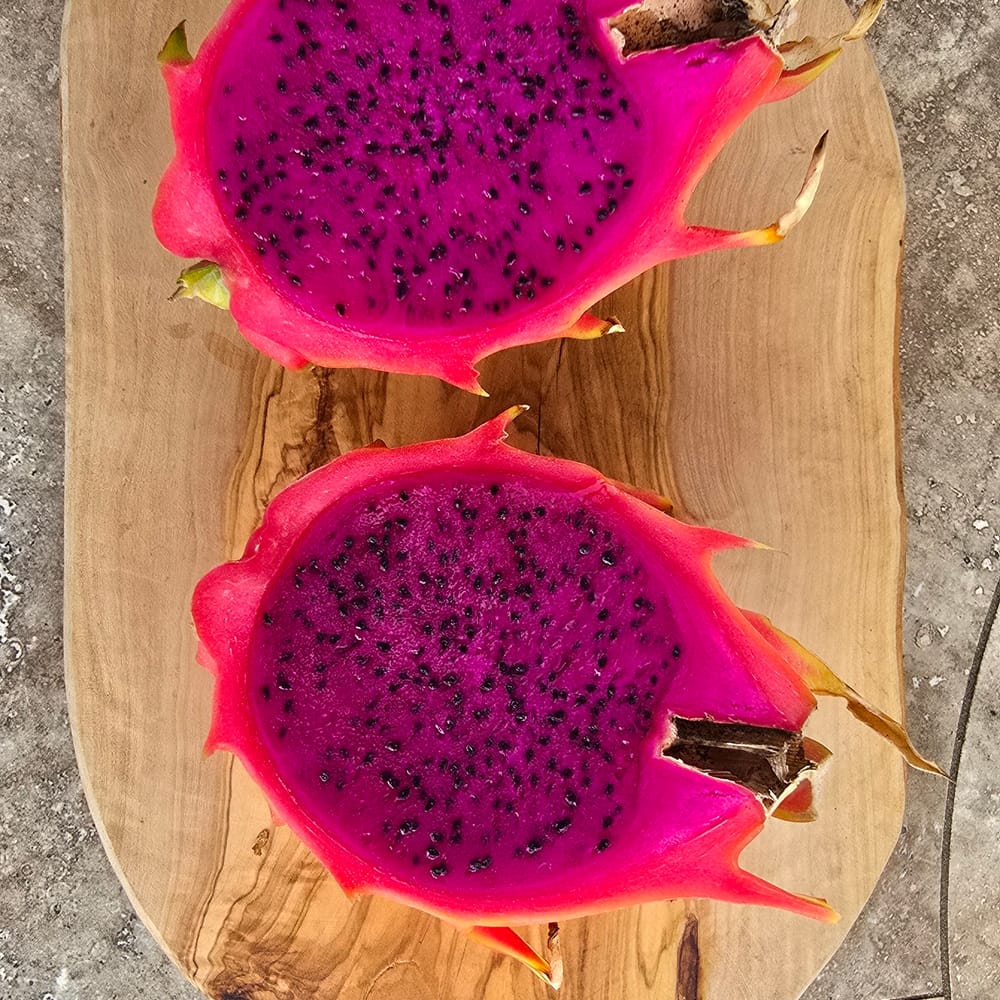
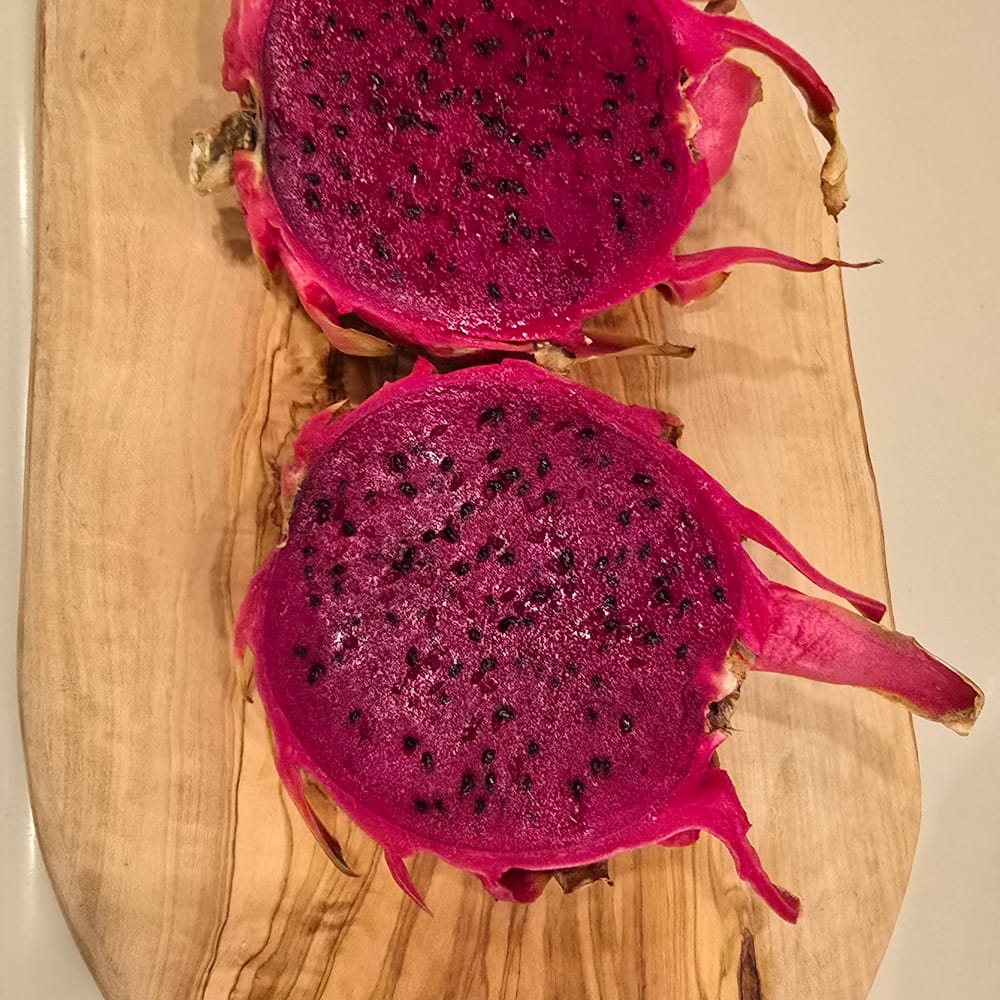
The fruit itself is distinct from the elongated shapes common in grocery stores. Sin Espinas produces round, medium-sized fruit averaging 390-500g. The skin is a thick, glossy pinkish-red that contrasts with the green fins. Inside, the flesh is a deep, vibrant red and notably firm. This texture allows the fruit to hold its shape well when sliced. It is a favorite for plating and presentations.
Growers often debate the pollination requirements for this variety. Some sources list it as self-fertile while others classify it as self-sterile. The Rare Dragon Fruit blog even lists it in both categories with the practical advice to cross-pollinate. In our experience, providing a compatible pollinator ensures the best fruit set. Do not rely on self-pollination if you want consistent harvests.
Grower Note: Because Sin Espinas has low tolerance for both cold and extreme heat, it thrives best in protected environments or indoors. This makes it a viable option for gardeners in marginal climates who can control the microclimate.
Taste and Texture
The flavor is sweet with distinct cherry and raspberry notes. It tastes solid without being cloying. The sugar content sits in the 16.5 to 17 Brix range. This is good quality. It is not as sweet as heavy hitters like Purple Haze or Physical Graffiti. Those varieties have higher sugar content. Sin Espinas trades raw sugar for better flavor complexity.
The flesh is very firm. It holds its shape beautifully when sliced. This texture makes it ideal for plating and presentations. You can arrange wedges on a plate without them turning to mush. The flesh stays firm until you bite it.
| Variety | Avg Brix | Texture | Flavor Notes |
|---|---|---|---|
| Sin Espinas | 16.5-17 | Firm | Cherry, Raspberry |
| Purple Haze | High | Medium | Sweet, Berry |
| Physical Graffiti | High | Medium | Sweet, Complex |
Like all red-fleshed varieties, Sin Espinas is rich in antioxidants. The deep color comes from betacyanins. These compounds offer health benefits similar to other red dragon fruit types. You get nutrition with the taste.
The Thornless Myth (and What's Actually True)
Sin Espinas means 'without thorns' in Spanish. It is the only variety in Nicaragua marketed as spineless. The reality differs. Research from UCANR confirms the plant is not completely bare. It retains one or two tiny spines per areole. These spines measure between 0.5 and 1 mm in length.
These are vestigial structures. They are technically present but practically harmless. Compare them to the longer thorns found on typical dragon fruit. The difference is clear. You can handle Sin Espinas stems with bare hands. Harvesting becomes a simple task rather than a hazard. This makes the variety easier to manage.
While the spines are tiny, they are still sharp enough to prick sensitive skin. Wear light gloves if you have delicate skin or are pruning thick stems.
This ease of handling is a major selling point for indoor growers. You do not need heavy protective gear to tend the plant. It fits on a patio or in a sunroom.
Growing Sin Espinas
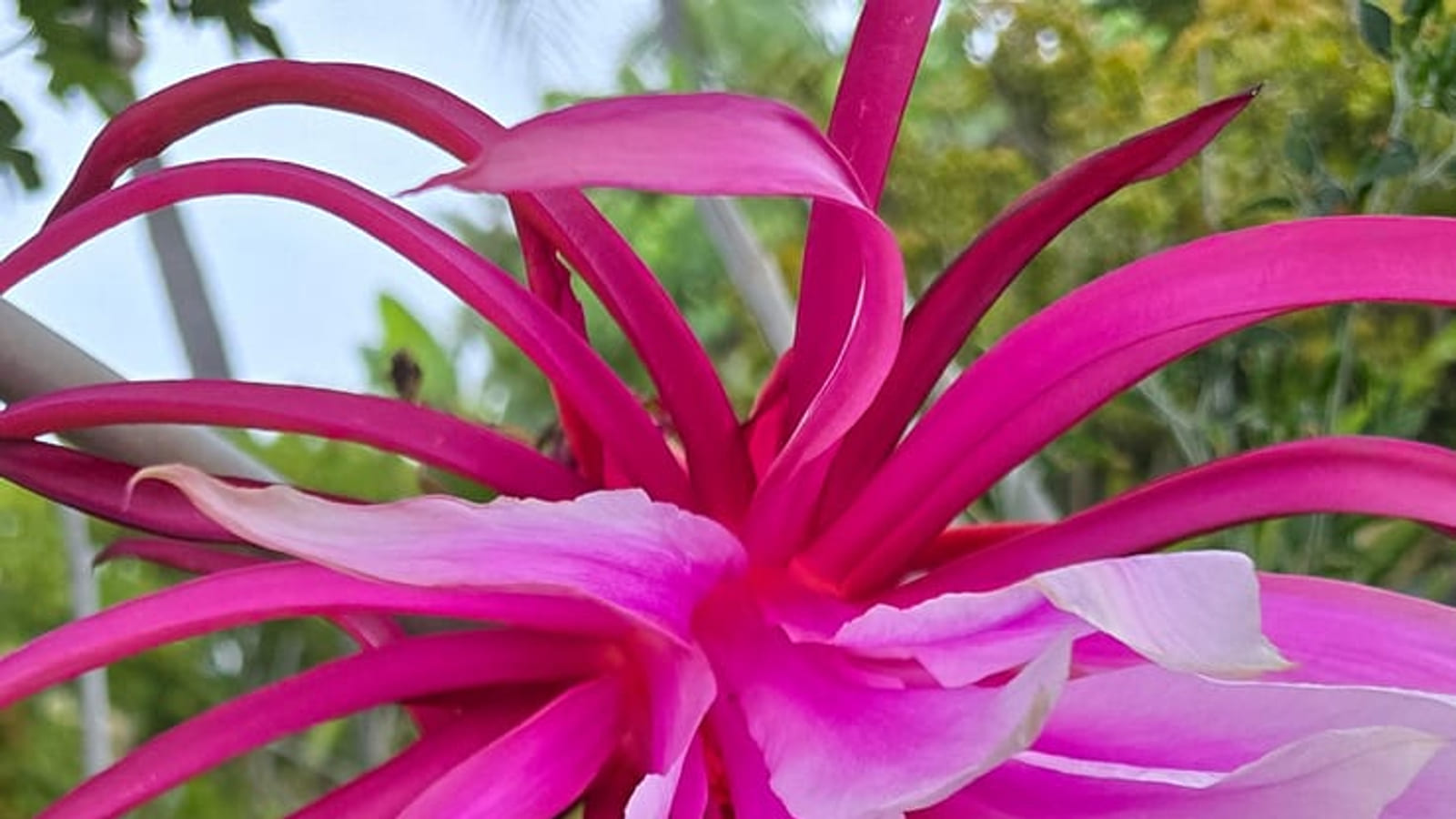
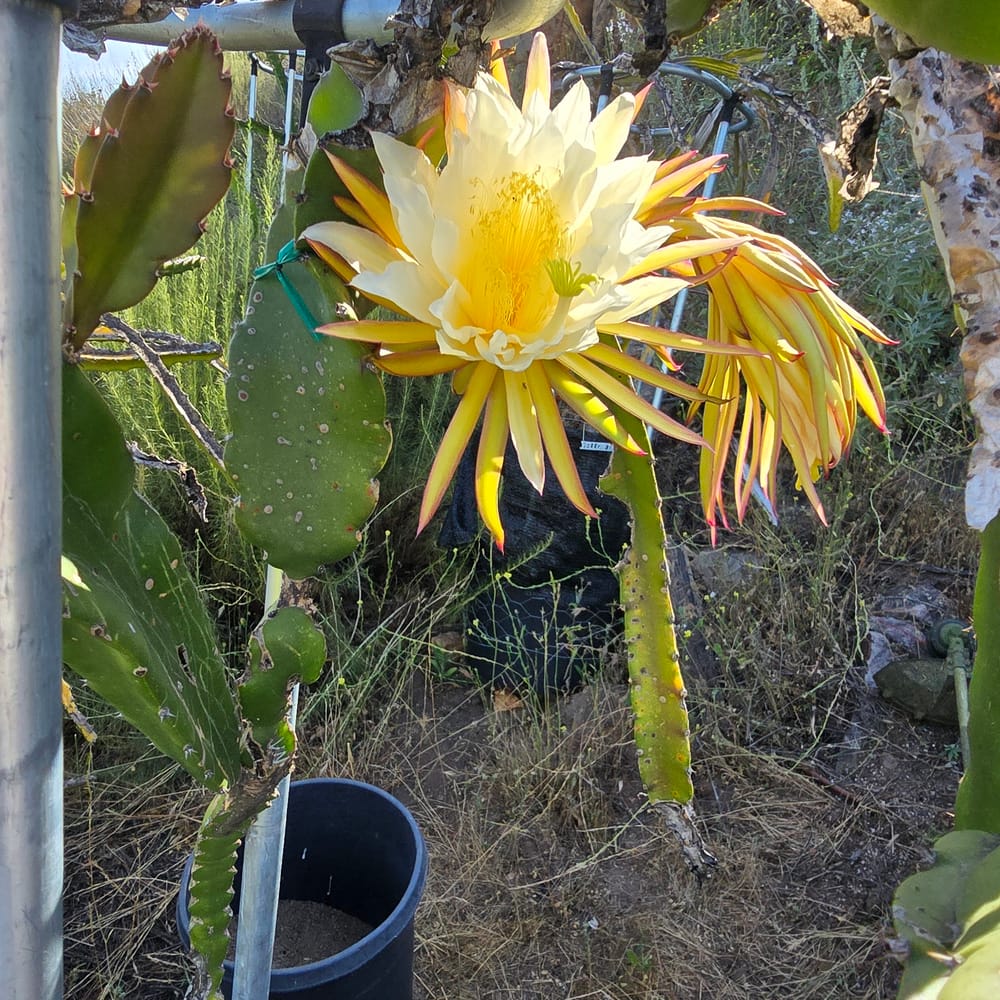
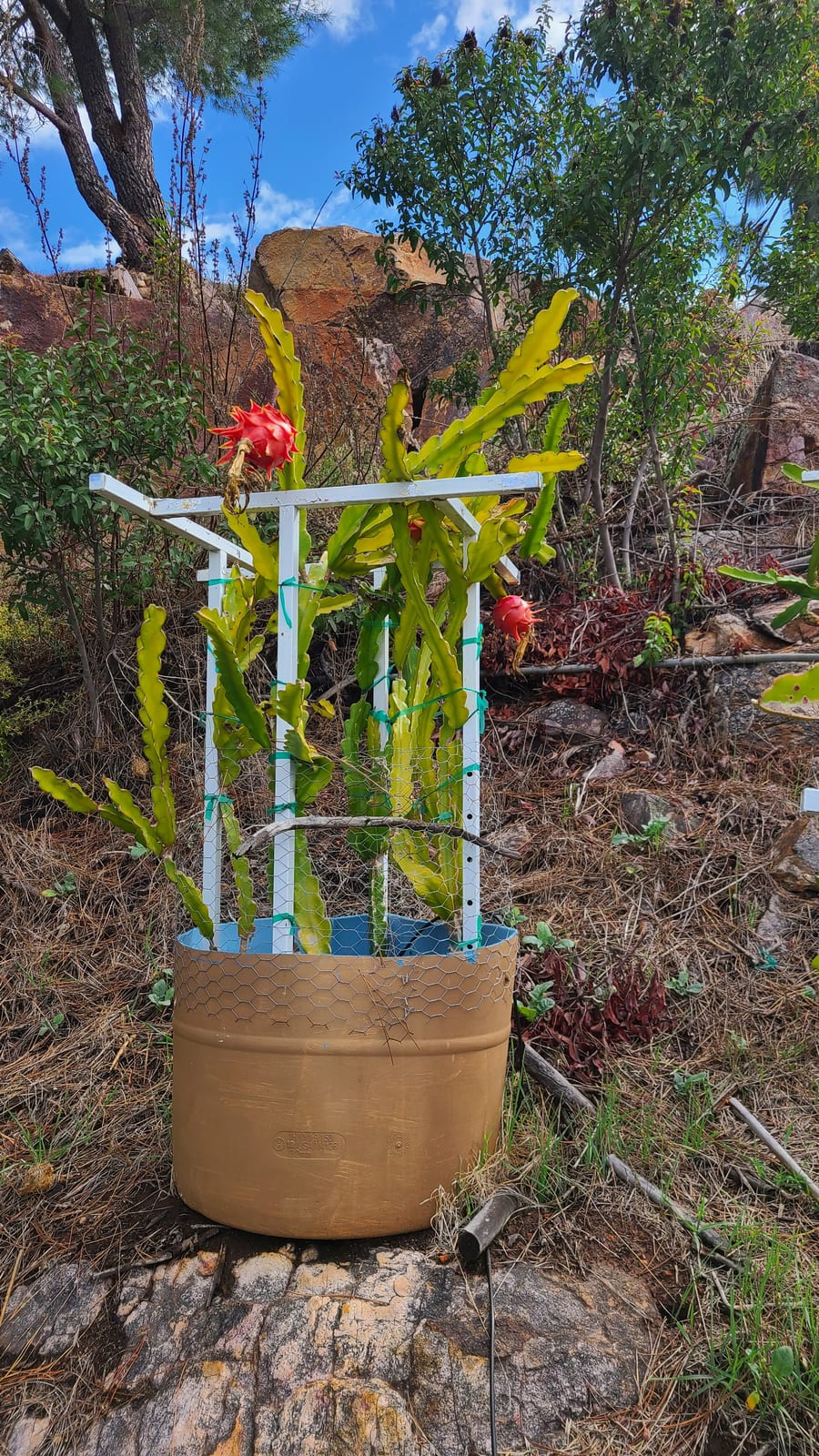
The stems of Sin Espinas are thin and very light. Mature wood turns a brownish-green color. This structure makes the plant easy to tie to a support. You do not need heavy trellising. The flowers are smaller. They are smaller than typical dragon fruit blooms. The petals are white with a light yellow calyx and anthers.
Sin Espinas has low tolerance for both cold and heat. It thrives best in protected environments or indoors. This makes it a good choice for gardeners in marginal climates who can control the microclimate.
Harvest is quick. In Southern California, the cycle runs 43 days from bloom to harvest. The main harvest window opens in early June and runs through December. The yield is average. It is not a high production commercial variety. You will get a reasonable number of fruits but not a massive crop.
Pollination requires attention. The plant is technically self-fertile. However, cross-pollination is strongly recommended for reliable fruit set. Do not rely on self-pollination if you want consistent harvests. Plant a compatible pollinator nearby to ensure the flowers set fruit.
Sin Espinas vs. Other Red-Fleshed Varieties
Red-fleshed dragon fruit varieties often compete on sugar content alone. Sin Espinas takes a different approach. It prioritizes texture and flavor nuance over raw sweetness. When you place it next to heavy hitters like Physical Graffiti or Purple Haze, the differences become clear. The table below breaks down how these popular varieties compare.
| Variety | Flesh Color | Brix | Firmness | Spines |
|---|---|---|---|---|
| Sin Espinas | Deep Red | 16.5-17 | Very Firm | Vestigial (tiny) |
| Physical Graffiti | Deep Red | High | Medium | Present |
| Purple Haze | Deep Red | High | Medium | Present |
Physical Graffiti and Purple Haze deliver intense sweetness that appeals to those who prefer candy-like fruit. Their flesh is softer and more yielding. Sin Espinas offers a firmer bite. This structure keeps the fruit from turning to mush when sliced. It holds its shape on a plate. The flavor is complex. You taste distinct notes of cherry and raspberry rather than just sugar.
Best Alternatives We Stock
We do not carry Sin Espinas cuttings. If you want that deep red flesh and firm texture, Physical Graffiti is the closest match in our nursery. It delivers a similar sweetness range with a complex flavor profile. The fruit is widely available and reliable for home growers. You can find our stock at Physical Graffiti Dragon Fruit Cutting.
Chase maximum sugar instead? Look at Purple Haze. It is one of the sweetest red-fleshed varieties we grow. The flesh is vibrant and the taste is intense. It suits gardeners who prioritize brix over structural firmness.
| Variety | Flesh Color | Key Trait |
|---|---|---|
| Physical Graffiti | Red | Complex flavor, firm texture |
| Purple Haze | Red | High sweetness, intense taste |
Physical Graffiti handles outdoor conditions better than Sin Espinas. It is a robust choice for growers in marginal climates who still want premium red fruit.