Rainbow Dragon Fruit: Guide to the Color Shift
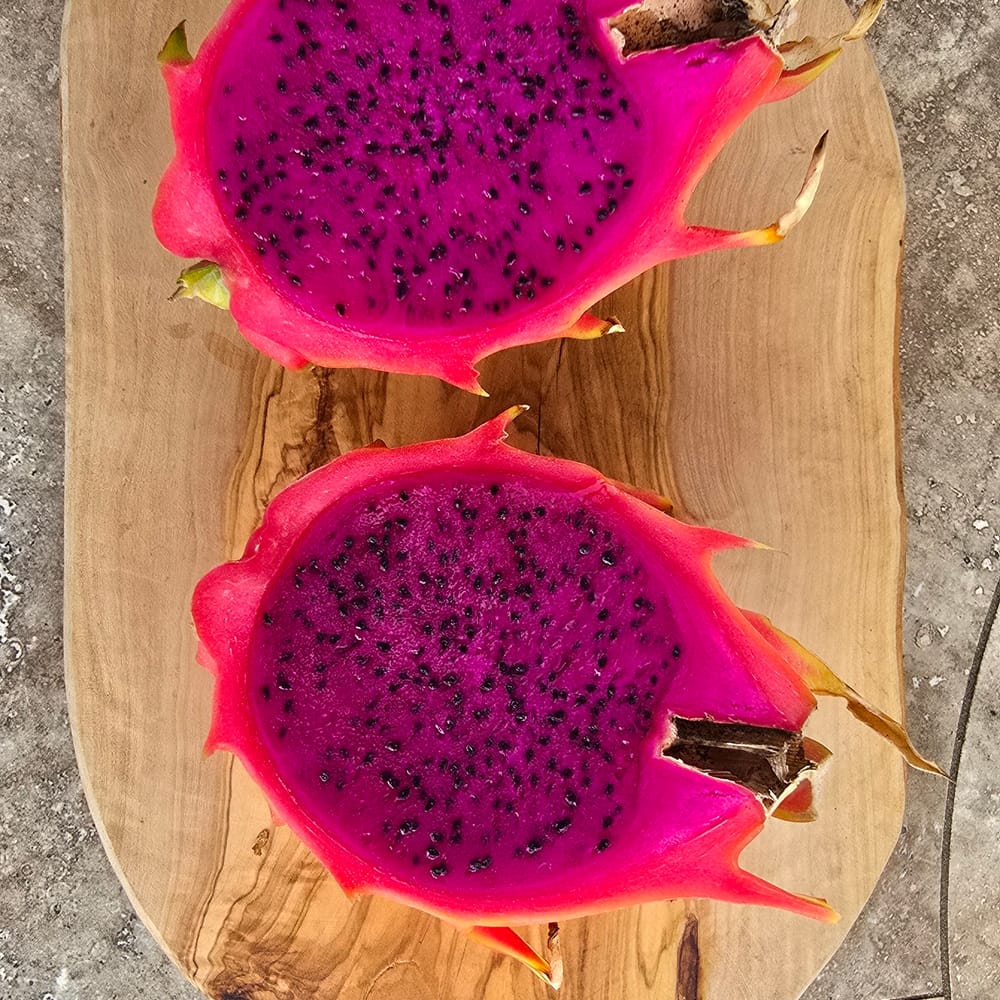
Rainbow dragon fruit is a rare, collector-focused cultivar prized for its dramatic skin color shift from green to yellow and finally red, rather than for consistent commercial sweetness. It is a red-fleshed selection within the Selenicereus group, often traded as 'Rainbow Lollipop,' and does not appear in standard US commercial variety lists. The fruit is roughly round with a deep red interior. Taste reports suggest a tarter, berry-like profile with modest sweetness, placing it between reliable sweet reds and purely ornamental rarities. Because it is treated as a specialty item, stock moves quickly and availability is limited.
At Sky Botanicals, we list Rainbow as a product, but it is currently out of stock. This guide fills the gap left by that listing, offering the specific growing details you need for this unique plant. If you are looking for a more dependable sweet red option while you wait, check out our guide to Sugar Dragon.
Where the name comes from: the color shift
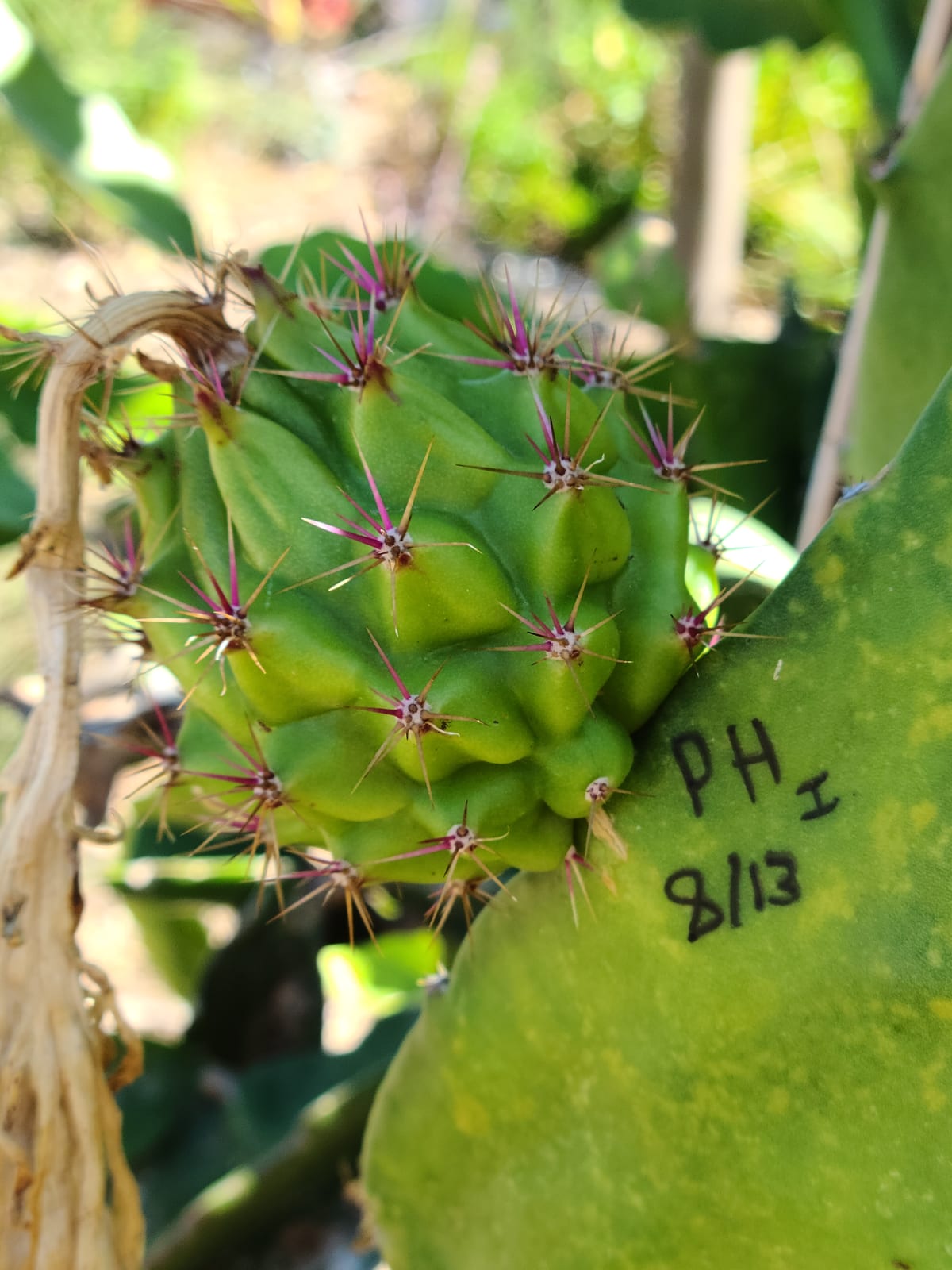
The "Rainbow" label does not refer to the flesh or the flowers. It describes the fruit skin as it matures. Young fruit starts green. As it develops, the skin shifts to yellow and orange tones. Finally, it ripens to a deep red with yellow-green fins. This multi-stage transition is the visual hook that makes the cultivar stand out in a nursery or on a collector's trellis.
Feeding the color shift
Supporting this transition requires adjusting your nutrition strategy. Young, actively growing vines need a balanced fertilizer, such as a 6-6-6 or 10-10-10 blend.
As the plant approaches bloom, you must shift the balance. Move to a lower-nitrogen bloom-support blend, like a 10-30-20 type. This encourages the plant to direct energy toward flower production rather than new stem growth. During fruiting, return to a light balanced feeding to sustain the developing fruit without stressing the vine.
Too much nitrogen is the most common mistake. Excess nitrogen promotes leggy, soft growth at the expense of flowers. If your vine is growing rapidly but not producing buds, check your fertilizer ratio. You likely need to reduce nitrogen and increase phosphorus and potassium to trigger the color shift and bloom cycle.
Understanding this nutritional rhythm helps you manage the plant's energy. The "rainbow" effect is not just cosmetic. It is a sign that the plant is moving through its reproductive cycle correctly. By aligning your feeding schedule with these visual cues, you support the health of the vine and the quality of the eventual fruit.
Rainbow vs the dragon fruits you already know
Most growers know the standard red-skinned pitayas as either the mild white-fleshed Selenicereus undatus or the sweet red-fleshed S. costaricensis and S. polyrhizus. Rainbow belongs to this red-flesh group, but it occupies a distinct niche. It is not a yellow S. megalanthus type, which has a completely different flavor profile and growth habit. Instead, Rainbow is a specific selection traded among collectors, often listed under the older genus name Hylocereus by European nurseries. Because it does not appear in major US commercial variety lists, it sits outside the standard production pipeline. You are buying a specialty item, not a bulk crop variety.
| Variety Type | Flesh Color | Flavor Profile | Primary Appeal |
|---|---|---|---|
| White (S. undatus) | White | Mild, subtle | Reliable production |
| Sweet Red (Sugar Dragon) | Red | Syrupy, high sugar | Commercial sweetness |
| Yellow (Ecuador Palora) | White | Lychee, pear, kiwi | Distinct exotic taste |
| Rainbow | Deep Red | Tart, berry-like | Visual color shift |
Where it fits in the flavor spectrum
When you taste a standard white dragon fruit, you expect a mild, almost neutral flavor. Sweet red cultivars like Sugar Dragon or Frankie's Red push the sugar content higher, delivering a rich, syrupy sweetness that many commercial growers target. Rainbow does not compete on that axis. Community taste tests describe it as having a distinct berry flavor with a noticeable tart edge. It is less syrupy than the top-tier sweet reds. If you are looking for the highest possible brix count, Rainbow is not the choice. It sits in the middle of the red-flesh group, offering a complex, tarter profile rather than pure sweetness. This makes it a different eating experience, closer to a tart berry than a sweet melon.
The visual difference
The most obvious difference is on the vine. Standard red dragon fruits typically turn red as they ripen, but they do not usually display the multi-stage color progression that defines Rainbow. You will see green, then yellow or orange, and finally red on the same fruit. This visual drama is the primary reason collectors seek it out. It is an ornamental feature that standard commercial varieties lack. While the fruit is roughly round and ball-shaped, the skin color journey is the unique identifier. If you want a plant that looks different on the trellis, Rainbow delivers that. If you want the most consistent, sweetest fruit for market, stick to the proven sweet reds. For a deeper look at how these varieties compare, check out our dragon fruit varieties guide.
What it tastes like (and how much we actually know)
Let’s be honest about the data. Because Rainbow is a collector’s item rather than a commercial crop, there is no standardized taste profile in the way there is for Sugar Dragon or White. The Dutch nursery that trades it has not fruited the variety and markets it strictly as an ornamental "must have for true collectors." This means we are relying on community reports and limited grower anecdotes rather than agricultural trials.
What we do know comes from a specific community taste test involving Michelle, Edgar, Isis, and Rainbow. The consensus from that group was that the fruit has a distinct "berry flavor" that is "very tart." The sweetness was described as modest. In multi-variety Brix tests across red types, Rainbow landed in the mid-teens. For context, reliable sweet reds like Sugar Dragon often hit 18-21 Brix, while white types sit lower at 11-14. Rainbow sits in that middle ground, offering a rich red-flesh flavor but with a sharper, less syrupy edge than the commercial standards.
| Variety | Typical Brix | Flavor Profile |
|---|---|---|
| White (S. undatus) | 11-14 | Mild, subtle |
| Sugar Dragon | 18-21 | Syrupy, high sugar |
| Rainbow | Mid-teens | Tart, berry-like |
This profile places Rainbow between the dependable sweet reds and purely ornamental rarities. You are not growing this for a bowl of dessert fruit that rivals a mango in sweetness. You are growing it for the visual drama of the skin shift and the unique, tangy bite of the flesh. If you prefer your dragon fruit with a pronounced tartness, this is likely your match. If you need consistent, high-sugar fruit for daily eating, you may find the experience underwhelming compared to the commercial varieties covered in our dragon fruit varieties guide.
Growing Rainbow: what it needs
Rainbow is a tropical fruiting cactus that demands specific environmental conditions to thrive. It requires full sun and well-drained soil with a pH between 6 and 7. The plant performs best in temperatures ranging from 65 to 85 degrees Fahrenheit. If you live in USDA zones 10 or 11, you can plant directly in the ground. In zone 9 and cooler areas, you must provide winter frost protection or grow the plant in a container that you can move indoors. Temperatures dropping below 40 to 50 degrees Fahrenheit pose a serious risk to the vine.The most common cause of death for this cultivar is overwatering, particularly during the winter months. When growth slows, the plant needs far less moisture. Allow the soil to dry out between waterings to prevent root rot. A heavy support structure is essential as the vine matures. The thick, three-angled stems climb upward and then drape down, forming the arms where flowers and fruit develop. Ensure your trellis or central post can handle the weight of a mature vine, which can reach significant lengths and produce a substantial crop.
Winter Care Alert
Overwatering in winter is the fastest way to kill a Rainbow dragon fruit. Reduce watering frequency significantly when temperatures drop and growth stalls. Check the soil moisture carefully before watering to avoid saturation.
| Condition | Requirement |
|---|---|
| Sunlight | Full sun |
| Soil pH | 6 to 7 |
| Temp Range | 65 to 85 F |
| Frost Limit | Protect below 40 to 50 F |
| USDA Zones | 10 to 11 (outdoor) |
For a broader look at how different species handle these conditions, see our /blog/blog/dragon-fruit-varieties-guide. Understanding the specific needs of your cultivar helps you create the right environment for consistent growth and fruit production.
Flowering, pollination, and harvest: the timeline
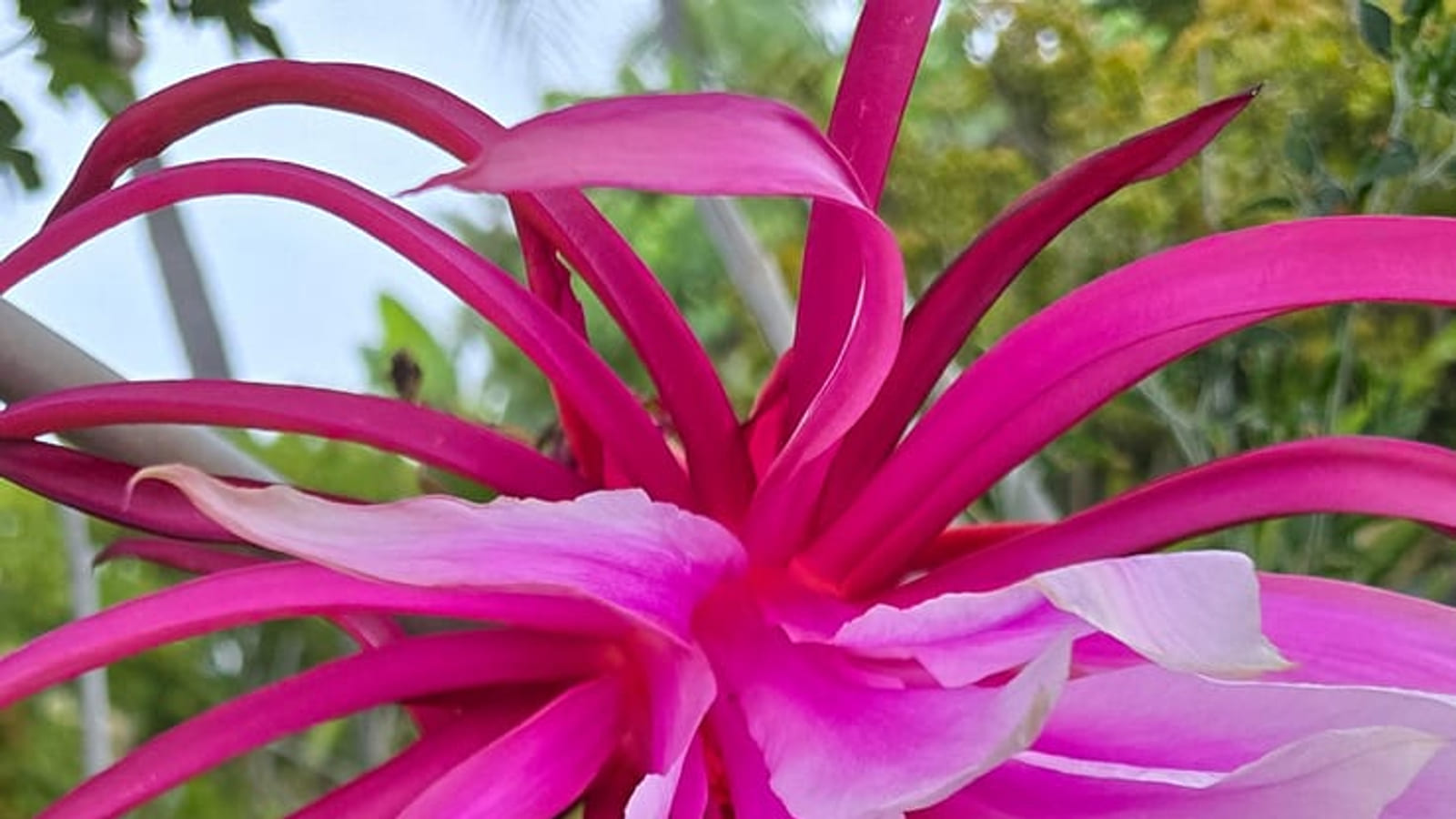
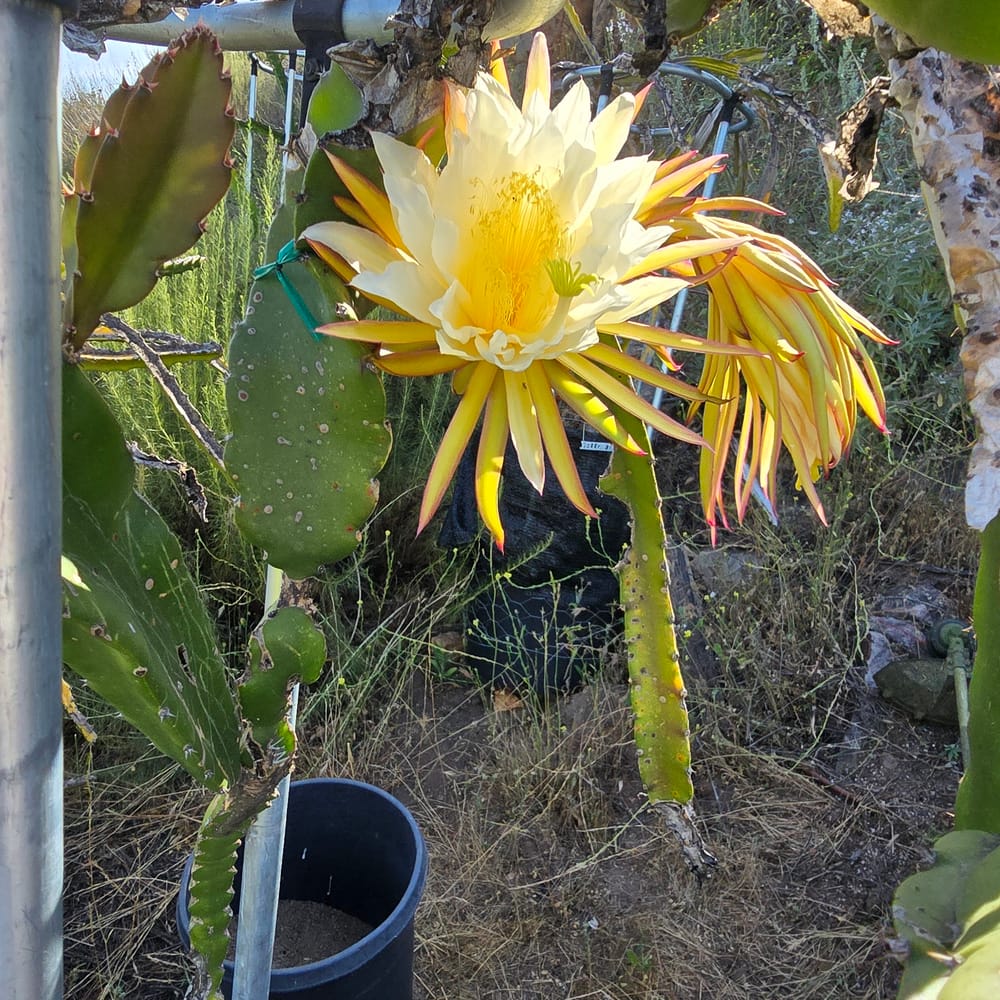
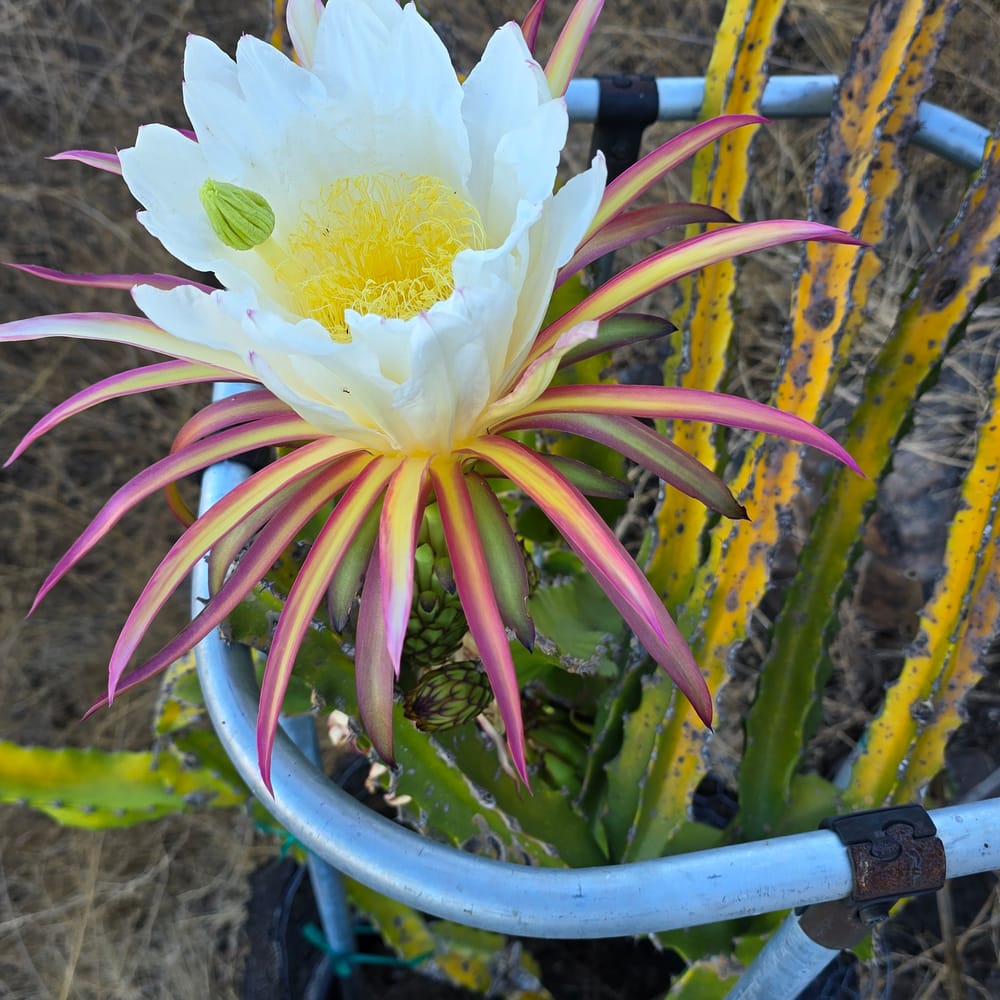
Once your Rainbow vine has established its structure and received the correct nutritional shift, the reproductive cycle begins. You will first notice the formation of buds along the draping arms. Bud development is a slow process, taking roughly 30 days from the initial forming stage to full opening. When the flower finally opens, it is a dramatic sight. The blooms are large, measuring about 8 to 12 inches across, with white petals that release a strong fragrance. These flowers open at night, making the timing of your intervention critical.
Managing pollination for better set
In the wild and in tropical regions, these flowers are pollinated by moths and bats. In southern California, hawkmoths are the primary natural pollinators. However, because Rainbow is a specialty cultivar with unconfirmed self-fertility, you should not rely on chance. If you have only one plant, hand pollination is the most reliable way to ensure fruit set. You need a small paintbrush and a flower that opened the same night. Transfer pollen from the center of one open flower to the center of another. This simple step significantly improves fruit set and can result in larger fruit, even on varieties that are self-fertile. If you have space for a second plant, pairing your Rainbow with a strong self-fertile red pollinator like Sugar Dragon or Vietnamese White is a standard practice among growers to guarantee cross-pollination.
From fruit set to harvest
Once pollination is successful, the fruit begins to develop. For red and white fleshed types like Rainbow, the ripening period is relatively quick compared to yellow varieties. You can expect the fruit to ripen in about 30 to 50 days after pollination. In warmer climates like southern California, this process often happens in concentrated summer flushes, typically between June and October. Keep in mind that the skin color shift you are watching is your primary indicator of maturity, not the calendar.
Knowing when to pick is just as important as knowing when to plant. The fruit is ready for harvest when the skin color has deepened and the green fins have faded into the main skin color. The fruit should give slightly under gentle pressure but should not feel mushy. When you are ready to pick, use hand clippers to cut the peduncle, or fruit stem, flush with the fruit. Do not twist or pull the fruit off the vine, as this can damage the stem and reduce future production.
One of the most important things to remember about dragon fruit is that sweetness is set on the plant. Unlike bananas or avocados, dragon fruit does not continue to ripen or sweeten significantly after it is harvested. Once harvested, ripe red-flesh fruit will keep for 1 to 2 weeks in the refrigerator. For the best flavor, eat it within a few days of picking.
Getting your hands on one
Rainbow dragon fruit is a specialty item, not a bulk crop. You will not find it in the standard commercial variety lists used by large US nurseries. It is a collector's cultivar, often traded under the name "Rainbow Lollipop" or listed under the older genus name Hylocereus by European sources. Because it is rare and treated as an ornamental "must-have," stock moves quickly. If you are looking for a specific plant, you need to know where to look and what to expect when it arrives.
Where to buy
Your best chances are with specialty nurseries that focus on rare cacti and dragon fruit cuttings. Sky Botanicals lists Rainbow as a product, but it is currently out of stock. This is typical for this cultivar. Availability is limited, and when plants do appear, they are often sold as cuttings rather than established potted vines. European specialty nurseries, such as those trading in Selenicereus selections, are also common sources. Be prepared to wait. If you see a listing, it is worth checking the details immediately, as these plants do not sit on shelves for long.
What you are actually buying
Most Rainbow plants are sold as cuttings. This is the standard propagation method for this type of cactus. A healthy cutting is a thick, three-angled stem segment. When you receive it, the plant will not be flowering or fruiting. It is a vegetative piece of vine that needs to root and establish itself before it enters its reproductive cycle. Cuttings fruit in roughly 6-14 months depending on conditions.
Tip: If you are buying from a European nursery, check the shipping method. Cuttings are often shipped bare-root or in minimal media. They are hardy, but they need to be potted and acclimated quickly to avoid drying out or rotting during transit.
Setting up for success
Before the cutting arrives, prepare your space. Rainbow is a climbing epiphytic cactus. It needs a sturdy support structure, such as a central post with a cross-arm or a trellis. The vine will climb up and then drape down. Flowers and fruit form along these draping arms. If you do not have a support ready, the plant will struggle to grow vertically and may become a tangled mess on the ground.
Once the cutting is potted, it will need time to root. This process takes about 2 weeks. During this period, keep the soil lightly moist but not soggy. Once established, you can begin the feeding schedule described in the growing section. Patience is key. This is a slow-growing cactus that rewards careful attention with a unique visual display.
For a broader overview of the different types of dragon fruit available and how they compare in terms of flavor and growth habits, you can refer to our dragon fruit varieties guide. It provides a useful baseline for understanding where Rainbow fits in the larger family of Selenicereus species.
FAQ
Since Rainbow is a niche cultivar, specific questions often arise about its reliability and care. Here are the most common concerns we hear from growers looking to add this color-shifting variety to their collection.
Is Rainbow dragon fruit self-fertile?
There is no confirmed data on Rainbow's self-fertility. Nursery listings typically mark this status as unknown. Because the plant is rare and often grown as a single specimen, you should assume it is not reliably self-fertile. Hand pollination is the safest approach. Use a small paintbrush to transfer pollen between flowers that open on the same night. If you have space for a second plant, pairing Rainbow with a known strong self-fertile red pollinator like Sugar Dragon or Vietnamese White can improve fruit set and size. These varieties are often called universal pollinators because they cross well with most red-fleshed types.
How long until I get fruit from a cutting?
Patience is required with this cultivar. Once a cutting has rooted, which takes about two weeks, it needs time to establish a vigorous vine. Under good conditions, a cutting can begin fruiting in roughly 6 to 14 months. This is significantly faster than growing from seed, which can take about 7 years. The timeline depends heavily on light exposure, temperature, and nutrition. Ensure the plant is in full sun and receiving the correct fertilizer blend to encourage the transition from vegetative growth to flowering.
Can I grow Rainbow in a container?
Yes, containers are ideal for growers in cooler climates or those who want to control the environment. A large pot, around 25 gallons, provides enough root space for a mature vine. Use a well-draining cactus mix. If you live in a zone where temperatures drop below 40-50F, moving the container indoors or into a greenhouse during winter is essential. Overwatering is the primary risk in containers, especially when the plant is dormant in cooler months. Let the soil dry out between waterings to prevent root rot.
Why is my Rainbow plant not flowering?
If the vine is growing vigorously but producing no buds, check your fertilizer ratio. Excess nitrogen promotes soft, leggy stem growth at the expense of flowers. Shift to a lower-nitrogen bloom-support blend, such as a 10-30-20 type, to encourage the plant to direct energy toward reproduction. Also ensure the plant is receiving full sun. Dragon fruit cacti need intense light to support the flowering cycle. If the plant is in a shaded area
Illustration generated for this article