Dr. Cedeño Dragon Fruit: Sweet, Firm, and Large
Dr. Cedeño is a new red-fleshed dragon fruit hybrid created by Dr. Cedeño of Puerto Rico. It stands out for combining strong flavor with real sweetness, with a Brix level of at least 18 at maturity that is expected to climb as the vines age. The fruit is medium to large, often reaching 15 to 20 ounces. This is typically larger than the typical white-fleshed pitaya. The flesh is firm rather than soft and wet, offering a very sweet taste with floral notes. The skin shifts from yellow to red as the fruit ripens, which is the main cue for harvest. We list this variety under SKU DRC, though it is currently out of stock. If you are ready to start with a variety that is in stock, check out our guide on American Beauty dragon fruit for a reliable self-fertile option while you wait.
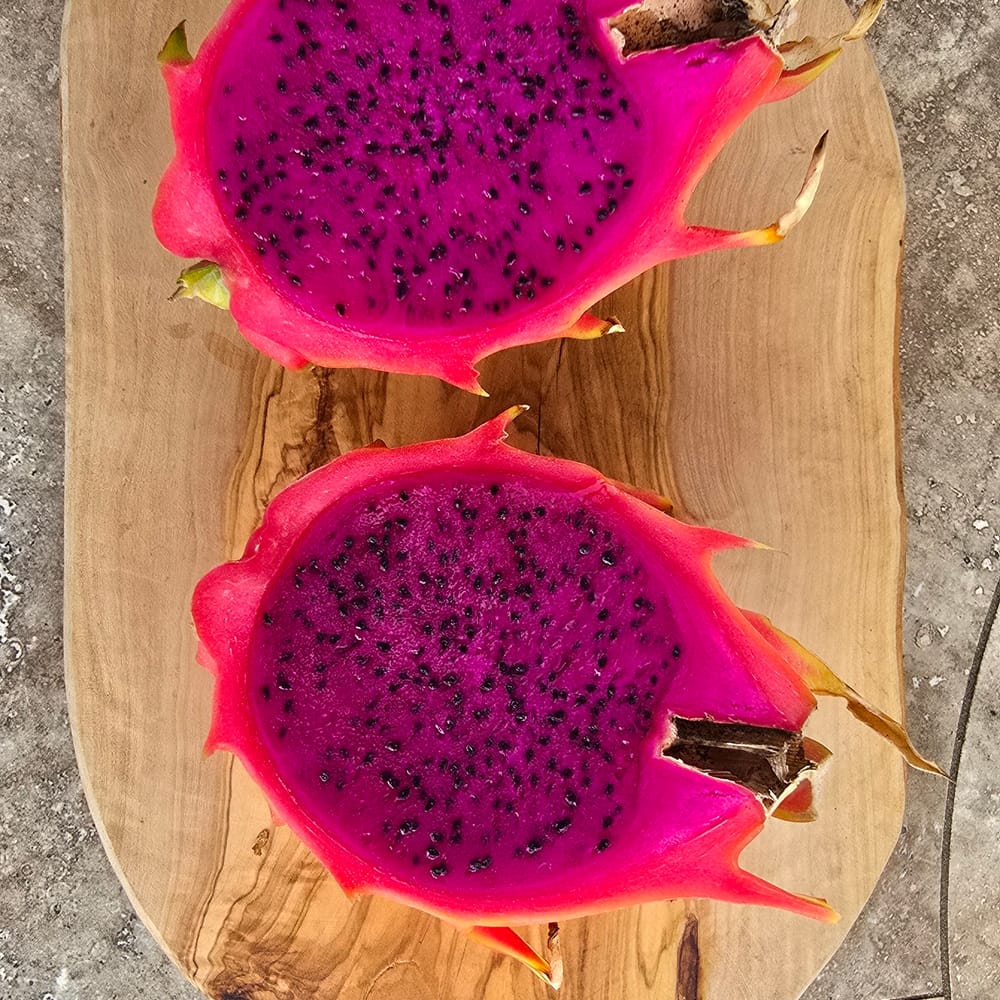
The defining characteristic of Dr. Cedeño is its texture. Unlike many red-fleshed types that can feel soft or wet, this hybrid offers a firm bite. That firmness carries a very sweet taste with subtle floral notes, making it a standout for fresh eating. The sweetness is not just a perception; it is measurable. At maturity, the fruit registers at least 18 Brix. As the vines mature, this number is expected to climb, placing Dr. Cedeño among the sweetest red-fleshed hybrids currently available to home growers.
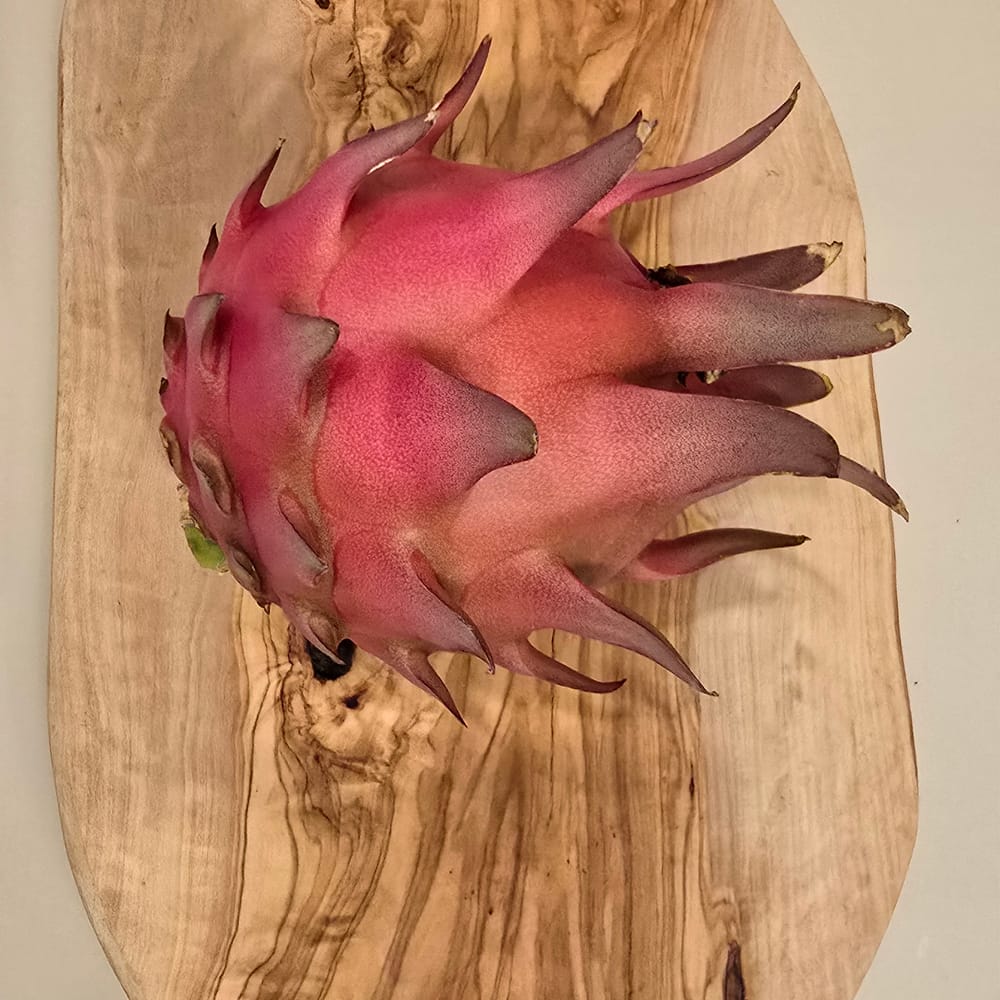
Size is another major advantage. The fruit typically lands in the medium to large category, often reaching 15 to 20 ounces. This is typically larger than the 10 to 12 ounces you might expect from a standard white-fleshed pitaya. If you are looking for a fruit that feels substantial in the hand, this variety delivers. The visual cues for harvest are equally distinct. The skin begins as yellow and transitions to red as it ripens. That color change is your primary signal. A deeper red indicates higher betacyanin pigment levels, which generally correlates with a more ripe and flavorful fruit.
While the fruit gets the attention, the plant itself has a unique trait worth noting. The stems develop a gray coating as they grow. This is not mold or disease; it is a natural shield. This layer helps protect the vine from extreme heat and cold. Young stems may appear yellow before turning green, but the gray coating is a sign of a healthy, established plant. Because this is a red-fleshed hybrid, you should plan for its specific pollination needs. It may be self-sterile or only partially self-fertile. To ensure a good crop, plant two or three different genetic types and be prepared to hand pollinate. The flowers open at night and close by late night. This window is when you need to be active in the garden.
For those comparing options, Dr. Cedeño sits in a specific group of sweet red hybrids. It is distinct from white-fleshed varieties like American Beauty or deep purple types like Black Dragon. It belongs to the same category as other popular reds like Robles Red and Frankies Red. If you are still deciding which red variety fits your climate and taste preferences, our guide on best tasting dragon fruit varieties offers a broader comparison. Dr. Cedeño is a strong contender in that lineup, particularly for growers who prioritize high Brix levels and firm texture.
How Dr. Cedeño compares to other popular varieties
Dr. Cedeño occupies a specific niche in the dragon fruit world. It is not the standard white-fleshed pitaya, nor is it the deep purple Black Dragon. It belongs to the group of sweet red-fleshed hybrids, sitting alongside varieties like Robles Red and Frankies Red. While those types are well-established, Dr. Cedeño distinguishes itself through its specific texture and sweetness profile. If you are weighing options, the differences in fruit size and flavor intensity are the primary factors to consider.
| Variety | Flesh Color | Typical Size | Key Trait |
|---|---|---|---|
| Dr. Cedeño | Red | 15-20 oz | Firm texture, high Brix |
| American Beauty | White/Pink | 10-12 oz | Self-fertile, reliable |
| Black Dragon | Purple | Medium | Deep color, distinct flavor |
| Robles Red | Red | Medium | Popular red hybrid |
The most immediate difference is size. Standard white-fleshed varieties like American Beauty typically produce fruit in the 10 to 12 ounce range. Dr. Cedeño often exceeds this, landing in the 15 to 20 ounce bracket. This makes for a more substantial harvest and a larger fruit to share. For growers who want a fruit that feels heavy in the hand, this size advantage is significant. It places Dr. Cedeño in the "medium to large" category, well above the average for common pitaya types.
Texture and sweetness differences
Texture is where Dr. Cedeño really separates itself from other reds. Many red-fleshed dragon fruits can feel soft or wet when cut. Dr. Cedeño offers a firm bite instead. This firmness carries the flavor without the mushy consistency that some growers dislike. Combined with a Brix level of at least 18, the result is a very sweet fruit with floral notes. As the vines age, that sweetness is expected to increase, making older plants even more productive in terms of flavor quality. This is a key differentiator for those who prioritize taste over mere yield volume.
Dr. Cedeño is part of the sweet red hybrid group. If you are comparing it to white varieties like American Beauty, note that the reds often require more attention to pollination. White varieties are frequently self-fertile, while reds like Dr. Cedeño may need hand pollination or a second plant to set fruit reliably.
When choosing between Dr. Cedeño and other reds like Robles Red, consider your specific goals. Dr. Cedeño is marketed for its excellent taste and high sweetness. If you are looking for a variety that balances size, firm texture, and measurable sweetness, it is a strong contender. For a broader look at how these types stack up against each other, you can review our guide on best tasting dragon fruit varieties. That resource covers the flavor profiles of several popular options, helping you match a variety to your local climate and taste preferences.
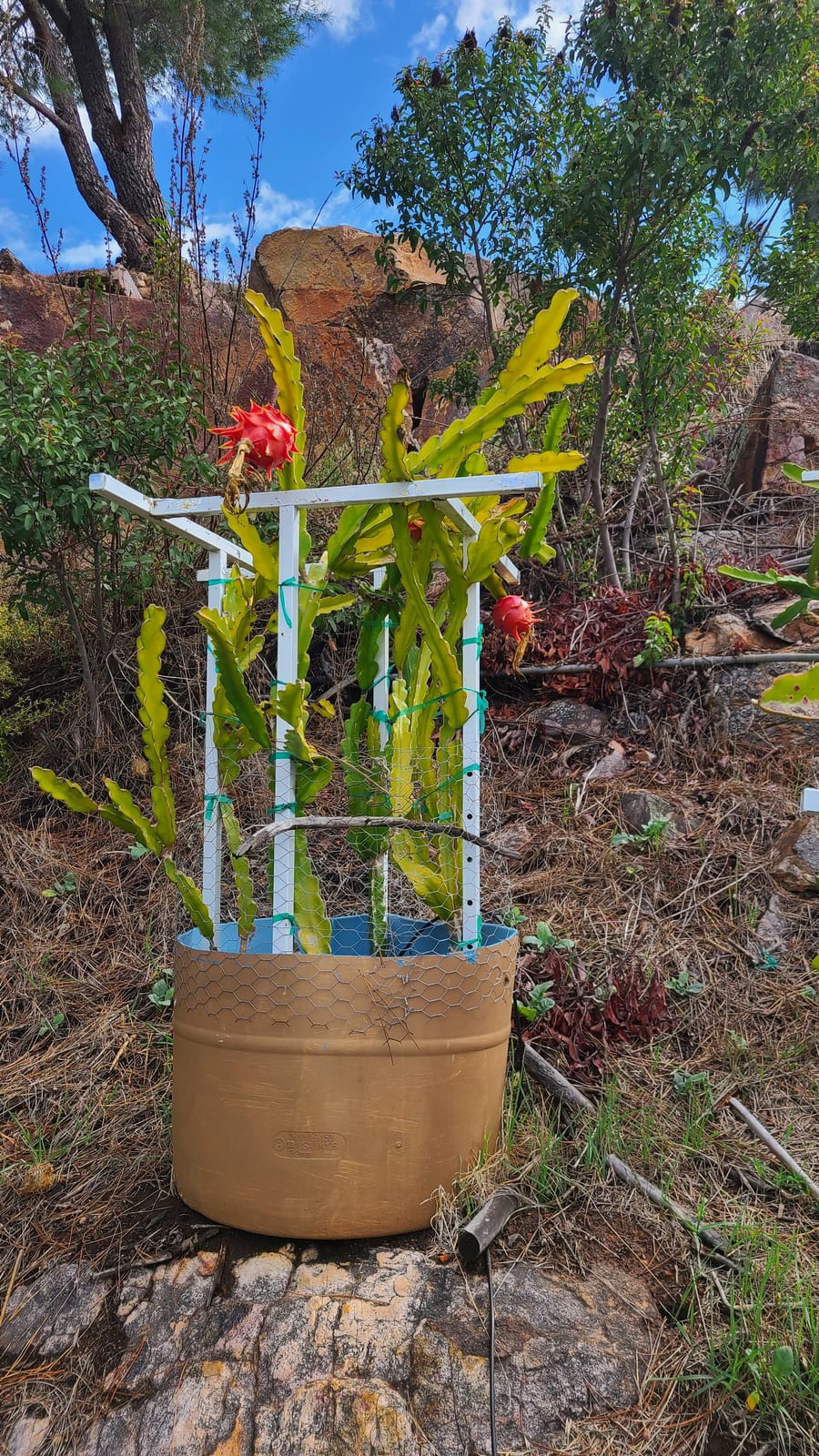
How it grows: stems, flowers, and that gray coating
While the fruit gets the spotlight, the vine itself tells a distinct story. Dr. Cedeño is visually unique because of the way its stems develop over time. New growth often appears yellow before transitioning to a standard green. As the plant matures, a distinctive gray coating forms on the stems. This is not a sign of disease or mold. It is a natural protective layer that acts as a shield against extreme heat and cold. Seeing this gray tone is actually a good indicator that your plant is established and healthy.
The night-blooming cycle
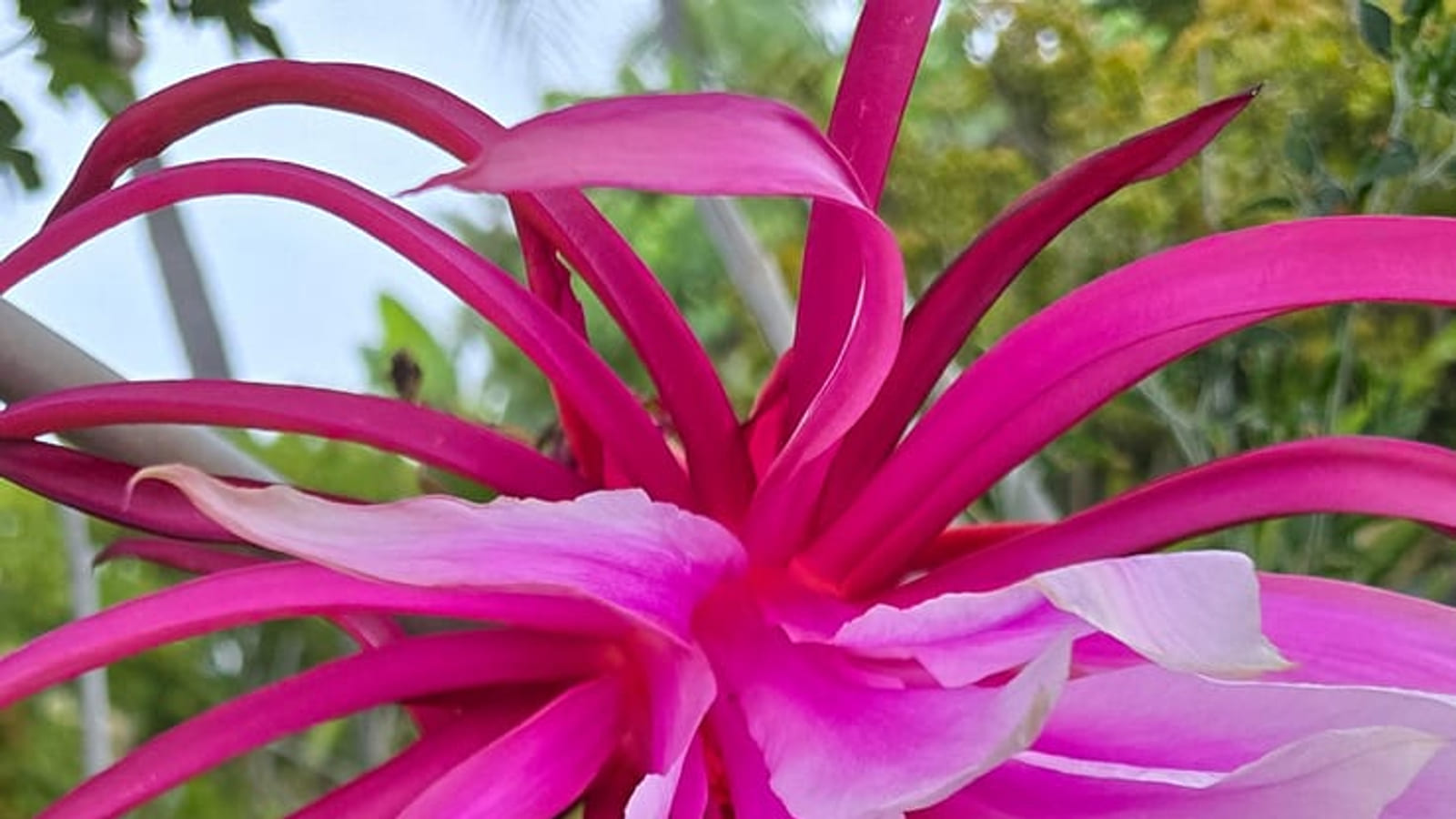
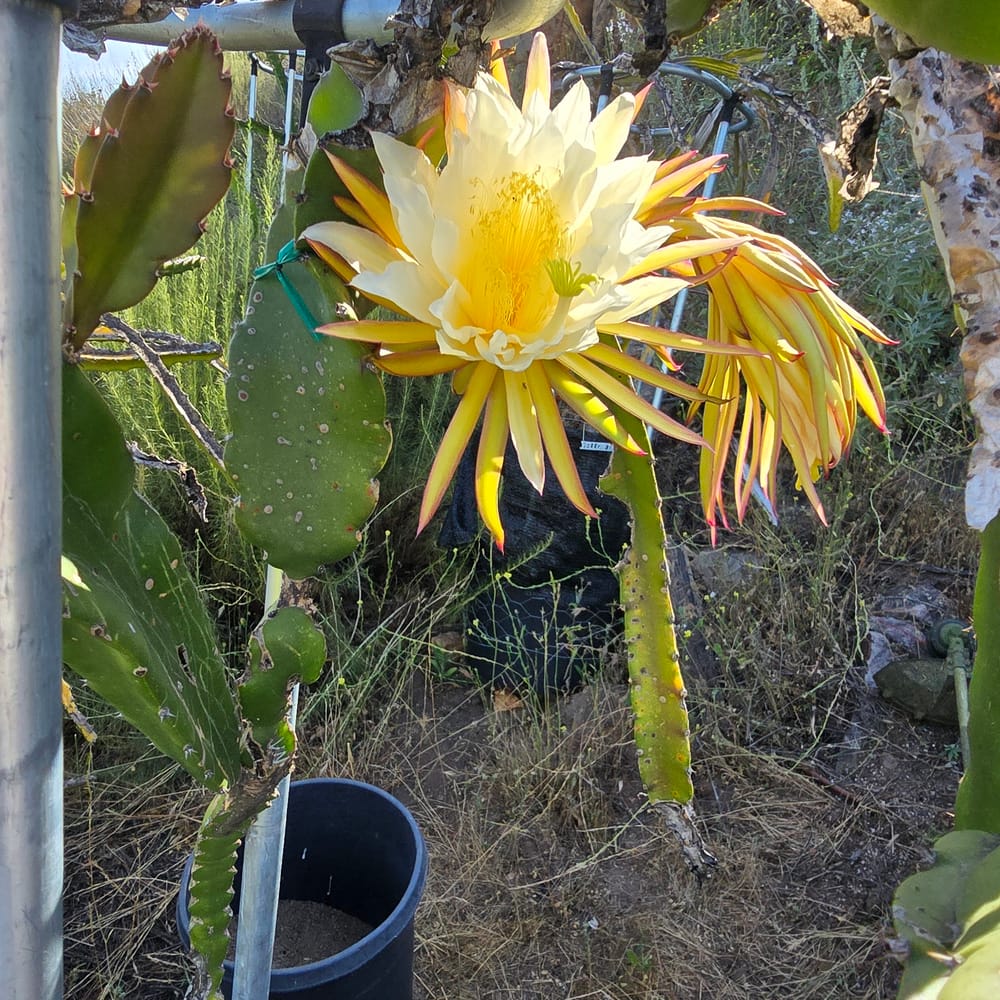
Like other red-fleshed hybrids, Dr. Cedeño produces large, fragrant flowers that open at night. You will typically see them unfurl in the evening, with the blooming window closing by late night. This timing is critical for fruit set. Because this variety may be self-sterile or only partially self-fertile, you cannot rely on the plant to pollinate itself. To ensure a good crop, you need to be active in the garden during this short window. Hand pollination is the most reliable method. If you are growing multiple plants, planting two or three different genetic types can also help, but manual intervention is often necessary to guarantee fruit development.
Grower Tip: The gray coating on the stems is a natural defense mechanism. Do not scrub it off or treat it with fungicide. It helps the vine manage temperature stress.
Once pollinated, the fruit takes time to mature. You are looking at a maturation period that spans several weeks after the flower closes. During this time, the fruit will change color, shifting from yellow to red. This color change is driven by betacyanin pigments. The deeper the red, the higher the pigment level, which usually correlates with a more ripe and flavorful fruit. The flesh will also firm up, moving away from the soft, wet texture found in some other red varieties. This firmness is a key part of the Dr. Cedeño experience, offering a satisfying bite that holds together well.
Understanding these growth patterns helps you manage expectations. The plant is robust, but it requires attention during the flowering phase. If you are interested in how this variety fits into a broader lineup of sweet reds, you can explore our guide on best tasting dragon fruit varieties to see how it stacks up against other popular options.
Flowering and getting fruit to set
Getting a reliable crop from Dr. Cedeño requires understanding its specific pollination behavior. As a red-fleshed hybrid, it often exhibits self-sterility or only partial self-fertility. This means a single plant may bloom beautifully but fail to set fruit without outside help. To secure a harvest, you should plant two or three different genetic types in close proximity. This diversity ensures that compatible pollen is available when the flowers open.
The timing is precise. Dr. Cedeño produces large, fragrant flowers that open at night, typically between 6:40 and 7:00 pm. These blooms are short-lived, closing by around 10 pm. This narrow window is your opportunity to intervene. If you are growing only one plant, or if your neighbors do not have compatible varieties, hand pollination is the most reliable method. You can transfer pollen manually from the anthers of one flower to the stigma of another. The goal is to ensure the stigma receives pollen from a genetically distinct source. Doing this within the first few hours of the bloom opening maximizes the chance of successful fertilization.
From bloom to harvest
Once pollination is successful, the fruit begins to develop. For red-fleshed pitaya, the maturation process generally takes 30 to 50 days after the flower closes. Published studies on red and white pitaya suggest physiological maturity can occur as early as 25 to 41 days after anthesis, though actual harvest readiness depends on your specific growing conditions. During this period, the fruit will grow and the skin will begin its color transition. You will see the skin shift from yellow to red. This color change is driven by betacyanin pigments. A deeper red indicates higher pigment levels, which usually correlates with a more ripe and flavorful fruit. The flesh should feel firm but yield slightly to gentle pressure when you are ready to pick.
While you wait for the fruit to mature, keep an eye on the plant's overall health. The gray coating on the stems is a natural protective layer against heat and cold. It is not a sign of disease. However, ensure the plant is still receiving full sun and well-drained soil. Overwatering during the fruiting stage can lead to rot, especially if temperatures drop. Reduce watering in winter to keep the roots healthy. For a broader look at how this variety fits into your garden plan, check out our guide on best tasting dragon fruit varieties to see how it compares with other sweet reds like Robles Red and Frankies Red.
Telling ripeness: the yellow-to-red skin shift
For Dr. Cedeño, the skin is your most reliable indicator of harvest time. The fruit begins with a yellow hue that gradually transitions to red as it matures. This color change is the primary signal that the fruit is ready to pick. While the shift is visual, you should also check the texture. A ripe Dr. Cedeño will yield to gentle pressure when squeezed. If the fruit feels rock hard, it likely needs more time on the vine. If it feels mushy, it has passed its prime.
The intensity of the red color matters. Deeper red tones indicate higher levels of betacyanin pigment. In red-fleshed pitaya, this pigment concentration generally correlates with a more ripe and flavorful fruit. A pale or uneven red might suggest the fruit is still developing its full sugar content. Wait for the color to deepen and become uniform before harvesting.
| Skin Color | Texture | Status |
|---|---|---|
| Yellow | Firm | Immature |
| Yellow-Red | Firm | Nearly Ripe |
| Deep Red | Gives slightly | Ready to Harvest |
| Dark Red/Black | Soft/Mushy | Overripe |
Do not rely on the flesh color to judge ripeness from the outside. You cannot see the red flesh until you cut the fruit open. The external skin shift from yellow to red is the only non-invasive way to gauge maturity. Once you see that deep red color and feel a slight give, the fruit is ready. Harvesting at this stage ensures you capture the firm texture and high sweetness profile that define this variety. If you are unsure, wait a few more days. Timing your pick based on skin color is critical for quality.
Care notes for growing your own cutting
Since Dr. Cedeño is currently out of stock under SKU DRC, you may need to source a cutting from another nursery or wait for our restock. When you do get your plant, treat it like any other dragon fruit but keep an eye on that unique gray stem coating. This natural shield helps the vine handle temperature swings, but young stems are more vulnerable. Ensure your soil drains quickly to prevent rot, especially during the cooler months when you should reduce watering. A heavy trellis is non-negotiable because the vines will grow long and heavy as they mature.
Because this is a red-fleshed hybrid, you cannot rely on a single plant to produce fruit. You must plant two or three different genetic types to ensure pollination. The flowers open at night. This is your window for hand pollination. Transfer pollen manually from the anther to the stigma. If you miss this window, you may lose the chance to set fruit on that bloom.
- Prepare the support: Install a sturdy trellis before planting the cutting. The vines need vertical space to climb.
- Plant the cutting: Place the cutting in well-drained soil in full sun. Allow the cut end to callus over before burying it deeply.
- Monitor for gray coating: As the vine matures, watch for the gray coating on the stems. This indicates the plant is establishing its natural heat and cold protection.
- Hand pollinate at night: When flowers open, transfer pollen between plants manually. Do this before the flowers close.
- Harvest at color change: Wait for the skin to shift from yellow to red. The flesh should feel firm and yield slightly to gentle pressure.
Once the fruit sets, it will take time to mature. The skin color is your primary guide. A deeper red indicates higher betacyanin pigment levels, which usually means the fruit is riper and sweeter. The flesh inside should be firm, not wet. This texture is a key part of the Dr. Cedeño experience. If you are still deciding if this variety fits your garden, check out our guide on best tasting dragon fruit varieties for a broader look at red-fleshed options.
Where to get it (and what to expect)
Dr. Cedeño is a relatively new release, so availability can be inconsistent. At Sky Botanicals, we list this variety under SKU DRC. Currently, the cutting is out of stock. We have five listing photos available that show the stem structure and the distinctive gray coating, which helps you verify the plant type before you buy. Because it is a new hybrid, inventory often moves quickly once it becomes available. You can check our site for restock updates or join our mailing list to be notified when the SKU is live again.
When you do receive your cutting, expect a single stem segment. This is standard for dragon fruit propagation. The stem may appear yellowish on the younger growth, which is normal before it turns green and develops the protective gray layer. Do not mistake this coloration for stress. The gray coating is a natural adaptation that helps the vine manage heat and cold. If you are looking for a plant that is ready to fruit immediately, you will need to wait for the vine to establish itself. New cuttings need time to establish.
Stock Tip: Since Dr. Cedeño is a specific hybrid, it is not interchangeable with other red-fleshed types like Robles Red or Frankies Red. If you need a plant now, consider a self-fertile white variety like American Beauty as a placeholder. It will give you experience with dragon fruit care while you wait for the Dr. Cedeño restock.
Be prepared for the specific pollination requirements of this group. As a red-fleshed hybrid, Dr. Cedeño may be self-sterile or only partially self-fertile. This means a single plant might not produce fruit on its own. To ensure a crop, plan to plant two or three different genetic types. You will also need to be active at night. The flowers open in the evening. This is your window for hand pollination if natural pollinators are scarce. The flowers are large and fragrant, so you will not miss them, but you must act within that specific timeframe.
Once pollinated, the fruit takes time to mature. You can expect the fruit to reach physiological maturity roughly 30 to 50 days after pollination. During this period, the skin will shift from yellow to red. That color change is your primary signal that the fruit is ready. A deeper red indicates higher betacyanin pigment levels, which generally means a sweeter, more ripe fruit. The flesh should feel firm but yield to gentle pressure. If the skin is still yellow, the fruit is not ready, no matter how large it looks.
FAQ
Growers often ask if Dr. Cedeño requires special pollination help. Because it is a red-fleshed hybrid, it can be self-sterile or only partially self-fertile. To ensure a reliable crop, plant two or three different genetic types. You should also be prepared to hand pollinate. The flowers open at night. This is
Illustration generated for this article