Asunta 3 Dragon Fruit: Fast Growth, Deep Purple Flesh
Asunta 3 dragon fruit delivers exceptional vigor and intense sweetness for growers who want a high performing plant. This hybrid variety grows two to three times faster than standard types and produces fruit with brix levels between 19 and 21. The flesh turns a deep purple as the plant matures and offers complex flavors of grape and lychee. Because Asunta 3 is self sterile, you must plant a compatible pollinator like Sugar Dragon nearby to set fruit. The plant thrives in full sun and handles heat well despite its shade loving parentage. Its stems are bright green with tiny spines and grow rapidly to form a heavy canopy. You can expect fruit in one to two years from a cutting. The variety is hardy in zones 10 and 11 and requires frost protection in zone 9. We carry healthy Asunta 3 cuttings ready to ship. Buy Asunta 3 dragon fruit cutting to start growing this top rated variety today.
Asunta 3 at a Glance (Quick Specs Card)
Understanding the lineage of Asunta 3 helps explain its unique performance. Edgar Valdivia, a member of the California Rare Fruit Growers, developed this hybrid. He crossed white-fleshed Asunta 1 or Asunta 2 with the Condor dragon fruit. The Condor parent contributes the deep purple flesh and intense sweetness. The genetic mix also includes Hylocereus undatus. This combination creates a plant that is distinct from standard white-fleshed types.
Genetic Makeup and Growth
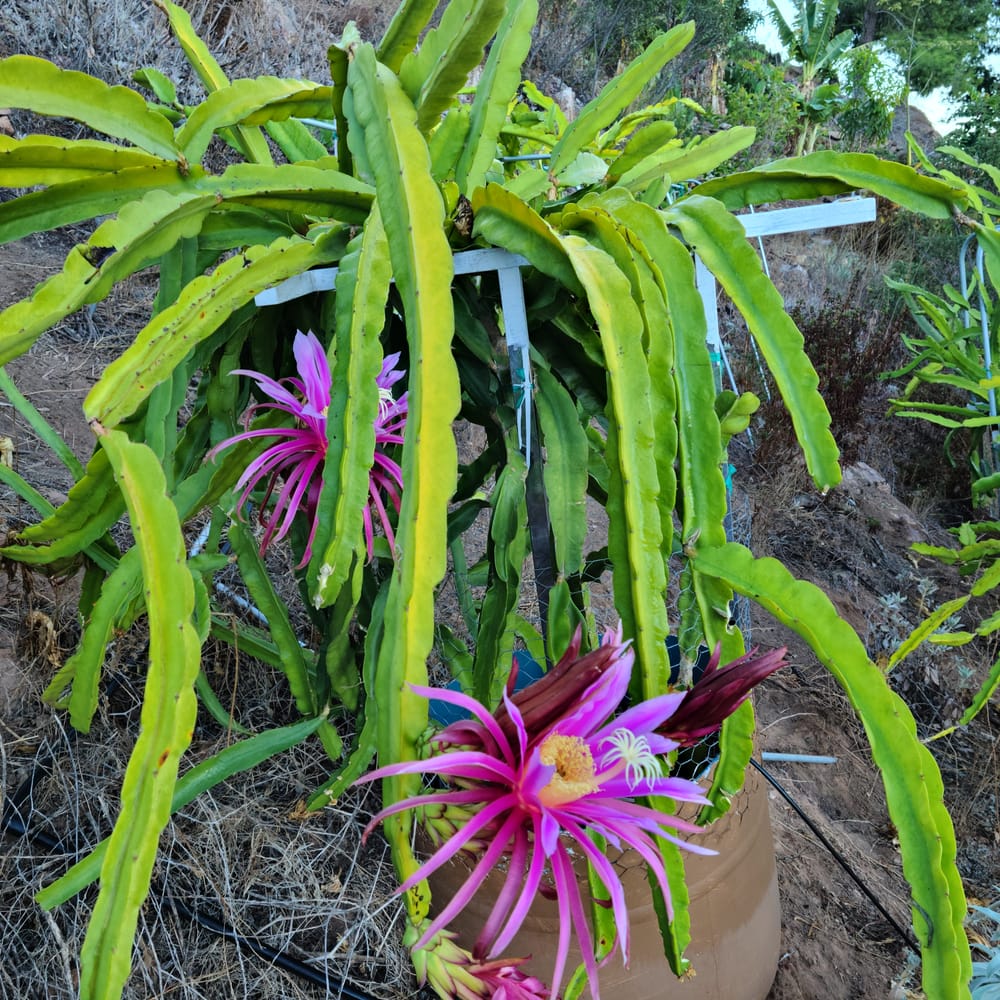
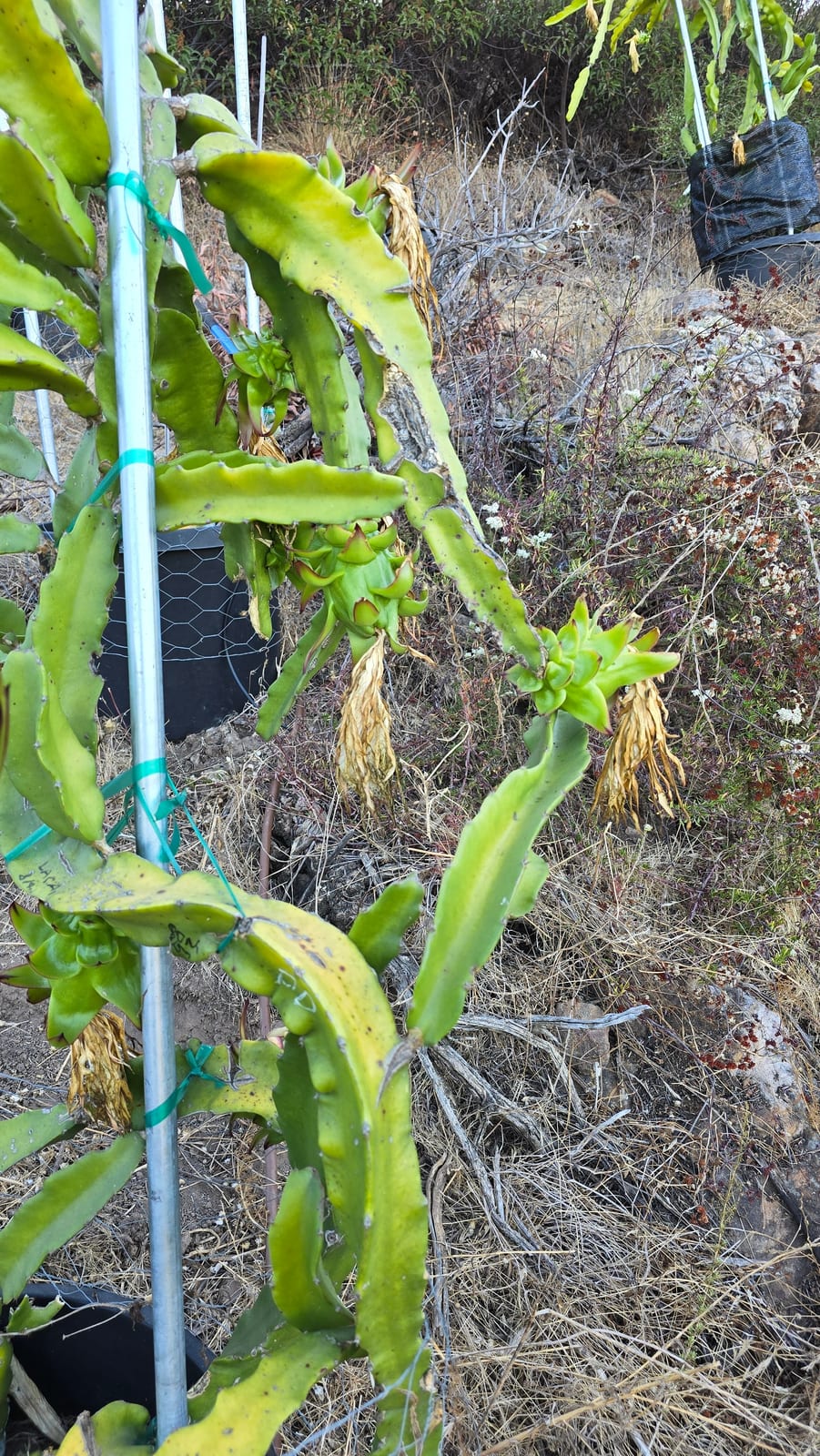
The cross between Hylocereus stenopterus and Hylocereus guatemalensis results in extreme vigor. Asunta 3 grows two to three times faster than standard H. guatemalensis. It often outperforms other vigorous varieties like Pink Lavern in grafting tests. The stems are bright green with three-sided heart-shaped ribs. Tiny spines line the edges. This rapid growth requires a heavy support structure to hold the canopy.
Flower Characteristics
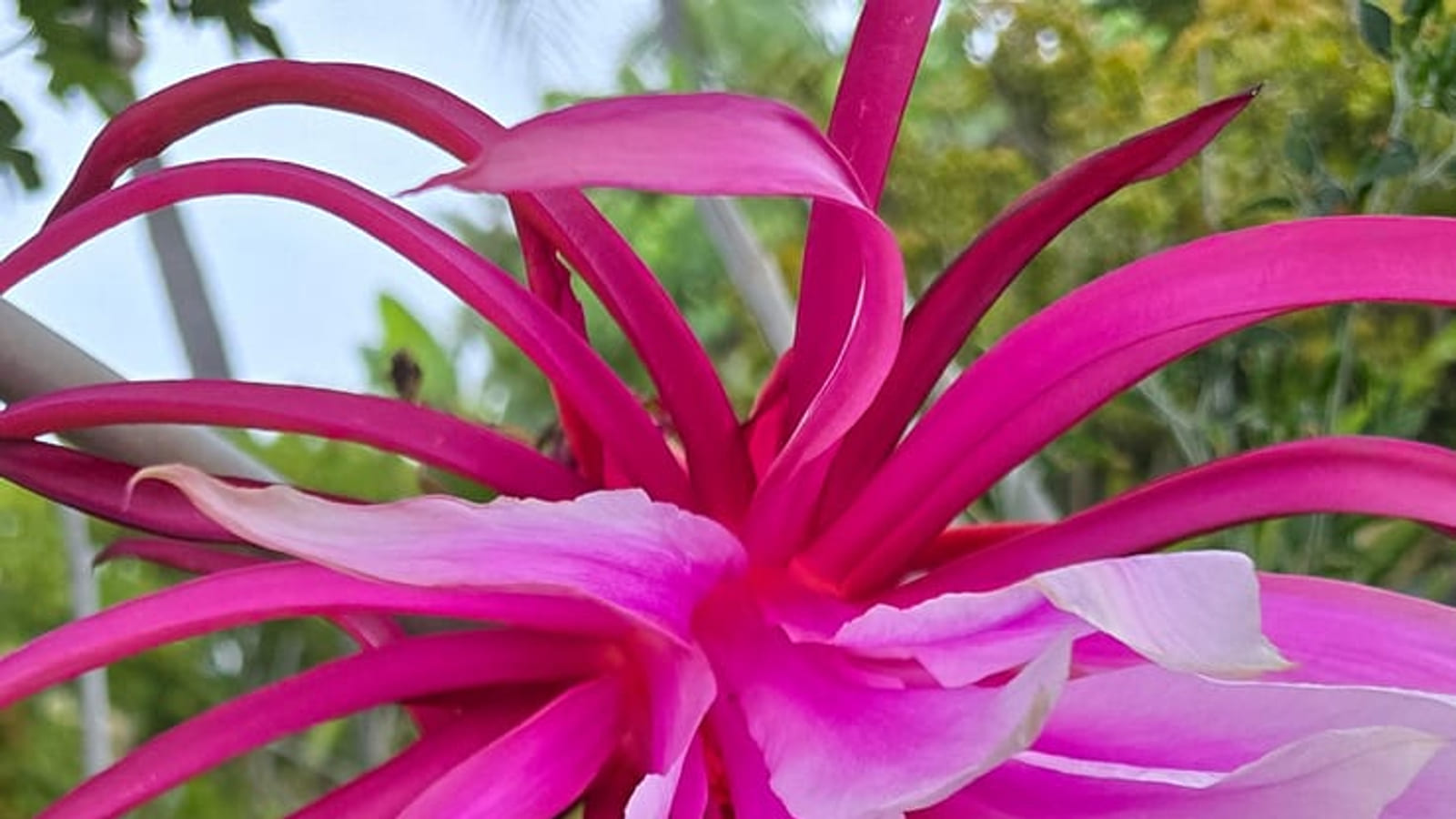
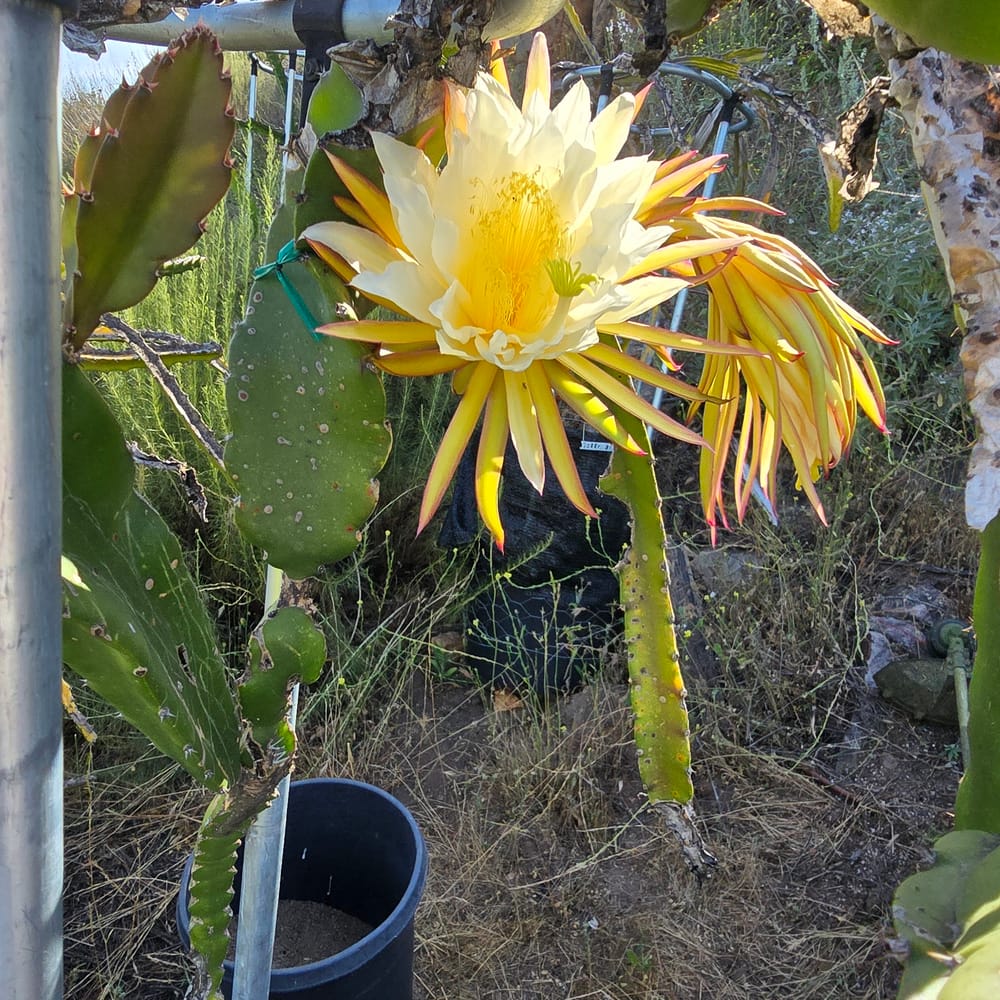
The flowers are medium-sized with a striking color pattern. The inner petals are purple. They shade to light pink at the edges and end in white tips. Unlike many dragon fruit varieties that bloom all night, Asunta 3 flowers open at dusk and close by sunrise. This short window means you must pollinate quickly. The stigma protrudes several inches from the anthers. This makes hand pollination straightforward if you have a compatible partner nearby.
Tip: Flower buds can sometimes stick together before opening. Check buds manually and gently separate petals if needed to ensure the flower opens fully.
Fruit Specifications
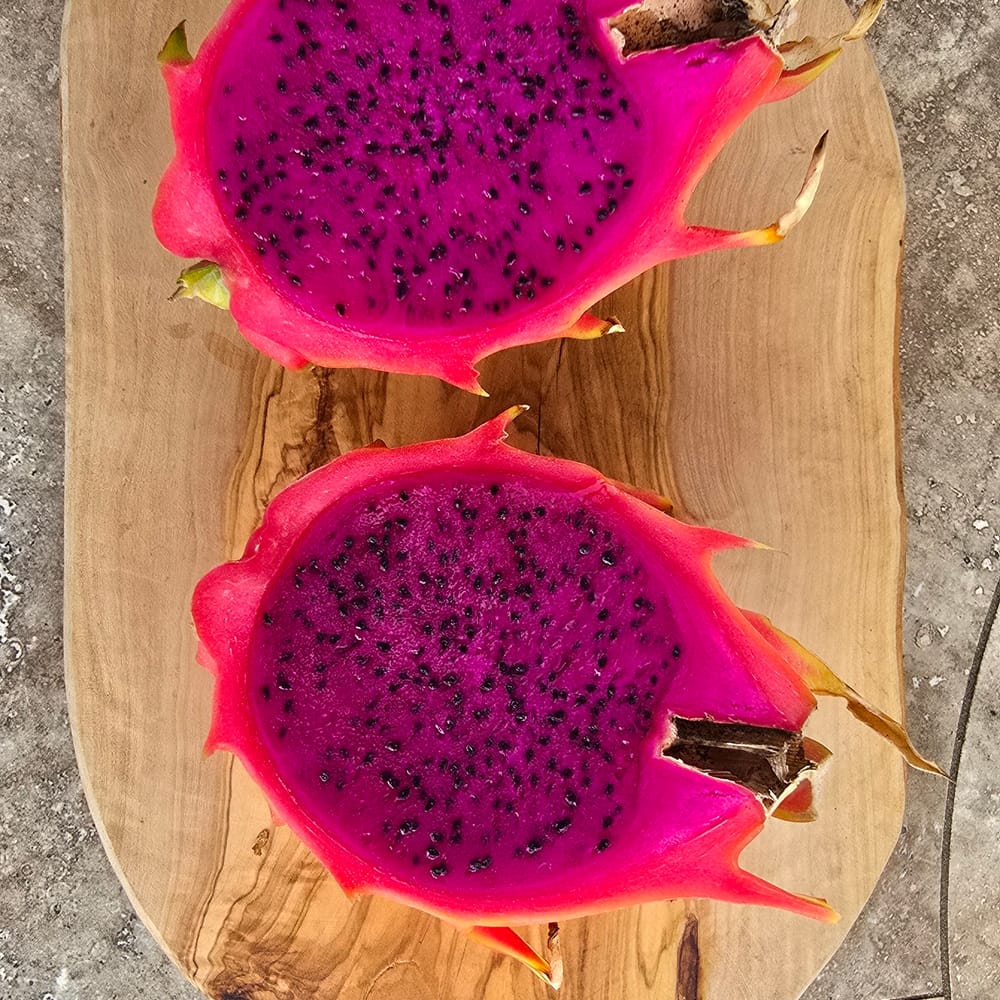
Fruit typically weighs between 0.75 and 1 pound. Some growers report first fruits reaching 560 grams. The mature skin is peach-colored with lemon-lime colored fins. The flesh starts pink on the first fruits. It deepens to pure purple or magenta by the second fruiting season. The texture is firm and juicy with slightly crunchy seeds. A unique trait of Asunta 3 is that seeds often begin to germinate inside the fruit before you slice it open.
Asunta 3 Dragon Fruit: Taste & Flavor Profile
The flavor of Asunta 3 is its strongest selling point. You get intense sweetness balanced by a mild, smooth tartness. The primary notes are grape and lychee. Secondary flavors of melon and cherry add depth. Some growers detect a subtle resemblance to papaya. The profile has a distinct floral complexity that sets it apart from standard white-fleshed varieties.
This taste aligns with its high sugar content. The fruit regularly hits brix levels between 19 and 21. That level of sweetness is rare in dragon fruit. The texture supports the flavor well. The flesh is firm and juicy. The seeds provide a slight crunch without being gritty.
Spicy Exotics gave Asunta 3 a perfect 5 out of 5 rating for flavor, fruit production, and growing ease. This independent review confirms the variety performs as well as it tastes.
The flavor intensity often improves as the plant matures. Early fruits may taste milder. By the second season, the deep purple flesh delivers the full spectrum of complex notes. The genetic contribution from the Condor dragon fruit parent is evident in this rich, sweet profile. You are not just growing a fast plant. You are growing a premium eating experience.
Asunta 3 vs. Other Popular Dragon Fruit Varieties (Comparison Table)
Comparing Asunta 3 to standard varieties highlights why growers choose this hybrid. The data shows clear advantages in speed and sugar content. Asunta 3 often outperforms vigorous types like Pink Lavern in grafting tests. It holds the title for the most vigorous dragon fruit in comparative trials. This growth rate changes how you manage the plant. You need to prune more often to keep the canopy manageable. The reward is fruit with brix levels between 19 and 21. Some measurements hit 20.4. That places it among the sweetest varieties available. The flavor profile rivals the Condor dragon fruit but with faster production.
| Trait | Asunta 3 | Standard White (H. undatus) | Pink Lavern |
|---|---|---|---|
| Growth Rate | Extremely vigorous | Moderate | Very vigorous |
| Brix Range | 19 to 21 | Moderate | Moderate-High |
| Time to Fruit | 1 to 2 years | Typical | Fast |
| Flesh Color | Deep purple | White | Pink |
| Pollination | Self-sterile | Self-fertile | Self-fertile |
The flower behavior differs from most Hylocereus types. Asunta 3 blooms open at dusk and close by sunrise. This short window requires quick action for hand pollination. The stigma protrudes several inches from the anthers. This makes the process straightforward if you have a partner plant nearby. Standard white varieties often bloom all night. That gives you more time to work. Asunta 3 demands precision. Check buds manually before they open. Petals can stick together in the bud stage. Gently separate them to ensure full opening.
Why Vigor Changes Your Routine
Extreme vigor means more pruning. Asunta 3 grows two to three times faster than standard H. guatemalensis. You will cut back stems more often to maintain structure. This keeps the plant healthy and productive. The bright green stems with tiny spines form a heavy canopy quickly. Without a strong support system, the weight can damage the plant. Use a heavy trellis or pillar. Secure the stems regularly as they elongate. This variety rewards effort with high yields. The fruit weighs 0.75 to 1 pound. Some first fruits reach 560 grams. The deep purple flesh offers complex flavors of grape and lychee. The texture is firm and juicy. Seeds may even germinate inside the fruit before you slice it. This unique trait adds to the variety's character.
Growing Asunta 3: Care Guide
You need a heavy support structure for this plant. Asunta 3 grows two to three times faster than standard dragon fruit. The stems are bright green with three-sided heart-shaped ribs and tiny spines. They form a dense canopy quickly. A weak trellis will snap under the weight. Build your support to handle significant biomass.
Asunta 3 is highly sun-tolerant. This is surprising given its Condor dragon fruit parentage which often prefers shade. Place it in full sun for best results.
Location matters for long-term success. The plant thrives outdoors year-round in USDA zones 10 and 11. In zone 9, you must provide frost protection. Grow in containers if you live in zone 8 or below. This allows you to move the plant indoors during cold snaps. Cold damage occurs below 40 degrees Fahrenheit. Frost will kill the plant. The ideal temperature range is 65 to 85 degrees Fahrenheit.
Pollination: Why Asunta 3 Needs a Partner
Asunta 3 will not set fruit on its own. The variety is self sterile. You must plant a compatible partner nearby to get a harvest. Sugar Dragon works well as a universal pollinator for this hybrid. It blooms at the right time and produces viable pollen.
The flowers offer a narrow window for pollination. They open at dusk and close by sunrise. You need to act fast. Check your buds before dark. The petals sometimes stick together in the bud stage. Gently separate them if they look fused. This ensures the flower opens fully and exposes the reproductive parts.
Hand pollination is straightforward with this variety. The stigma protrudes several inches from the anthers. It is easy to see and reach. Use a small paintbrush or cotton swab. Collect pollen from your partner plant. Dust it onto the stigma of the Asunta 3 flower. Do this while the flower is fully open.
Look for the long, protruding stigma. It makes hand pollination much easier than with varieties where the stigma and anthers are clustered together.
Wind and bees rarely pollinate dragon fruit effectively. Rely on your own hands. If you miss the window, the flower will drop without setting fruit. Plant your pollinator close enough to reach easily. A few feet is ideal. This saves time during the short blooming period.
Successful pollination leads to fruit set within a few days. The flower wilts and the ovary swells. You will see the fruit grow rapidly. This variety supports heavy fruit loads. Ensure your trellis can handle the weight. The deep purple flesh and high sugar content depend on proper pollination. Without a partner, you get leaves but no fruit.
For more on the genetics that give Asunta 3 its unique traits, read about the Condor dragon fruit parentage. Understanding the lineage helps explain why cross-pollination is necessary.
How Long Until Asunta 3 Produces Fruit?
Asunta 3 is a fast mover. You can expect your first harvest in one to two years from a healthy cutting. The plant’s extreme vigor drives this speed. It grows two to three times faster than standard dragon fruit types. This rapid growth means the plant reaches reproductive maturity quickly.
Vigorous growers may see flowers in the first year. Do not mistake early flowers for a guaranteed harvest. Asunta 3 is self sterile. The plant cannot pollinate itself. You must have a compatible partner nearby to set fruit. Without a pollinator, the flowers will open at dusk and close by sunrise without producing any fruit.
Timing your pollination is critical. The flowers have a short window. They open at dusk and close by sunrise. This is earlier than most Hylocereus varieties. You need to act fast. The stigma protrudes several inches from the anthers. This makes hand pollination straightforward if you have a partner plant like Sugar Dragon.
Check your flower buds manually before they open. The petals can stick together in the bud stage. Gently separate them to ensure the flower opens fully. A stuck flower cannot be pollinated.
The quality of the fruit improves with time. The first fruits often have pink flesh. The color deepens to pure purple or magenta by the second fruiting season. The sugar content also stabilizes. You will see brix levels between 19 and 21 once the plant is established. The flavor profile becomes more complex with each season. You get intense sweetness with notes of grape and lychee.
Support matters for yield. The stems grow rapidly and form a heavy canopy. A weak trellis will fail under the weight. Use a heavy support structure. This allows the plant to spread its energy into fruit production rather than struggling to stay upright.
Where to Buy Asunta 3 Dragon Fruit Cuttings
Finding verified Asunta 3 cuttings requires looking beyond general garden centers. This is a specific hybrid developed by Edgar Valdivia of the California Rare Fruit Growers. It is not a standard white-fleshed type you will find in bulk packs. You need a source that tracks lineage to ensure you get the vigor and flavor profile described in this guide.
Sky Botanicals sources our Asunta 3 directly from trusted growers who maintain the genetic integrity of the Asunta series. We verify that each cutting comes from a healthy, fruiting mother plant. This guarantees the deep purple flesh and high brix levels you expect. We also ensure the plant is free of pests and diseases before shipping.
Why source matters: Many sellers list "purple dragon fruit" without specifying the variety. Asunta 3 has a distinct genetic makeup involving Condor dragon fruit and Hylocereus stenopterus. Buying from a specialist ensures you get the correct hybrid.
When you order from us, you receive a rooted cutting ready to establish itself. We include care instructions specific to Asunta 3’s rapid growth habit. Since this variety grows two to three times faster than standard types, it needs a strong start. Our cuttings are harvested at the optimal stage for root development.
We also help you plan your pollination strategy. Asunta 3 is self-sterile. You cannot plant just one and expect fruit. We recommend pairing your Asunta 3 with a compatible pollinator like Sugar Dragon. We can bundle these together for your order. This ensures you have the necessary partner for cross-pollination from day one.
- Check availability: Visit our shop page for current Asunta 3 stock. We harvest cuttings seasonally to ensure quality.
- Select your pollinator: Add Sugar Dragon or another compatible variety to your cart. This is essential for fruit set.
- Review shipping dates: We ship during safe weather windows to protect the cuttings in transit.
- Prepare your site: Have your trellis and soil ready before the plants arrive. Asunta 3 grows fast.
If you are in a colder climate, consider ordering container-ready plants. These are easier to move indoors during frost. We provide guidance on hardiness zones and protection methods. Our goal is to help you grow the best possible Asunta 3 crop.