Orejona Dragon Fruit: Traits, Pollination, and Robles Red
Orejona is a vigorous Nicaraguan red-fleshed pitaya (Hylocereus polyrhizus) prized for its round fruit shape, small fins, and intensely blood-red flesh. It ranks among only five varieties grown commercially in Nicaragua. The fruit offers moderate sweetness with tart and tangy notes. Stems are grayish-green with heavy spination that provides heat and cold protection. While it is a rapid grower and high producer, conflicting reports exist on pollination needs. Experienced commercial growers suggest it is self-sterile and requires a pollinator. We do not stock Orejona due to its heavy spines and handling difficulty. Instead, we recommend Robles Red. It shares the deep red flesh and balanced sweetness but is easier to handle. Shop Robles Red cuttings.
What Is Orejona Dragon Fruit?
Orejona belongs to the Hylocereus polyrhizus species. This classification sets it apart from the more common Hylocereus undatus types found in many home gardens. The plant hails from Nicaragua where it holds status as one of only five varieties grown commercially. Its lineage explains its vigorous growth and distinct physical traits.
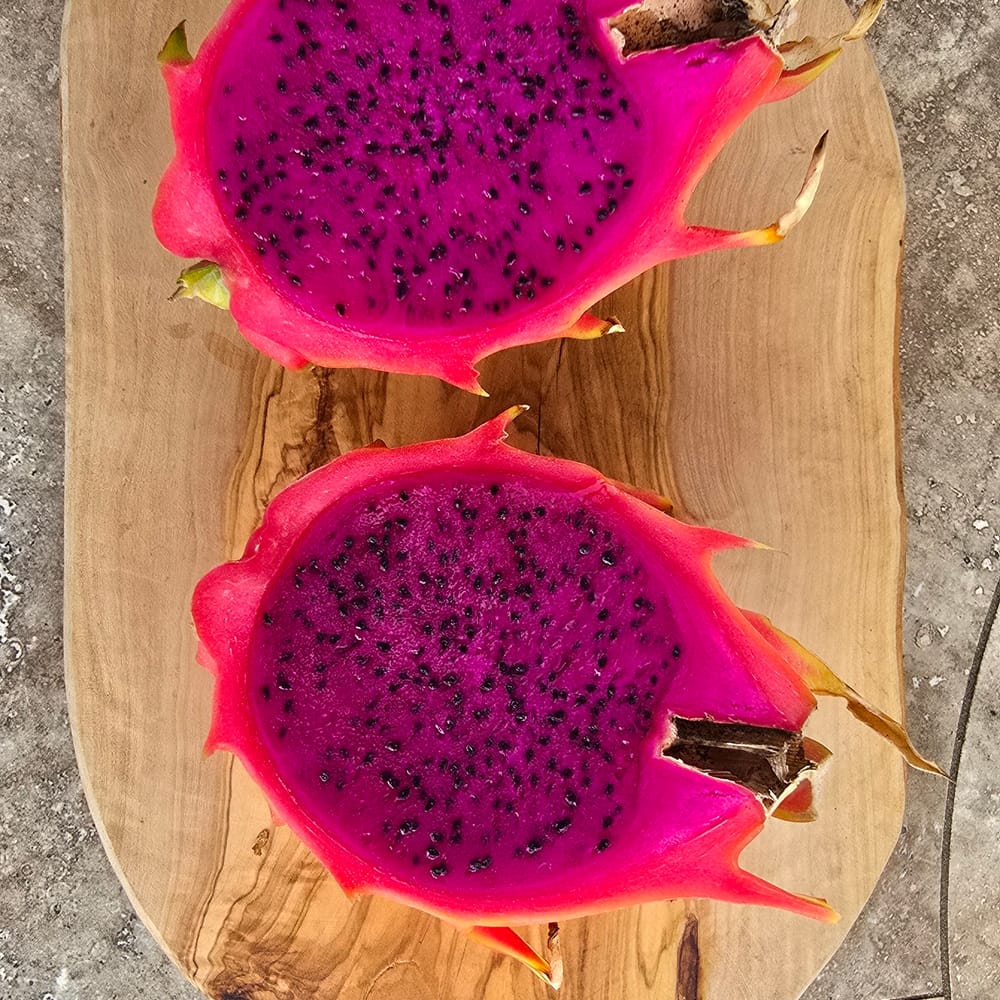
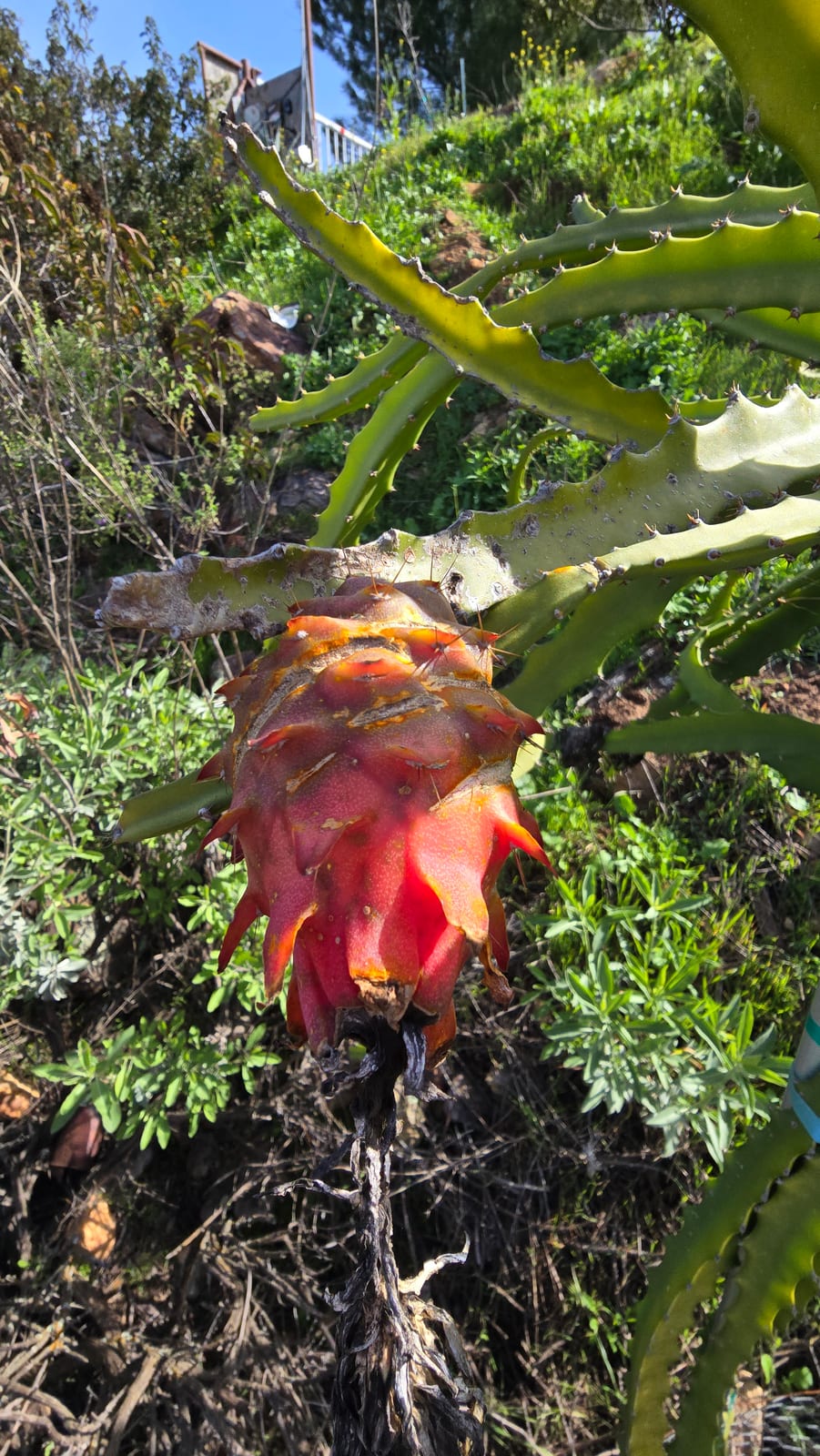
The fruit itself breaks the mold of the typical elongated pitaya. Orejona produces round to oblong fruit with notably small fins. This compact shape contrasts sharply with the long cylindrical forms of white-fleshed varieties. The skin is dark red with red-tipped scales. Beneath that skin lies the feature that draws most attention. The flesh is a deep dark blood-red to crimson. This intense coloration comes from high levels of betalain antioxidants. It gives the fruit a striking appearance that stands out among red varieties.
The name 'Orejona' offers a clue to its identity. In Spanish 'oreja' means ear. The name likely refers to the shape of the fruit or the small fin structures that resemble ears. This local naming convention highlights its cultural roots in Central American agriculture.
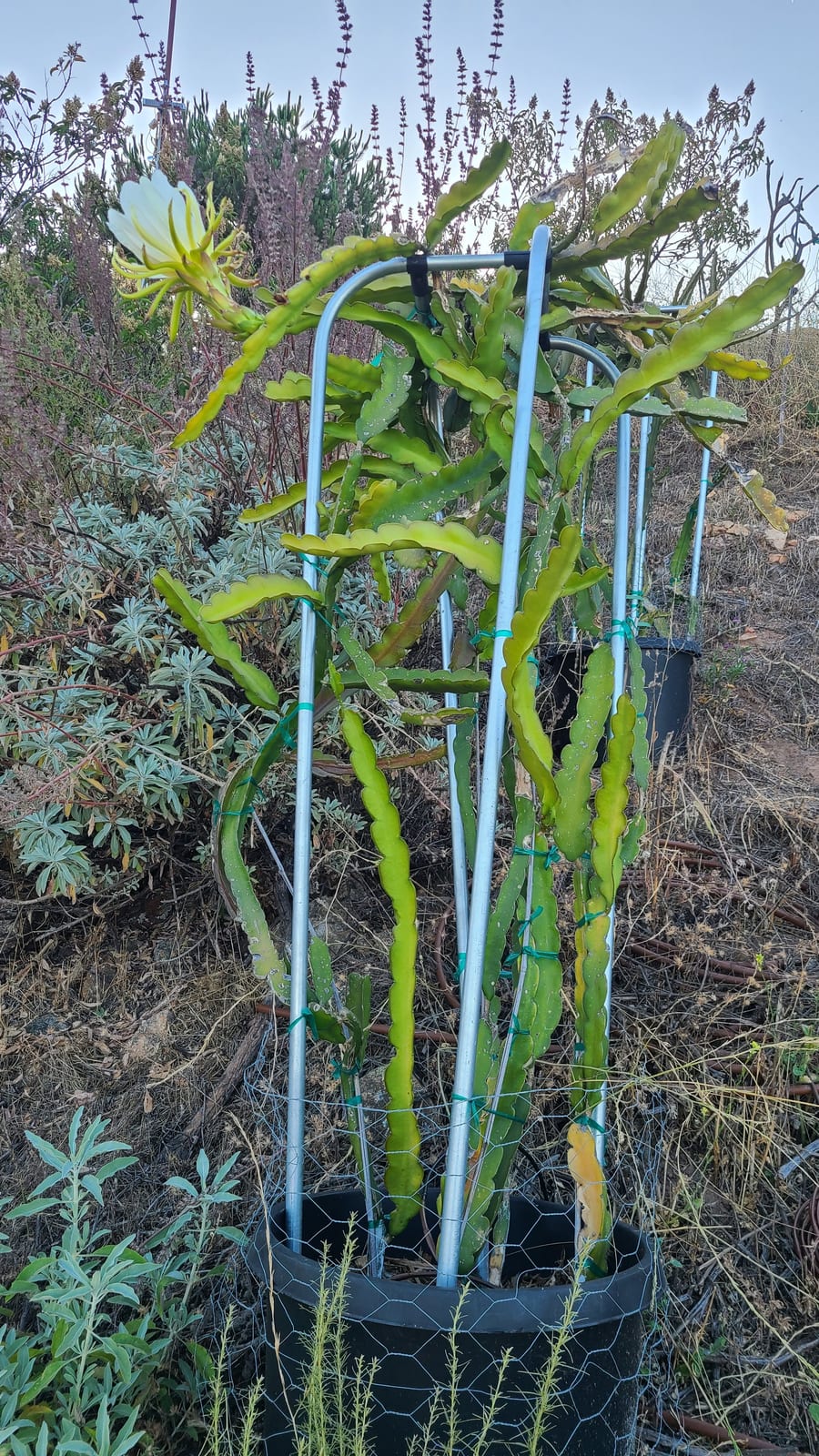
The plant’s stems are equally distinctive. They carry a grayish-green hue with a protective gray coating. This coating helps the plant manage heat and cold extremes. The stems are three-sided with medium spines. The areoles hold six to eight spines in a random pattern. These spines range from 3 to 8 mm in length. The segments between areoles are straight to slightly concave. This structure exposes the spines clearly. The result is a very spiny appearance that signals the plant’s defensive nature.
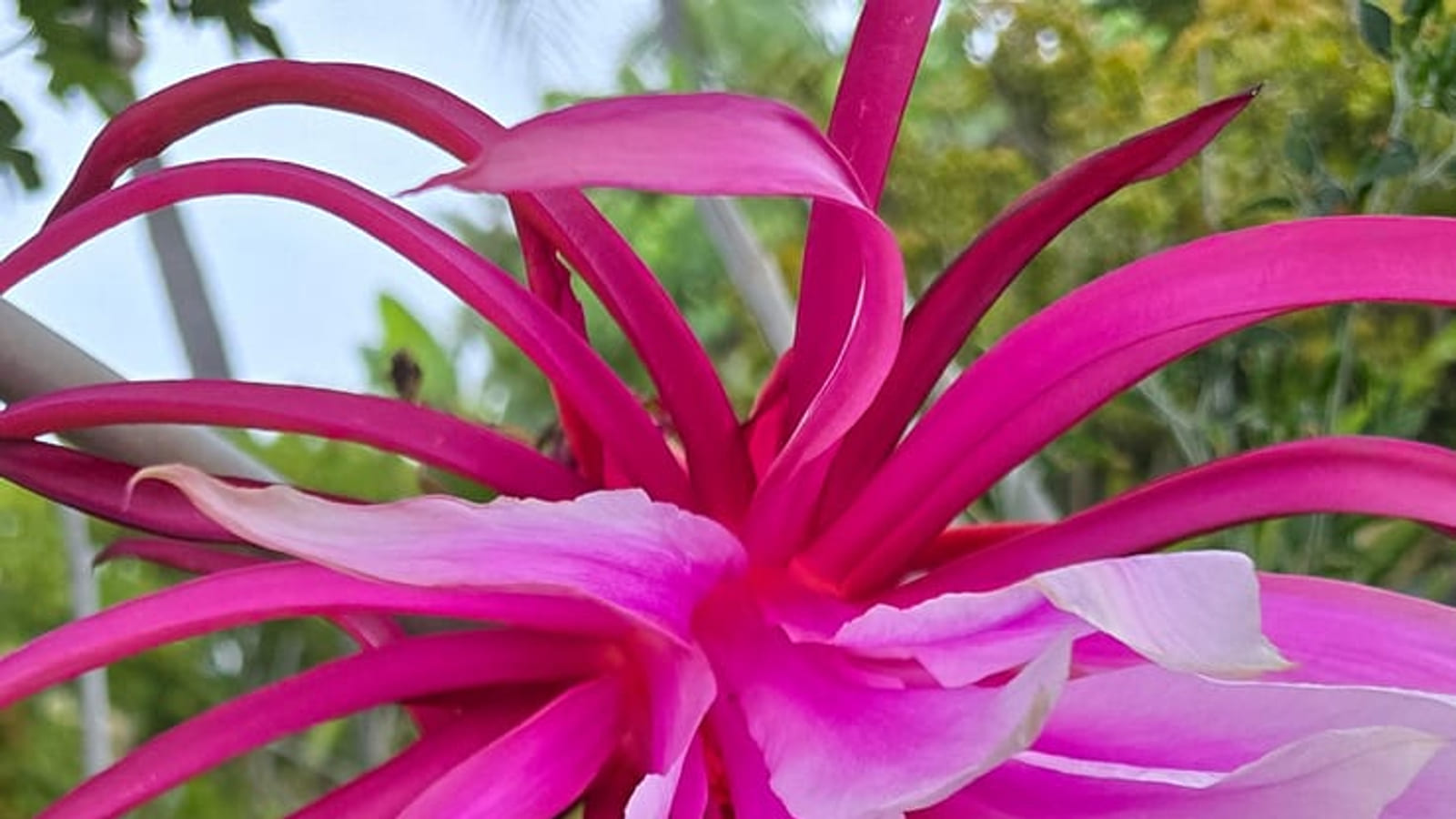
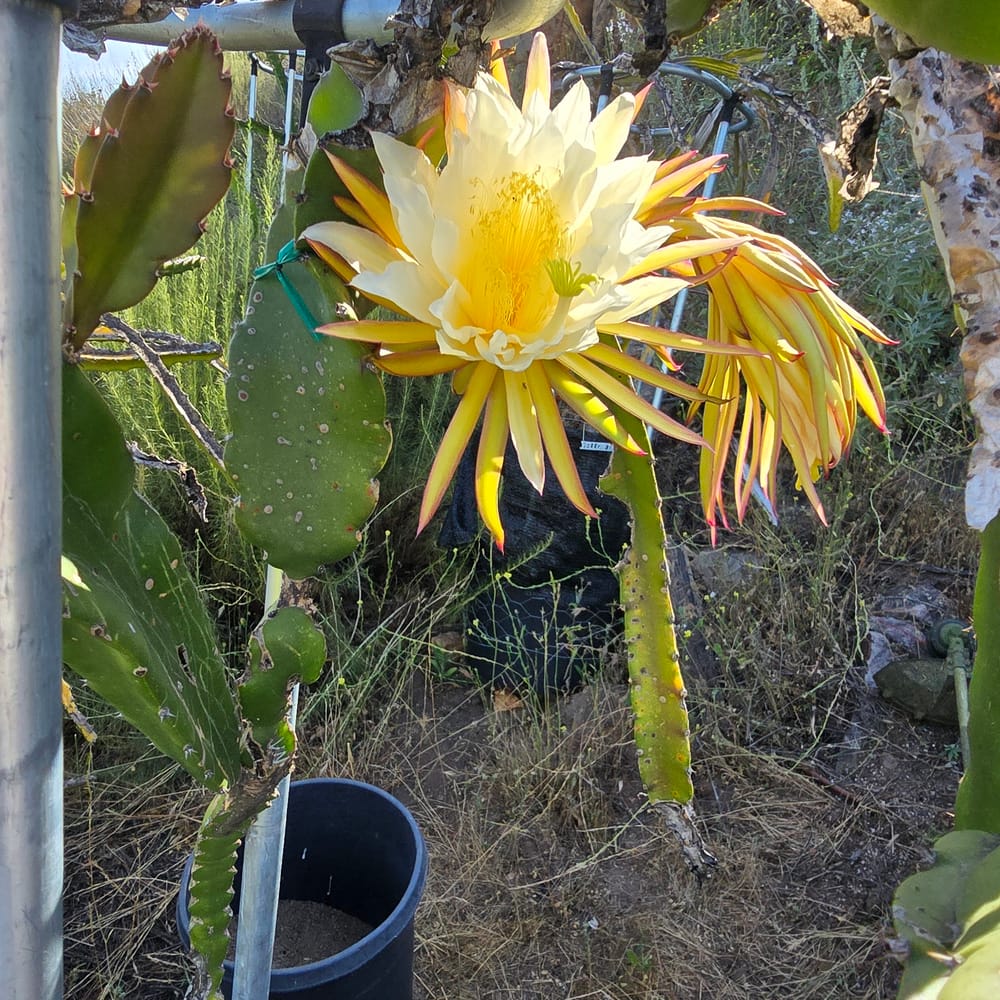
Despite the thorny exterior the plant produces spectacular flowers. The blooms are large and round. They can reach 10 to 16 inches in diameter. The petals are white with a yellow calyx. The edges of the petals often show a red tint. These flowers are highly fragrant. They open at night to attract pollinators. The visual impact of these blooms is significant for any garden.
Understanding the specific traits of Orejona helps explain why it is prized yet challenging. For a broader look at how different types compare check out our dragon fruit varieties guide.
This harvest window defines the growing season for this variety in Southern California. You can expect fruit from late June through late December. This extended period allows for multiple picking cycles once the plant is established. The round fruit shape and small fins make it distinct from the long cylindrical types you might see elsewhere. If you want to see how Orejona stacks up against other red-fleshed options, check out our dragon fruit varieties guide.
Flavor Profile and Sweetness
Orejona delivers a smooth, slightly earthy taste with balanced sweetness and distinct tart notes. It sits on the moderate-to-tart side for red-fleshed varieties. The flavor is often described as tasty but not overwhelmingly sugary. This profile makes it a versatile fruit for fresh eating or blending.
Understanding Brix helps set expectations for sweetness. Brix measures the percentage of sugar in the fruit juice. A higher number means a sweeter taste. Orejona averages around 16 Brix. This places it below the threshold of the sweetest commercial reds.
| Variety | Average Brix | Sweetness Level |
|---|---|---|
| Orejona | 15.78-16 | Moderate to Tart |
Orejona offers a brighter, tangier experience. The earthy undertones add complexity that pure sugar lacks. It is a grown-up flavor for those who enjoy a bit of acidity.
For a broader look at how different types compare, check out our dragon fruit varieties guide.
Growing Orejona Dragon Fruit
Orejona is a vigorous grower that rewards patience with heavy yields. Once the plant reaches maturity, it produces fruit consistently. The stems carry a grayish-green hue with a distinct gray coating. This natural layer helps the plant manage heat and cold extremes. It offers average tolerance to both temperature ranges but handles stress better than smoother varieties.
The plant adapts easily to various soils and grows well in full sun. You will need a heavy support structure. The vines grow rapidly and gain significant weight quickly. A sturdy trellis is essential to keep the stems upright and healthy. Dragon fruit plants can live for 50+ years. They typically mature fully in 4 years. A mature plant can produce 110+ lbs per season.
Bloom to Harvest Timeline
In Southern California, the cycle from bloom to harvest takes 45 days. This window allows for multiple picking cycles during the season. The plant flowers at night with large fragrant blooms. Because Orejona is self-sterile, you must plant a compatible pollinator variety nearby. Without a partner, the flowers will drop without setting fruit. For details on compatible partners, see our dragon fruit varieties guide.
Is Orejona Self-Fertile or Self-Sterile?
The internet offers mixed signals on this point. Some retailers list Orejona as self-pollinating. Others insist it needs a partner. You should trust the growers who harvest by the ton. Spicy Exotics and Tasty Dragons both classify Orejona as self-sterile. These are commercial operations with years of field data. Their experience outweighs the general claims found on small retail sites.
Treat your Orejona as self-sterile to be safe. Planting a compatible pollinator ensures you get fruit. Do not guess with your harvest. Choose a variety that blooms at the same time. This simple step removes the uncertainty from your growing season.
Pro tip: If you are unsure about your local bloom times, check our dragon fruit varieties guide. Matching bloom windows is the key to successful cross-pollination.
Self-sterility is common in Hylocereus polyrhizus types. Even if a flower looks perfect, it may not set fruit without pollen from a different plant. Cross-pollination often improves fruit size and set rate. It is a small effort for a much better reward. Plant your pollinator within a few feet of your Orejona. Bees and bats will do the rest.
Closest Varieties Sky Botanicals DOES Carry
We do not stock Orejona because the heavy spines make handling difficult and risky. You can still grow excellent red-fleshed dragon fruit with varieties that are easier to manage. We recommend Robles Red as the closest match. It shares the deep red flesh and balanced sweetness of Orejona. Robles Red is accessible for most growers. It offers a reliable harvest without the handling hazards.
If you want higher sugar content, look at Valdivia Roja or Dark Star. These are premium options for sweet fruit lovers. Physical Graffiti stands out for its flavor. It is a top choice for taste above all else.
| Variety | Flesh Color | Sweetness | Key Trait |
|---|---|---|---|
| Robles Red | Red | Moderate | Easy to handle |
| Valdivia Roja | Red | High | Reliable |
| Physical Graffiti | Red | High | Distinctive flavor |
| Dark Star | Red | Very High | Premium sweetness |
Pair these varieties with good pollinators for better fruit set. This boosts your yield and fruit quality. See our dragon fruit varieties guide for more pairing ideas.
Red Dragon Fruit Varieties Comparison
Orejona stands out for its round fruit and dark red skin with red-tipped scales. It also features numerous bracts that give the rind a textured look. To see how it stacks up against other red-fleshed options, look at the table below. We compare Orejona with varieties we carry at Sky Botanicals. This helps you weigh flavor, shape, and growing needs.
| Variety | Flesh Color | Brix | Pollination | Fruit Shape |
|---|---|---|---|---|
| Orejona | Blood-red | ~16 | Self-sterile | Round |
| Robles Red | Red | Moderate | Self-fertile | Oblong |
| Valdivia Roja | Red | High | Self-fertile | Oblong |
| Physical Graffiti | Red | High | Self-fertile | Round |
| Dark Star | Red | Very High | Self-fertile | Oblong |
Orejona is the only variety in this list that is likely self-sterile. You will need a pollinator to get fruit. Most of the others are self-fertile. This makes them easier for solo growers. Orejona also has a unique round shape. Most red varieties produce long oblong fruit. If you want a round fruit that is easier to handle, consider Physical Graffiti. It shares the shape but is self-fertile. For more details on these types, check out our dragon fruit varieties guide.
FAQ
Growers often have specific questions about Orejona after seeing its unique traits. Here are the direct answers to the most common inquiries.
Is Orejona self-fertile?
Conflicting reports exist on this point. Some sellers list it as self-pollinating. However, experienced commercial growers like Spicy Exotics and Tasty Dragons classify it as self-sterile. These assessments carry more weight because they come from large-scale production experience. You should plan to plant a compatible pollinator nearby to ensure fruit set. Do not rely on self-fertility for a harvest.
Why doesn't Sky Botanicals sell it?
We prioritize plants that are practical for home gardeners. Orejona has heavy spination. The areoles hold six to eight spines in a random pattern. These spines range from 3 to 8 mm in length. The segments between areoles are straight to slightly concave. This structure exposes the spines clearly. Handling the plant requires thick gloves and careful attention. The University of California Agricultural and Natural Resources rated its commercial potential as low due to this handling difficulty. We avoid stocking varieties that pose a high risk of injury during routine care.
What's the closest variety you carry?
We recommend Robles Red. It shares the deep red flesh and balanced sweetness of Orejona. Robles Red is much easier to handle. It lacks the dense, exposed spination of Orejona. You get the flavor profile you want without the handling challenges. Shop Robles Red cuttings for a safer alternative.
How sweet is it?
Orejona offers moderate sweetness. It measures around 16 Brix. This places it on the tart side for red-fleshed varieties. The flavor is smooth with slight earthy notes. You will taste distinct tart and tangy elements alongside the sugar. It is not a cloying sweet fruit. It has a complex, balanced profile.
What's special about its round shape?
Most dragon fruit varieties produce long cylindrical fruit. Orejona breaks this mold. It produces round to oblong fruit with notably small fins. This compact shape is visually distinct. The name Orejona likely refers to these small fin structures that resemble ears. The round shape also affects how the fruit hangs on the trellis. It presents a different aesthetic in the garden compared to standard types.