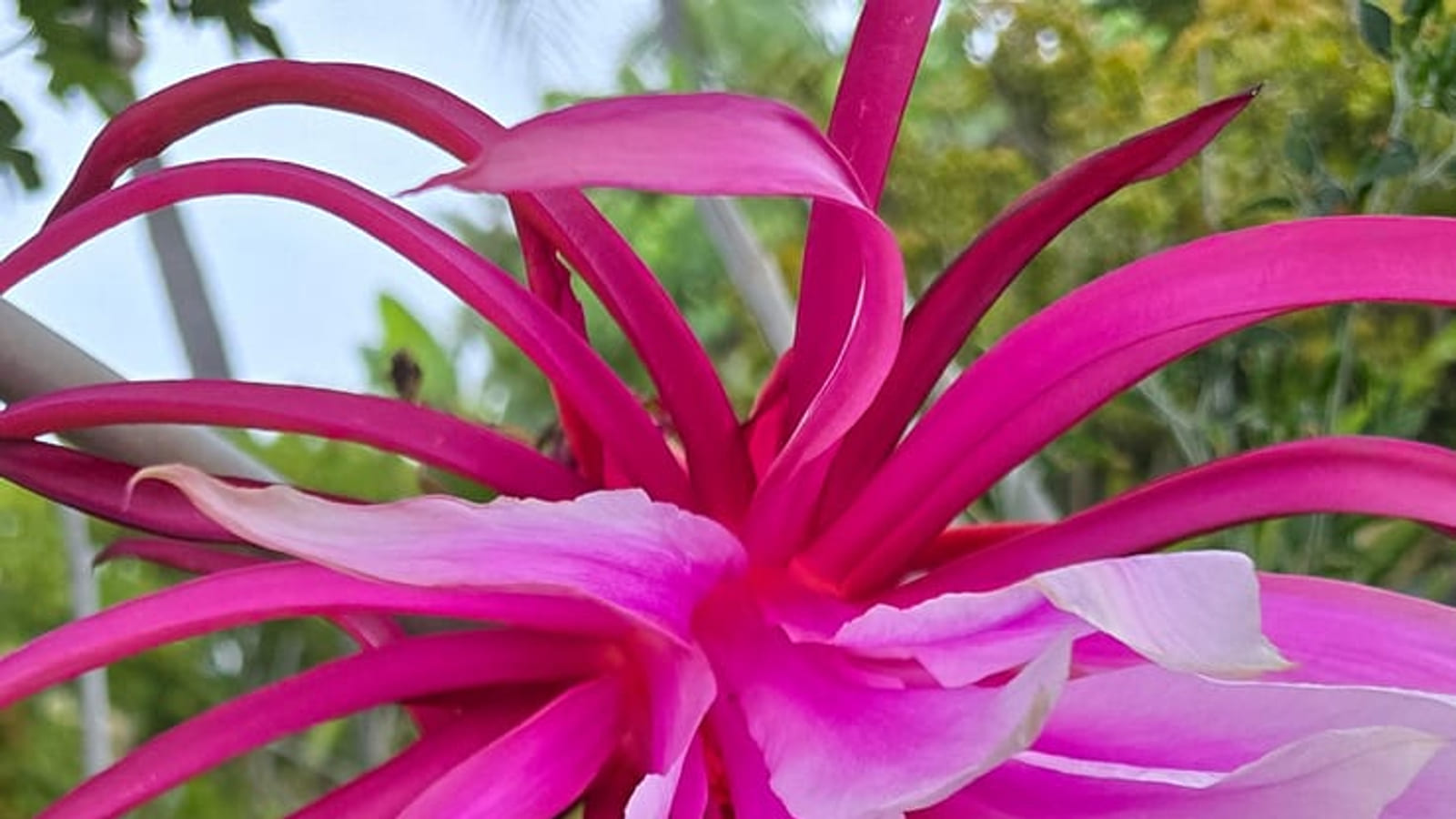
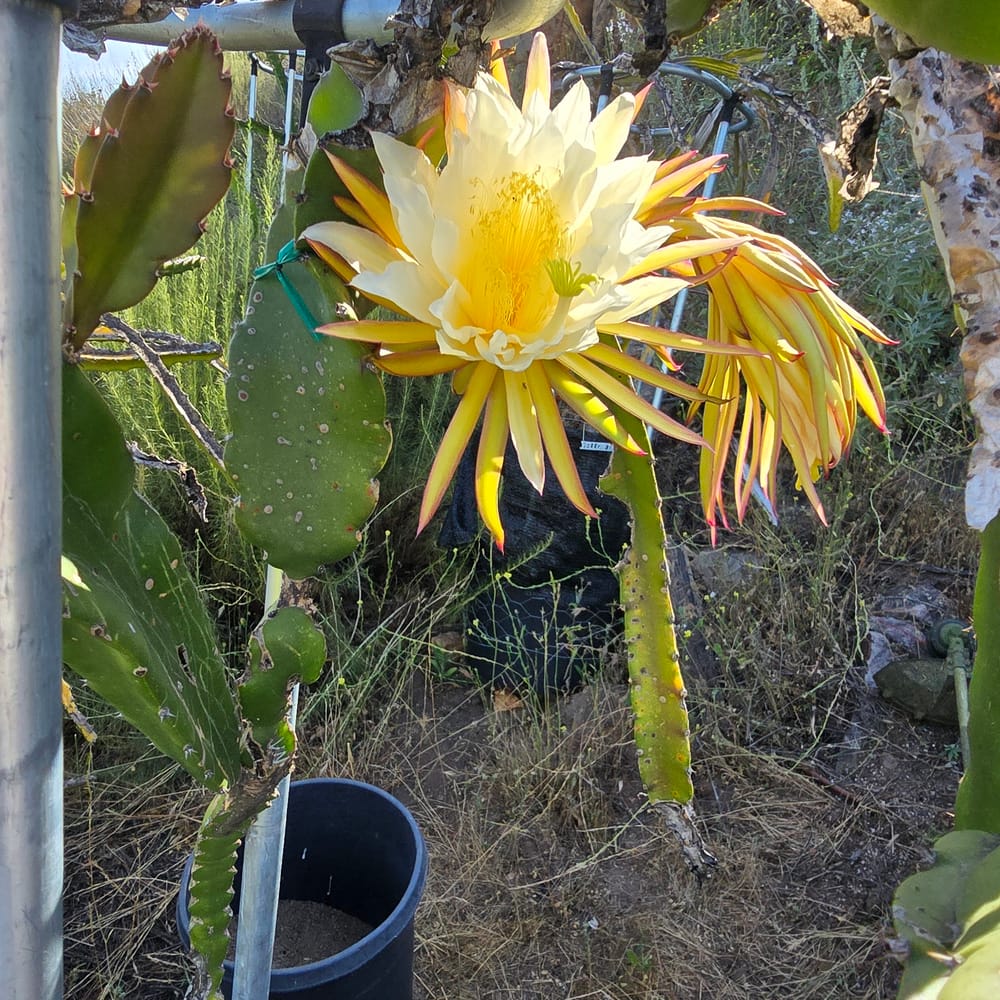
Jade Red Dragon Fruit: A Grower's Guide
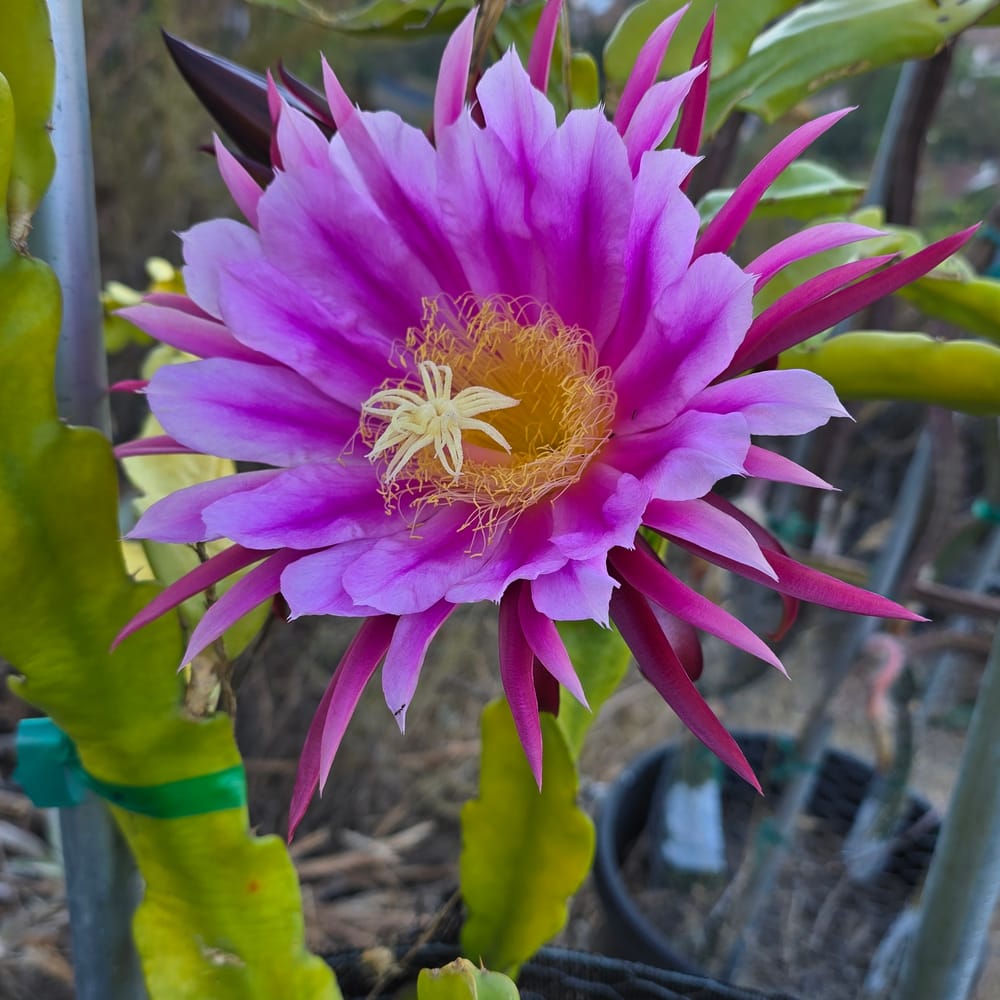
Jade Red, also sold as Red Jade, is a rare Australian dragon fruit hybrid that delivers large, red-fleshed berries with a melting texture and intense berry flavor. This cross between Hylocereus polyrhizus and an Epiphyllum hybrid produces purple flowers that open early in the evening. The fruit typically reaches about 400 g, making it a standout among colored-flower varieties that usually set much smaller crops. While the plant fruits quickly, often before 13 months from a cutting, it is self-sterile and requires a compatible pollinator for reliable harvests. We currently have Jade Red listed but it is out of stock. If you are ready to commit to this long-term grower, check our guide to dragon fruit pollination to plan your planting strategy.
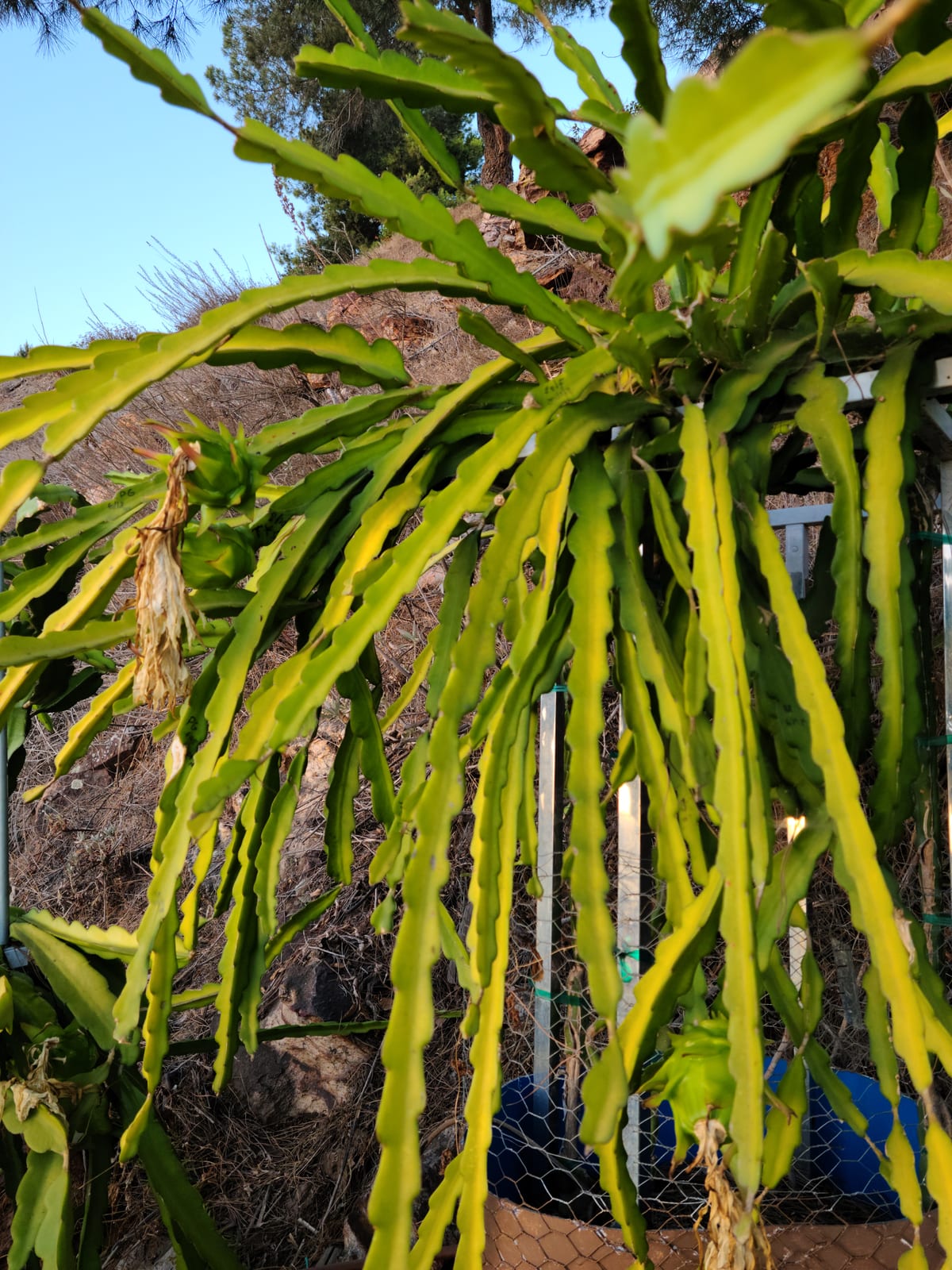
Jade Red combines the vigorous climbing habit of its Hylocereus parent with the early-blooming tendencies of its Epiphyllum lineage. The vines grow rapidly and robustly, though the stems remain moderate in thickness rather than becoming the thick, heavy trunks seen in some commercial varieties. This growth pattern makes it manageable on standard trellises while still providing enough biomass for a productive harvest. The plant handles full sun well and shows reasonable tolerance to mild cold, a trait that distinguishes it from many other red-fleshed types that are more sensitive to temperature drops.
| Attribute | Detail |
|---|---|
| Scientific Identity | Hylocereeae hybrid (H. polyrhizus x unnamed Epiphyllum) |
| Alternate Name | Red Jade |
| Flesh Color | Deep red |
| Flower Color | Purple |
| Fruit Size | ~400 g / 3/4 lb |
| Pollination | Self-sterile, hand-pollinate |
| Bloom Time | ~5 pm, closes by ~7 am |
| Time to First Fruit | Under 13 months from cutting |
| Ripening | Non-climacteric, pick at full color |
| Growth | Fast climber, moderate stems, sun and light-cold tolerant |
The compact nature of the stems means you do not need heavy-duty support structures, but the rapid growth rate requires consistent pruning to keep the plant from becoming unruly. Because the fruit is non-climacteric, it will not sweeten after picking. You must harvest the berry when the skin has reached its full deep red color. Waiting too long on the vine risks the fruit passing its prime window, as the color holds steady even when the interior quality begins to decline. This characteristic makes timing your harvest critical for achieving the best flavor profile.
Where Did Jade Red Come From?
For years, the dragon fruit community accepted Jade Red as a purely Australian creation. The variety appeared in local nurseries with a simple story: a cross made down under. However, recent evidence has shifted this narrative. The purple flowers of Jade Red closely resemble those of the Asunta series, a group of hybrids with deep roots in Ecuadorian breeding programs. This floral similarity, combined with records from Ecuadorian breeder Edgar Valdivia, suggests a different origin. Valdivia was known for creating numerous seedlings and gifting seeds to visiting growers, including those from Australia. It is highly likely that Jade Red is one of these Valdivia seedlings, which explains why the variety became attributed to Australia after the seeds arrived there.
The Significance of Cross-Genera Breeding
Understanding the parentage reveals why this hybrid is so unusual. Jade Red is a cross between Hylocereus polyrhizus and an unnamed Epiphyllum hybrid. This is a cross-genera breeding event within the Hylocereeae tribe. Most dragon fruit varieties are crosses within the Hylocereus genus. Breaking the species barrier to include Epiphyllum allowed breeders to introduce traits that do not naturally exist in standard pitaya. The result is a plant that retains the vigorous, fruiting habit of Hylocereus but displays the distinct purple flower of its Epiphyllum parent. This genetic combination is rare and is the primary reason Jade Red stands out in the market.
The "Australian" label for Jade Red is a matter of provenance, not origin. The seeds likely traveled from Ecuador to Australia, where they were planted and named. This pattern is common in the dragon fruit world, where varieties often take the name of the region where they were first commercially propagated rather than where they were genetically created.
This origin story highlights the importance of accurate varietal records. When a hybrid like Jade Red moves between countries, its identity can become blurred. Growers who understand the cross-genera nature of the plant can better anticipate its behavior, such as the early blooming time and the specific pollination requirements that differ from standard Hylocereus types. For those interested in how this unique lineage contributes to its flavor profile, you can explore more in our guide to Best Tasting Dragon Fruit Varieties.
What Does Jade Red Taste Like?
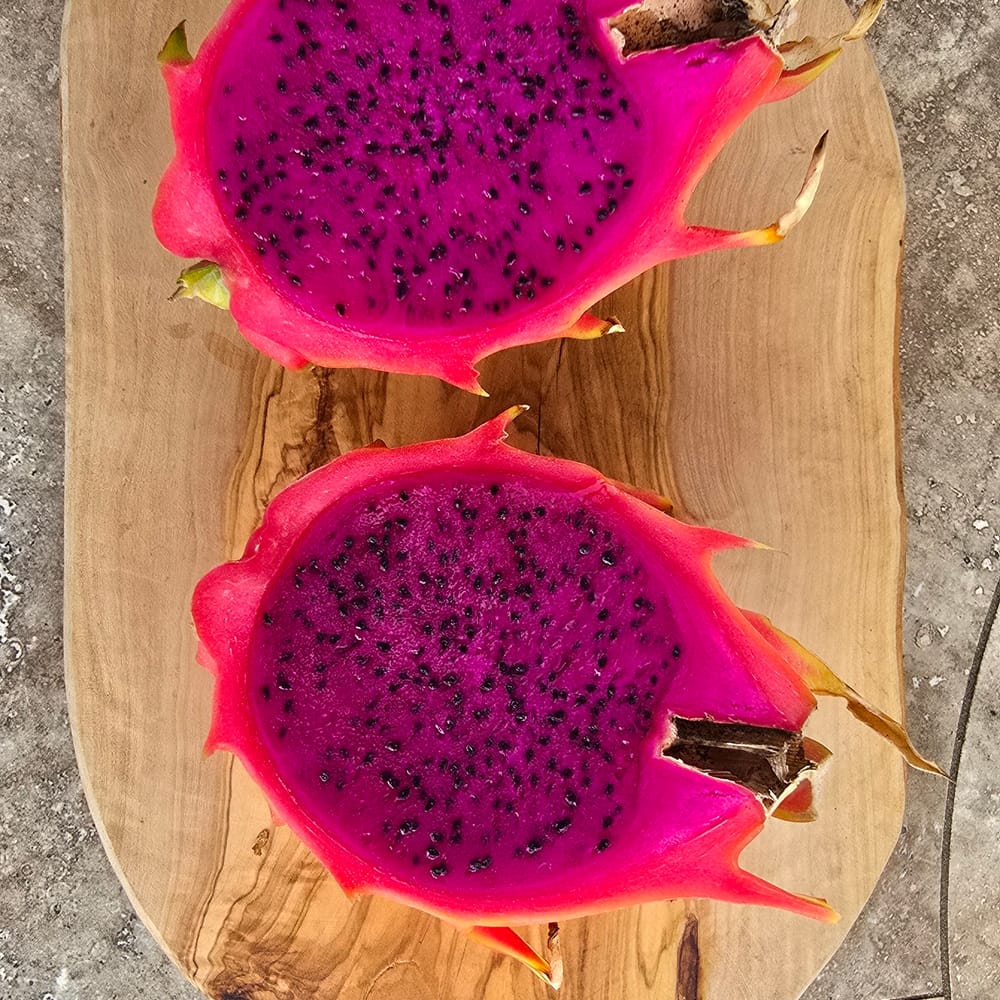
Jade Red delivers a flavor profile that stands out in the dragon fruit world. The flesh is juicy, sweet, and slightly sour, creating a balanced taste that is distinctly berry-like. Growers often describe the texture as very smooth, almost melting in the mouth. This smoothness is a key differentiator. While many red-fleshed varieties have a slightly grainy or fibrous feel, Jade Red offers a clean, uniform mouthfeel that makes the intense flavor easier to appreciate.
Flavor Profile Comparison
| Variety Type | Flavor Intensity | Texture |
|---|---|---|
| White-fleshed pitaya | Mild, subtle | Standard |
| Typical red-fleshed pitaya | Berry-like, sweet | Standard to slightly grainy |
| Jade Red | Intense berry, sweet-sour balance | Very smooth, melting |
Compared to white-fleshed types, Jade Red is significantly more intense. It sits on par with the best red-fleshed cultivars in terms of flavor depth. However, it distinguishes itself from close relatives like Colombian Supreme through its unusually smooth texture. While Colombian Supreme is known for its rich color and flavor, Jade Red adds a layer of refinement to the eating experience. This combination of high flavor intensity and a silky texture is what many growers single out as the variety's primary culinary advantage.
The fruit is best enjoyed fresh. Because it is non-climacteric, the flavor is at its peak when you pick it at full color. Slicing it open reveals a deep red interior that is visually striking. The long bracts on the skin add to the aesthetic appeal, making the fruit look impressive on a plate or in a fruit bowl. If you are looking for a variety that delivers both visual impact and complex flavor, Jade Red is a strong contender. For a broader look at flavor profiles, check out our guide to Best Tasting Dragon Fruit Varieties.
The Purple Flower: Jade Red's Signature
Most dragon fruit flowers open at dusk, but Jade Red breaks that pattern. The bloom typically opens around 5 pm, a notably early start for the species. This early timing is likely a trait inherited from its Epiphyllum parent. By around 7 am the next morning, the flower has closed nearly fully. This creates a much shorter active window than the typical Hylocereus flower, which stays open through the night.
You can identify the developing buds before they open. Jade Red buds start with distinct purple tips. This is a useful visual marker, especially if you are growing it alongside Colombian Supreme, which has red-tipped buds. As the bud expands, the purple petals emerge from the top, signaling that the flower is ready to open.
Hand Pollination Timing
Because the flower closes early, you have a limited window for hand pollination. Work during the evening opening or early the next morning before the petals close. Missing this window means the flower will not set fruit.
For growers planning their pollination schedule, this early bloom time requires a shift in routine. You cannot rely on the standard "check at midnight" approach. The practical implication is clear: if you are hand-pollinating, you need to be present in the evening or very early the next morning. This specific timing requirement is one of the unique management challenges of growing this variety, distinct from the more forgiving schedules of standard white or pink flowered types.
Growing Jade Red Dragon Fruit
Jade Red grows fast, but patience is still required for a serious harvest. While the plant is vigorous, the stems remain moderate in thickness, so they do not require the heavy-duty support structures needed for some commercial varieties. This moderate build makes it manageable on standard trellises. The plant handles full sun well and shows reasonable tolerance to mild cold, a trait that distinguishes it from many other red-fleshed types that are more sensitive to temperature drops.
- Plant a cutting on a trellis or post. Ensure the structure is sturdy enough to handle the rapid climbing growth, even if the stems themselves are not exceptionally thick.
- Position the plant in full sun. Jade Red thrives in direct light, which supports its robust growth habit.
- Water deeply during dry spells. Consistent moisture helps maintain the vigorous growth rate without waterlogging the roots.
- Feed lightly during the active growth phase. Avoid heavy fertilization, as the plant responds well to a balanced, gentle approach.
Setting Realistic Expectations
You may see the first buds appear before the plant is 13 months old from planting a cutting. This is very fast for dragon fruit, as many varieties take multiple years to flower. However, do not mistake this early start for immediate abundance. Jade Red is slow to reach full production after that first fruiting. A single plant is a long-term bet. Plan on 18+ months before you see meaningful harvest volume. The early bloom is a sign of health, not a signal that the plant is ready for commercial-level yields.
Because Jade Red is self-sterile and slow to full production, ensure you have a compatible pollinator nearby. Without cross-pollination, very few flowers will set fruit, and the quality of any fruit that does set may be low. Check our guide to Best Tasting Dragon Fruit Varieties to find a suitable partner for your planting strategy.
Pollinating Jade Red: Why You Need a Partner
Jade Red is self-sterile. This is a critical biological constraint that distinguishes it from many other dragon fruit varieties. The plant produces limited pollen, and because it is a hybrid cross between Hylocereus polyrhizus and an Epiphyllum hybrid, its genetics do not support reliable self-fertilization. Growers report that without human intervention, very few flowers will set fruit. When fruit does set spontaneously, it is often low quality, small, or misshapen. You cannot rely on the plant to feed itself.
Be wary of retail listings that incorrectly label Jade Red as self-pollinating. This is a common error in the trade, but it is factually wrong for this specific hybrid. The safe and necessary practice is to hand-pollinate from a compatible red-fleshed variety. You need a partner plant that blooms at the same time and offers compatible pollen. A red-fleshed Hylocereus polyrhizus or a similar red-fleshed Hylocereus variety is the ideal choice. This ensures the genetic compatibility required for a healthy, full-sized berry.
What Happens Without a Pollinator
If you plant a single Jade Red vine without a compatible partner, you are setting yourself up for disappointment. The set rate will be very low. You may see a few berries form, but they will likely be inferior to the potential of the variety. The fruit may fail to reach its typical size or develop the intense berry flavor that makes Jade Red special. Since the plant is slow to reach full production even with proper care, wasting a bloom season on failed pollination sets back your harvest timeline significantly. Planning for a pollinator is not optional; it is the foundation of a successful Jade Red grow.
Harvest and Ripening: The Over-Ripeness Trap
The lifecycle of a Jade Red fruit moves quickly once the flower opens. You will likely see the purple petals unfurl around 5 pm. If pollination happens that same night, the fruit begins its development immediately. It takes several weeks for the berry to grow to its full size. During this period, the skin color deepens gradually. This ripening pattern closely resembles Colombian Supreme, a closely related Hylocereus polyrhizus type. In both varieties, the color must deepen fully before the fruit is ready to pick.
Here is where Jade Red presents a specific challenge for the grower. The fruit holds its deep red color unusually long without splitting. In many other varieties, a split skin or a slight softening provides a clear visual cue that the fruit is ready or even past ready. Jade Red does not give you that obvious "too late" signal. The exterior remains vibrant and intact even as the interior quality begins to decline. This makes over-ripeness the primary management risk. If you leave the fruit on the vine too long, it can pass its prime window without any external warning signs.
You must understand the physiology of dragon fruit to avoid this trap. Dragon fruit are non-climacteric. They do not continue to ripen or sweeten after they are harvested. Unlike bananas or avocados, a dragon fruit picked early will never catch up. It will remain firm and less sweet indefinitely. Because Jade Red does not soften significantly before it is over-ripe, you cannot rely on touch to judge readiness. You must rely entirely on visual cues and timing.
Reading the Skin
The only reliable indicator of ripeness is the skin color. Wait until the entire surface has turned a uniform, deep red. There should be no green patches remaining. If you see green, the fruit is not ready. If the fruit has been fully red for several days, it is likely past its peak flavor. The window between "ready" and "over-ripe" is narrow. Because the fruit does not split to signal decay, you must develop a habit of checking your vines daily once the fruit reaches full color.
When you pick a Jade Red at full color, you capture the peak of its intense berry flavor and melting texture. If you wait, the flesh may become watery or lose its sweetness, even though the skin looks perfect. This is the over-ripeness trap. The fruit looks good, but the taste has already slipped. For the best eating experience, harvest the moment the color is complete. If you are comparing this behavior to other red-fleshed types, you will find similar non-climacteric traits in many commercial varieties, but the lack of splitting makes Jade Red particularly deceptive.
Managing the harvest requires a shift in mindset from "waiting for it to be ready" to "watching for the window to close." Since the fruit does not give you a grace period, your attention to detail during the final weeks of development is critical. Check your vines every day. When you see that uniform deep red, pick the fruit. You are not saving it for later; you are capturing it at its best. This discipline ensures that you get the full flavor profile that makes Jade Red a standout variety. For more on how this variety compares to other top performers in flavor and texture, see our guide to Best Tasting Dragon Fruit Varieties.
Jade Red vs. Other Colored-Flower Red Dragon Fruits
Most dragon fruit varieties with colored flowers are bred for novelty rather than commercial yield. The Asunta series, for instance, is famous for its striking purple blooms but typically sets fruit that stays well under 200 g. Jade Red breaks this pattern. It produces berries around 400 g, placing it in the same weight class as established commercial types like Colombian Supreme. This size advantage is rare among purple-flowered hybrids and makes Jade Red a practical choice for growers who want both visual interest and marketable fruit volume.
| Variety | Fruit Size | Flower Color | Pollination | Time to First Fruit |
|---|---|---|---|---|
| Jade Red | ~400 g | Purple | Self-sterile | Under 13 months |
| Colombian Supreme | ~400 g | Red | Self-fertile | Slower |
| Asunta Series | Often under 200 g | Purple | Variable | Slower |
The comparison highlights a key trade-off. Colombian Supreme offers the same large fruit size but with red flowers and self-fertility, making it easier to manage in isolation. Jade Red requires a pollinator partner due to its self-sterile nature, but it fruits faster from a cutting. The Asunta series shares the purple flower trait with Jade Red but falls short on size, often producing berries that are too small for standard retail channels. For growers prioritizing yield per plant, Jade Red stands out as one of the few purple-flower types that actually makes commercial-scale fruit.
Can You Buy Jade Red Dragon Fruit?
Securing a Jade Red cutting is a matter of patience and timing. This variety is not widely available in the US market, and stock moves quickly when it appears. Tasty Dragons is the primary US source, while a few Australian nurseries also carry the plant. Because demand outpaces supply, listings are frequently out of stock. If you see a cutting available, it is worth moving quickly to secure your plant.
Plan your order strategically. Since Jade Red is self-sterile, you should order a compatible pollinator at the same time. Waiting to find a partner later can delay your first harvest significantly.
It is also important to set realistic expectations for your timeline. This is a long-term planting project. While the plant may produce its first fruit relatively quickly, reaching a meaningful volume of harvest takes time. You are investing in a perennial that will reward you over years, not a same-season crop. Pairing it with a reliable pollinator from the start ensures you are ready for that production phase when it arrives.
Frequently Asked Questions
Is Jade Red self-pollinating?
No. Jade Red is self-sterile. It produces limited pollen, and because it is a hybrid, it cannot reliably fertilize its own flowers. Growers who rely on natural pollination often find that very few flowers set fruit, and the berries that do develop are frequently low quality. Some retail listings incorrectly label it as self-pollinating, which leads to disappointment. The safe practice is to hand-pollinate from a compatible red-fleshed variety. You need a partner plant to ensure a reliable harvest.
What does it taste like?
The texture is very smooth, almost melting. The flavor is an intense berry profile that is juicy, sweet, and slightly sour. It tastes much closer to red-fleshed pitaya than to the milder white-fleshed types. If you enjoy bold, fruit-forward flavors, this variety delivers. For a broader comparison of flavor profiles, see our guide to Best Tasting Dragon Fruit Varieties.
When does it bloom?
The purple flowers open unusually early for dragon fruit, around 5 pm. This early opening is likely due to its Epiphyllum parent. The flowers close nearly fully by around 7 am the next morning. This is a much shorter bloom window than typical Hylocereus flowers, which open at dusk and stay open through the night. Timing your pollination is critical because the window is tight.
How big is the fruit?
Jade Red typically fruits around 400 g, or roughly 3/4 lb. This is unusually large for a colored-flower type. Most purple-flowered varieties set small fruit, often under 200 g. Jade Red puts it in the same weight class as commercial red-fleshed types like Colombian Supreme. The fruit also features impressively long bracts.
How fast does it fruit?
First buds can appear before the plant is 13 months old from planting a cutting. This is very fast for dragon fruit, as many varieties take multiple years. However, Jade Red is slow to reach full production after that first fruiting. A single plant is a long-term bet. Plan on a pollinator partner and 18+ months before you see meaningful harvest volume.
Where did it come from?
Jade Red was long thought to be a purely Australian hybrid. Recent evidence suggests it is likely a seedling created by Ecuadorian breeder Edgar Valdivia. Valdivia was known for gifting seeds to visiting growers, including those from Australia. The variety became attributed to Australia after these seeds arrived there. The purple flowers closely resemble the Asunta series, which has deep roots in Ecuadorian breeding programs.
Illustration generated for this article