Natural Mystic Dragon Fruit: Flowering Guide
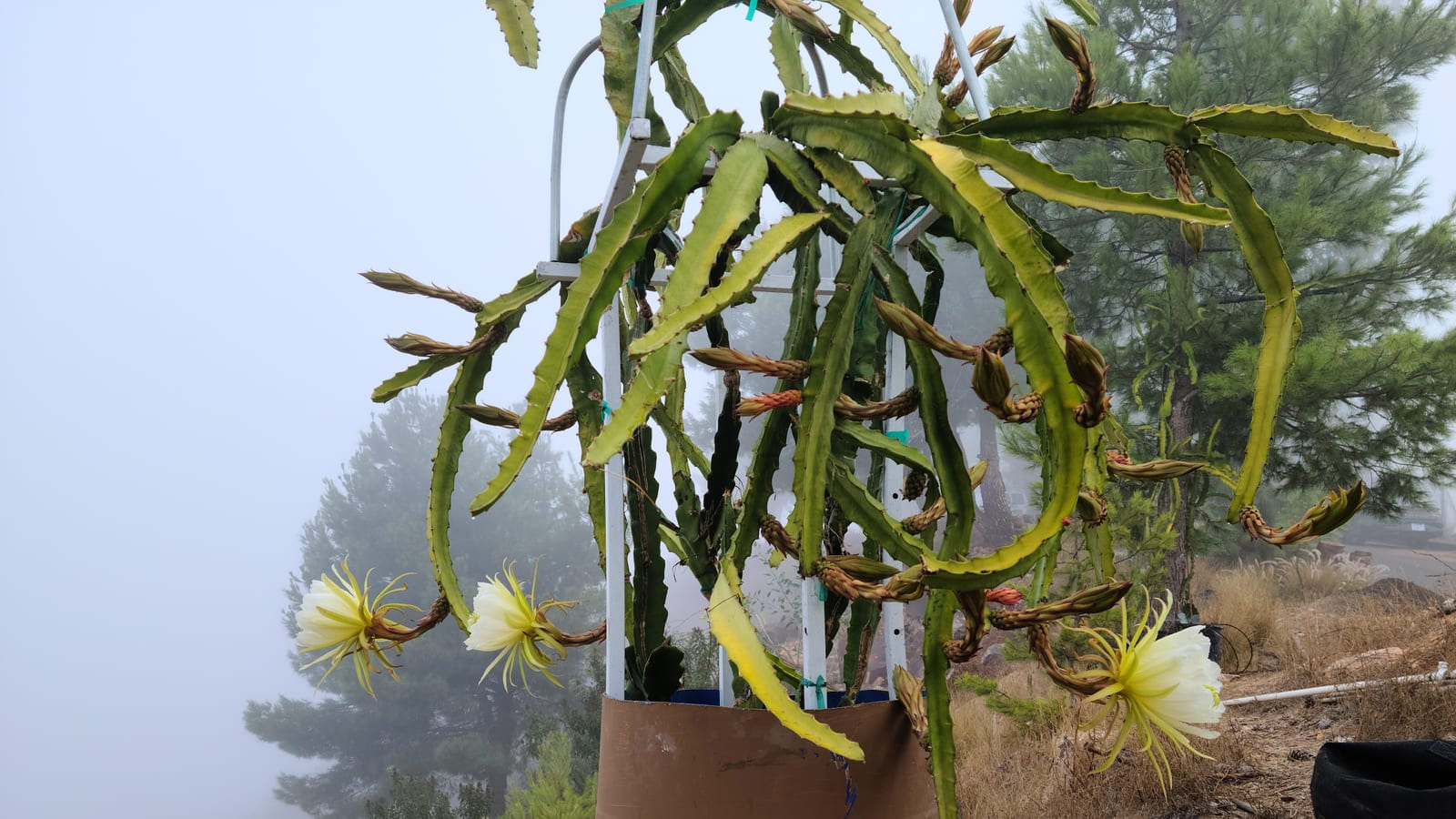
Natural Mystic is a red-fleshed dragon fruit hybrid that produces large, semi-sweet fruit with a watermelon-like flavor. It is one of the few red-fleshed varieties that is self-fertile, meaning it can set fruit using its own pollen. The plant features three-sided, meaty stems with small to medium spines. You will notice the flower buds turn from light green to white as they develop. The blooms are nocturnal, opening in the evening and closing by morning. Because the flower only lasts for one night, timing is critical for fruit set.
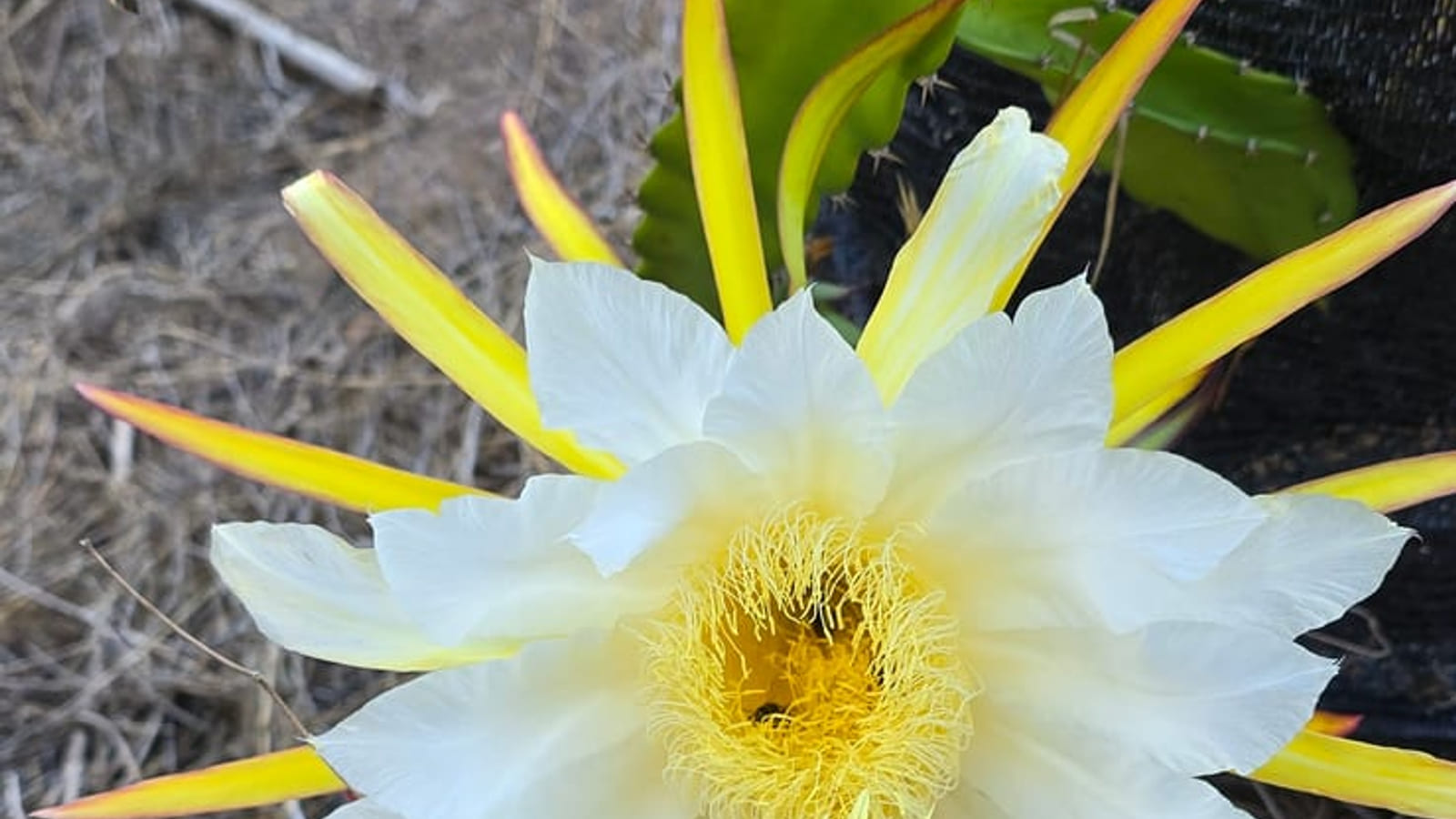
These flowers are large and bell-shaped with white, fragrant petals and a golden yellow center. They typically open around 6:40 pm and are fully open by 10:00 pm. Pollination must occur while the flower is open, ideally after 10:00 pm. If you live in an area without active nocturnal pollinators like moths or bats, you can hand pollinate the flower. Use a small soft brush to transfer pollen from the anthers to the sticky stigma. Once pollinated, the young fruit begins to swell at the base. For more details on managing your plant's health, check out our guide on preventing rust on dragon fruit stems.
What kind of flower it is
Natural Mystic produces a classic dragon fruit bloom, often called the "Queen of the Night." These flowers are hermaphroditic, meaning each one contains both male and female reproductive parts. The male parts are the cream-colored stamens surrounding the center, while the female part is the stigma, a sticky, lobed tip located in the golden yellow center. Because the flower contains both, it has the potential to set fruit without a partner, a trait that makes Natural Mystic particularly reliable for home growers.
From bud to bloom
The journey from bud to open flower is a slow, visible process. The buds start as cylindrical structures that are light green in color. As they mature, they gradually turn white. For Natural Mystic, this development phase typically takes roughly 16 to 17 days, during which the bud grows significantly in length before reaching anthesis, or full bloom. While some dragon fruit species can take 30 days or longer to develop a bud, Natural Mystic tends to move through this stage relatively quickly once the plant is established and conditions are right.
Timing tip: Since the bud takes about two weeks to develop, you can predict the bloom date by watching for the color change from green to white. This gives you a heads-up to be ready for the night of opening.
The anatomy of the bloom
When the flower finally opens, it reveals a large, bell-shaped structure with white, fragrant petals. The interior features a distinct golden yellow center where the critical pollination work happens. The stamens are covered in pollen, and the stigma is designed to catch it. This specific arrangement allows for self-pollination, but the physical act of transferring pollen from the anthers to the stigma is what triggers fruit set. Understanding this anatomy is key to successful hand pollination if natural pollinators are scarce.
For a deeper look at how this variety performs in the garden, see our full profile on natural-mystic-dragon-fruit.
When Natural Mystic flowers
Natural Mystic does not bloom on a strict calendar. Instead, it responds to environmental cues, typically producing flushes of flowers from late spring through early fall. In warm climates, heat, long days, and recent rain act as the primary triggers for these blooming cycles. While the plant can begin producing flowers earlier, heavy and consistent production usually does not kick in until the plant reaches its third year of growth. By that point, the three-sided, meaty stems have developed enough energy reserves to support the energy-intensive process of flowering.
Reading the seasonal cues
Because the variety is sensitive to temperature and day length, your local climate dictates the rhythm of the bloom. If you are in a cooler zone, the flowering window may be shorter or less predictable. Growers in these areas often report that Natural Mystic can blossom for a season or two without setting fruit. This is common in young plants that have not yet reached full maturity, which typically occurs between two and three years of age. In these cases, the plant is biologically capable of flowering but may lack the vigor to sustain fruit set without assistance. Hand pollination becomes a critical tool here, ensuring that the limited blooms available during the season result in actual fruit rather than just decorative flowers.
As the season progresses, the plant may produce multiple waves of flowers. Each wave is a separate event, and the plant needs time to recover and build energy between them. If you notice the stems looking stressed or the new growth slowing down, it may be a sign that the plant is prioritizing vegetative growth over reproduction. Ensuring the plant is healthy and free from issues like rust, which this variety is susceptible to, helps maintain the energy levels needed for consistent blooming.
Understanding these seasonal patterns allows you to anticipate when to be ready for the night of opening. Since the flowers only last for one night, knowing when the flush is likely to occur helps you plan your hand pollination schedule. For a deeper look at how this variety performs in the garden, see our full profile on natural-mystic-dragon-fruit.
The one-night-only window and pollination
Dragon fruit blooms are often called the "Queen of the Night" or "Moonflower" because they operate on a strict nocturnal schedule. The entire lifecycle of a single flower is brief, lasting only about one night. This short window makes timing the most critical factor in your success. While the flower is open, it is vulnerable to the elements and dependent on immediate action for fruit set.
Nature has designed these blooms to attract nocturnal pollinators. Moths and bats are the primary visitors, drawn to the large, fragrant petals during the dark hours. In some cases, bees may visit certain cultivars in the early morning, but for most growers, the night shift is where the work happens. If you live in an area without active nocturnal pollinators, you must step in. You have a window from opening to closing to complete the transfer. This is not a task that can be delayed until the next day. Once the flower closes, it cannot be pollinated, and the potential fruit is lost.
Reading the signs of success
After the flower fades, you can determine if pollination occurred by observing the base of the bloom. If the flower looked healthy, opened fully for one night, and then collapsed without any swelling at the base, pollination did not happen. The plant has simply discarded the unfertilized flower. Conversely, a successful pollination triggers a visible change. The flower will fade over the next day or two, but the young fruit will begin to swell at the base. If you see a drop or a brown, non-swelling base, the attempt failed. When the base swells, you have a fruit on the vine. From that point of successful pollination, the fruit typically takes about 30 to 45 days to reach ripeness.
Natural Mystic's self-fertile advantage
Most red-fleshed dragon fruit varieties require a compatible partner to produce fruit. Natural Mystic breaks this pattern. As a hybrid of Hylocereus polyrhizus and Hylocereus undatus, it carries the genetic ability to set fruit using its own pollen. This self-fertility is a significant advantage for growers who only have space for one plant or who live in areas with limited nocturnal pollinator activity. You do not need to hunt for a specific cross-pollinator to get a harvest.
While the flower is hermaphroditic, containing both male and female parts, self-fertility does not mean the plant is immune to environmental stress. Cross-pollination can still improve fruit set and potentially increase the number of fruits per flush. If you have another dragon fruit variety blooming at the same time, a little pollen exchange can boost your yield. However, if you are growing Natural Mystic in isolation, you can rely on its internal mechanics to produce fruit.
Why this matters: Self-fertility reduces the risk of a failed season due to lack of pollinators. In cooler zones or urban environments where moths and bats are scarce, this trait ensures that a single healthy plant can still produce fruit without external help.
Understanding this trait helps you manage expectations. If your plant is young or in a cooler climate, it may take a season or two to establish a consistent bloom cycle. Once the plant matures and reaches its third year, the combination of self-fertility and proper environmental cues leads to reliable fruit production. For a deeper look at how this variety performs in the garden, see our full profile on natural-mystic-dragon-fruit.
FAQPage Q&A
Growers often ask why a healthy plant produces beautiful blooms but no fruit. The most common culprit is a timing mismatch. If you live in an area without active nocturnal pollinators like moths or bats, the flower may open and close without ever receiving pollen. Since the bloom lasts only one night, you have a narrow window to act. If the flower looks healthy in the evening but collapses the next morning without the base swelling, pollination likely did not occur. In these cases, hand pollination is the standard fix. You can also check our guide on natural-mystic-dragon-fruit for more on managing plant health during this critical phase.
Another frequent question involves the timeline from bloom to harvest. Once successful pollination happens, the flower fades over the next day or two, and the young fruit begins to swell at the base. From that point, the fruit typically takes about 30 to 45 days to reach ripeness. If the base of the flower turns brown or drops off without swelling, the pollination attempt failed, and you will need to wait for the next bloom cycle. This process is not immediate, so patience is key while the plant develops the fruit.
Many home growers wonder why their plants flower for a season or two without setting any fruit at all. This is often a sign of immaturity or environmental stress. Natural Mystic tends to produce heavy, consistent fruit only after reaching its third year of growth. Before that, the plant may focus energy on stem development rather than reproduction. Cooler zones can also delay this process. Ensuring the plant is mature and providing hand pollination when natural pollinators are scarce usually resolves this issue. The plant needs enough energy reserves in its three-sided stems to support the energy-intensive process of flowering and fruiting.
Symptom to cause: flowers but no fruit
Seeing a beautiful bloom that vanishes the next morning without leaving a fruit behind is a common frustration for dragon fruit growers. For Natural Mystic, this usually points to a gap in the pollination process or a plant that is not yet ready to commit energy to fruit development. Since the flower only lasts for one night, the window for success is narrow and unforgiving. If the base of the flower does not swell after the bloom closes, the pollen did not successfully reach the stigma.
Why the flower drops
The most frequent cause is a lack of active pollinators. While Natural Mystic is self-fertile, it still requires the physical transfer of pollen from the anthers to the sticky stigma. In areas without nocturnal moths or bats, this transfer rarely happens on its own. If you have not hand-pollinated the flower, it is likely that the pollen simply sat on the stamens and never made the jump to the female parts. Another factor is plant maturity. Young plants often focus their energy on building stem mass and root structure rather than producing fruit. It is not uncommon for a plant to blossom for a season or two without setting fruit, particularly if it is still under three years old. In these cases, the plant is signaling that it is ready to flower but not yet robust enough to support the energy cost of fruiting.
| Symptom | Likely Cause | Action |
|---|---|---|
| Flower closes, base stays flat and brown | Pollination did not occur | Hand pollinate next bloom after 10 pm |
| Flower opens, but plant is young | Plant not mature enough for fruit | Focus on stem growth; wait for year 3 |
| Flower wilts early in the night | Stress or temperature shock | Check for heat spikes or wind damage |
Confirming the failure
You can diagnose the issue by inspecting the flower after it closes. If the base of the flower remains small, brown, and dry, pollination failed. If it had been successful, you would see the base beginning to swell and turn greenish within a day or two. A drop or a shriveled, non-swelling base is the definitive sign that the reproductive process did not complete. Do not assume the plant is sterile. Natural Mystic is a reliable variety, and the issue is almost always mechanical or developmental rather than genetic.
Tip: If you are in a cooler zone or growing a young plant, do not rely on natural pollinators. Hand pollination is the most reliable way to ensure fruit set. Use a small soft brush to transfer pollen from the anthers to the stigma while the flower is fully open, ideally after 10 pm. This simple step bypasses the need for moths or bats and gives the plant the best chance to set fruit.
Once you have successfully pollinated a flower, the young fruit will begin to swell at the base. From that point, it takes about 30 to 45 days for the fruit to ripen. If you continue to see flowers drop without swelling, check the age of your plant and ensure you are hand-pollinating every single bloom. For more details on managing your plant's health and ensuring it reaches maturity, see our full profile on natural-mystic-dragon-fruit.