Connie Mayer Dragon Fruit: Pollination Guide
Connie Mayer dragon fruit is self-sterile, so it cannot set fruit using its own pollen. You must provide pollen from a different, compatible variety to get a harvest. This plant is a hybrid of Hylocereus stenopterus and Hylocereus undatus, which makes it incompatible with other plants that share the stenopterus parent. To fruit, Connie Mayer needs pollen from varieties that do not carry that gene. Red-fleshed self-fertile types like American Beauty or Vietnamese Red work well as pollinators. Because it blooms early in the season, it often needs hand pollination or a specific neighbor that flowers at the same time.
Check our guide on dragon fruit pollination techniques for step-by-step instructions on how to transfer pollen by hand.
What Connie Mayer actually is
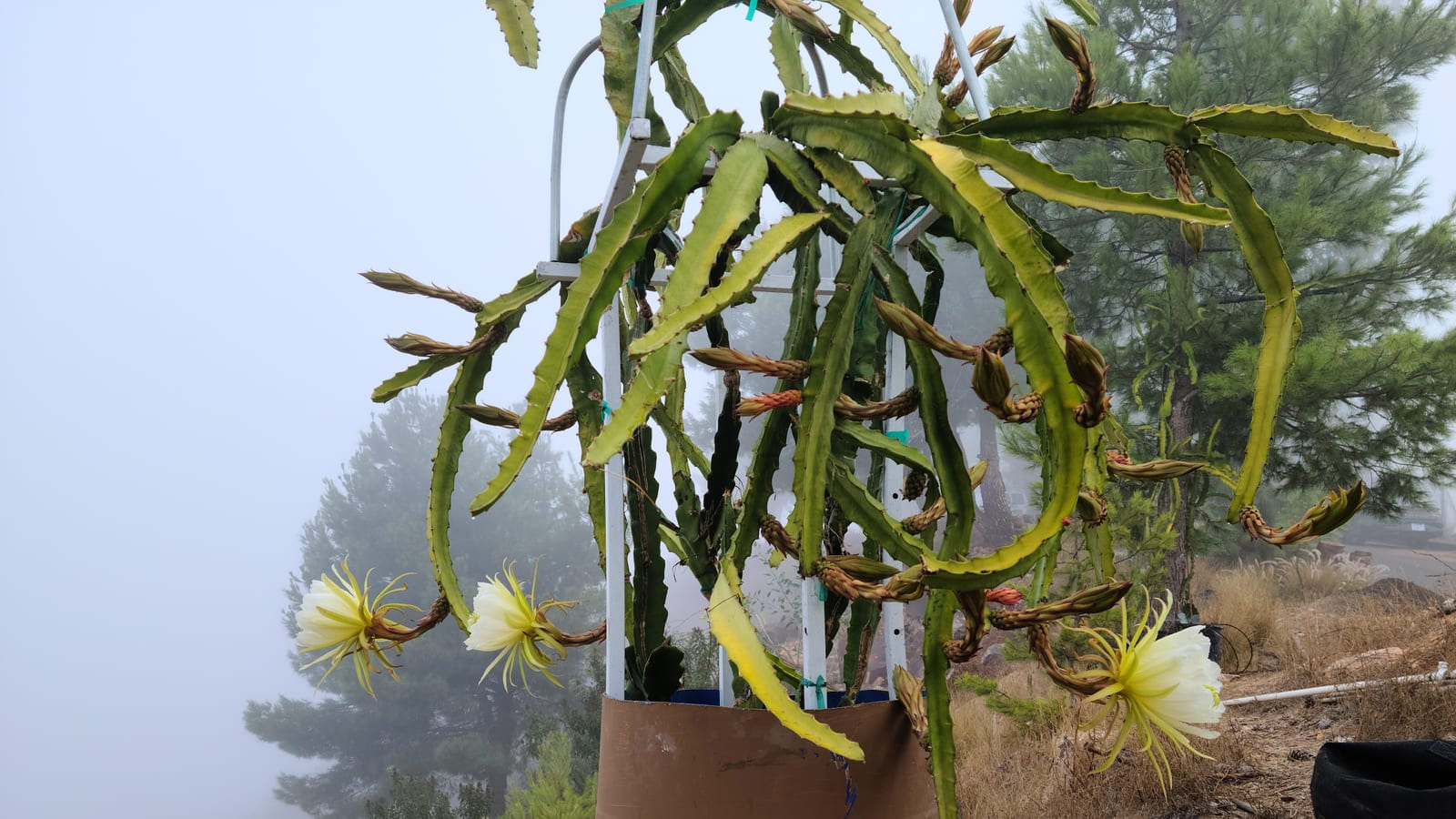
Connie Mayer is a specific hybrid clone created by German hybridizer Eckhard Meier. It sits in a small family of three sibling hybrids, alongside Bruni and Kathy Van Arum. While Kathy Van Arum stands out with its light pink flesh, Connie Mayer is nearly identical to Bruni. Both share the same genetic makeup, a cross between Hylocereus stenopterus and Hylocereus undatus. This lineage explains much of its behavior in the garden. The stenopterus parent contributes the self-sterility that defines the variety, but it also shapes the physical plant. You will notice the vine grows with three distinct sides rather than the round shape of standard white dragon fruit. The spines are tiny and single, similar to Bruni, and the plant remains very tender. This tenderness means it requires careful protection during colder months, as it lacks the hardiness of pure undatus types.
Visual identity and growth habits
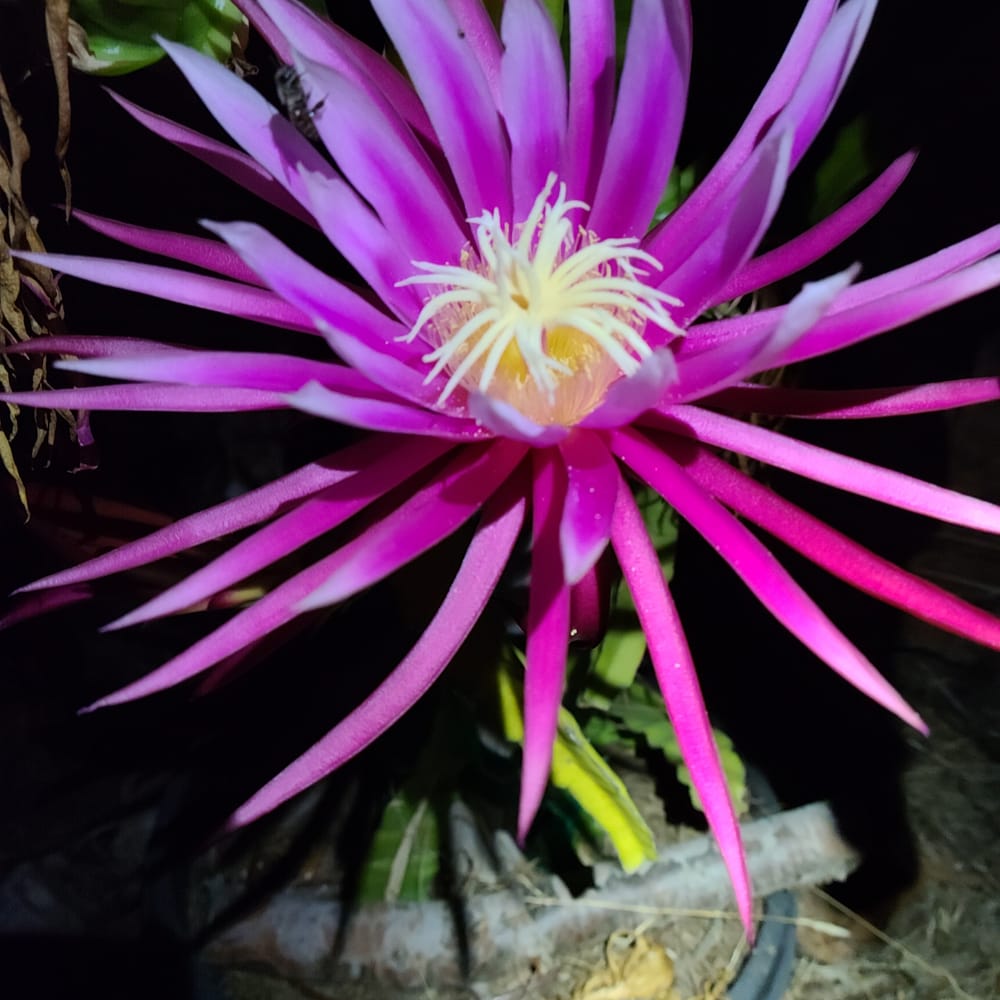
The plant is a fast grower that establishes quickly. Because it sets fruit with very little biomass, you do not need a massive, woody vine to see a harvest. A rooted cutting can produce flowers and fruit within a year or two of planting. They are medium-sized night blooms that open at dusk and close by dawn. The inner petals display a deep purple shade that transitions to light pink edges with white tips. In warmer climates like Louisiana, these flowers often open noticeably earlier than other varieties, which is a key factor in its pollination challenges. Some growers even dry the spent flowers to use for tea, adding a culinary use beyond the fruit itself.
Grower Note: Connie Mayer is a poor pollen donor. Because it blooms so early in the season, its pollen is rarely available when other varieties are ready to receive it. Treat this plant as the one that needs pollen, not the one that provides it. Do not rely on it to pollinate your other dragon fruit.
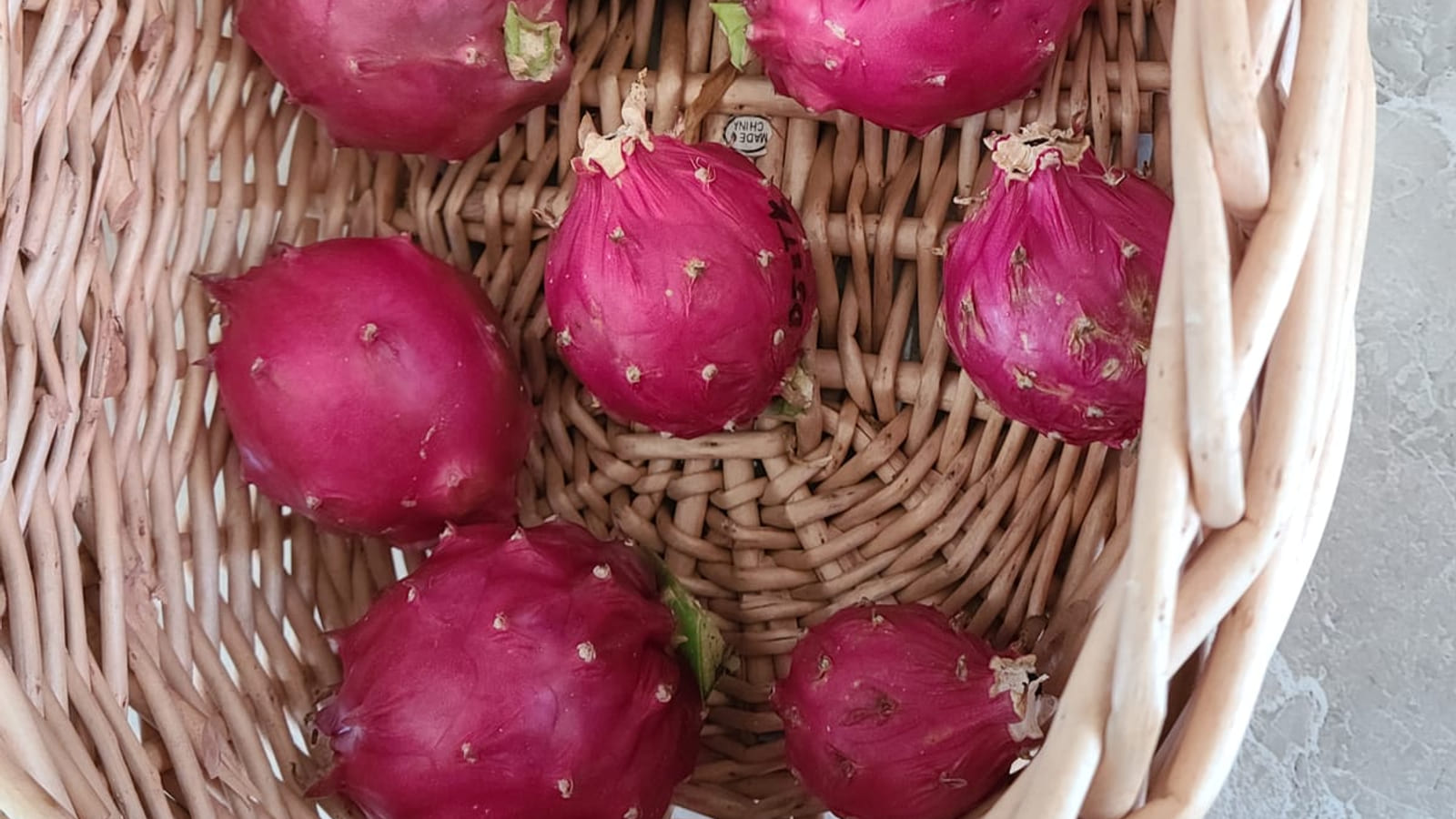
The fruit that results from successful pollination is small to medium in size, typically weighing between 200 and 400 grams. The skin remains green even when ripe, so you must judge harvest time by the pearl-white flesh inside. Flavor profiles are divided among growers, with some describing it as underwhelming and others praising its complexity. When perfectly ripe, it offers an extremely sweet taste with dominant notes of young green coconut. If allowed to sit slightly over-ripe, it develops a longan or lychee-like depth. For more details on these flavor notes and care specifics, see the full Connie Mayer variety guide.
Why it is self-sterile
The self-incompatibility in Connie Mayer is inherited directly from its Hylocereus stenopterus parent. This genetic trait creates a biological barrier that prevents the plant from fertilizing itself, even though its flowers are fully functional and produce viable pollen. The stenopterus lineage also dictates which other plants are compatible. Any variety that carries the stenopterus gene, such as its sibling Bruni, shares this self-sterile mechanism and cannot serve as a pollinator for Connie Mayer. Using Bruni pollen on Connie Mayer will result in no fruit set because the genetic codes are too similar to trigger fertilization.
Successful fruiting requires pollen from a variety that lacks the stenopterus gene entirely. This is why Hylocereus undatus types are the ideal partners. The red-fleshed self-fertile varieties, including American Beauty, Vietnamese Red, Sugar Dragon, and Natural Mystic, provide the necessary genetic difference to break the sterility barrier. White-fleshed self-fertile undatus types, such as self-fertile Guatemalan whites, also work well. Some growers have reported success with early-blooming Hylocereus polyrhizus (yellow dragon fruit) as well, provided the bloom times align. The key factor is the absence of the stenopterus gene in the pollen donor, not just the color of the flesh.
Do not use Bruni pollen. Because Bruni is also a cross between stenopterus and undatus, it shares the same self-sterile genetics as Connie Mayer. Pollinating Connie Mayer with Bruni pollen will not produce fruit. Stick to pure undatus or polyrhizus varieties for reliable results.
Understanding this genetic limitation also clarifies why Connie Mayer is a poor pollen donor for other plants. Its early bloom time means its pollen is often available before other varieties are ready to receive it. Even when timing aligns, the pollen does not set fruit well on other types. Treat Connie Mayer strictly as the recipient in your pollination strategy. If you are planning a multi-variety planting, ensure that at least one compatible undatus variety is nearby and blooming at the same time. For more details on managing bloom times and selecting the right neighbors, see the full Connie Mayer variety guide.
Choosing a pollinator for Connie Mayer
Since Connie Mayer cannot use its own pollen, you need a partner that shares the Hylocereus undatus lineage but lacks the Hylocereus stenopterus gene. This genetic distinction is the only hard rule. Any variety carrying the stenopterus parent, including its sibling Bruni, is incompatible and will not produce fruit when crossed with Connie Mayer. You want a plant that is genetically distinct enough to bypass the self-incompatibility barrier.
Red-fleshed, self-fertile undatus types are the most reliable choices. Growers consistently report success with American Beauty, Vietnamese Red, Sugar Dragon, and Natural Mystic. These varieties are robust, self-pollinating, and their pollen sets fruit on Connie Mayer effectively. If you are looking for a specific recommendation, Tasty Dragons notes that Connie Mayer will set fruit with most red-fleshed fruit pollen, making these common cultivars a safe bet for your first attempt.
White-fleshed options also work, provided they are true undatus types. Self-fertile Guatemalan whites and Pink Panther-type pollen are compatible. However, you must verify that your white variety does not have stenopterus in its background. If you are unsure of a white variety’s parentage, stick to the red-fleshed options where the lineage is clearer and the compatibility is more predictable.
| Pollinator Type | Compatibility | Notes |
|---|---|---|
| Red-fleshed undatus (e.g., American Beauty, Vietnamese Red) | High | Most reliable; sets fruit with most red pollen. |
| White-fleshed undatus (e.g., Guatemalan, Pink Panther) | Good | Must be pure undatus; no stenopterus parent. |
| Yellow dragon fruit (H. polyrhizus) | Good | Early bloomer; good timing match. |
| Stenopterus hybrids (e.g., Bruni, Kathy Van Arum) | None | Incompatible; shares self-sterile gene. |
Timing is critical
Even with the right genetic match, Connie Mayer’s early bloom time can be a hurdle. In warmer climates like Louisiana, its flowers open noticeably earlier than most other varieties. If your pollinator is a late bloomer, you may miss the window entirely. This is why early-blooming Hylocereus polyrhizus (yellow dragon fruit) is an excellent companion. It flowers early in the season, often overlapping with Connie Mayer’s bloom period, which increases the chances of natural cross-pollination without hand intervention.
If you plant a compatible neighbor that blooms at the same time, Connie Mayer can set fruit on its own, even in rainy conditions, as long as the flowers are accessible to pollinators or you can hand-pollinate during brief dry spells. In diverse multi-variety plantings, this natural overlap often eliminates the need for manual intervention. However, if you are growing Connie Mayer in isolation or with a late-blooming partner, hand pollination remains the only way to guarantee a harvest. For detailed instructions on transferring pollen by hand, see our guide on the full Connie Mayer variety guide.
Pro Tip: Connie Mayer is a poor pollen donor. Do not plant it expecting it to pollinate your other varieties. Its early bloom means its pollen is rarely available when other plants are receptive. Treat it as the recipient, not the provider.
How to hand-pollinate Connie Mayer
Timing is critical with this variety. Because Connie Mayer blooms early and closes by dawn, you need to work during the night when the flower is fully open and the pollen is most viable. The best window is usually around 10 pm, when the petals have unfurled completely. If you wait until morning, the flower will be closing, and the pollen will be less effective. You will need a fine makeup brush or a small, soft paintbrush. Avoid using your fingers, as moisture from your skin can ruin the pollen grains.
Gathering the pollen
Start by locating the anthers, which are the yellow, pollen-covered structures surrounding the central stigma. Gently rub the tip of your brush against these anthers to collect a dry, powdery layer of pollen. You want a visible dusting on the brush, but do not pack it too tightly. If the air is humid or rain is forecast, cover the flower with a plastic bag to keep moisture out. Open the bag briefly to perform the pollination, then reseal it to protect the stigma from rain, which washes pollen away and prevents fertilization.
Applying the pollen
Once you have gathered the pollen, move to the stigma, the sticky, multi-lobed structure in the center of the flower. Rub the pollen onto the entire surface of the stigma, coating it several times to ensure thorough coverage. Do not just dab it in one spot. The goal is to get pollen onto every part of the receptive tissue. If you have a compatible pollinator variety blooming at the same time, you can also use a small piece of tissue to transfer pollen directly from the donor flower to the Connie Mayer stigma.
After pollination, watch the flower closely over the next few days. Success is indicated when the petals yellow and fall off, while the base of the flower remains green and firm on the branch. If the entire flower drops or the base turns brown and shrivels, pollination failed. In humid climates, it is a good idea to remove the yellowed petals manually after they separate to prevent rot from setting in on the developing fruit. For more details on interpreting these signs, check out our guide on the full Connie Mayer variety guide.
Did it take? What to look for 4-7 days later
You do not need to wait for a fruit to appear to know if your pollination worked. The plant gives you a clear signal within the first week. Watch the base of the flower where it connects to the branch. If the pollination was successful, the petals and sepals will begin to yellow and dry out. They will eventually separate and fall away. The critical part is the base. It should remain green, firm, and attached to the vine. This green base is the developing fruit. If the entire flower, including the base, turns brown and shrivels up, the pollination failed. The flower will drop off completely, leaving no sign of a fruit.
Timing matters for this check. The flower opens at dusk and closes by dawn. You performed the pollination in the evening. Four to seven days later, the flower should be in the process of dying back. If you see the yellowing petals but the base is still green and plump, you have a fruit set. This is the moment to stop worrying about the flower and start thinking about the fruit. You are looking for the structural change from a flower to a fruit.
If you are growing multiple varieties, you might notice that Connie Mayer sets fruit more reliably when a compatible neighbor blooms at the same time. However, even in a diverse planting, if you see the flower drop without a green base remaining, the timing or compatibility was off. Check your notes. Did the pollinator bloom at the same time? Was the pollen fresh? If you are unsure, you can try again with a different compatible variety, such as a red-fleshed self-fertile type, at the next bloom.
For more details on what to expect as the fruit matures, see the full Connie Mayer variety guide.
Connie Mayer fruit and flavor
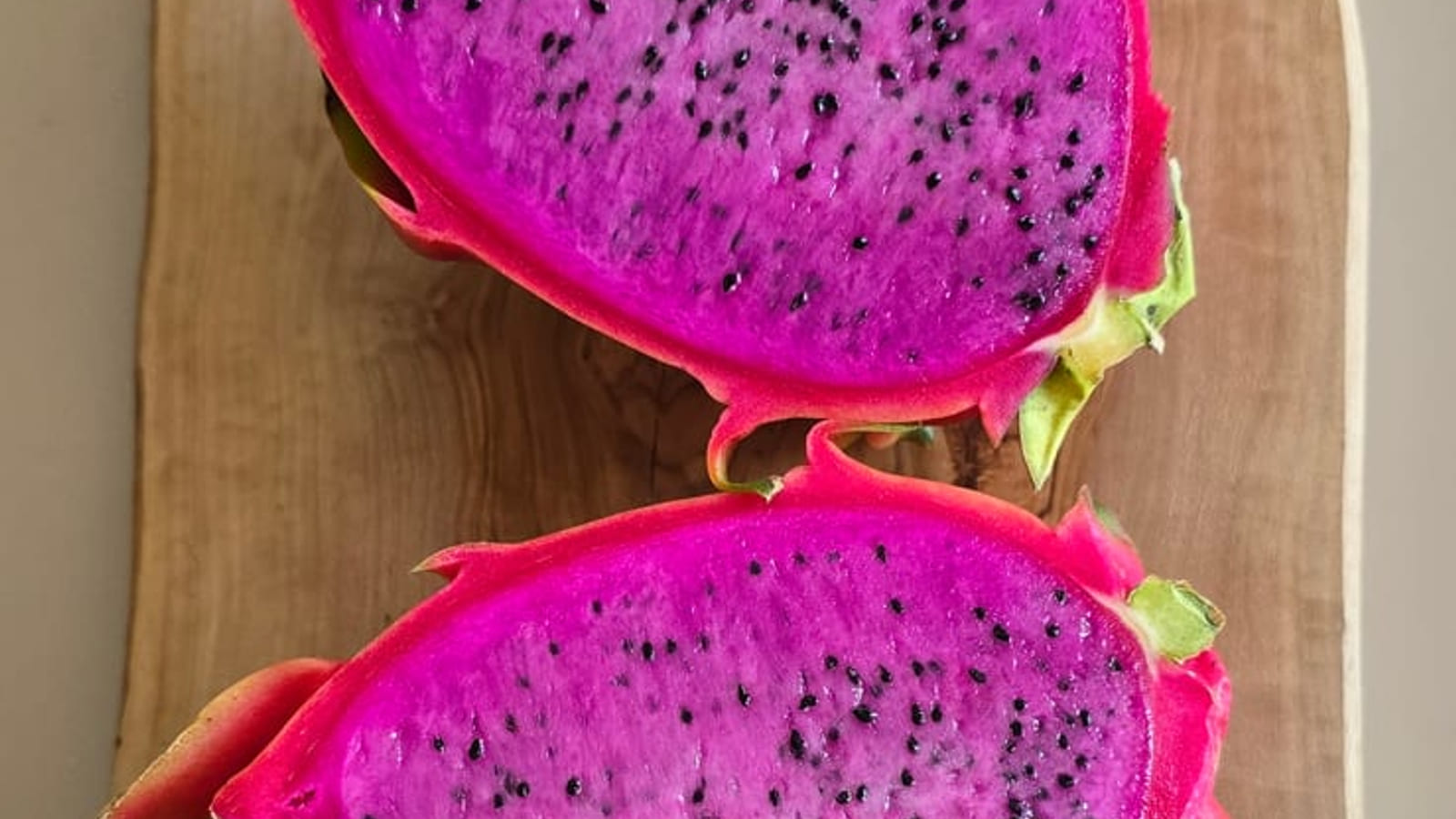
The fruit that results from a successful cross is small to medium, typically landing in the 200 to 400 gram range. Unlike many dragon fruits that change color at the stem or blush, the skin of Connie Mayer remains green even when the fruit is fully ripe. This makes visual cues from the outside unreliable. You must judge harvest time by the flesh. The interior is a distinct pearl-white, contrasting sharply with the red-fleshed pollinators often used to set it.
Flavor is where this variety earns its reputation, though opinions among growers are split. Some find the taste underwhelming for a white-fleshed type. Others, including those at Rare Dragon Fruit, rank it as one of the most complex and flavor-forward white varieties available. It has an extremely sweet taste with high sugar content. The dominant note is young green coconut. Some growers describe it as tasting like coconut candy. If you let the fruit sit slightly past peak ripeness, the profile shifts. It develops a deeper, longan or lychee-like complexity that adds a layer of nuance to the initial coconut sweetness.
Because the skin does not signal ripeness, timing your harvest is a matter of patience and observation. The fruit matures about 30 days after flowering. For more details on managing the plant's tenderness and potential rust issues during seasonal changes, see the full Connie Mayer variety guide.
Harvest Tip: Since the skin stays green, do not wait for a color change. Rely on the 30-day maturation window and the weight of the fruit.
FAQ
Can I use Bruni pollen to fertilize Connie Mayer? No. Both varieties share the Hylocereus stenopterus parent, which carries the self-sterile gene. Because they are genetic siblings, their pollen is incompatible. You must use a pollinator that does not carry the stenopterus lineage, such as a red-fleshed Hylocereus undatus type or yellow dragon fruit.
Is Connie Mayer a good pollinator for other plants? Generally, no. It blooms very early in the season, often before other varieties are ready to receive pollen. Treat Connie Mayer as the plant that needs help, not the one that provides it. If you want a reliable pollen source for your other vines, choose a self-fertile variety that blooms during the main season.
What happens if I miss the flower window? Dragon fruit flowers are short-lived, opening at dusk and closing by dawn. If you miss the night, that specific flower will not set fruit. However, the plant is a fast grower and will produce more flowers. Consistent monitoring during the blooming period is key to maximizing your harvest.
Can I store pollen for later use? Yes. You can collect pollen from open flowers into a small bowl. Let it dry for about 24 hours, then store it in a sealed container in the freezer. This allows you to bank pollen from an early bloom to use on a later flower if needed. Just ensure the pollen is completely dry before storage to prevent mold.
Why did my fruit drop after pollination? If the flower part yellows and separates while the base remains green and firm, the pollination was successful. If the entire structure turns brown and falls off, the pollination likely failed or the plant was stressed.
Do I need to hand pollinate if I have multiple plants? If you have a compatible neighbor that blooms at the same time, natural pollination may occur. In diverse plantings, Connie Mayer can set fruit without manual intervention, even in rainy conditions. However, hand pollination guarantees fruit set and often results in larger, better-shaped fruit. For the best results, especially if you only have one plant, hand pollination is recommended.
Is the flower edible? Growers often dry the spent flowers to use for tea.
For more details on flavor profiles and long-term care, see the full Connie Mayer variety guide.