Cebra Roja Dragon Fruit: The Truth Behind the Name
Want to grow Cebra Roja dragon fruit? Know this first: the name is a marketing label for the Nicaraguan cultivar Cebra, not a registered variety. It is a red-fleshed pitaya of Hylocereus polyrhizus, which Kew’s Plants of the World Online now classifies as Selenicereus monacanthus. Expect substantial, dark red fruit averaging about 1 lb with sweet 18 to 20 Brix readings. The plant has greyish-green stems protected by a waxy coating. Cebra is self-sterile. You cannot grow it alone. You need a second cultivar for cross-pollen and you must hand pollinate the night blooms for a reliable harvest. Without a partner plant, you get flowers but no fruit. We stock compatible pollinators and cuttings ready for your trellis.
The name mess: Cebra, Cebra Roja, Rosa Lisa, Costa Rican Cebra
You will see this plant sold under four different labels. They all point to red-fleshed pitaya lines, though origins and traits vary. The confusion reflects how the plant moves through the trade. It reflects trade labeling practices and the gap between DNA data and visual traits.
DNA analysis confirms that plants labeled Cebra and Rosa Lisa share the same genotype.[7] Despite this genetic identity, experienced growers often report minor visible differences in stem appearance and fruit shape between the two name lines. These discrepancies are likely due to environmental factors or selection within the same genetic pool, rather than distinct cultivar status.
The situation gets murkier with the label "Costa Rican Cebra." Some listings describe it as self-pollinating with mild red flesh, which directly contradicts the self-sterile nature of the true Cebra line.[9] This suggests that "Costa Rican Cebra" may sometimes refer to a different selection or a mislabeled plant, even if the name implies a geographic origin for the same stock.
Comparative analysis shows that white-fleshed species often contain more volatile aroma compounds than their red-fleshed counterparts.[2] The red pigment is a visual trait, not a proxy for superior taste or aroma.
| Name on Tag | What It Refers To | Claim Reliability |
|---|---|---|
| Cebra | The original Nicaraguan cultivar | High. This is the genetic baseline. |
| Rosa Lisa | Genetically identical to Cebra | High. DNA matches Cebra, though visual traits may vary slightly. |
| Cebra Roja | Marketing label for Cebra | Medium. Accurate plant, but the name is not a registered variety. |
| Costa Rican Cebra | Often a mislabeled or different selection | Low. Claims of self-pollination conflict with known Cebra traits. |
When you buy, ask for the genetic source. If the seller cannot confirm it is the self-sterile Nicaraguan line, you may be getting a plant that behaves differently in your garden.
Taxonomy, and why your tag is out of date
If you check the botanical name on a Cebra Roja label, you will likely see Hylocereus polyrhizus. That name has a long history. Britton and Rose validly published it in Cactaceae 2: 185 in 1920, basing it on the earlier description Cereus polyrhizus by F.A.C. Weber in 1897.[5] However, modern taxonomic consensus has shifted. Plants of the World Online now treats Hylocereus polyrhizus as a synonym of Selenicereus monacanthus.[6] This means the species name on most nursery tags is technically outdated according to current Kew standards. Do not worry if you see both names in circulation. Peer-reviewed pitaya literature frequently still uses H. polyrhizus, so using either term in conversation or research is defensible. The plant itself does not change, only the label attached to it.
Fruit, flavor and the sweetness argument
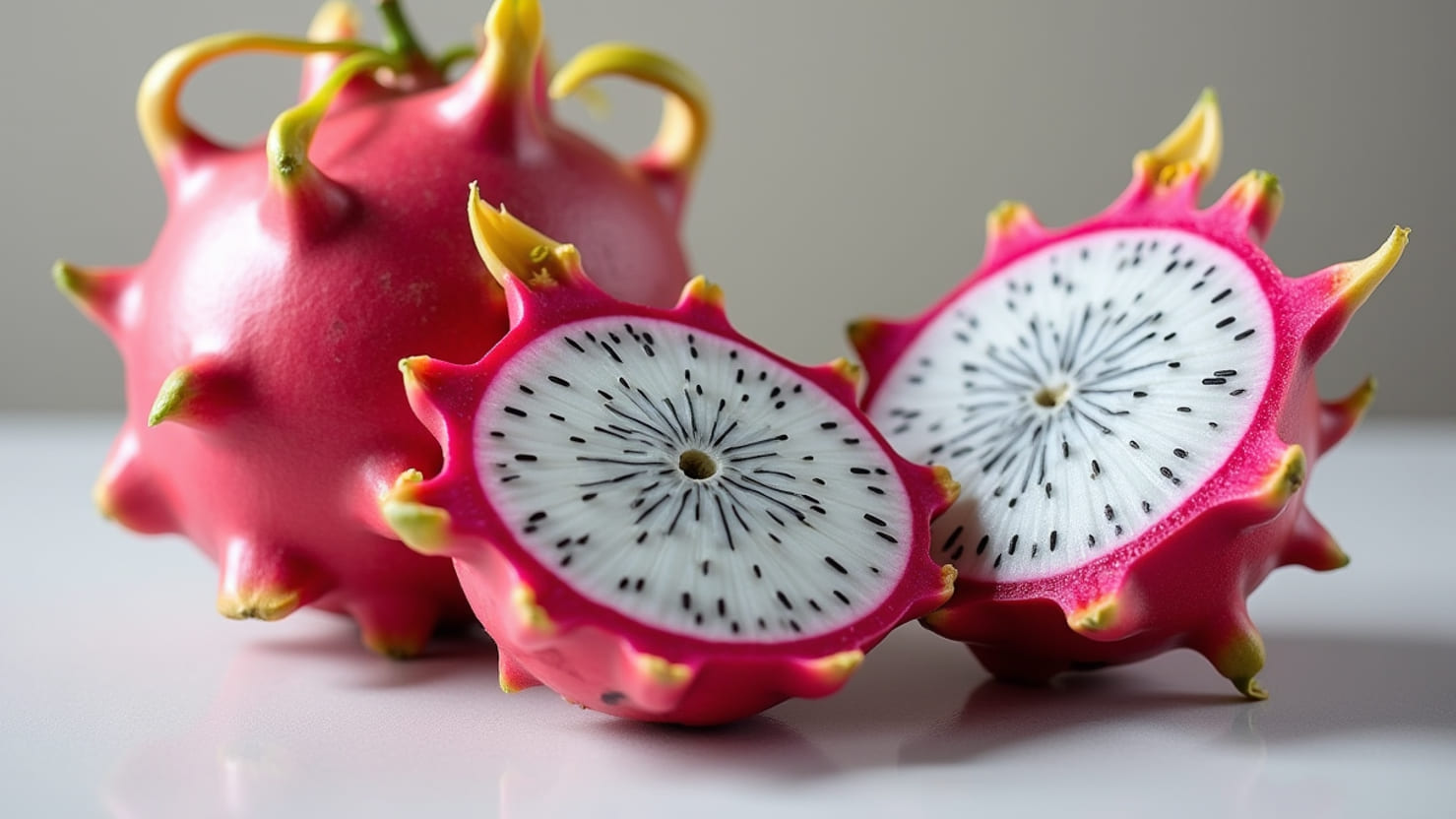
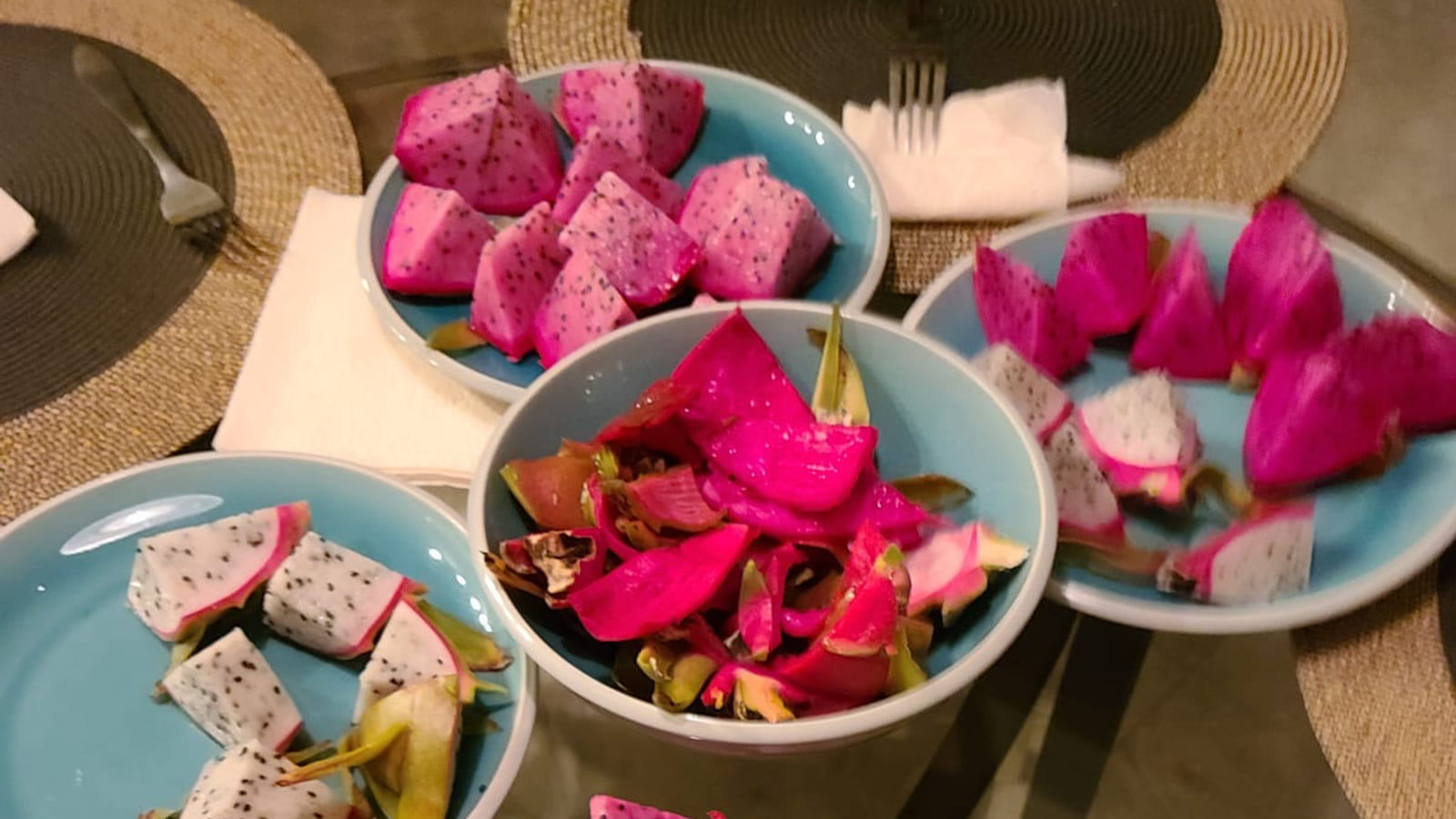
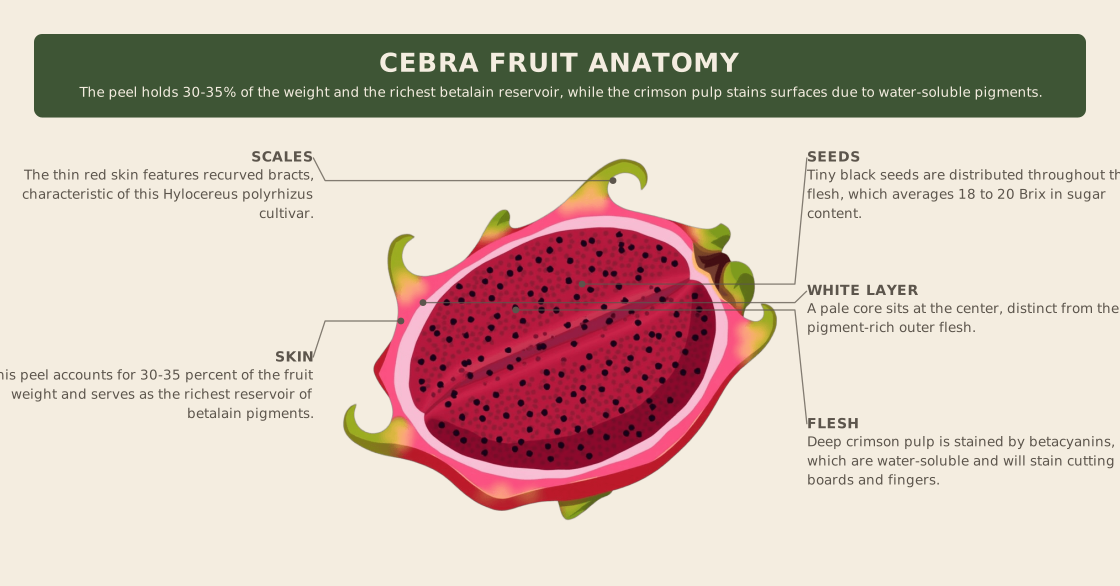
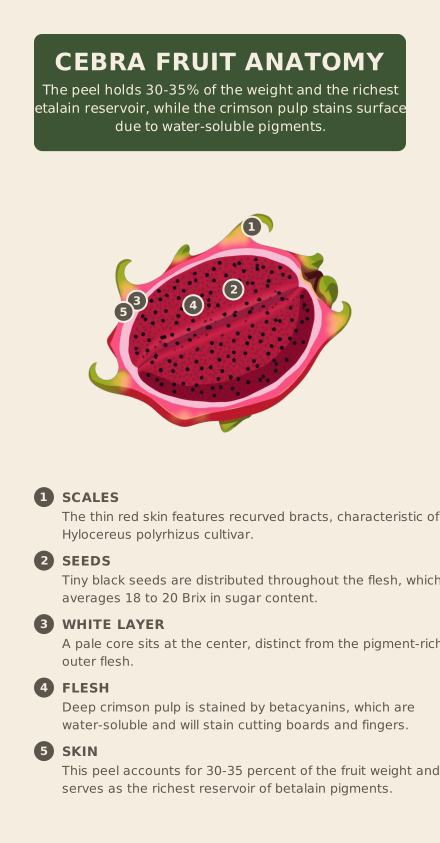
You can expect a substantial harvest from a well-managed Cebra Roja vine. The fruit is dense and juicy, packed with tiny black seeds that add texture without crunch. When you cut into a ripe specimen, the dark red flesh stains everything it touches, from your cutting board to your fingers. It is a heavy, pigmented pitaya that demands attention in the kitchen and on the plate.
Weight and sugar content are where the conversation gets complicated. Most growers report that Cebra fruit averages about 1 lb, or roughly 450 g, per piece.[8] That is a solid, marketable size for a backyard trellis. The sweetness, however, is a moving target. A commercial nursery in Nicaragua reports an average Brix of about 19, with some samples climbing into the 20s.[8] Other growers see similar highs, with individual fruits measuring in the low 20s.[7] These numbers suggest a sweet, rich flavor profile that justifies the hype.
But do not treat those numbers as a guarantee. OAX Dragon Fruit Farm lists Cebra as having a very high tart berry character and low sugar, which directly contradicts the sweet 18 to 20 Brix profile sold elsewhere.[10] This reflects how variable pitaya flavor can be. Brix is a function of ripeness, ambient temperature, crop load, and the age of the scion. A single nursery reading is a snapshot, not a promise. If your plant is stressed, over-cropped, or harvested too early, you will taste the tartness OAX describes. If it is mature, well-fed, and picked at peak ripeness, you will taste the sweetness the Nicaraguan nursery reports.
Why the discrepancy? Flavor is not static. It changes with every season and every fruit. Do not judge your Cebra Roja by one harvest. Taste it over several seasons to understand how your specific microclimate affects the sugar-to-acid balance.
Spec sheet and conflicting reports
Here is the baseline data you can expect from true-to-type Cebra Roja, followed by the honest dissent from other growers.
The Dissent: OAX Dragon Fruit Farm
OAX lists Cebra as red-fleshed with a very high tart berry character and low sugar.[10] This report stands in contrast to the sweet 18 to 20 Brix profile cited by other sources. Both are correct in their own context. OAX likely tested fruit under different conditions or at a different stage of maturity. Cebra Roja performs variably. It can be sweet, or it can be tart. Your results depend on how you manage the plant.
Why the flesh is red and what that means in the kitchen
The deep crimson color inside a Cebra Roja fruit is not just a visual trick. It comes from betacyanins, a group of water-soluble, nitrogen-containing pigments.[4] If the color reminds you of beetroot, that is because they belong to the same pigment family. This shared chemistry explains why red pitaya stains cutting boards and fingers so aggressively. The pigment is designed to dissolve in water, so it spreads quickly when the fruit is cut or blended.
Many gardeners assume red flesh automatically means higher health benefits. The data suggests otherwise. When researchers compared red-fleshed Hylocereus polyrhizus (Siyam) with white-fleshed Hylocereus undatus (Vietnam Jaina), the total phenolic content was nearly identical. The red variety measured 16.66 mg GAE per 100 g, while the white variety measured 17.11 mg GAE per 100 g.[2] Quercetin was the dominant phenolic compound in both. The case for red pitaya is the betacyanin pigment itself, not a general antioxidant halo that dwarfs white varieties.
| Metric | Red Flesh (H. polyrhizus) | White Flesh (H. undatus) |
|---|---|---|
| Total Phenolics (mg GAE/100 g) | 16.66 | 17.11 |
| Dominant Phenolic | Quercetin | Quercetin |
| Primary Pigment | Betacyanins | None (colorless) |
| Peel Weight Contribution | 30-35% (Pigment rich) | 30-35% (Less pigment) |
The peel is where the pigment concentration peaks. Dragon fruit skin accounts for 30 to 35% of the whole fruit weight and serves as the richest reservoir of betalains in red-fleshed types.[4] When you eat the flesh, you are consuming a diluted version of the pigment load found in the skin. This matters if you are processing the fruit. The flesh is juicy and vibrant, but the peel holds the bulk of the color compounds.
Betalains are fragile. They break down when exposed to light, oxygen, high water activity, and heat.[4] Temperatures above roughly 50 C cause rapid degradation. This is why hot-dried red pitaya often turns brown and loses its antioxidant capacity. If you want to preserve the color and nutritional value, eat the fruit fresh, freeze it, or dry it at low temperatures for a long time. High-heat cooking will strip the red hue and the associated benefits.
Industry Note: Commercial producers stabilize these pigments by encapsulating them. One method uses maltodextrin and ultrasound to achieve over 79% encapsulation efficiency, which raises the thermal onset temperature and protects the color from heat damage.[4]
For the home grower, the lesson is simple. Treat Cebra Roja as a fresh-eating fruit. Do not try to can it or bake it into hot pastries if you want to retain the red color and the betacyanin content. The pigment is beautiful, but it is chemically temperamental. Protect the pigment from heat to keep the color.
Pollination: the part that decides whether you get fruit
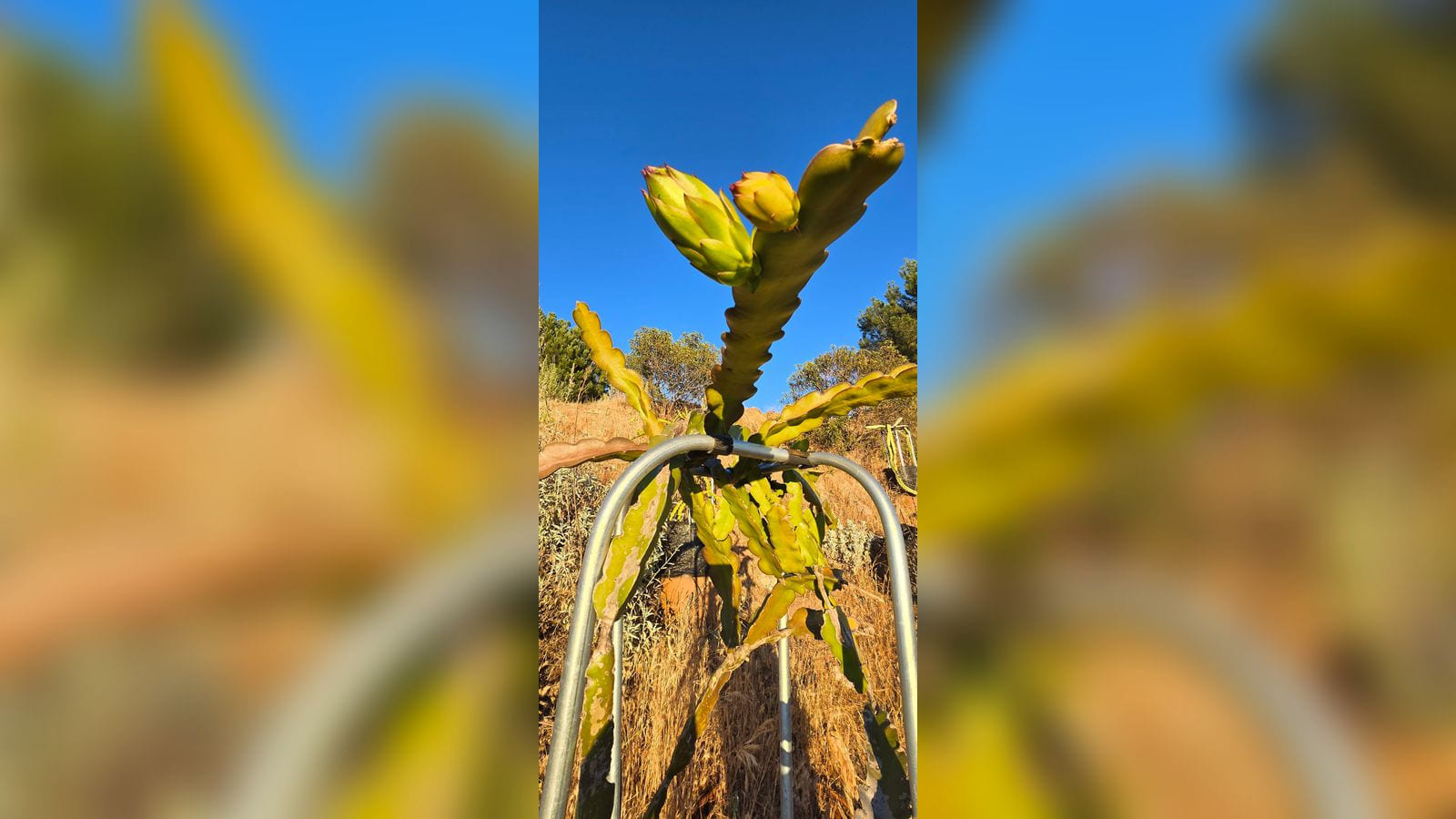
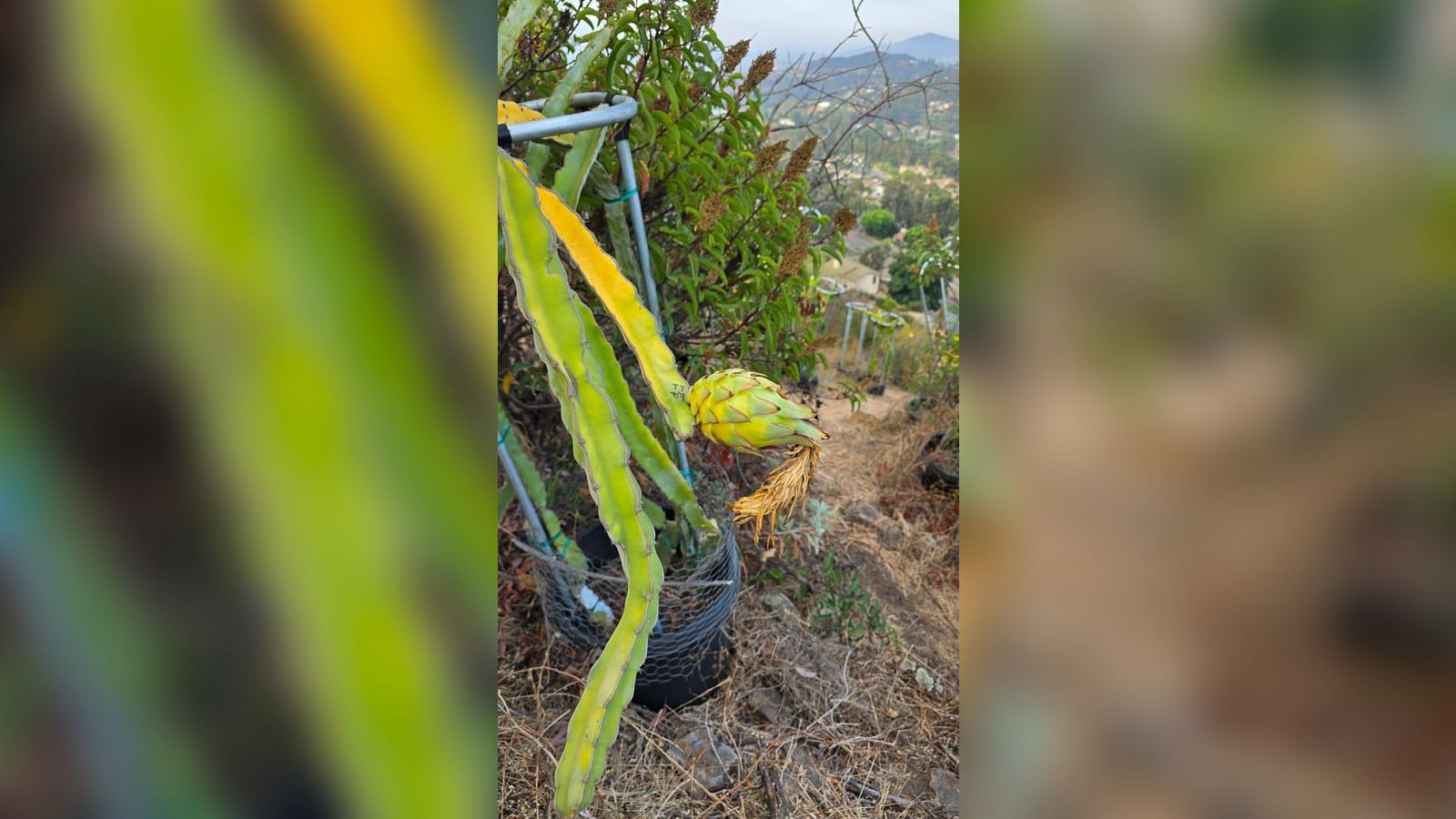
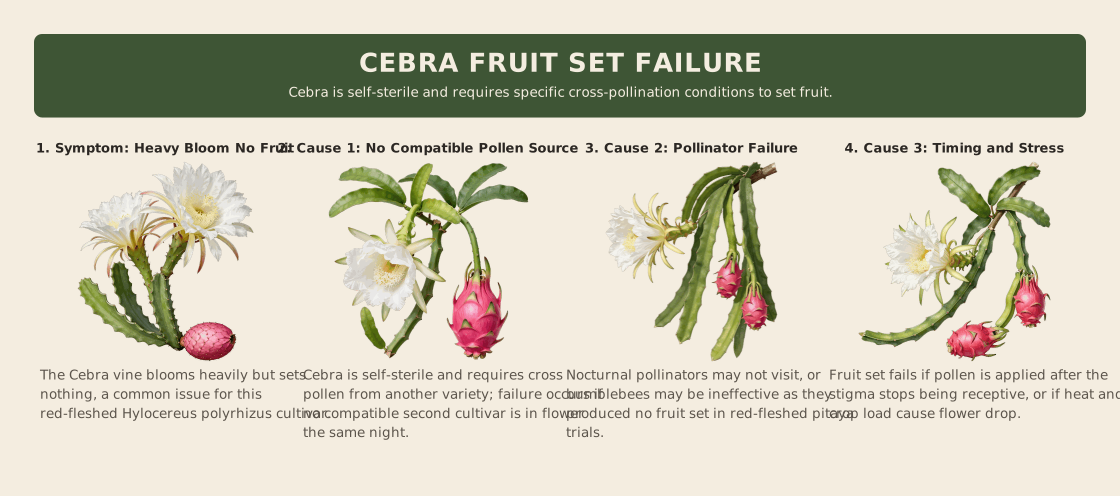
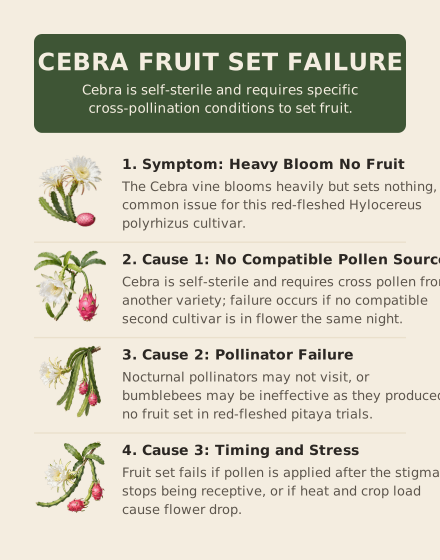
You cannot rely on luck or local insects to set Cebra Roja. The cultivar is self-sterile, meaning its own pollen will not fertilize its own flowers. You need cross-pollen from a different variety. Without a partner plant, your trellis will produce beautiful night blooms that drop off without forming fruit. This is the primary bottleneck for red-fleshed pitayas.
The data supports a hands-on approach. In a controlled trial involving Red Jaina, a close relative of Cebra within the same species, natural pollination resulted in a fruit set of only 14.30%. When growers switched to hand pollination, that number jumped to 77.40%.[1] The difference in fruit quality was equally stark. Naturally pollinated fruits weighed an average of 40.64 g, while hand-pollinated fruits reached 164.70 g.[1] This is a statistically significant gain that directly impacts your harvest weight.
Do not assume that renting bumblebee hives will solve the problem. In the same trial, bumblebee pollination produced zero fruit set in the red-fleshed cultivar tested.[1] This stands in sharp contrast to white-fleshed varieties like White Jaina, which are often self-compatible and set 60.00% of fruit under natural conditions.[1] Pollination dependence in pitaya is cultivar-specific. What works for a white-fleshed vine will fail you with a red-fleshed one.
Ignore the "self-pollinating" claim. Some listings for "Costa Rican Cebra" describe it as self-pollinating with mild red flesh.[9] This conflicts with the genetic reality of the true Cebra line. Treat all red-fleshed Cebra stock as self-sterile. Plant a partner and hand pollinate.
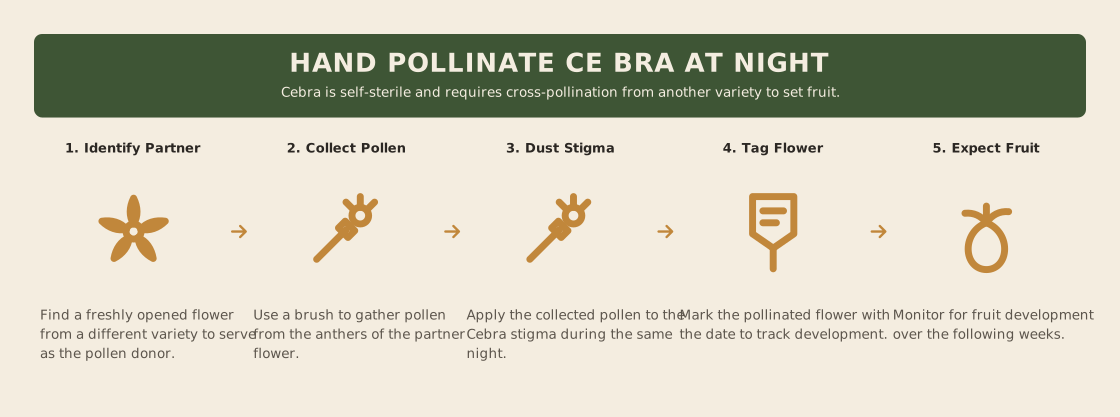
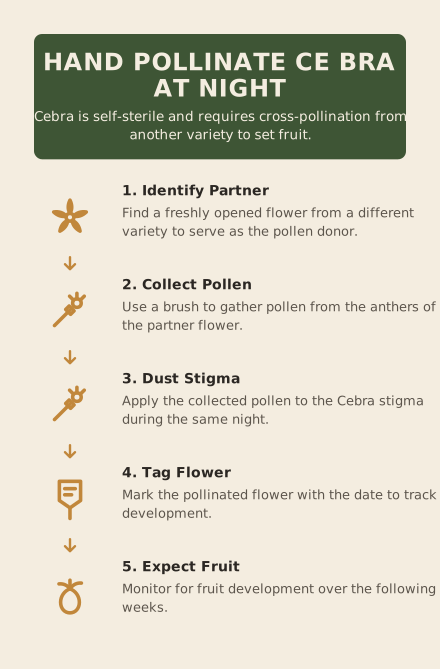
Hand pollination is straightforward but requires timing. Dragon fruit blooms open at night and close by morning. You must work while the flowers are fresh and the stigma is receptive. Here is the sequence that works.
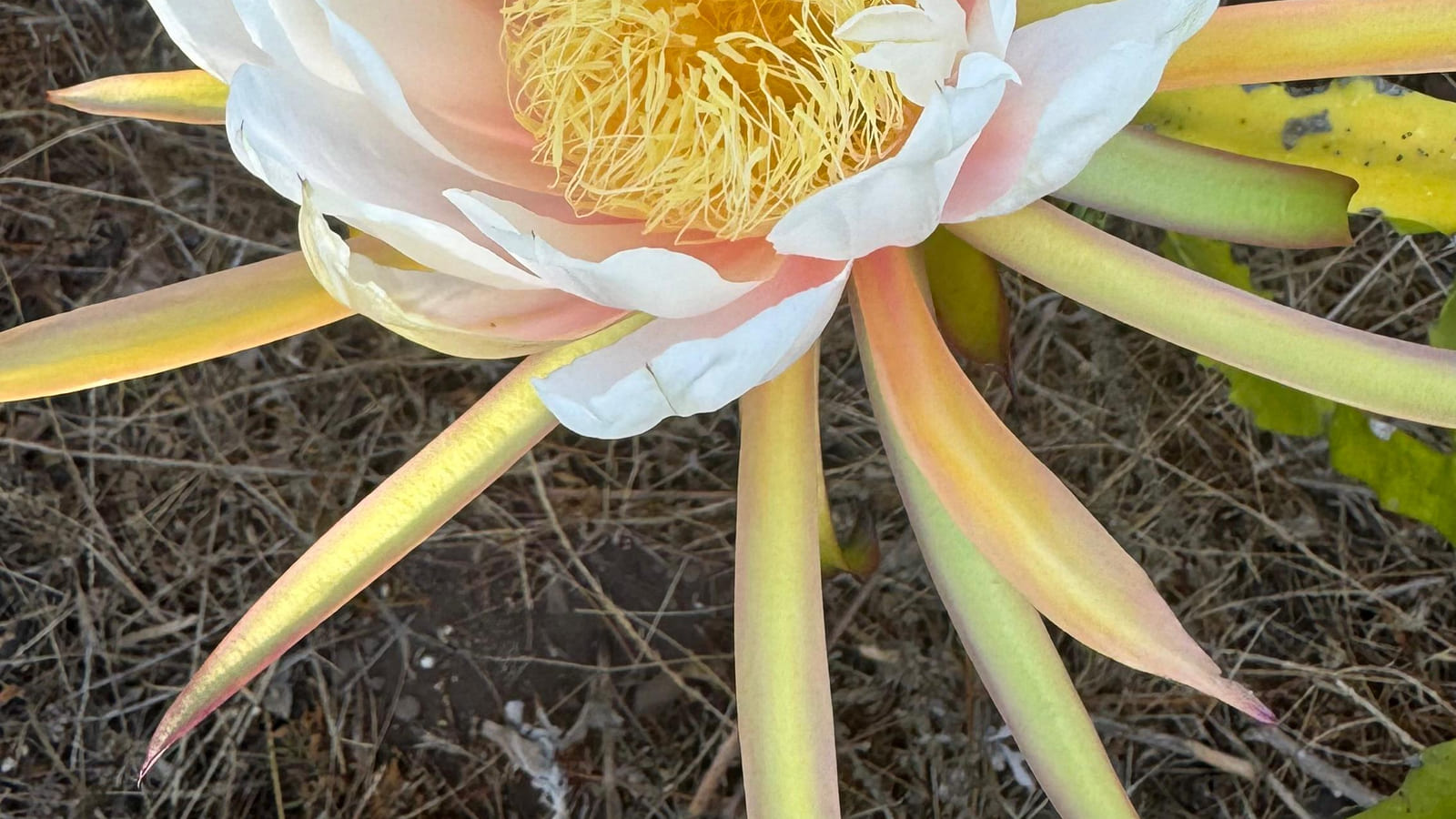
- Identify the bloom. Look for flowers that have fully opened. The petals should be spread wide, and the stigma (the star-shaped center) should be moist and sticky.
- Collect pollen. Use a soft brush or cotton swab to gently sweep the anthers (the pollen-bearing structures surrounding the stigma) of a flower from your partner plant. You want yellow pollen on the brush.
- Transfer the pollen. Gently dab the pollen-laden brush onto the stigma of the Cebra Roja flower. Cover the entire surface of the stigma. Deposit pollen gently rather than scrubbing.
- Repeat. Pollinate multiple flowers to ensure a good set. If you have several partner plants, rotate between them to maximize genetic diversity and vigor.
Why do blooms drop? If you see flowers falling off without forming fruit, it is usually a sign of poor pollination or a lack of compatible pollen. The plant aborts unfertilized flowers, so hand pollination prevents this waste. It ensures that the energy the plant puts into blooming translates into harvestable fruit.
Data from Red Jaina (H. polyrhizus) trial, applicable to Cebra Roja.
Keep a simple log. Note which flowers you pollinated and when. This helps you track yield trends and adjust your timing if blooms are opening earlier or later in the season. Consistency pays off: a few minutes of attention each night during the blooming window yields heavier, more uniform fruit.
Growing Cebra in a Southern California backyard
Cebra handles the variable weather of Southern California well because its greyish-green stems carry a waxy coating that shields the tissue from extreme heat and dry winds. This physical protection allows the plant to maintain vigor even when summer temperatures spike or winter nights dip. The cultivar is a very close relative of Hylocereus costaricensis, sharing that robust structural resilience.[7] You do not need to coddle the soil. Listings for Costa Rican Cebra note adaptability to a range of growing conditions, from sandy loam to heavier clay, as long as drainage is adequate.[9]
Yield in a home garden often disappoints growers who focus only on flower count. Pitaya production is determined by the efficiency of the transition from bud to flower to fruit, not by how many blooms appear.[3] To improve this transition, apply biochar and Trichoderma viride to the root zone. This combination has been shown to improve yield in red-fleshed Hylocereus costaricensis and other red-fleshed varieties.[3] Expect a mid-range harvest. The plant produces fruit reliably if pollinated, but it does not flood the trellis with heavy clusters like some commercial white-fleshed strains.
Soil Amendment Tip: Mix biochar into the planting hole or top-dress established vines with a thin layer. Follow with a Trichoderma viride inoculant. This supports root health and helps the plant convert buds into fruit more efficiently.
| Care Spec | Guidance | Source |
|---|---|---|
| Light | Full sun to partial shade. The waxy stem coating protects against intense exposure. | Grower observation |
| Soil | Adapts to a range of conditions. Well-draining is key. | [8] |
| Water | Deep watering during active growth. Reduce frequency in winter. | Grower observation |
| Support | Heavy trellis or post. Stems are thick and carry medium-sized spines. | [7] |
| Bloom Window | Night-blooming. Flowers open after dusk. | [8] |
| Fruit Development | Mid yield. Depends on bud-to-fruit transition efficiency. | [8] |
Buying true-to-type Cebra Roja
Shopping for this cultivar requires more scrutiny than buying a standard white-fleshed pitaya. Because the name "Cebra Roja" is a marketing label rather than a registered variety, you are buying a specific genetic lineage, not just a plant with red flesh. Start by asking the seller exactly which name line the stock came from. If they cannot confirm it is the self-sterile Nicaraguan line, you risk receiving a plant that behaves differently in your garden. The confusion between Cebra, Rosa Lisa, and Costa Rican Cebra is not just semantic; it affects your pollination strategy and harvest expectations.
Look for a grower who has eaten their own fruit. This is the most reliable filter for quality. A seller who consumes the harvest can speak to the actual flavor profile, which varies significantly in the trade. Some listings promise sweet 18 to 20 Brix readings, while other reports describe a very high tart berry character with low sugar[10]. If the seller cannot describe the taste or show you a cut fruit, they are likely reselling cuttings without verifying the outcome. Trust the person who has stained their hands with the juice, not the person who only sells stems.
Expect to buy a partner cultivar. You cannot grow Cebra alone. It is self-sterile and requires cross-pollen from a different variety to set fruit[7]. A reputable nursery will not sell you a single Cebra cutting without discussing pollination partners. If a seller claims their "Costa Rican Cebra" is self-pollinating, be skeptical. You need a compatible pollinator ready for hand pollination at night.
Ignore photos of supermarket fruit. Those images show what the fruit looks like when ripe, but they do not prove the genetic identity of the cutting you are buying. Red flesh is a visual trait, not a guarantee of the specific Nicaraguan genotype. DNA analysis confirms that plants labeled Cebra and Rosa Lisa share the same genotype, but visual differences can still appear due to environmental factors[7]. A photo of a dark red fruit could be any number of red-fleshed varieties. Ask for the source of the cutting, not a picture of the harvest.
Checklist before you buy:
- Ask the seller to identify the specific name line (Cebra, Rosa Lisa, etc.) and its origin.
- Confirm the seller has eaten the fruit from their own plants and can describe the flavor.
- Ensure the seller acknowledges the plant is self-sterile and offers compatible pollinators.
- Disregard supermarket fruit photos as proof of genetic identity.
What to pair it with
Since Cebra Roja is self-sterile, your trellis design depends on compatible partners. You need a second cultivar to provide pollen for those night blooms. Without a partner, you get flowers but no fruit. The best pairings offer genetic compatibility while adding visual and flavor contrast to your harvest.
Red vs. White Contrast
Pairing red-fleshed Cebra with white-fleshed varieties creates a striking visual difference in the fruit basket. White-fleshed pitayas often contain more volatile aroma compounds than red ones[2], so the contrast extends beyond color to scent and taste. This diversity helps if you are experimenting with different flavor profiles or selling mixed boxes.
Consider Albino Ocamponis as a pollinator. Its white flesh provides a clean backdrop to Cebra’s deep red. The two cultivars bloom at similar times, making hand pollination manageable. You can alternate rows or graft them onto the same support structure.
Asunta 3 and Asunta 5 are also strong candidates. These varieties are known for vigorous growth and reliable pollen production. Planting them near Cebra ensures you have fresh pollen available when the Cebra flowers open. The red flesh of Cebra stands out vividly against the lighter flesh of the Asunta lines.
If you want a high-contrast pairing, try American Beauty. Its pinkish-red skin and white flesh offer a different aesthetic than Cebra’s dark red interior. The two varieties complement each other in the garden and in the kitchen. You can use American Beauty pollen to fertilize Cebra flowers, ensuring a set.
For growers interested in unique genetics, Bahamut and Box Of Fresh are worth exploring. These varieties bring different growth habits and fruit characteristics to the mix. Cross-pollinating Cebra with these partners can result in interesting seedlings if you are breeding, but for immediate fruiting, they serve as reliable pollen sources. The key is ensuring bloom times overlap.
Tip: Plant pollinators within arm’s reach of your Cebra vines. Hand pollination is easier when you can reach both flowers without moving ladders or stretching too far.
Remember that pollination method must be selected per cultivar. Red-fleshed pitayas like Cebra rely on hand pollination for any reliable yield. White-fleshed varieties may be self-compatible, but using them as pollen donors for Cebra still requires manual transfer. Check our full Cebra guide for detailed pollination steps.
Frequently Asked Questions
Is Cebra Roja the same plant as Rosa Lisa? Yes. DNA analysis confirms they share the same genotype, though growers sometimes note minor visual differences in stem shape or fruit appearance due to environmental factors or selection within the same genetic pool.[7] Treat them as the same plant for cultivation purposes.
Do I need two dragon fruit plants? Yes. Cebra is self-sterile and requires cross-pollination. See the pollination section above for details on partner plants and hand pollination requirements.
How sweet is it really? Most grower refractometer readings average 18 to 20 Brix, with some individual fruits hitting the low 20s.[7] However, flavor reports are not uniform. One farm describes it as having very high tart berry character and low sugar, which contradicts the sweet profile sold elsewhere.[10] Expect a balance of sweetness and acidity rather than pure sugar.
Why did every flower drop? This is common if you rely on natural pollination. Red-fleshed pitayas often fail to set fruit without human intervention. Bumblebees produced zero fruit set in these tests, so renting hives is not a substitute for hand pollinating the night blooms yourself.[1]
Can I dry the fruit? You can, but expect color loss. Pitaya betalains, the pigments responsible for the red flesh, are unstable in light, oxygen, and temperatures above roughly 50 C.[4] Hot-drying degrades these compounds, so the dried fruit will lose its vibrant hue and antioxidant capacity compared to fresh fruit.
Should I believe the Brix number? Use it as a general indicator, not a guarantee. While commercial nurseries report averages around 19 Brix, actual sweetness varies by growing conditions and individual plant health.[8] Remember that red flesh color comes from betalains and does not correlate with higher sugar content or stronger aroma compared to white-fleshed varieties.[2]
Our claims about Cebra Roja rest on a mix of peer-reviewed trials, taxonomic databases, and direct grower observations. We prioritize data that reflects how the plant behaves in a real garden, not just how it looks in a photo.
The case for hand pollination is supported by a subtropical trial showing that red-fleshed pitayas like Red Jaina set only 14.30% of flowers under natural pollination, while hand pollination raised fruit set to 77.40%[1]. That same study found that bumblebee pollination produced no fruit set at all in red-fleshed types, confirming that insect assistance is not a viable substitute for human intervention in these cultivars[1]. The authors concluded that pollination methods must be selected per cultivar, with red-fleshed pitayas requiring hand pollination for any reliable yield[1].
Regarding flavor and nutrition, a comparative analysis of red-fleshed and white-fleshed pitayas found broadly similar total phenolic content and sugar profiles[2]. However, the white-fleshed species contained more volatile aroma compounds, indicating that red flesh is not a proxy for stronger flavor[2]. The red color itself comes from betalain pigments, which are unstable in light, oxygen, and temperatures above roughly 50 C[4]. This instability is why hot-dried red pitaya loses both color and antioxidant capacity[4].
Yield potential is tied to the efficiency of the bud-to-flower-to-fruit transition rather than flower count alone[3]. In red-fleshed Hylocereus costaricensis, a combination of biochar and Trichoderma viride improved yield, suggesting that soil biology plays a role in production[3].
For taxonomy, we rely on Plants of the World Online, which treats Hylocereus polyrhizus as a synonym of Selenicereus monacanthus[6]. The original valid publication by Britton and Rose in 1920 is documented in the International Plant Names Index (IPNI), providing the historical baseline for the species name[5].
Note on trade listings: Data on specific Brix readings, fruit weight, and self-sterility for the Cebra cultivar comes from commercial nursery reports and grower forums, not peer-reviewed studies. These are labeled as grower reports. For example, a Nicaraguan nursery reports average Brix at about 19, while other growers note readings in the low 20s[8]. DNA testing confirming Cebra and Rosa Lisa as the same genotype is also drawn from grower-shared data[7]. We treat these as practical field observations rather than controlled experimental results.
References
- Determination of the effects of bumblebee (Bombus terrestris), hand, and natural pollination on fruit set, yield, and quality in pitaya (Hylocereus spp.) cultivation under subtropical conditions (Yolcu, Atmaca, Baysal, Ozturk; BMC Plant Biology 26:999), PubMed / BMC Plant Biology (2026).
- Nutritional Analysis of Red-Purple and White-Fleshed Pitaya (Hylocereus) Species (Attar et al.; Molecules 27(3):808), PubMed / MDPI Molecules (2022).
- Path analysis of the efficiency in the bud-flower-fruit transition of pitahaya: the biochar-Trichoderma viride combination improves yield in Hylocereus costaricensis and H. undatus cv. Vietnam White (Campos-Ruiz et al.; Frontiers in Plant Science 17:1901632), Frontiers in Plant Science (2026).
- Improvement of betalains stability extracted from red dragon fruit peel by ultrasound-assisted microencapsulation with maltodextrin, PubMed Central / National Library of Medicine (2022).
- Hylocereus polyrhizus (F.A.C.Weber) Britton & Rose, Cactaceae 2: 185 (1920), nomenclatural type record, International Plant Names Index (Kew, Harvard, Naturalis) (2026).
- Hylocereus polyrhizus is a synonym of Selenicereus monacanthus (Lem.) D.R.Hunt, Plants of the World Online, Royal Botanic Gardens Kew (2026).
- Cebra dragon fruit variety listing (H. polyrhizus, Nicaragua, Rosa Lisa DNA note, stem description, self-sterile, 1 lb, Brix 18-20), Dragons Alley Nursery (2026).
- Cebra dragon fruit (Nicaraguan commercial variety, about 1 lb, average Brix 19 with samples in the 20s), Leewi Farms (2026).
- Costa Rican Cebra Dragon Fruit Cactus (Hylocereus polyrhizus): 0.5-1.0 lb fruit, mid yield, self-pollinating claim, night blooming, Ken's Philodendrons (2026).
- Cebra dragon fruit cutting (red flesh, described as very high tart berry mix, low sugar), OAX Dragon Fruit Farm (2026).