Connie Meyer Dragon Fruit: The Real Name & Taste
Connie Mayer is a high-sweetness white-fleshed dragon fruit hybrid that requires a separate pollinator to set fruit. This fast-growing vine produces small, consistent crops averaging 18 to 23 Brix. The variety is self-sterile. The fruit stays green when ripe with a pink blush and offers a rosy floral taste with coconut notes. Growers value this plant for its early-blooming purple flowers and reliable yield.
Where the name comes from (and why it's misspelled)
You will often see this variety listed as "Connie Meyer." That spelling is a common error. The correct name is Connie Mayer. Every nursery catalog, grower reference, and cutting listing uses the "Mayer" spelling. If you search for "Connie Meyer," you are likely hitting a typo that has propagated through online forums and social media posts.
Connie Mayer is one of three sibling hybrid clones developed by Eckhard Meier in Germany. It is a cross between Hylocereus stenopterus and Hylocereus undatus. The other two siblings from this same breeding program are Bruni and Kathy Van Arum. These three plants share a similar growth habit and flower structure, which is why they are often confused in the field. Spicy Exotics collected the Connie Mayer line from a California grower who had possessed the plant since 2000, shortly after it was identified and registered in Germany.
The misspelling persists in online forums. However, the distinction matters for sourcing. When you order cuttings or plants, using the correct spelling ensures you are getting the specific hybrid from the Meier breeding line. Confusing it with a generic white dragon fruit or a different hybrid can lead to unexpected pollination issues or fruit quality differences.
Because Connie Mayer is a specific hybrid with a defined lineage, its traits are consistent across clones. It is not a seedling with variable genetics. This stability is why growers value it for its reliable blooming time and fruit size. If you are researching the full history and technical details of this variety, our deep-dive guide covers the breeding background and field identification tips in more depth: Connie Mayer Dragon Fruit: Taste, Pollination & Facts.
Fruit and taste
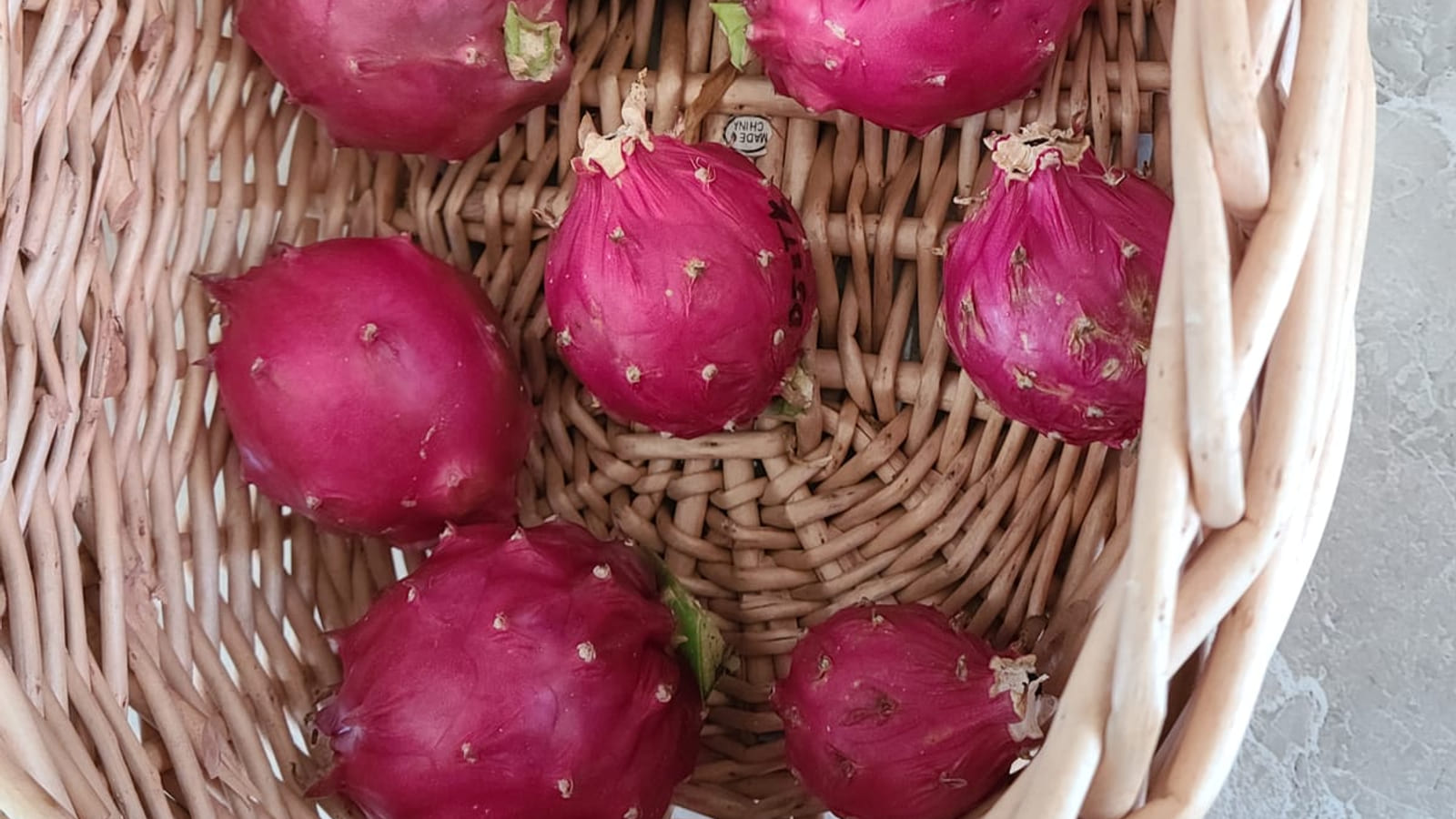
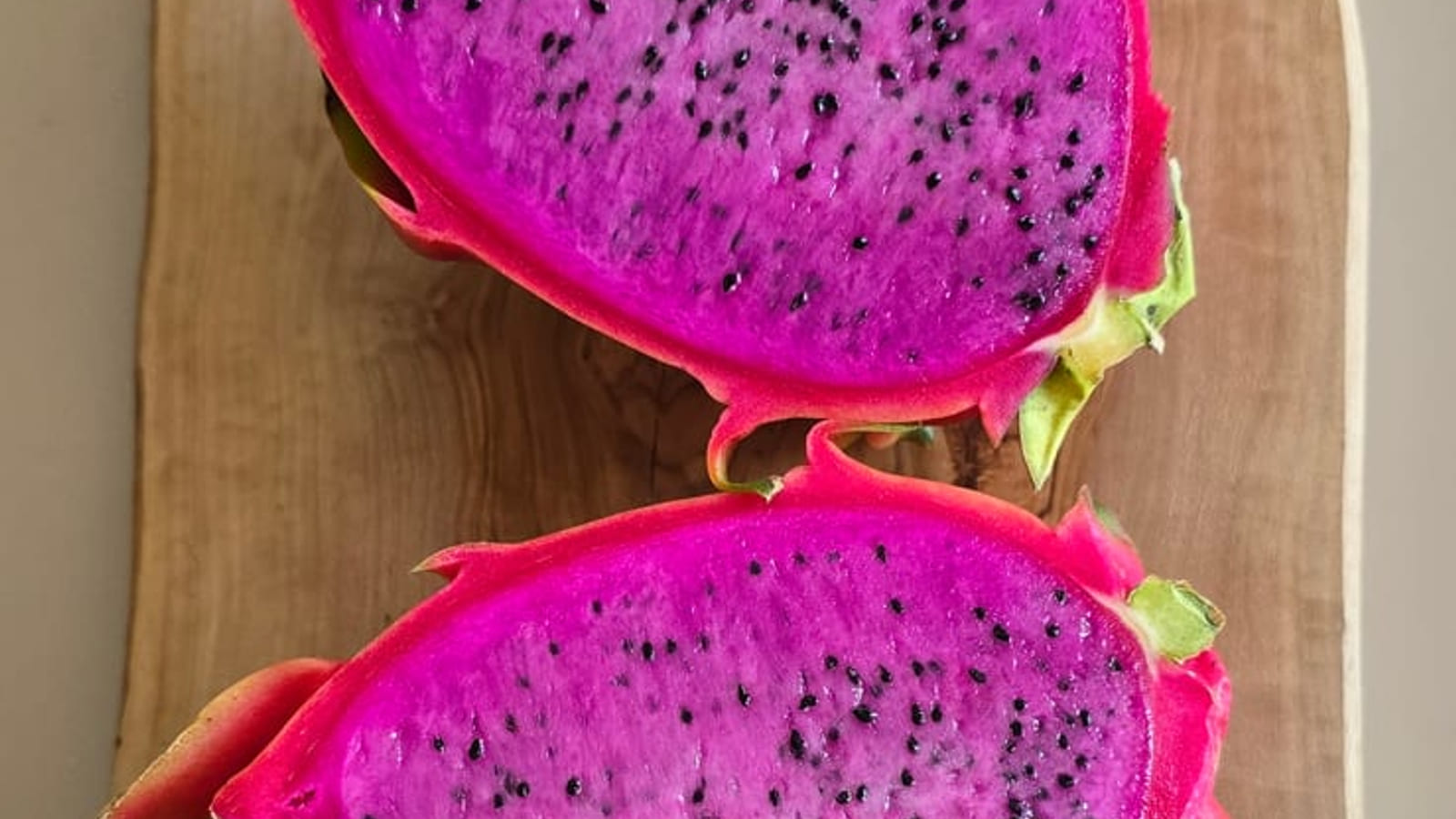
Connie Mayer produces small to medium fruit that typically weighs between 0.25 and 1 lb (113-454 g). While this size is modest compared to some commercial giants, the consistency is high. With excellent pollination, some growers report pushing fruits toward 2-3 lb, though this is less common. The skin remains green at maturity, marked by a transparent pink blush and lemon-lime green fins. It never undergoes the full color change seen in many other white-fleshed varieties. Inside, the flesh is pearl-white and speckled with small black seeds.
The flavor profile is where this variety earns its reputation for sweetness. Sky Botanicals averages the Brix level at 18 to 23, placing it among the sweeter white-fleshed options available. The taste is often described as rosy and floral with distinct hints of coconut. As the fruit over-ripens, subtle notes of longan or lychee may emerge. Opinions on the overall experience are divided. Some growers call it exceptional, while others find it underwhelming when compared to bold red-fleshed types. For context on how this sweetness compares to other popular options, see our guide to best tasting dragon fruit varieties.
Why the size matters
The small, consistent size of the fruit is actually a key field identifier. It helps distinguish Connie Mayer from its near-identical sibling, Bruni. Because Connie Mayer sets fruit with very little biomass, it fruits young. This efficient growth habit means you do not need a massive vine to produce a plentiful crop.
Harvesting is straightforward. Look for the skin to soften slightly and the pink blush to deepen. This visual cue indicates the fruit has reached peak sweetness. Once picked, the fruit is excellent eaten fresh, in salads, jams, or juiced into drinks. It is also rich in antioxidants, vitamins, and fiber. For a deeper dive into the technical details of this hybrid's lineage and field identification, refer to our full guide on Connie Mayer Dragon Fruit: Taste, Pollination & Facts.
The flowers Connie Mayer is grown for
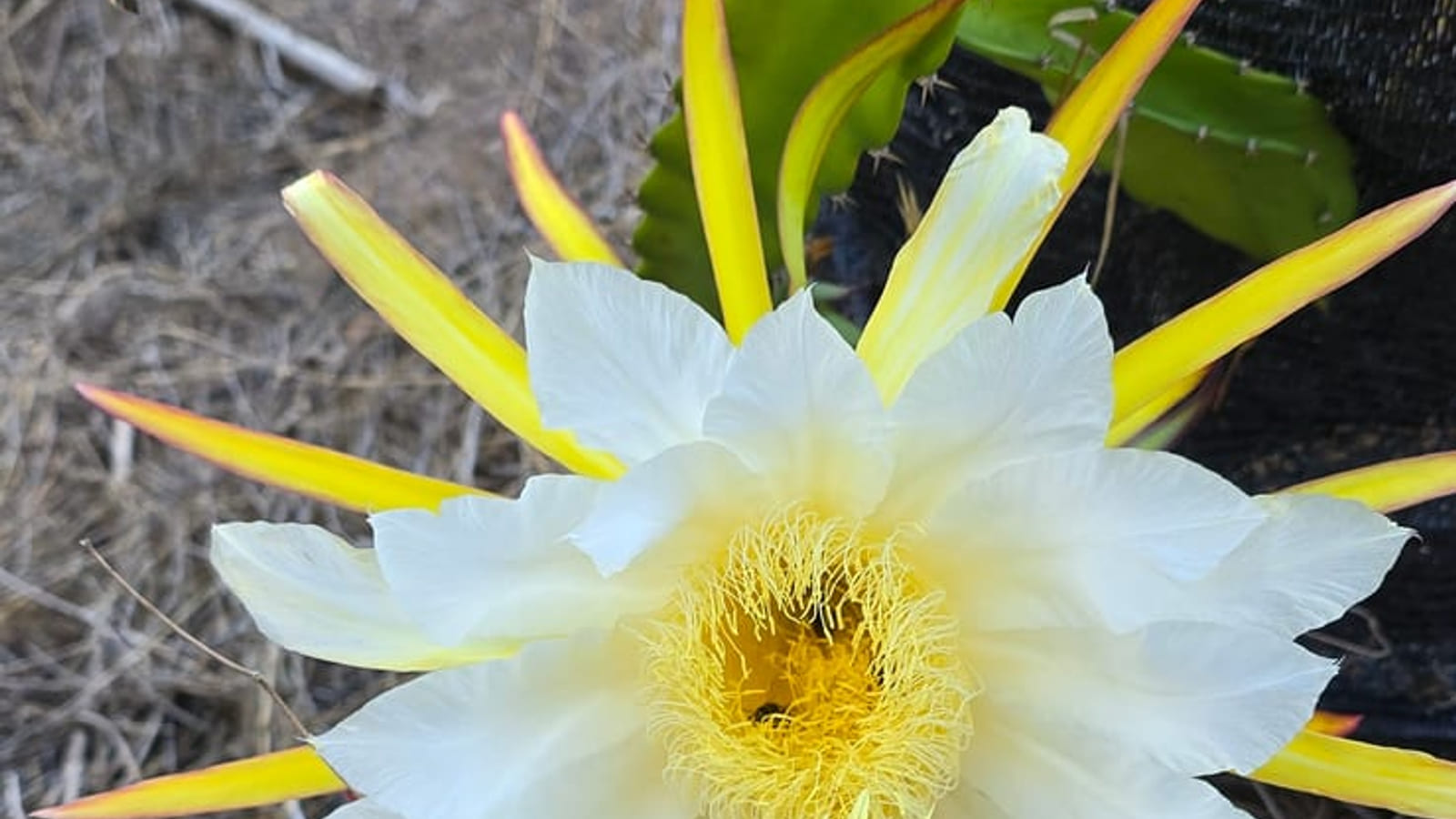
While the fruit earns its reputation for sweetness, the bloom is the feature that first catches a grower's eye. Connie Mayer produces medium-sized, nocturnal flowers inherited from its Hylocereus stenopterus parent. These buds are distinctively purple-tipped before they open, signaling the imminent arrival of the bloom. As dusk falls, the petals unfurl to reveal a striking gradient: deep purple at the center shading into light pink edges with crisp white tips. The flowers open at dusk and close by sunrise, a noticeably earlier window than most other Hylocereus varieties. Even growers who find the fruit flavor modest often cite the visual impact of the bloom as the primary reason for keeping the plant in their garden.
Beyond the fruit
Connie Mayer is not just a fruit crop; it is a versatile ornamental. The flowers are sometimes dried and used for tea, adding a unique botanical element to your kitchen. For a deeper look at how this variety fits into a broader collection, see our guide to best tasting dragon fruit varieties. If you want to explore the full technical details of this hybrid's lineage and care, our Connie Mayer Dragon Fruit: Taste, Pollination & Facts guide covers the breeding background and field identification tips in depth.
Growing Connie Mayer
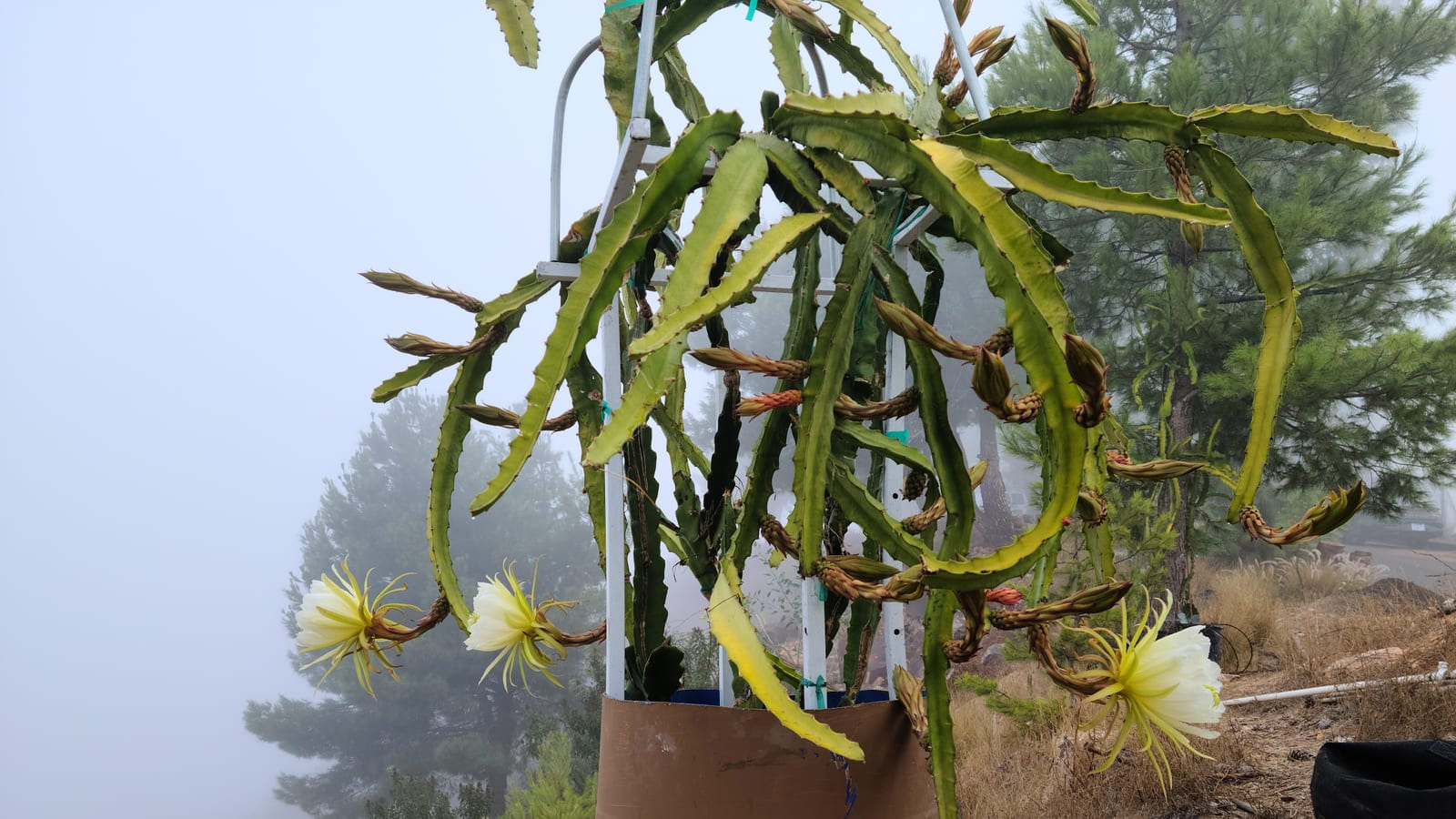
Because Connie Mayer sets fruit with very little biomass, it fruits young and suits containers or smaller trellises. You do not need a massive structure to support this vine. A sturdy post or a small wall is enough to handle the weight of the stems and the crop. The stems are tender and three-sided, a trait inherited from the Hylocereus stenopterus parent. They carry tiny single thorns, similar to its sibling Bruni. This tenderness means the plant is frost-sensitive. It thrives in tropical to subtropical climates where it can receive full to partial sun without the risk of cold damage.
Soil and Watering
Drainage is the most critical factor for long-term health. Use a well-draining mix with a pH between 6.6 and 7.3. Sand or volcanic soil helps achieve this texture. Once the plant is established, it is drought-hardy. Water only after the soil dries out to avoid root rot. Overwatering is a common mistake that kills these vines faster than under-watering. Feed the plant with a balanced fertilizer regularly to support its fast growth rate. Good airflow around the stems is also essential to prevent fungal issues in humid conditions.
| Factor | Requirement |
|---|---|
| Soil pH | 6.6 to 7.3 |
| Light | Full to partial sun |
| Watering | After soil dries out |
| Structure | Trellis, post, or wall |
Frost Warning: Connie Mayer stems are tender. Protect the plant from frost or grow it in a container that can be moved indoors during cold snaps.
The plant’s growth habit makes it ideal for gardeners with limited space. It does not require the heavy, industrial-scale support structures needed for larger commercial varieties. Focus on providing a stable anchor for the climbing stems and ensure the root zone has excellent drainage. This combination allows the vine to focus its energy on producing its prized blooms and fruit.
Ripening and harvest timeline
Connie Mayer takes its time. While most Hylocereus species are ready for harvest in roughly 30 days after pollination, this hybrid needs about 45 days to reach maturity. That extra week and a half on the vine is not just a delay; it is the mechanism that builds the fruit's signature sweetness. The longer the fruit hangs, the higher the Brix level climbs, which is why rushing the harvest often results in a less flavorful crop.
| Vine Type | Typical Hang Time | Primary Driver |
|---|---|---|
| Most Hylocereus | ~30 days | Standard sugar accumulation |
| Connie Mayer | ~45 days | Extended brix development |
Because the skin does not change color dramatically, visual cues are subtle. You are looking for a slight softening of the skin texture and a deepening of the transparent pink blush that marks the fruit's maturity. If the fruit feels firm and the blush is faint, it is likely still developing its full sugar content. Patience is the key to getting that 18 to 23 Brix range that defines the variety.
Once you have confirmed the fruit is ready, harvest it. For more details on how this sweetness compares to other popular options, see our guide to best tasting dragon fruit varieties.
Pollination: the one hard requirement
Connie Mayer is self-sterile. To set fruit, you must provide pollen from a compatible variety that does not carry the Hylocereus stenopterus gene. This is the single most critical factor in growing this plant. Without a compatible neighbor or manual intervention, the flowers will open, close, and drop without ever producing a single fruit.
The best partners are typically red-fleshed or self-fertile H. undatus types. American Beauty, Sugar Dragon, Vietnamese Red, and Natural Mystic are all proven choices. Early-blooming yellow dragon fruit (H. polyrhizus) also works well. The key is genetic compatibility. You need a pollinator that offers the specific genetic makeup Connie Mayer lacks. If you are unsure which varieties in your region fit this profile, our guide to best tasting dragon fruit varieties breaks down the genetics and flavor profiles of popular options.
Hand pollination: the reliable method
If you do not have a compatible variety blooming at the same time, hand pollination is your only option. The timing is everything. Connie Mayer flowers open at dusk and close by sunrise. You need to work just after dark, around 10 pm, when the flowers are near fully open. This window is narrow. If you miss it, the flower will close and the pollen will be lost.
- Take a fine makeup brush or a small, soft paintbrush. Rub it gently over the anthers (the pollen-producing parts) of the flower to gather dry pollen.
- Coat the entire stigma (the sticky, split-lobed center) several times with the pollen-laden brush. Ensure you cover all the lobes.
- If it is a rainy night, cover the flower with a plastic bag to keep moisture off the pollen. Open the bag briefly to perform the pollination, then reseal it.
Moisture is the enemy of pollen. If you are in a humid climate, this step is non-negotiable. You can also dry pollen for later use. Collect pollen from a flower, let it dry for about 24 hours, and store it in a freezer.
Confirming success
How do you know if it worked? Wait 4 to 7 days. If pollination was successful, the flower part of the blossom will yellow and separate from the fruit base. The fruit base will remain green, firm, and attached to the branch.
In humid conditions, removing the yellowed flower part after it separates is a good practice. It prevents rot from setting in on the developing fruit. In diverse multi-variety plantings where a compatible neighbor is blooming simultaneously, Connie Mayer can sometimes set fruit without hand pollination. However, given the specific timing requirements and the risk of incompatible neighbors, hand pollination remains the most reliable way to ensure a crop.
Connie Mayer vs its siblings
Connie Mayer belongs to a specific trio of hybrid clones developed by German hybridizer Eckhard Meier. The other two siblings are Bruni and Kathy Van Arum (sometimes spelled Kathie Van Arum). All three share the same parentage, a cross between Hylocereus stenopterus and Hylocereus undatus. This shared lineage explains why they look so similar in the field, but it also creates a critical trap for growers planning their pollination strategy.
The most common mistake is assuming that because Bruni looks almost identical to Connie Mayer, it can serve as a pollinator. It cannot. Bruni carries the stenopterus gene and is also self-sterile. Planting these two together will result in beautiful flowers that drop without setting fruit. You need a pollinator that lacks the stenopterus gene, typically a red-fleshed or self-fertile H. undatus type like American Beauty or Sugar Dragon. For a deeper look at the breeding background and how to identify these plants in the field, see our Connie Mayer Dragon Fruit: Taste, Pollination & Facts guide.
How to tell them apart
Since the vines and flowers are nearly indistinguishable, the easiest way to confirm which sibling you have is to cut the fruit open. Kathy Van Arum is the outlier of the group. Its flesh is light pink, making it immediately distinct from the pearl-white flesh of Connie Mayer and Bruni. Distinguishing Connie Mayer from Bruni requires a closer look at the fruit size and consistency. Connie Mayer typically produces smaller, more consistent fruit. If you are unsure which white-fleshed hybrid you are growing, the flesh color is your first check, and the fruit size is your second.
| Variety | Flesh Color | Self-Sterile? | Key Identifier |
|---|---|---|---|
| Connie Mayer | Pearl White | Yes | Small, consistent fruit size |
| Bruni | Pearl White | Yes | Near-identical to Connie Mayer |
| Kathy Van Arum | Light Pink | Yes | Pink flesh color |
Do not plant Bruni as a pollinator for Connie Mayer. Both are self-sterile and share the same genetic limitation. They will not set fruit together. You must use a non-stenopterus variety for cross-pollination.
FAQ
Growers often ask why the name appears as "Connie Meyer" in so many online searches. This is a persistent typo. The correct spelling is Connie Mayer. The error persists in online forums. Using the correct spelling is practical, not pedantic. It ensures you are sourcing the specific hybrid from the German breeding line rather than a generic white dragon fruit. For a deeper look at the breeding history and field identification, see our Connie Mayer Dragon Fruit: Taste, Pollination & Facts guide.
Many growers wonder if they can use their other white-fleshed plants as pollinators. You need a compatible partner that lacks the Hylocereus stenopterus gene, typically a red-fleshed or self-fertile Hylocereus undatus type. Good named partners include American Beauty, Sugar Dragon, Vietnamese Red, and Natural Mystic. If you are unsure which red-fleshed variety suits your climate, our guide to best tasting dragon fruit varieties offers context on flavor and compatibility.
Hand pollination is often the most reliable method, especially in container gardens. The flowers open at dusk and close by sunrise, so timing is critical. Work just after dark, around 10 pm, when the blooms are near fully open. Use a fine makeup brush to rub over the anthers and gather dry pollen. Then, coat the entire stigma several times. Moisture is the enemy of pollen. On rainy nights, cover the flower with a plastic bag and open it briefly to perform the pollination. If you collect pollen in advance, you can dry it for about 24 hours and store it in a freezer for later use.
After pollination, you need to confirm success before the fruit develops. Four to seven days after the process, the flower part will yellow and separate from the stem. If the fruit base remains green and firm on the branch, pollination was successful. In humid conditions, remove the yellowed flower to prevent rot. In diverse plantings where a compatible neighbor blooms at the same time, Connie Mayer may set fruit without hand intervention, but manual pollination guarantees the highest set rate.
Finally, growers often ask about the ripening timeline. Connie Mayer takes about 45 days from pollination to harvest. This is longer than the roughly 30 days seen in many other Hylocereus species. This extended hang time is not a flaw; it is the mechanism that builds the high Brix levels. The longer the fruit stays on the vine, the sweeter it becomes. Harvest when the skin softens slightly and the pink blush deepens.