Bruni Dragon Fruit Flower: Bloom Guide
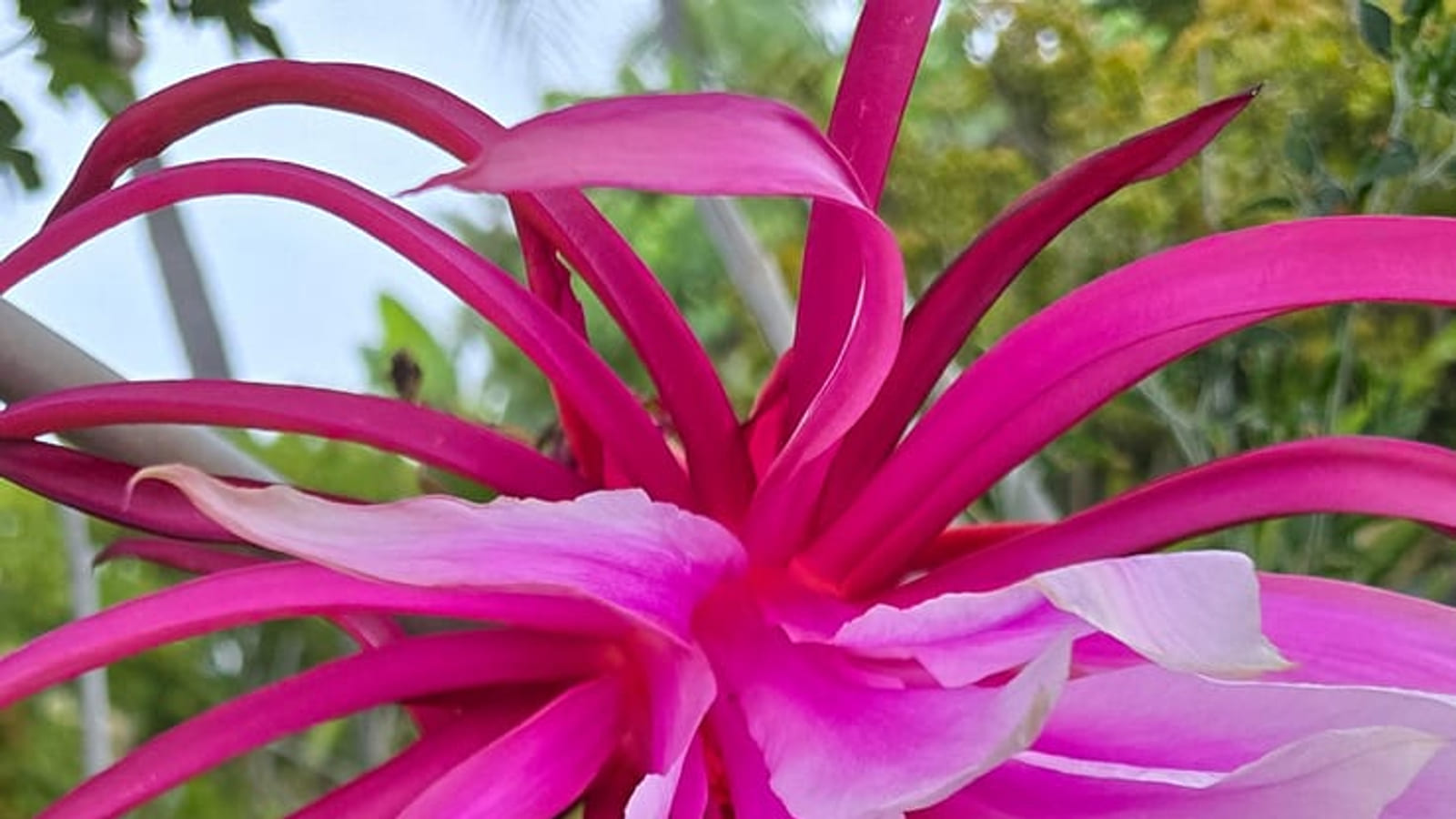
Bruni dragon fruit blooms at dusk with a medium-sized, nocturnal flower featuring purple inner petals that fade to light pink edges with white tips. The buds are showy with purple tips before they open, and the bloom window lasts roughly 8 to 12 hours. Because Bruni is self-sterile, it cannot set fruit from its own pollen. You must hand pollinate it using compatible pollen from another variety that does not carry the stenopterus gene. Good partners include white-fleshed Hylocereus undatus types. If you want to see this specific bloom and understand the pollination process, read our guide to dragon fruit pollination.
The Bruni dragon fruit flower is the centerpiece of the plant, a medium-sized nocturnal bloom that inherits its striking purple-pink hues from its parents. It is visually stunning, but there is a significant catch. Bruni is self-sterile, meaning its own pollen cannot fertilize its own flower. Without compatible pollen from a different variety, the bloom is purely ornamental and will not produce fruit. This guide covers exactly what to expect from the bloom, when it opens, and the precise steps to hand pollinate it successfully. We will also discuss the plant's vigorous, three-sided growth habit, which requires a strong support structure to handle the weight of the flowers and developing fruit. If you are ready to move from admiring the petals to harvesting the fruit, the following sections provide the technical details you need.
Quick Note: Because Bruni is self-sterile, you must have a compatible pollen partner nearby. You cannot rely on wind or insects alone if your garden only contains Bruni plants. Check out the Bruni dragon fruit variety page for more on this hybrid's background.
What the Bruni Flower Looks Like (anatomy of the bloom)
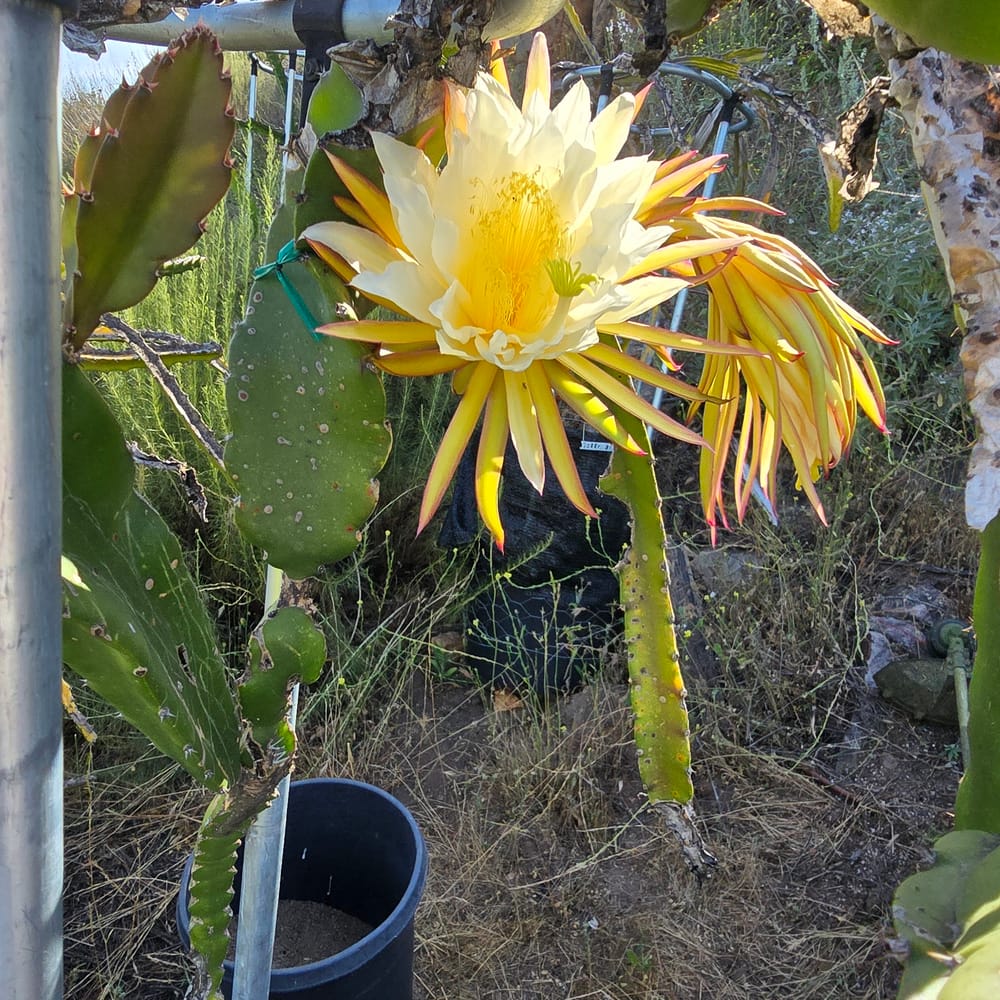
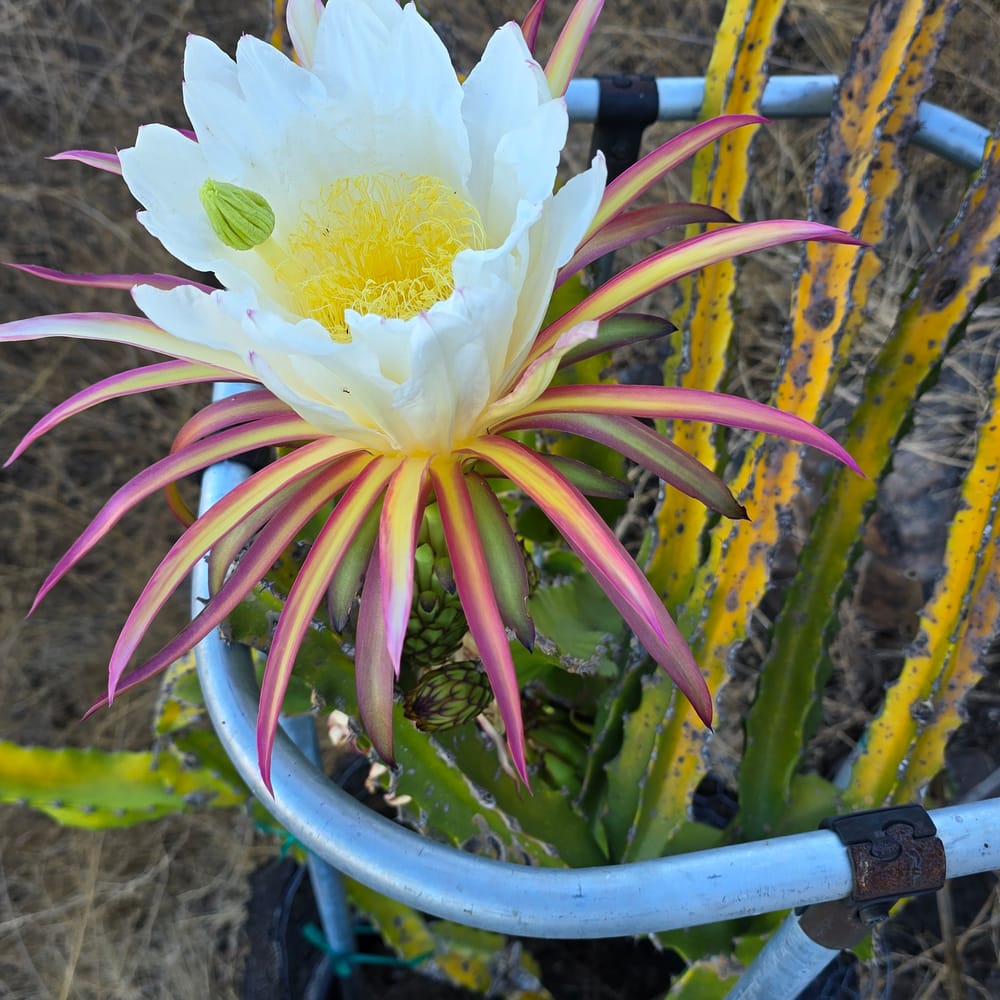
The Bruni dragon fruit flower is a visual standout, distinct from the plain white blooms of standard pitaya. Before the bud opens, it is already showy, featuring a distinct purple tip that signals the color shift to come. Once the bloom unfurls at dusk, the structure is bell-shaped with slender tepals. The inner petals are a deep purple that shades outward to light pink edges, finishing with crisp white tips. This gradient is the primary visual cue that separates Bruni from its classic white-fleshed relatives.
The bloom is medium-sized, typically reaching a diameter of 20 to 22 cm (8 to 9 inches). It is fragrant, a trait shared by most nocturnal dragon fruit flowers, which rely on scent to attract pollinators like moths and bats. At the center of the bell sits a golden-cream cluster of stamens surrounding a lobed stigma.
While the Bruni bloom is striking, it shares its fundamental architecture with other Hylocereus species. The bell shape is consistent with the genus, but the coloration is unique. The purple inner shading is inherited from its parents, giving the flower a depth that the standard white undatus flower lacks.
Visual Check: If you are unsure if a bud is Bruni, look for the purple tip on the closed bud. Once open, the purple inner petals fading to white tips are unmistakable. This coloration persists until the flower begins to fade in the morning light.
When Bruni Blooms (timing)
Bruni follows a strict nocturnal schedule. In Louisiana, the flower opens at dusk and closes by sunrise. This window is roughly 8 to 12 hours. Because the bloom closes quickly, you must perform hand pollination while the petals are fully open. Missing this window means the flower will drop without setting fruit.
The journey to that single night starts weeks earlier. Flower buds emerge as 3 to 5 small round buttons on the stem margins. Typically, only 2 to 3 of these develop into full buds. Each bud takes roughly 13 to 17 days to reach full length, growing to about 20 to 27 cm before it opens. You can anticipate the opening by watching the tip. When the top becomes puffy and you can see the inner petals through the outer layers, the bloom is days away.
Patience for the First Bloom
New growers often wonder when they will see the first flower. A cutting can take about 2 to 3 years to produce its first blooms, especially in non-ideal or container conditions. The key to reliable flowering is structure. Plants with limited branching, specifically 3 to 5 well-pruned main branches, bloom more consistently than those with a tangled mass of vines. This pruning strategy ensures the plant directs energy into flower production rather than excessive vegetative growth. For more on managing this growth habit, see the Bruni dragon fruit variety page.
The Long Wait for Fruit
Once you have successfully pollinated the flower, the wait for harvest is longer than with standard pitaya. In Louisiana, Bruni takes about 45 days from pollination to harvest. Most other Hylocereus species take about 30 days. This extended period is part of the Bruni experience. The fruit gets sweeter the longer it hangs on the vine. If you are comparing this timeline to its sibling hybrid, check out the Connie Mayer variety page for a side-by-side look at their growth patterns.
Seasonal Pattern: In subtropical climates, Bruni often has long summer flowering runs. If you are in a region with distinct seasons, expect the most consistent blooms during the warmest months when the plant is actively growing.
The Bruni Catch: It Is Self-Sterile
Bruni’s self-sterility means the plant cannot fertilize itself. The pollen produced by its own stamens is biologically incompatible with its own stigma. If you leave the flower to chance, the bloom will simply fall off without setting a fruit. This is a hard biological limit, not a sign of poor health or stress. The flower is fully functional and ready to accept pollen, but it requires a specific genetic key that its own pollen does not hold.
The critical factor in compatibility is the stenopterus gene. Bruni inherits this gene from its Hylocereus stenopterus parent. Any other dragon fruit variety that also carries the stenopterus gene is incompatible with Bruni. Pollen from these plants will not trigger fruit set. You must use pollen from a variety that lacks this gene, typically standard Hylocereus undatus types. If you are unsure about the lineage of a potential partner, check the Bruni dragon fruit variety page for a list of verified compatible partners.
Once you have identified a compatible partner, you must act within the narrow window when the flower is open. The decision process is straightforward but time-sensitive.
- Confirm the flower is open. The bloom must be fully unfurled. If the tepals are still tight, wait. Pollinating a closed bud is ineffective.
- Verify partner compatibility. Ensure the source of your pollen is a variety without the stenopterus gene. Standard white undatus is the safest bet for fruit set.
- Hand pollinate within the open window. Transfer the pollen to the stigma while the flower is receptive. This is the only step that matters for success.
- Monitor for success signs. Wait 4 to 7 days to see if the pollination worked.
The outcome is visible and distinct. You do not need to guess if it worked. Look at the base of the flower where it attaches to the stem.
| Outcome | Visual Sign (4-7 Days) | Meaning |
|---|---|---|
| Success | Flower part yellows and detaches; ovary swells and stays attached | Fruit set initiated |
| Failure | Whole flower drops off | Pollination failed |
If the entire flower falls off, the pollination did not take. This usually indicates incompatible pollen or timing issues. If the flower part yellows and falls away while the small green base (the ovary) remains attached and begins to swell, you have a fruit. That swelling base is the beginning of your Bruni dragon fruit.
Compatible Pollen Partners for Bruni
Bruni is a hybrid of Hylocereus stenopterus and Hylocereus undatus. Because it carries the stenopterus gene, it cannot accept pollen from other plants that share that lineage. You need a partner that is purely undatus-based. The good news is that many common white-fleshed varieties fit this requirement. Below is a quick reference to help you choose the right neighbor for your Bruni plant.
| Variety | Compatibility | Notes |
|---|---|---|
| Vietnamese White | Compatible | Classic undatus type. Self-fertile, making it a reliable pollen source. |
| Connie Mayer | Incompatible | Sibling hybrid to Bruni. Carries the stenopterus gene, so its pollen will not fertilize Bruni. |
| White-fleshed Self-fertile Hylocereus | Compatible | Any standard white pitaya without stenopterus ancestry works well. |
| Pink/Red-fleshed undatus Cultivars | Generally Compatible | Check the parentage. If it is a pure undatus cross, it is a valid partner. |
| Any stenopterus-based Variety | Incompatible | Shares the stenopterus gene. Pollen will not fertilize Bruni. |
When selecting a partner, prioritize plants that bloom at the same time. Since Bruni opens at dusk and closes by sunrise, your pollen source needs to be in full bloom during that same window. If you are growing multiple varieties, map out their bloom times to ensure overlap. For a deeper look at how Bruni compares to its sibling, check out the Connie Mayer variety page. You can also review the full background on this hybrid on the Bruni dragon fruit variety page.
How to Hand Pollinate a Bruni Flower
Because Bruni is self-sterile, the window for success is narrow. You must act while the flower is open, which typically happens from dusk until sunrise. Watch the bud tip closely. When the closed bud becomes puffy and you can see the inner petals pushing through, the bloom is about to open. This is your cue to get your tools ready. Do not wait until the petals are fully unfurled and starting to fade.
- Catch the bloom at dusk. Monitor your plants in the evening. The puffy bud tip is the signal that opening is imminent. Have your collection bowl and brush on hand before the flower fully opens.
- Collect the pollen. Hold a small, clean bowl directly under the golden-cream cluster of stamens. Gently shake or tap the stamen cluster to release the pollen into the bowl. If you have a compatible partner flower open nearby, you can also use a soft brush to sweep pollen directly from the partner's stamens.
- Dust the stigma. Using a small paintbrush or a clean makeup brush, pick up a small amount of the collected pollen. Gently brush the pollen onto the lobed stigma in the center of the Bruni flower. Ensure you cover all the lobes. The goal is to deposit the compatible pollen directly onto the receptive surface.
- Repeat if necessary. If your Bruni plant has multiple buds that are staggered in their opening times, you may need to repeat this process over two nights. Collect fresh pollen for each new bloom that opens.
- Store spare pollen. If you collect more pollen than you need for the current bloom, do not throw it away. Place the extra pollen in a small container and store it in the refrigerator overnight. This allows you to pollinate a bud that opens the next morning if needed.
- Check for success signs. Wait 4 to 7 days after pollination. Look for the flower portion to turn yellow and detach from the base. The base, which is the ovary, should remain attached and begin to swell. If the entire flower drops off, the pollination failed. If the ovary stays and grows, you have a fruit set.
Tip: If you are growing Bruni alongside Connie Mayer, note that Connie Mayer is also self-sterile. You cannot use Connie Mayer pollen to pollinate Bruni because it carries the stenopterus gene. You must use pollen from a non-stenopterus variety like Vietnamese white. Always ensure your pollen source does not carry the stenopterus gene.
What Happens After: Bruni Fruit and Flavor
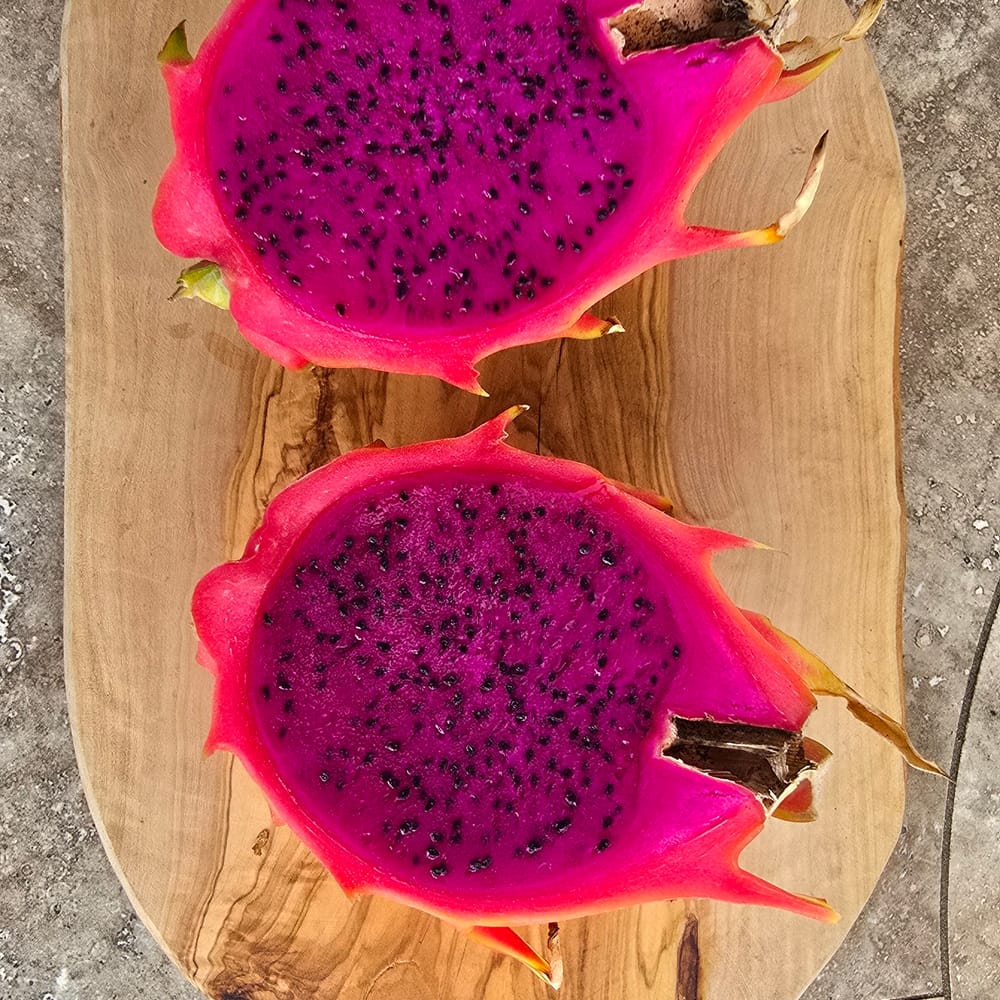
Once the flower fades and the ovary swells, the real work begins. Bruni produces a small, distinct fruit that rewards patience. The skin starts green but develops a translucent pink cast as it ripens, accented by lemon-lime green fins. Inside, the flesh is white, contrasting with the colorful exterior. Because the fruit is small, ranging from 0.25 to 0.75 lb (100 to 340 g), it is easy to handle and perfect for snacking directly from the vine.
| Attribute | Detail |
|---|---|
| Fruit Weight | 0.25 to 0.75 lb (100 to 340 g) |
| Exterior | Green skin with translucent pink cast and lemon-lime fins |
| Flesh Color | White |
| Sweetness (Brix) | Up to 21.3 |
| Time to Harvest | ~45 days from pollination |
| Flavor Profile | Rosy floral, coconut, longan, lychee, mango, subtle tartness |
Flavor and Ripening
The flavor profile is complex and aromatic. Tasters describe it as rosy and floral, with distinct notes of coconut, longan, lychee, and mango. A subtle tartness balances the sweetness, preventing the fruit from tasting cloying. In 2016 Brix testing, Bruni reached up to 21.3 Brix, indicating a high sugar content. One key characteristic of this variety is that it gets sweeter the longer it hangs on the vine. Waiting until the skin shows that pink cast ensures the full spectrum of tropical notes is present.
Ripening Tip: Bruni takes about 45 days from pollination to harvest in Louisiana, which is longer than the ~30 days typical for many other Hylocereus species. Do not rush the harvest. The fruit gets sweeter the longer it ripens on the vine.
For a side-by-side look at how Bruni compares to its sibling hybrid, see the Connie Mayer variety page.
Growing Bruni for Better Flowers
Bruni’s vigorous, three-sided growth habit demands a robust support system. Because the stems are tender and can become heavy with fruit, a strong pole or trellis is essential to prevent breakage. Without adequate structural support, the weight of the blooms and developing fruit can cause the branches to sag or snap, reducing your yield. Light and drainage are the next critical factors. Bruni thrives in full sun, receiving at least 6 to 8 hours of direct exposure daily. Equally important is the growing medium. Use a well-drained soil or potting mix that allows excess water to escape quickly. Avoid waterlogging at all costs, as saturated conditions will kill the plant faster than drought. Nutrition plays a specific role during the reproductive phase. While a balanced fertilizer supports general growth, you should shift your feeding strategy when the plant begins to flower. Add potassium and calcium during the flowering and fruiting stage. Pruning is often overlooked but is vital for reliable blooming. Limit your plant to 3 to 5 main branches from a single stalk. This focused structure allows the plant to direct its energy into producing flowers rather than maintaining excessive vegetative growth. Plants with limited, well-pruned branches tend to bloom more reliably than those with sprawling, unmanaged canopies. Finally, patience is required. A cutting can take about 2 to 3 years to produce its first flowers, especially in container conditions or non-ideal climates. For detailed guidance on maintaining your plant’s health throughout this period, refer to our general dragon fruit care guide.FAQ: Bruni Flower and Pollination
Growers often have